
REVIEW · KILIMANJARO MACHAME ROUTE
7-Day Kilimanjaro Trekking Tour via Machame Route
Kilimanjaro is a test, not a stroll. This 7-day Machame Route is built for trekkers who want strong scenery, classic camps, and a real sense of achievement.
Starting in Moshi, you climb through rainforest, moorland, and alpine desert, then go for the summit from the crater rim at night.
I especially love how the itinerary balances effort with timing, so you reach the big camps without feeling like you’re rushing. I also like the human side of the trip, with a team that (in past trips) included guides like Mwinyi and assistants such as Gloria, plus cooks and porters who handle the heavy lifting and keep the days running smoothly.
One possible drawback: Machame is a bit more challenging than some other options because it includes steeper ascents and descents. If you do not already have solid hiking stamina, that summit night plus the downhill dust can feel like a lot.
In This Review
- Key things that make this Machame trek memorable
- Machame Route: why this is the tougher, more rewarding Kilimanjaro style
- Moshi arrival and your first night at Keys Hotel
- Day 2 to Machame Camp: rainforest start and getting into hiking flow
- Shira Plateau and the Kibo sunset glow
- Acclimatization through Lava Tower to Barranco Camp
- Barranco Wall to Barafu Camp: where hands and balance matter
- Summit night: Stella Point to Uhuru Peak at 5895m
- Day 7 Mweka Gate farewell, shower, and your certificate moment
- Team, porters, and food: the part you feel every single day
- Price and value: what $2,850 is really paying for
- Who this Machame trek suits best
- Should you book the 7-Day Machame trek with Kilimanjaro Heroes Adventures?
- FAQ
- Where does this Kilimanjaro trek start?
- What route is this tour using?
- How long is the trek?
- Does the price include park entrance tickets?
- Is this a private tour?
- Is pickup offered?
- What is the altitude goal on summit day?
- What fitness level do I need?
- Are tickets provided digitally?
- What is included on the first and last day?
- Can I cancel for a full refund?
Key things that make this Machame trek memorable
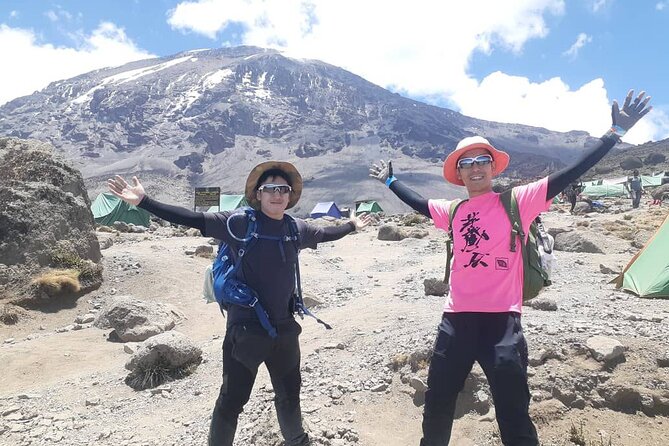
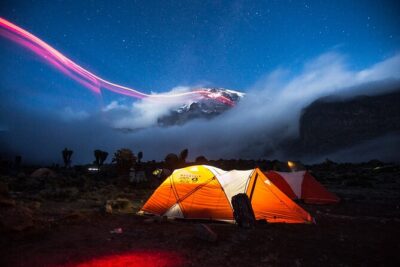
- Machame’s camps feel world-class, especially the sunsets from Shira Camp and the stargazing from Barranco Camp
- A built-in acclimatization day helps your body adjust before the long final push
- Barranco Wall uses hands and feet, so it rewards confident hikers
- Summit night starts at midnight, with a slow climb toward Stella Point and Uhuru Peak
- Porters and a cook setup take pressure off your load and keep you fed during long days
Other ways up Kilimanjaro we reviewed
- Kilimanjaro climb by Lemosho Route (7-day)★ 5.0 · 651 reviews
- Kilimanjaro climb, Machame Route (7-day)★ 5.0 · 262 reviews
- Kilimanjaro Climbing Lemosho Route 8 Days.★ 5.0 · 186 reviews
- Climbing Kilimanjaro – Machame Route★ 5.0 · 170 reviews
Machame Route: why this is the tougher, more rewarding Kilimanjaro style
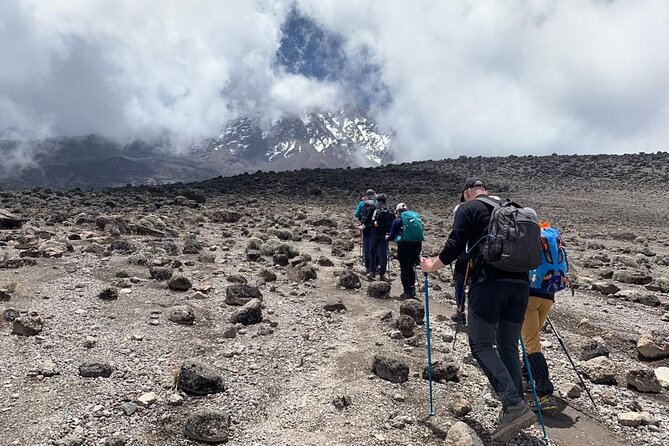
Machame has a reputation for being demanding, and the pacing here matches that. You’ll hike days that are not just longer, but also steeper, with plenty of up and down. That matters because Kilimanjaro success is not only about altitude, it’s also about staying steady when your legs are tired.
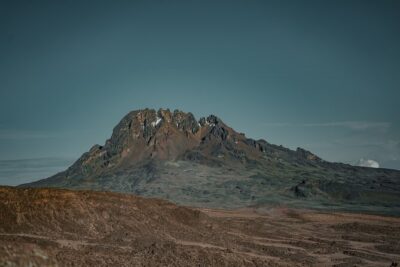
What makes Machame so appealing is that the payoff feels spread out. You do not wait until Day 6 to see why people come. You’ll get major scenery shifts across the climb: rainforest early on, then moor and heath land, then later the alpine desert feel. That “world changes under your feet” effect is a big part of the route’s magic.
This is also a route that rewards mental grit. The summit push is long and slow, and the descent can be dusty because volcanic ash loosens as conditions change. If you like a challenge, and you can stay calm when it’s hard, Machame can feel like the right Kilimanjaro.
Moshi arrival and your first night at Keys Hotel
You start in Moshi, and the trip begins with a meet and greet when you land at Kilimanjaro International Airport (JRO). From there, you’ll transfer to Keys Hotel for a briefing and overnight stay.
Why this first step is worth something: it helps you get your head on straight before hiking starts. You also get a chance to meet your team, ask questions, and understand the rhythm of the days to come. The briefing is also a nice buffer, because Day 2 starts with an early transition from “travel mode” into “trail mode.”
You should plan for the simple reality that Kilimanjaro logistics take time. Even though the climb starts the next day, the day before shapes your experience. If you’re sensitive to travel fatigue, building in that briefing night is a practical advantage.
Day 2 to Machame Camp: rainforest start and getting into hiking flow
On Day 2, you drive from Moshi to the Kilimanjaro National Park gate, which is about a 1-hour drive. After breakfast you head to the gate, where your guide handles formalities like entrance forms while you watch mountain crew and teams get ready.
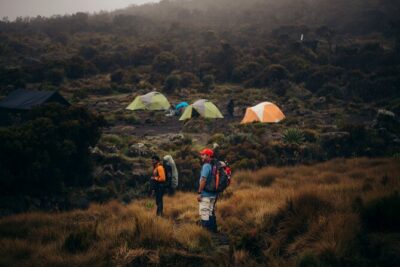
Then you start climbing toward Machame Camp, which takes about 5 to 6 hours. Early on, you’re described as moving through rainforest with older trees, which usually means cooler, greener footing and a very different feel from later days. Even if you’re not a “nature photographer,” that rainforest portion helps you ease in. It’s where you learn your pacing without yet facing the most intense altitude strain.
A practical tip for Day 2: keep your effort controlled. In Kilimanjaro country, the biggest enemy is usually going too fast too soon. Even with a good team, you’re still hiking a high-altitude mountain, so steady steps matter.
More Machame departures, compared
Shira Plateau and the Kibo sunset glow
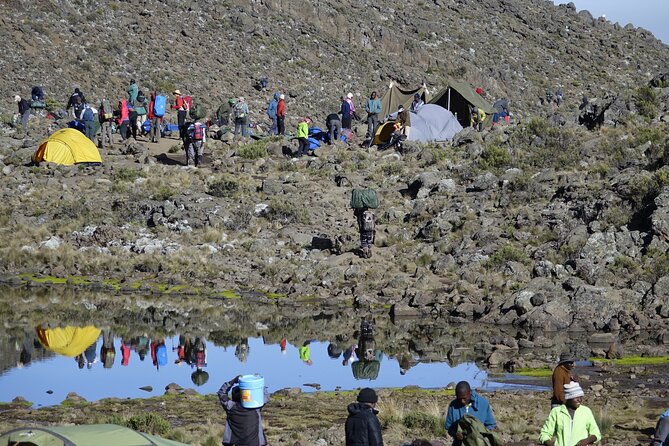
Day 3 is shorter in trekking time, about 6 hours, but it still matters because it gives you time in a key zone. The route shifts dramatically from lush green rainforest to moor and heath land. You’re also sleeping on the Shira Plateau, and you’ll likely notice the air change as the vegetation shifts.
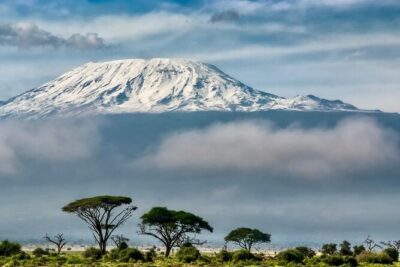
One standout from this day is the evening view. The glacier of Kibo lights up as the sun sets. That kind of visual moment is not just pretty. It’s also a mental reward when you’re thinking, okay, I’m actually doing this.
Shira Plateau tends to feel “in between.” You’re higher, you can feel less oxygen, and yet you still have days ahead to acclimatize. That’s why the shorter hiking time here is valuable. You get to move, but you don’t smash your body.
If you want the best experience from Day 3, treat it like a camera moment and a rest-and-observe moment. Watch the light. Breathe. Save energy for the next day.
Acclimatization through Lava Tower to Barranco Camp
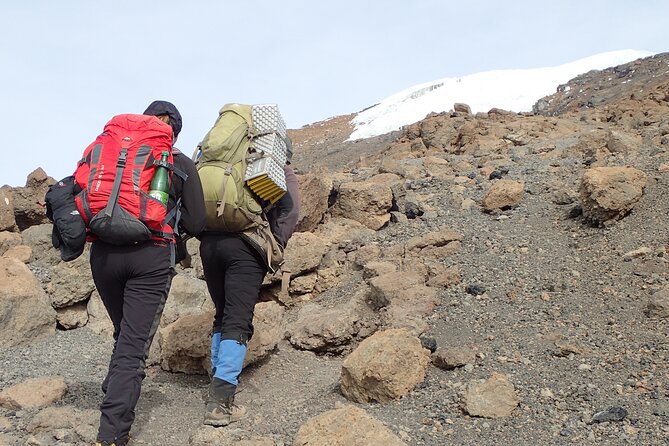
Day 4 is where the route earns its keep. You climb roughly 700m, but you sleep on a level not much higher than the previous night. That is classic acclimatization logic: gain altitude, then avoid climbing too much overnight.
You start around Shira Plateau and head up toward Lava Tower at about 4640m. After a rest, you continue through the Barranco Valley to reach Barranco Camp, which is about 6 to 7 hours of hiking.
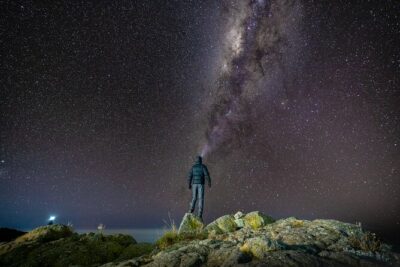
Here’s what makes this day special beyond the numbers. You experience the alpine desert, plus the Barranco Valley with small lobelia plants and giant Senecio. You’ll also get that famous night-time mood at Barranco Camp, where stargazing is described as breath-taking. That’s important because at higher camps, clear skies can make you feel like you’ve stepped into a different universe.
The main drawback to this day is that it asks for patience. Acclimatization means you might not feel like you accomplished much by the time you reach camp. Trust the plan. The payoff shows later, especially during the final summit attempt.
Barranco Wall to Barafu Camp: where hands and balance matter
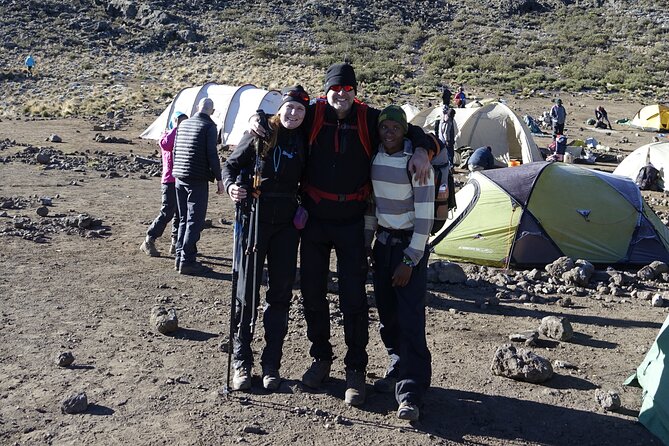
Day 5 is long, about 8 hours, and it’s the day that tests technique. The first section includes scaling the Barranco Wall, and the route specifically notes using your hands and feet. That can feel intimidating at first glance, but it’s also described as looking more daunting than it actually is, with safety taken seriously.
You’ll cross streams and hike up and down. After lunch in the Karanga Valley, you continue for another 2 to 3 hours before reaching Barafu Camp at around 4640m.
This is the day to be practical. It’s not the time to save energy for hero mode later. Your job is to stay warm, eat when you can, and protect your balance. Long days plus hand-and-foot sections can lead to fatigue injuries if you rush.
And then there’s the evening plan. The instructions are clear: drink plenty of fluids, try to eat even if you’re not hungry, and go to bed early. That combination supports you for midnight later, and it’s one of those quiet “do it even when you don’t feel like it” strategies that makes summit day more likely to go smoothly.
Summit night: Stella Point to Uhuru Peak at 5895m
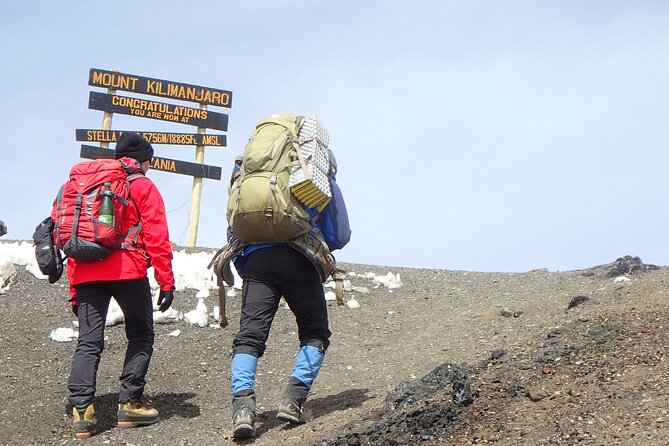
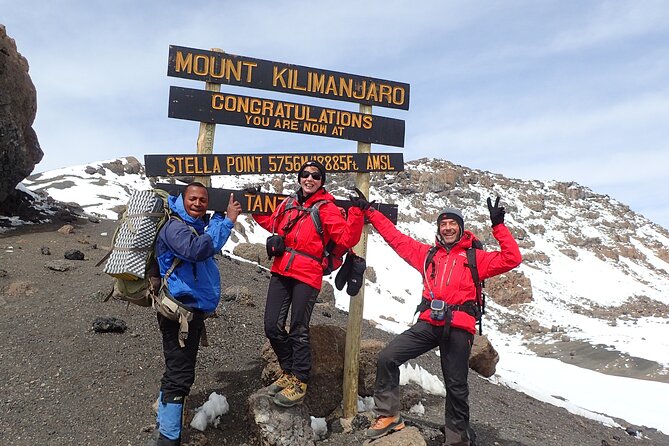
Day 6 starts in the middle of the night. You’re woken with tea and a biscuit, dressed warmly, and set off with a headlight and your daypack. Expect 5 to 7 hours of slow climbing, often described as pole pole, toward the rim of the crater at Stella Point.
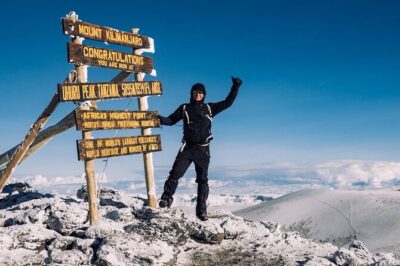
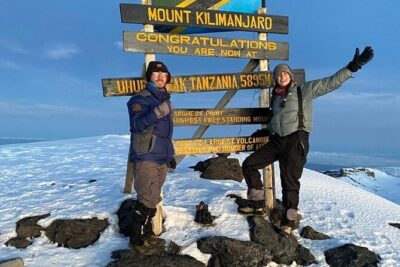
From there, it’s another 1 to 2 hours along the crater’s edge to reach Uhuru Peak at 5895m. The timing is everything here. The early morning light, the slow progress, and the final approach all combine into a summit feeling people remember for years.
Then comes the descent. It is described as easier but dusty, because volcanic ash has defrosted. That dust can make footing slippery, so your knees and ankles will want respect. You return on the same route and should arrive back at Barafu Camp.
The best mental move for summit night is to treat it like a process, not an event. You’re not racing for a number on the clock. You’re moving one step at a time toward Stella Point, then one step at a time toward Uhuru Peak. If you stay patient and follow your guide’s pace, the summit becomes possible.
Day 7 Mweka Gate farewell, shower, and your certificate moment
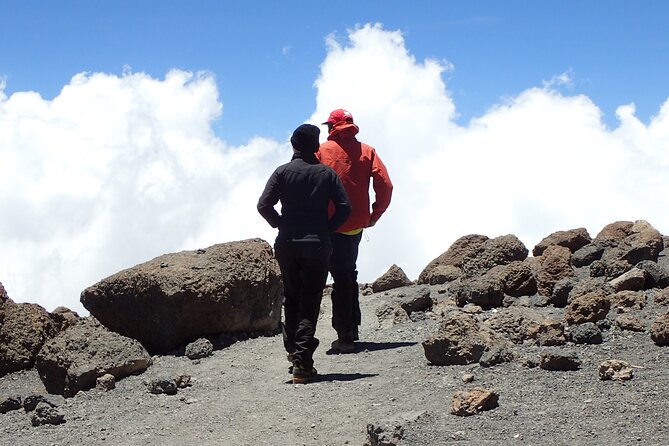
After breakfast, Day 7 shifts from mountain effort to celebration and cleanup. You’ll have a traditional farewell ceremony from the whole mountain crew. Then it’s a short walk of about 2 to 3 hours through rainforest to the Mweka gate, where your driver waits.
From there, you transfer back to Keys Hotel for a well-deserved shower and cold drink. You also get a debrief and an awarding of your certificate of achievement, and the rest of the day is yours to relax and reflect.
This final day is more important than it sounds. After the summit and descent, your body needs a reset. Rainforest walking is still effort, but it’s far gentler than what you’ve done in recent days. It also gives you a psychological landing. You’re done with the hard part, and you can finally shift into relief.
Team, porters, and food: the part you feel every single day
The most consistent praise across trips is about the team. Many groups have reported attentive, experienced guides and a caring support crew. Names that show up repeatedly include Mwinyi and assistant guide Gloria, plus cook teams and porters that keep logistics smooth.
One specific detail that really matters for comfort is how porters handle more than you might expect. Porters are described as carrying not just food, but also most of your gear. That changes your hiking experience. You get to walk with less weight on your back, which can make a huge difference on steep sections like Barranco Wall and on tired downhill moments after summit day.
Food is another big deal here. Past trekkers have noted large, multi-course meals and even a separate dining tent setup with table and chairs. It’s a small detail, but it makes camp life feel human, not just survival mode. When you’re eating well, you’re more likely to sleep better and recover between tough days.
If you’re the type of traveler who values relationship travel as much as sightseeing, this style fits. A big part of the Kilimanjaro experience is trust in your guide and team. The strong reviews around safety and attentiveness suggest you should feel supported at each step.
Price and value: what $2,850 is really paying for
At $2,850 per person for an approximately 7-day private Machame trek, this is not a budget trip. But it also isn’t overpriced fluff. You’re paying for a full operation that includes National Park entrance coverage (admission tickets are noted as included), multi-day camp logistics, and the mountain crew who do the work behind the scenes.
You’re also getting value in the way the days are structured. This route includes an acclimatization day with altitude gain but limited sleeping height increase. It also includes the midnight summit plan, which is all timing and staffing. Those are the pieces that usually cost real money to do correctly, because they require people in place long before you arrive.
Private matters too. Even when groups of different sizes happen across seasons, the trip is described as private, meaning your group climbs together rather than blending with random strangers. That can make the pace and communication feel smoother.
So is it worth it? If you want Machame specifically, care about support and meal quality, and you’re physically ready for a tougher route, the value looks strong. If you’re chasing a gentle introduction to altitude hiking, you might want a less challenging route instead.
Who this Machame trek suits best
This tour fits travelers with moderate physical fitness and enough comfort with long hiking days. It’s especially well matched for people who like steady progress and don’t mind a tough day or two.
It also suits you if you want the classic Machame camp moments: Shira Camp sunsets, Barranco Camp stargazing, and Barranco Valley scenery. And if you enjoy having a team you can count on, the repeated praise for guides and support staff is a good sign.
If you’re new to hiking, consider whether you can manage long days plus steep sections. If you’re unsure, it’s worth asking your guide how they expect pace to feel on the Barranco Wall and summit night, because those are the two moments that typically decide whether the trip feels exciting or stressful.
Should you book the 7-Day Machame trek with Kilimanjaro Heroes Adventures?
I’d say yes if you want Machame and you’re ready to earn the views. The route structure gives you acclimatization, the camp experiences are described as standout, and the support team, porters, and meal setup are consistently praised.
I’d think twice if your fitness is mostly casual or if you get nervous on steep sections or long midnight climbs. Machame is challenging by design, and the summit push is not a short spectacle. It’s a slow, serious climb.
If you’re the kind of traveler who likes clear plans, strong support, and a real sense of achievement, this is a smart pick for your Kilimanjaro goal.
FAQ
Where does this Kilimanjaro trek start?
The trek starts at Kilimanjaro Airport, with the meeting point also tied to Kilimanjaro National Park. The listed start time is 8:00 am.
What route is this tour using?
This is a 7-day Kilimanjaro trek via the Machame Route.
How long is the trek?
It’s listed as 7 days, with daily hiking times ranging roughly from 4 hours on Day 7 up to about 10 hours on the summit day.
Does the price include park entrance tickets?
Yes. Admission tickets are listed as included for each day in the itinerary.
Is this a private tour?
Yes. It is described as private, meaning only your group participates.
Is pickup offered?
Pickup is offered, and the itinerary includes transfers around Moshi and the national park gates.
What is the altitude goal on summit day?
The summit is Uhuru Peak at 5895m.
What fitness level do I need?
The tour notes that travelers should have a moderate physical fitness level.
Are tickets provided digitally?
Yes. A mobile ticket is listed.
What is included on the first and last day?
Day 1 includes a meet and greet on arrival at JRO and an overnight stay at Keys Hotel, plus briefing. Day 7 includes a farewell ceremony, walk to Mweka gate, transfer back to Keys Hotel, shower, cold drink, and a certificate.
Can I cancel for a full refund?
Free cancellation is listed, with full refund available if you cancel at least 24 hours in advance of the experience start time.
More Machame Departures
- Kilimanjaro climb, Machame Route (7-day)
★ 5.0 · 262 reviews - Climbing Kilimanjaro – Machame Route
★ 5.0 · 170 reviews - Climbing Kilimanjaro through 7 days Machame Route
★ 5.0 · 151 reviews - #1. Best Kilimanjaro Day hike Tour-Machame Route-ISMANI
★ 4.2 · 47 reviews - 7 Days Machame route – Kilimanjaro
★ 5.0 · 45 reviews
Kilimanjaro, Route by Route
- Kilimanjaro climb by Lemosho Route (7-day)
★ 5.0 · 651 reviews - Kilimanjaro climb, Machame Route (7-day)
★ 5.0 · 262 reviews - Kilimanjaro Climbing Lemosho Route 8 Days.
★ 5.0 · 186 reviews - Climbing Kilimanjaro – Machame Route
★ 5.0 · 170 reviews - Climbing Kilimanjaro through 7 days Machame Route
★ 5.0 · 151 reviews
Just added from around Moshi
Kilimanjaro Machame Route, compared.
 ★ 5.0Kilimanjaro climb, Machame Route (7-day)From $3,377262 reviews
 ★ 5.0Climbing Kilimanjaro – Machame RouteFrom $2,322170 reviews
 ★ 5.0Climbing Kilimanjaro through 7 days Machame RouteFrom $2,425151 reviews
 ★ 5.07-Day Machame Kilimanjaro Summit Tour from ArushaFrom $2,695125 reviews
 ★ 5.07 Days Kilimanjaro via Machame route affordable priceFrom $2,400110 reviews
 ★ 4.2#1. Best Kilimanjaro Day hike Tour-Machame Route-ISMANIFrom $11547 reviews
 ★ 5.07 Days Machame route – KilimanjaroFrom $2,85045 reviews
 ★ 5.0The Best of Machame Route in 6 Days: Your World’s Summit GuideFrom $1,15044 reviews
Browse the lists this tour appears in