
REVIEW · KILIMANJARO MACHAME ROUTE
7-Day Guided Mount Kilimanjaro Climb by Machame Route
One word for this climb: altitude. The Machame Route (the “whiskey route”) mixes steep forest tracks, moorland, and high desert with big ridgeline views, then finishes with a sunrise run to Uhuru Peak. It is a classic Kilimanjaro mix of grind plus reward.
Two things I really like about this trip are the way it builds in acclimatization (you are not just rushing upward) and how much is handled for you. You get professional guides, cooks, and porters, plus permits and camping fees already included, and the operation includes airport pickup and drop off.
One drawback to consider: this is not a casual walk. Machame is steeper, longer, and more stop-start exhausting than the Marangu option, so if you are new to trekking, you will feel it.
In This Review
- Quick hits before you go
- Machame Route, the Whiskey Route: why it is popular and why it is work
- Before the first step: Moshi base, airport pickup, and Kisaza team style
- Day 1 on Machame: rain forest switchbacks to Machame Camp
- Days 2: Shira moorland, steeper rhythm, and a key overnight
- Day 3: Lava Tower and Arrow Glacier to Barranco Hut (acclimatization you should respect)
- Day 4: a shorter acclimatization day through the Barranco area to Karanga Valley
- Day 5: Barafu Hut and the South Circuit, with Mawenzi and Kibo in view
- Day 6: midnight to summit, Stella Point sunrise, Uhuru Peak, then straight down to Mweka Hut
- Day 7: Mweka Park Gate certificates, muddy steps, and back to Moshi
- How tough is Machame for first-timers, realistically?
- Meals, camps, and the week-long rhythm
- Guides, porters, and the service factor that makes or breaks Kilimanjaro
- Price of $2,180: what you are really buying and who it makes sense for
- Packing and trail gear: what the plan tells you to plan for
- Should you book this 7-day Machame climb?
- FAQ
- How long is the Kilimanjaro climb on the Machame route?
- Where is the meeting point, and when does it start?
- What is the Machame route like, and is it technically difficult?
- What fitness level should I have?
- When do you start the summit push?
- What is included in the tour price?
- What is not included?
- Is accommodation and airport transfer included before and after the trek?
- What is the cancellation policy?
Quick hits before you go
- Machame’s route profile: Steeper and longer days, with lots of up-and-down across valleys and ridges.
- A smart acclimatization rhythm: The plan slows down on purpose on key high-altitude days.
- Summit timing is built for sunrise: You start very early, with Stella Point on the crater rim and a sunrise stop.
- Included support and fees: Guides, cooks, porters, park fees, camping fees, and rescue fees are covered.
- Clear end-game logistics: Summit certificate at Mweka Park Gate, then a vehicle back to Moshi.
Other ways up Kilimanjaro we reviewed
- Kilimanjaro climb by Lemosho Route (7-day)★ 5.0 · 651 reviews
- Kilimanjaro climb, Machame Route (7-day)★ 5.0 · 262 reviews
- Kilimanjaro Climbing Lemosho Route 8 Days.★ 5.0 · 186 reviews
- Climbing Kilimanjaro – Machame Route★ 5.0 · 170 reviews
Machame Route, the Whiskey Route: why it is popular and why it is work
The Machame Route is one of the most popular ways up Kilimanjaro because it delivers variety. You move from rain forest into moorland, then toward semi desert and alpine desert, and you spend summit week walking through changing altitude zones instead of staying in one long “same-thing” climb.
Here is the tradeoff. Machame is not technically complicated, but it is more exhausting than some other routes. The trail is steeper and longer, and it keeps throwing in climbs and descents across ridges and through valleys. That means your legs feel it, and your lungs feel it. If you love trekking and want an adventure that feels earned, this is a great match. If you want the easiest, most relaxed option, Machame is not that.
And yes, Machame is often chosen because its success rate tends to be higher than Marangu. The important reason is not magic. It is the route design, including how the climb steps through acclimatization days.
Before the first step: Moshi base, airport pickup, and Kisaza team style
This climb runs out of Moshi, Tanzania, with start coordination tied to Kilimanjaro International Airport. The plan includes pick up and drop off at the airport, and it also includes 2 nights of accommodation in Moshi or Arusha before and after the trek. That matters more than people think. Kilimanjaro is not just the mountain. It is also getting your sleep, food, and nerves lined up before the real walking begins.
The operation is run by Kisaza Tours, with a staff that includes guides, cooks, and porters. In the feedback, team members like Stephen get called out for fast, helpful communication, and on-mountain support is credited to leaders such as Michael, Francis, Louis, David, Ezekiel, and Lusekelo. I take that as a sign of an organized team culture, not just a random set of hired hands.
Start time listed is 9:00 am, and the activity meeting point is the airport area (Kilimanjaro Airport Road, Tanzania). If you like having a plan, you will appreciate that you are not wondering who picks you up or where you sleep the nights before you start climbing.
Day 1 on Machame: rain forest switchbacks to Machame Camp
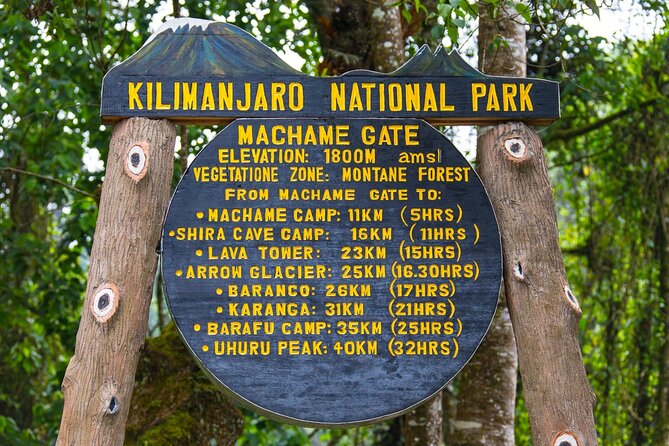
Day 1 begins with a drive from Moshi to the Mount Kilimanjaro National Park gate, about 50 minutes. The drive passes through Machame village on the lower slopes. Then you leave the gate and start hiking through rain forest.
What makes Day 1 worth paying attention to is not the height. It is the ground. The itinerary notes that the lower trail can be muddy and slippery. That is where gear helps immediately. Gaiters and trekking poles are a smart call here, because you are likely to be dealing with slick sections soon after you begin.
Elevation climbs from roughly 5,400 ft to 9,400 ft. You cover about 11 km with 5 to 7 hours of hiking time. You end at Machame Camp in the rain forest zone.
Practical takeaway: start calm. Day 1 sets your pace for the week. If you sprint uphill to prove a point, your summit-night body will remember.
More Machame departures, compared
Days 2: Shira moorland, steeper rhythm, and a key overnight
After breakfast, you leave the forest glades and continue ascending. The day includes crossing a valley and walking along a steep rocky ridge with heather. Then the route turns toward a river gorge.
Day 2 is the move from lush lower slopes to open higher country. Expect less “green” footing and more exposure to wind and changing conditions as you gain altitude. You hike about 5 km in 4 to 6 hours.
Elevation goes from about 9,400 ft to 12,500 ft. You sleep at Shira campsite in the moorland habitat.
Why this overnight matters: it is your first big step toward the high plateau style walking that comes next. You are building breathing rhythm and learning how your body handles effort as the air thins.
Day 3: Lava Tower and Arrow Glacier to Barranco Hut (acclimatization you should respect)
Day 3 is a highlight because it mixes iconic features with a purpose. From Shira Plateau, you continue east up a ridge. You pass a junction toward the peak of Kibo, then head south east toward the Lava Tower, called the Shark’s Tooth.
Shortly after the tower, you reach the second junction to the Arrow Glacier at about 16,000 ft. Then the itinerary has you continue down to Barranco Hut at around 13,000 ft.
So yes, at the end you are roughly back near where you started the day. That is the point. The plan specifically notes Day 3 is very important for acclimatization because you are preparing your body for summit day.
Elevation shifts from around 12,500 ft to 13,000 ft, while the route passes higher points. You cover about 10 km in 6 to 8 hours. Habitat is listed as semi desert.
Practical takeaway: treat Day 3 like training, not sightseeing. Enjoy the views, but keep your effort controlled. You are not trying to “win” the altitude.
Day 4: a shorter acclimatization day through the Barranco area to Karanga Valley
Day 4 is described as a short day, and that is a good thing. You leave Barranco and continue on a steep ridge, passing the Barranco Wall, to Karanga Valley campsite.
Elevation is very tight for this day, about 13,000 ft to 13,100 ft. You hike about 3 miles for 4 to 5 hours in alpine desert.
This is classic Kilimanjaro planning: a relatively shorter push so you can absorb altitude and feel fresher for the next big camp shift. If you are prone to overdoing it, Day 4 is where you learn to coast a little.
Day 5: Barafu Hut and the South Circuit, with Mawenzi and Kibo in view

After breakfast, you head toward a junction connecting with the Mweka Trail, then continue up to Barafu Hut.
The itinerary calls this the point where you have completed the South Circuit. It also notes that from here you get views of the summit from multiple angles. You are also able to see Mawenzi and Kibo from this position, which can help you mentally connect the map to the climb you are doing.
Elevation goes from about 13,000 ft to 15,300 ft. Hiking time is 4 to 5 hours, with the day’s distance listed as 2.5 miles. That short distance can feel misleading, because at altitude, “short” can still be hard.
You camp at Barafu Hut to rest, have dinner, and prepare for summit day. This is where you want your head in the right place. Not hype. Not doom. Just practical readiness.
Day 6: midnight to summit, Stella Point sunrise, Uhuru Peak, then straight down to Mweka Hut
This is the day people talk about because it is intense, but it is also structured. The plan has you heading from midnight to 2 am in very early hours toward the summit between the Rebmann and Ratzel glaciers.
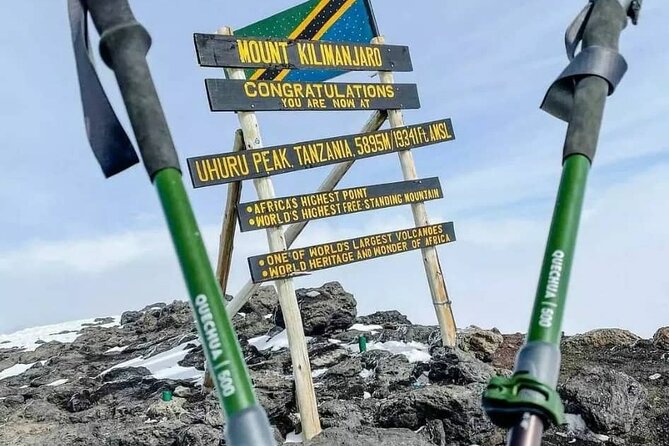
You ascend through heavy scree toward Stella Point on the crater rim. At Stella Point, you stop briefly. The itinerary notes you are rewarded with the most magnificent sunrise you are likely to see, weather permitting. Snow can also be possible all the way on the roughly 1-hour ascent to the summit.
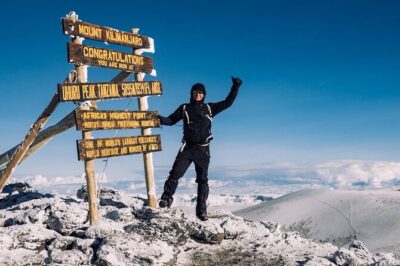
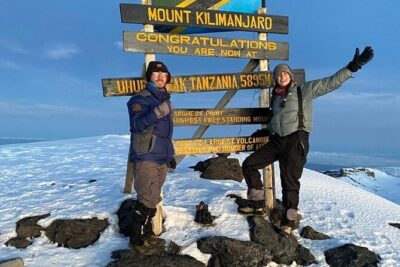
At Uhuru Peak, you reach the highest point on Mount Kilimanjaro and the continent of Africa. Then you descend, continuing down to Mweka Hut camp site.
What you should understand: this is not a gentle stroll. It is a hard climb at night followed by a long descent. Even if you feel strong at the top, your knees may feel like they are filing complaints on the way down.
Day 7: Mweka Park Gate certificates, muddy steps, and back to Moshi
After breakfast, you hike down to Mweka Park Gate to receive your summit certificates. The plan notes that at lower elevations it can be wet and muddy, so gaiters and trekking poles again help a lot.
At the gate, you continue about another hour to Mweka Village. A vehicle meets you at Mweka Village and drives you back to your hotel in Moshi.
Elevation drops from about 10,000 ft to 5,400 ft. You hike about 6 miles in 3 to 4 hours in rain forest habitat. The notes are also practical about clothing: shorts and t-shirts will probably be plenty at lower elevations, but you should keep rain gear and warmer clothing handy.
This is one of those days where success feels real because you can finally relax your body without worrying about another ascent.
How tough is Machame for first-timers, realistically?
The trip is clear that Machame is best suited for people with some hiking or trekking experience, especially if you like adventure. It is also honest that for first-time climbers, the route can be tiring.
I think the key is not whether you can walk. It is how you pace. Machame has ups and downs across ridges and valleys. Your best tool is restraint. Go slower than you think you need to. Let your guide set the tempo. And take the acclimatization days seriously, especially Day 3 and Day 4 when the itinerary is designed around preparing for summit day.
Also, keep in mind the summit push starts midnight to 2 am. Even strong hikers feel it. You are moving while tired, while it is cold, and while the air is thin. You will feel more human if you treat this as a process, not an event.
Meals, camps, and the week-long rhythm
The plan includes a full set of meals: breakfast 6 times, dinner 6 times, and lunch 7 times. You will also have on-the-ground support from professional guides, cooks, and porters, and the climb uses camping fees that are included.
Even without getting too detailed about menu specifics, you should expect the typical Kilimanjaro rhythm: eat before you hike, arrive, settle, and recover before the next altitude step. Summit day adds a major twist, because you are starting in the dark.
Practical takeaway: eat what is offered, even if appetite is low. Keep drinking water. Sleep as much as you can on the nights you can.
Guides, porters, and the service factor that makes or breaks Kilimanjaro
Kilimanjaro is a group effort. You cannot carry everything. You do not want to. That is why this trip includes guides, cooks, and porters, and it also includes fees for the operation plus rescue fees. It is not just comfort. It is safety structure.
What I like about the way this operator gets described is the service tone. People highlight an experience that runs from the first day through the end, with proactive support when questions come up. Names like Stephen and guides like Michael, Francis, Louis, David, Ezekiel, and Lusekelo show up in feedback, which suggests consistency in the human side of the trip, not just logistics.
One note for your budget: the trip explicitly says tips to the driver guide and hoteliers are not included. So plan for that reality rather than treating it as an afterthought.
Price of $2,180: what you are really buying and who it makes sense for
At $2,180 per person, this is not a budget gamble. The upside is that the price includes many of the “big-ticket” costs people often forget: park fees, camping fees, rescue fees, VAT charges, plus 2 nights accommodation in Moshi or Arusha before and after, and airport pickup and drop off.
So you are paying for the mountain staff support, the permits, the camp system, and most of the on-the-ground essentials. You are not paying separate line items for every piece of entry and logistics.
What is not included matters too: international flights, insurance fees, and the cost of Tanzania as listed, plus tips to the driver guide and hoteliers. In other words, your number may move depending on how you handle insurance and airfare.
Who gets the best value? People who want an organized, supported climb and who will actually use the built-in acclimatization schedule. If you are trying to do it as cheaply as possible by cutting corners, this setup is probably not your match. If you want a smoother, safer-feeling experience with the core costs covered, it is a strong value.
Packing and trail gear: what the plan tells you to plan for
The itinerary directly points out a few gear needs:
- Gaiters and trekking poles are recommended for slippery, muddy sections on Day 1 and again for a wet, muddy Day 7 descent.
- At lower elevations near the end, shorts and t-shirts will probably be plenty, but you should keep rain gear and warmer clothing handy.
Because summit starts midnight to 2 am, you should also assume the conditions can be cold and dark, so come prepared with reliable nighttime walking essentials. Your operator can advise you on what they expect you to carry, but the timing in the plan is your clue that you need to be ready for that early start.
Should you book this 7-day Machame climb?
Book it if you want Machame’s mix of variety plus a plan built around acclimatization. This is a good match if you have some trekking experience, you are comfortable with long days, and you do not mind that the trail is steeper and more exhausting.
Consider something else if you want the most relaxed Kilimanjaro experience. Machame can be tiring for first-timers, and the week includes a very early summit push that tests endurance.
If you do book, I would go in with one mindset: follow the pace, respect the acclimatization days, and treat summit night like a job you can do well, step by step.
FAQ
How long is the Kilimanjaro climb on the Machame route?
The trek runs for about 7 days.
Where is the meeting point, and when does it start?
The meeting point is Kilimanjaro International Airport (Kilimanjaro Airport Rd, Tanzania), and the listed start time is 9:00 am. The activity ends back at the meeting point.
What is the Machame route like, and is it technically difficult?
Machame is not technically difficult, but it is steeper and longer than some other routes. It is also described as more exhausting due to frequent ups and downs across valleys and ridges.
What fitness level should I have?
The tour notes that travelers should have a moderate physical fitness level.
When do you start the summit push?
You start very early, between midnight and 2 am, for the summit attempt. You reach Stella Point on the crater rim and then continue to Uhuru Peak.
What is included in the tour price?
Included are professional guides, cooks and porters; park fees, camping fees, and rescue fees; VAT fees and charges; airport pickup and drop-off; 2 nights of accommodation in Moshi or Arusha before and after; and meals (lunch 7 times, breakfast 6 times, dinner 6 times).
What is not included?
Not included are international flights, tips to the driver guide and hoteliers, insurance fees, and the cost of Tanzania (as listed).
Is accommodation and airport transfer included before and after the trek?
Yes. The tour includes pick up and drop off at the airport and 2 nights’ accommodation in Moshi or Arusha before and after the climb.
What is the cancellation policy?
Free cancellation is available up to 24 hours in advance of the experience start time for a full refund. If you cancel less than 24 hours before, the amount paid is not refunded. Cut-off times are based on local time.
More Machame Departures
- Kilimanjaro climb, Machame Route (7-day)
★ 5.0 · 262 reviews - Climbing Kilimanjaro – Machame Route
★ 5.0 · 170 reviews - Climbing Kilimanjaro through 7 days Machame Route
★ 5.0 · 151 reviews - #1. Best Kilimanjaro Day hike Tour-Machame Route-ISMANI
★ 4.2 · 47 reviews - 7 Days Machame route – Kilimanjaro
★ 5.0 · 45 reviews
Kilimanjaro, Route by Route
- Kilimanjaro climb by Lemosho Route (7-day)
★ 5.0 · 651 reviews - Kilimanjaro climb, Machame Route (7-day)
★ 5.0 · 262 reviews - Kilimanjaro Climbing Lemosho Route 8 Days.
★ 5.0 · 186 reviews - Climbing Kilimanjaro – Machame Route
★ 5.0 · 170 reviews - Climbing Kilimanjaro through 7 days Machame Route
★ 5.0 · 151 reviews
Just added from around Moshi
Kilimanjaro Machame Route, compared.
 ★ 5.0Kilimanjaro climb, Machame Route (7-day)From $3,377262 reviews
 ★ 5.0Climbing Kilimanjaro – Machame RouteFrom $2,322170 reviews
 ★ 5.0Climbing Kilimanjaro through 7 days Machame RouteFrom $2,425151 reviews
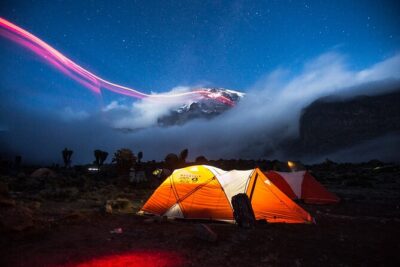 ★ 5.07-Day Machame Kilimanjaro Summit Tour from ArushaFrom $2,695125 reviews
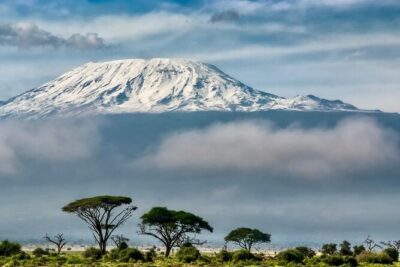 ★ 5.07 Days Kilimanjaro via Machame route affordable priceFrom $2,400110 reviews
 ★ 4.2#1. Best Kilimanjaro Day hike Tour-Machame Route-ISMANIFrom $11547 reviews
 ★ 5.07 Days Machame route – KilimanjaroFrom $2,85045 reviews
 ★ 5.0The Best of Machame Route in 6 Days: Your World’s Summit GuideFrom $1,15044 reviews
Browse the lists this tour appears in