
REVIEW · KILIMANJARO MACHAME ROUTE
6 days Kilimanjaro Climbing Machame Route in Tanzania
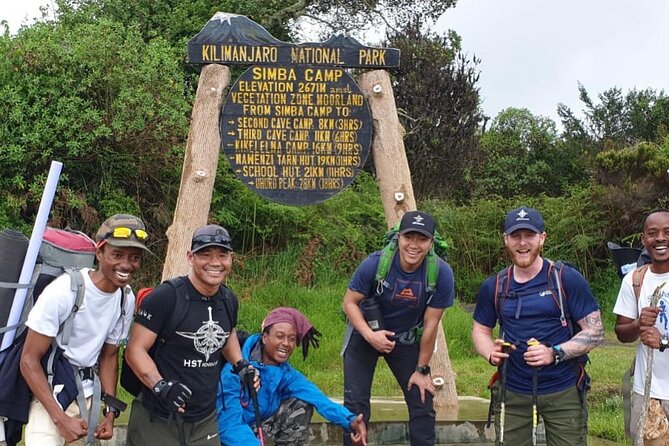
This trek earns its legend, with the Machame (Whisky Route) feel and tents only nights. I like that it is longer and a bit tougher than the more common Marangu approach, which means you earn the views instead of just collecting them. I also like the human side, Twende Africa Tours is run locally by Peter, and guides like Eli are the kind of people who keep the climb running smoothly. One drawback to flag, it asks for more grit than the easier routes, so if you want a low-stress hike, this may not be your match.
The route is built for acclimatization, not just momentum. You get an intentional rhythm of camping and altitude work, and that is a big reason Machame is often associated with strong summit success rates (around 85%). Just be ready for cold, wind, and long hiking blocks on summit night and the day leading into it.
In This Review
- Guides and porters make the difference
- Key points to know before you go
- Machame Route on Kilimanjaro: why this one feels different
- The 6-day plan, day by day, in plain language
- Day 1: Machame Forest to Machame Camp (1830m to 3000m)
- Day 2: Shira Campsite and moorland altitude (3000m to 3840m)
- Day 3: Lava Tower area, Arrow Glacier, and Barranco zone (up and down for acclimatization)
- Day 4: Barranco Wall and Barafu Hut, finishing the south circuit feel (3900m to 4600m)
- Day 5: Midnight summit attempt, Stella Point sunrise, then a fast drop (4600m to 5895m, back down)
- Day 6: Mweka Park Gate descent and certificates (3100m to 1830m)
- What the tent-based Machame experience means for your packing
- Gear and walking tips that match the actual trail conditions
- Acclimatization logic: why these altitude shifts are planned
- Guides, porters, and the local operator value you can feel
- Price and value: what $2,800 per person buys you
- Who should choose this Machame 6-day climb
- Should you book this Machame route with Twende Africa Tours?
- FAQ
- What route is this, and what is it like compared with other options?
- How long is the trek, and what time does it start?
- Is pickup included?
- What is included in the price?
- What are not included costs?
- What fitness level do I need?
- Do I need to provide passport details?
Guides and porters make the difference
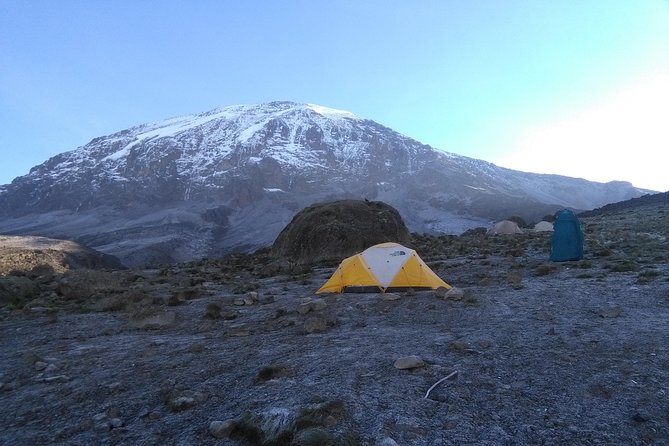
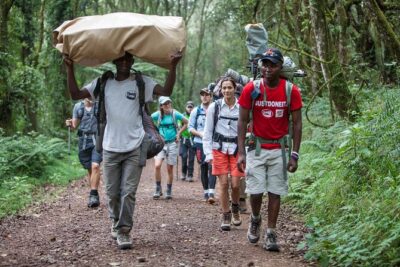
I’m especially impressed by how much care people describe around the booking and on-the-ground support. From the guidance during pickup and briefings to the teamwork on the mountain, the operation seems set up for calm, clear decision-making, even when your body is tired. You’ll also want to respect the porters, because they do much of the heavy lifting that keeps your plan on track.
Other ways up Kilimanjaro we reviewed
- 8-Day Small-group Lemosho Kilimanjaro Summit Trekking★ 5.0 · 186 reviews
- 7-Day Machame Kilimanjaro Summit Tour from Arusha★ 5.0 · 125 reviews
- Mountain Kilimanjaro Day Hike★ 5.0 · 102 reviews
- 4 days Best experience Kilimanjaro Hike, Serengeti &Ngorongoro★ 5.0 · 54 reviews
Key points to know before you go
- Machame is the Whisky Route, longer and tougher than Marangu, with big scenery payoffs
- Strictly tent-based camping on Machame, so you pack like a camping trip, not a hut stay
- Acclimatization rhythm includes Shira and the Arrow Glacier area to set up summit day
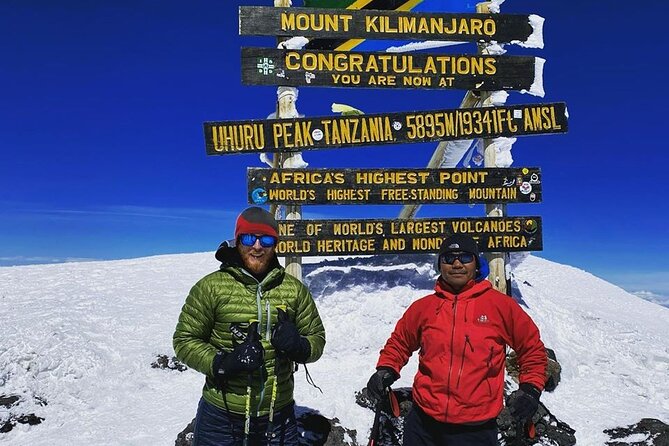
- Summit night starts near midnight, with scree slogging to Stella Point for sunrise
- Local operator feel from Peter and a guide team that gets praised for support and reliability
- Practical gear advice like gaiters and trekking poles is directly built into the plan
Machame Route on Kilimanjaro: why this one feels different
Kilimanjaro is often sold like a checkbox. Machame is something else. It is commonly called the Whisky Route, and the nickname fits the experience: it is straightforward enough to follow, but it has real bite. Compared with Marangu, Machame is slightly longer and more challenging, which changes the whole vibe. You do more uphill time, you spend more hours moving, and you sleep under canvas rather than in huts.
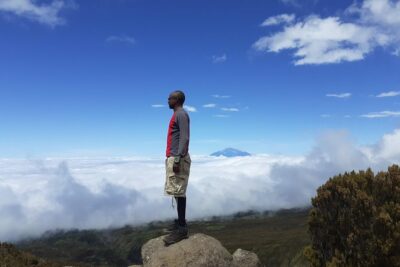
If you like your travel with a strong sense of effort, Machame is a good match. You are not just walking from one named stop to another. You are building altitude tolerance day by day, and you can feel your body adjust as the trek climbs into moorland, then semi-desert, then alpine desert. That progression matters because the mountain does not care about your Instagram drafts.
The 6-day plan, day by day, in plain language
This is set up for a full Machame experience, from the forest edge right up to the crater rim and back down for certificates. Start time is 9:00 am with the trip ending back where you started.
More Machame departures, compared
Day 1: Machame Forest to Machame Camp (1830m to 3000m)
You’ll start with the transfer into Kilimanjaro National Park, and the drive from Moshi to the gate is about 45 minutes. Along the way you pass through the village of Machame, a sign you are climbing out of everyday life and into the mountain’s rhythm.
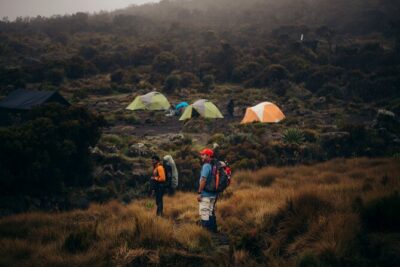
Then it is on foot. Day 1 follows a winding ridge trail through montane forest, with slippery spots possible lower down. This is a good warm-up day, but not a stroll. The plan lists 11 km and about 5 to 7 hours, climbing from roughly 1830m to 3000m.
What I like here is the early texture: muddy trail sections mean you learn quickly whether your footwear and gaiters are up to the task. If you arrive with the right socks and poles, Day 1 makes you feel competent.
Day 2: Shira Campsite and moorland altitude (3000m to 3840m)
After breakfast, the route pushes you out of the rain-forest feel and into higher terrain. Expect rocky walking, a steeper ridge with heather, then a turn toward a river gorge. The change in plants is your cue that you are leaving the forest world behind.
The distance is shorter than Day 1 at 5 km, but altitude makes it harder. The schedule calls for about 4 to 5 hours, climbing to roughly 3840m and ending at Shira campsite. Vegetation shifts to moorland.
This day matters because it sets your breathing pattern. You will feel the air thin out. Go slow and consistent. Save your muscles for the nights ahead.
Day 3: Lava Tower area, Arrow Glacier, and Barranco zone (up and down for acclimatization)
Today is one of those classic Kilimanjaro half victories. You start at the Shira Plateau area and head east up a ridge, with a junction near the Kibo peak direction. The route then swings toward the Lava Tower, often nicknamed the Shark’s Tooth. Soon after, you reach the Arrow Glacier area at about 4876m.
From there, the plan turns into a strategic descent to Barranco (listed around 3860m), where you rest, eat, and sleep. The total listed hiking is 11 km in about 5 to 7 hours, and the elevation line covers around 3800m to 4630m, then down to about 3986m by the end.
Why this day earns its keep: you end the day at about the same altitude range you started, which helps acclimatization. Even though you gain and lose height, your body gets a chance to adapt without wrecking itself. This is one of those days where good pacing beats fitness bragging.
Day 4: Barranco Wall and Barafu Hut, finishing the south circuit feel (3900m to 4600m)
Day 4 is where Machame turns into real mountain work. You leave Barranco and tackle a steep ridge up the Barranco Wall. Then you move through the Karanga Valley, with lunch listed at about 4200m. After that, you link into the route network that connects with the Mweka Trail.
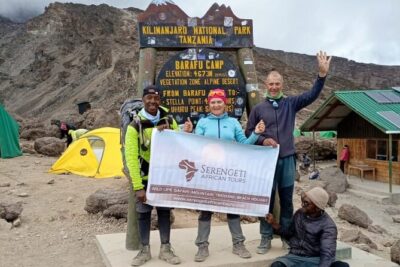
From there you continue up to Barafu Hut, around 4600m. The plan lists 9 km and about 8 hours, with alpine desert vegetation.
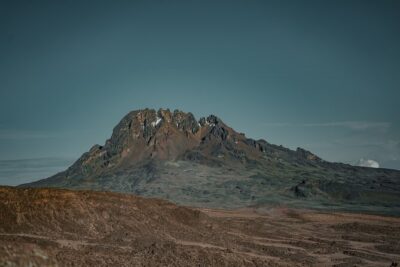
The highlight here is not just height, it is the views. You are positioned for the south circuit feeling, and the schedule notes you can see Mawenzi and Kibo from here. This is the last “big day” before summit preparations. You want your legs to feel steady, not fried.
Day 5: Midnight summit attempt, Stella Point sunrise, then a fast drop (4600m to 5895m, back down)
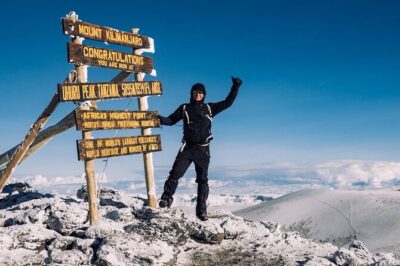
Summit day is the one everyone remembers, and it also scares people for a reason. You start very early, around midnight (12:00 am), climbing a northwesterly path through heavy scree toward Stella Point on the crater rim.
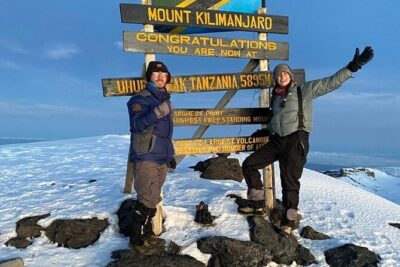
The schedule lists Stella Point at about 5685m, and this is where you stop briefly. The goal is sunrise, weather permitting. After that, you continue through snow toward the summit area, and the plan describes snow continuing all the way on the ascent. It lists roughly 2 hours after Stella Point for the main push.
In distance terms, it is listed as about 5 km ascent and 12 km descent, with total hiking time around 6 to 8 hours for ascent and about 3 hours for descent. Vegetation is listed as stone scree and ice-capped summit.
If you want the practical truth: this day is mentally demanding. The terrain is tiring underfoot, and the air makes every step feel heavy. Pack your headlamp, hydrate carefully, and do not rush just because the group moves. Your job is to keep breathing calm.
Day 6: Mweka Park Gate descent and certificates (3100m to 1830m)
You get a slower start after breakfast, but the hike is still steady. You descend down to the Mweka Park Gate for summit certificates. The plan notes that lower down it can be wet and muddy, so gaiters and trekking poles again matter here.
The distance is about 10 km with 3 to 4 hours hiking time. Vegetation transitions back to forest as you lose altitude.
Dress like a practical climber, not a fashion traveler. The plan suggests shorts and t-shirts will likely be fine at lower elevation, but keep rain gear and warmer clothing ready for the change in conditions. Once you reach the gate, Twende Africa Tours meets you to drive you back toward your hotel in Moshi, around 30 minutes.
What the tent-based Machame experience means for your packing
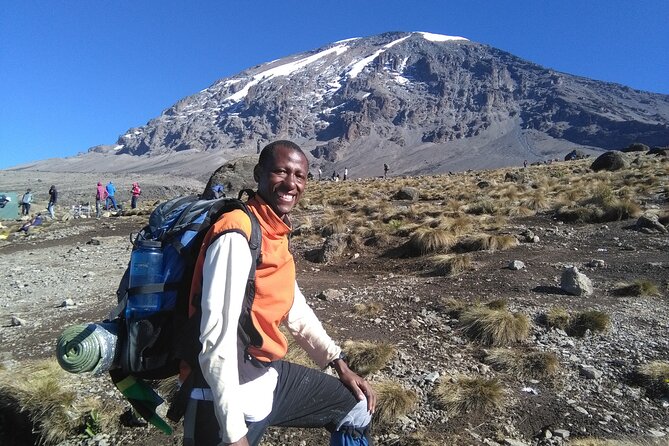
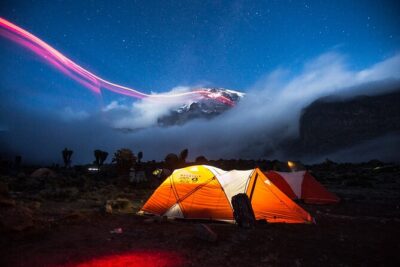
Machame’s most obvious difference from hut routes is the camping style. The overview is clear: strictly tents only on Machame. That means your comfort comes from layers, sleep setup, and cold-weather preparation, not from a wall that blocks the wind.
Practically, think in terms of weather swings. You will start in forest warmth-ish, then climb into moorland and semi-desert, and summit is an entirely different world with ice-capped sections and snow described on summit night. Even if you run hot, the mountain has a way of cooling you down when you stop moving.
If you want a simple checklist approach, treat it like backpacking in altitude: layers for wind, rain protection that actually works in a downpour, and gear that prevents trail grime from chewing up your day.
Gear and walking tips that match the actual trail conditions
This plan repeatedly flags real trail problems, especially early on and during the final descent. Here’s what I’d prioritize because the itinerary itself points to it:
- Gaiters and trekking poles: recommended for muddy and slippery sections lower down and again during descent
- Footing control: Day 1 can be muddy, Day 5 is heavy scree, and both punish bad balance
- Weather layering: you’ll likely be fine in shorts and t-shirts lower down, but keep rain gear plus warm clothing nearby
- Headlamp readiness: summit night starts at midnight, so you want reliable light before you step out
The best part of following these tips is that you spend less energy fighting small problems. On Kilimanjaro, conserving energy is not a slogan. It is the difference between feeling okay and feeling wrecked.
Acclimatization logic: why these altitude shifts are planned
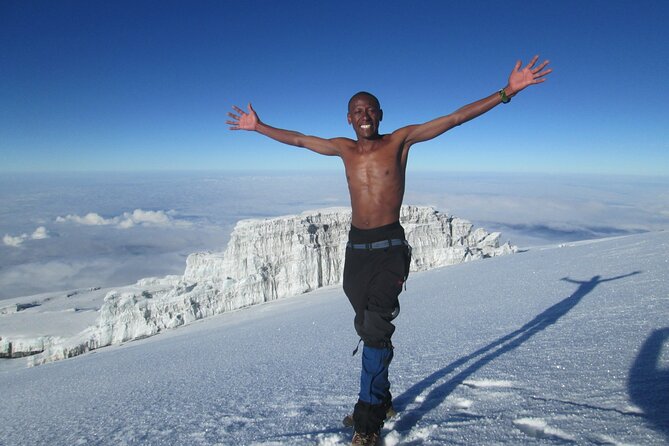
Acclimatization is often described like a ritual. On this trek it is more like a system.
You gain steadily from Day 1 into Day 2 at Shira. Then Day 3 gives you the classic pattern, climb toward high points like the Arrow Glacier, then descend to a lower camp zone. That means your body gets the stimulus without living at the highest elevations overnight every day.
Day 4 then takes you up into the Barafu area where the summit push is next. Finally, Day 5 is a long climb up and a longer day in terms of effort, then you drop quickly. That drop matters because it helps you recover enough to handle the final descent to the gate.
This is one reason Machame has a strong summit track record. It is not magic. It is pacing plus altitude planning.
Guides, porters, and the local operator value you can feel
Twende Africa Tours is a locally run company, and in the feedback you’ll see names that show up again and again: Peter as the main figure, and guides like Eli from Moshi. The praise is not just for friendliness. People highlight support, careful organization, and responsiveness to needs during the climb.
Two details I find especially useful for your decision-making:
- Booking and pre-climb help: you can arrange this from abroad, and the operator describes airport pickup and briefings before starting the climb. That reduces the stress of arriving in a new country and trying to figure things out on your own.
- Cooking and porter teamwork: good food matters when you are burning calories at altitude. Porters do much of the carrying workload, which is a huge part of what makes the trek safe and possible for trekkers.
If you want a summit experience where you feel looked after, this is the kind of operation you should look for. You still need fitness and discipline, but the team structure makes a real difference.
Price and value: what $2,800 per person buys you
At $2,800 per person for a roughly 6-day climb, you are paying for more than beds. You are paying for logistics in a remote environment and for the support crew that keeps you moving safely.
Here’s what is explicitly included:
- Dinner
- National park fees
- Private transportation
- 2 nights accommodation
- Round-trip shared transfer
You also have additional items that appear in the itinerary like admission ticket inclusion for key trekking days, and the final gate day is listed as free for admission.
Not included:
- Souvenir photos
- Landing and facility fees
So is it good value? In my view, the best sign is that the package includes core mountain essentials and park costs. For a trek of this length and complexity, you do not want to piece together park fees, transport, and guide support separately. You also want an operator who can handle the “messy middle” on summit night when plans depend on weather, pace, and team communication.
If you compare against cheaper offers that cut corners on guide staffing or park access, costs can look lower upfront and more expensive later. This price feels positioned for a serious climb with support.
Who should choose this Machame 6-day climb
This is for you if:
- You want a route that is longer and more challenging than Marangu
- You are comfortable camping in tents at altitude and you have patience for long hiking days
- You have moderate physical fitness and you can handle a midnight summit start
It might not be for you if:
- You want an easier climb with less time hiking
- You are not willing to manage the mental and physical stress of summit night
Should you book this Machame route with Twende Africa Tours?
I’d book this itinerary if you want the real Machame experience: tents only, proper acclimatization pacing, and a summit plan built around Stella Point sunrise. The extra cost makes more sense when you factor in park fees, transport, and a team approach that earns praise for support and reliability, including guide names like Eli and local leadership like Peter.
I would hesitate only if you are hoping for a relaxed, low-effort hike. Machame is the tougher path, and the schedule includes demanding days, including the midnight summit push. If that sounds like your style, this looks like a strong, well-structured way to climb Kilimanjaro.
FAQ
What route is this, and what is it like compared with other options?
This is the Machame Route, also known as the Whisky Route. It is longer and slightly more challenging than the Marangu Route, and it uses tents only instead of hut sleeping.
How long is the trek, and what time does it start?
The duration is about 6 days. The start time is 9:00 am in Arusha, and the trip ends back at the meeting point.
Is pickup included?
Yes. The experience includes pickup offered, plus private transportation and round-trip shared transfer.
What is included in the price?
Included items are dinner, national park fees, private transportation, 2 nights accommodation, and round-trip shared transfer. Admission ticket details are also noted as included for multiple trekking days.
What are not included costs?
Not included are souvenir photos (available to purchase) and landing and facility fees.
What fitness level do I need?
The guidance is moderate physical fitness. This trek is described as requiring a slightly more adventurous hiker than easier routes.
Do I need to provide passport details?
Yes. You must provide the passport name, number, expiry, and country at the time of booking for all participants.
More Machame Departures
- 7-Day Machame Kilimanjaro Summit Tour from Arusha
★ 5.0 · 125 reviews - 6 Days: Hiking Kilimanjaro via Machame Route
★ 5.0 · 24 reviews - 6-Day Guided Tour in Machame Route Mt Kilimanjaro
★ 5.0 · 17 reviews - KILIMANJARO MACHAME ROUTE, (Climb 7days)
★ 5.0 · 16 reviews - 7 days Kilimanjaro climb via Machame route (Whiskey route)
★ 5.0 · 16 reviews
Kilimanjaro, Route by Route
- 8-Day Small-group Lemosho Kilimanjaro Summit Trekking
★ 5.0 · 186 reviews - 7-Day Machame Kilimanjaro Summit Tour from Arusha
★ 5.0 · 125 reviews - Mountain Kilimanjaro Day Hike
★ 5.0 · 102 reviews - 4 days Best experience Kilimanjaro Hike, Serengeti &Ngorongoro
★ 5.0 · 54 reviews - From Arusha/Moshi: Kilimanjaro Hike Marangu Route Day Trip
★ 4.5 · 54 reviews
Just added from around Arusha
Kilimanjaro Machame Route, compared.
 ★ 5.0Kilimanjaro climb, Machame Route (7-day)From $3,377262 reviews
 ★ 5.0Climbing Kilimanjaro – Machame RouteFrom $2,322170 reviews
 ★ 5.0Climbing Kilimanjaro through 7 days Machame RouteFrom $2,425151 reviews
 ★ 5.07-Day Machame Kilimanjaro Summit Tour from ArushaFrom $2,695125 reviews
 ★ 5.07 Days Kilimanjaro via Machame route affordable priceFrom $2,400110 reviews
 ★ 4.2#1. Best Kilimanjaro Day hike Tour-Machame Route-ISMANIFrom $11547 reviews
 ★ 5.07 Days Machame route – KilimanjaroFrom $2,85045 reviews
 ★ 5.0The Best of Machame Route in 6 Days: Your World’s Summit GuideFrom $1,15044 reviews
Browse the lists this tour appears in