
REVIEW · KILIMANJARO MARANGU ROUTE
5 Days Marangu Route – Mount Kilimanjaro Trek
Midnight starts a climb you will remember, and the Marangu route gives it structure from the first gate paperwork to the final push to Uhuru Peak. I like the pickup and equipment check that happen before you ever step onto the trail, and I like the clear hut-based pacing through Mandara, Horombo, and Kibo. One possible drawback is that the plan is demanding, especially the long summit stage that begins around midnight.
This is also the kind of trip that feels well managed. You hike in a small group, up to 15 people, and you get a team approach on the mountain, with guides such as Meshack and Maziku highlighted for being fun and steady, and other guides like Franky, John, and Julius praised for knowing the mountain and keeping things professional. The tradeoff? You need to be ready for cold, short nights, and a very early start rhythm.
In This Review
- Key Things You’ll Notice on This Kilimanjaro Marangu Trek
- Moshi, Airport Pickup, and Gear Check: Getting Ready the Right Way
- Day 2 to Mandara Hut: Marangu Gate, Rainforest Hiking, and Maundi Crater Views
- Day 3 from Mandara to Horombo Hut: Timberline to Heath and Moor Zone
- Day 4 to Kibo Hut: Last Water Point, the Saddle, and the Long Tough Stage
- Summit Night to Uhuru Peak: Midnight Ascent, Gillman’s Point, and the Sunrise Moment
- Day 6 Descent to Mandara and Back to the Gate: Last Lookouts, Warm Lunch, and Moshi Recovery
- Day 7 in Moshi: Wind Down, Fly Home, or Add Zanzibar Safari Time
- Guides, Group Size, and the Small-Group Feel (Up to 15 People)
- Price and Value: Is $1,500 a Fair Deal for a Marangu 5-Day Climb?
- Who Should Book This Marangu Route, and Who Should Reconsider
- Should You Book Rupia Adventure for the 5 Days Marangu Trek?
- FAQ
- Where are you picked up, and how do transfers work?
- Is this a 5-day trek or a 7-day trip?
- What route is used to reach the summit?
- When do you start the summit climb?
- What altitude points does the itinerary mention?
- Do you check equipment before the trek starts?
- How long are the hike stages between huts?
- How many people are in the group?
- What happens if the weather is poor?
- Can I cancel and get my money back?
Key Things You’ll Notice on This Kilimanjaro Marangu Trek
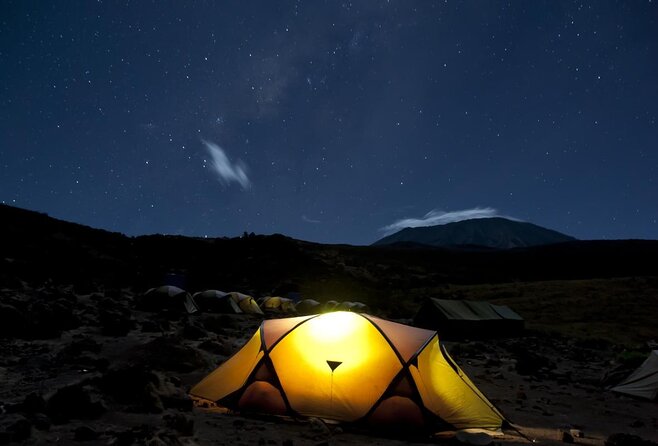
- Airport pickup and hotel transfer that set you up in Moshi (with an early start focus on trekking day)
- Equipment check and gear rental on day 1 so you can fix missing items before the climb gets serious
- Rainforest to moorland changes that make days 2 and 3 feel like different worlds instead of one long grind
- Hut stops with timed meals at Mandara Hut, Horombo Hut, and Kibo Hut, which helps you keep moving on schedule
- A big summit night plan that starts around midnight, aims for Gillman’s Point at sunrise, then continues to Uhuru Peak
Other ways up Kilimanjaro we reviewed
- 8-Day Small-group Lemosho Kilimanjaro Summit Trekking★ 5.0 · 186 reviews
- 7-Day Machame Kilimanjaro Summit Tour from Arusha★ 5.0 · 125 reviews
- Mountain Kilimanjaro Day Hike★ 5.0 · 102 reviews
- 4 days Best experience Kilimanjaro Hike, Serengeti &Ngorongoro★ 5.0 · 54 reviews
Moshi, Airport Pickup, and Gear Check: Getting Ready the Right Way
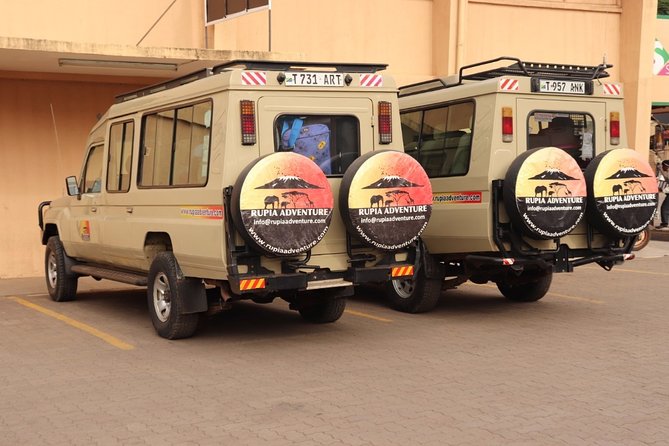
Your trip is built around the idea that you should not scramble once you are already on the mountain. The first step is a pickup at Kilimanjaro International Airport and a transfer to your hotel in Moshi town, then meeting your guide for a trek briefing and an equipment check.
That gear check matters more than it sounds. If something is missing, the plan includes renting the missing mountain gear on this day, which reduces the chance you lose time later while sorting out essentials. It also means your team can confirm you are set for the cold you will face on summit night, since the itinerary openly calls out the cold during the midnight climb and sunrise timing.
You also get an overnight at a hotel like Panama Hotel or Mvuli hotel in Arusha, or an alternative, depending on your schedule. The practical takeaway: don’t assume everything is identical from booking to booking. Your key point is to arrive early enough that you can meet your guide, complete the equipment check, and get a calm night before the hike begins.
Day 2 to Mandara Hut: Marangu Gate, Rainforest Hiking, and Maundi Crater Views
Day 2 is your launch into Kilimanjaro proper. After an early setup from your lodge in Moshi, you head to the Marangu gate, complete the necessary paper work, and begin hiking through dense rainforest.
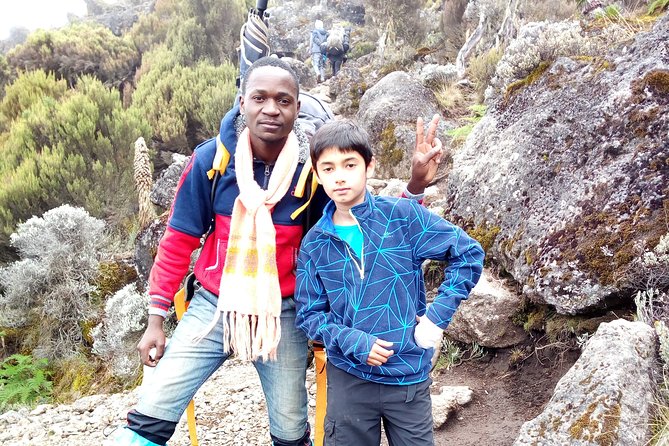
This rainforest segment is where the trek feels grounded and alive. The trail passes impressive vegetation and gives you a chance to spot primates along the way. For me, that kind of wildlife moment is a reminder that Kilimanjaro is not only about altitude. It is also about the journey through different ecosystems, and the rainforest is your first big taste of that.
Your first major stop is Mandara Hut, where you get a rest after the rainforest climb. Then you add another highlight later in the day: a visit to Maundi Crater for views of the Kenyan interior. That is a meaningful contrast. One minute you are moving through thick forest, the next you are looking outward into a wider world.
A small consideration for this stage: rainforest travel can be slower than you expect. The itinerary starts you into a dense environment, so pacing is likely to feel more natural than fast. Plan to go with the flow on day 2 rather than expecting a smooth, high-speed hike.
Day 3 from Mandara to Horombo Hut: Timberline to Heath and Moor Zone
Day 3 starts early with breakfast, then the trek shifts away from rainforest as you move toward the timberline. Once you pass into the heath and moor zone, the scenery changes in a way you can feel.
The itinerary gives you a timeframe here, roughly 4 to 6 hours before Horombo Hut appears at 3,700 meters. That timing is useful because it tells you the day has a real climb component, not just a short connector stage. You are gaining altitude while moving into a different climate zone, so you should expect the air to feel different as you go.
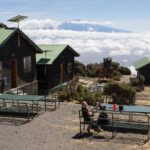
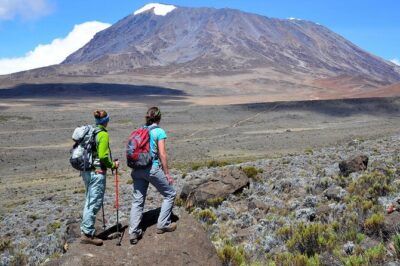
Horombo Hut is also about views. From the hut, you get fantastic perspectives over Mawenzi, Kibo, and the wide plain of the Masai steppe. That is the moment where the trek starts to look like a big mountain journey rather than a sequence of huts.
The practical value of Horombo’s views is motivation. On a day like this, you are working your way up toward the summit push, and seeing those peaks in the distance helps you understand what you are training for.
Marangu, other operators and other lengths
Day 4 to Kibo Hut: Last Water Point, the Saddle, and the Long Tough Stage
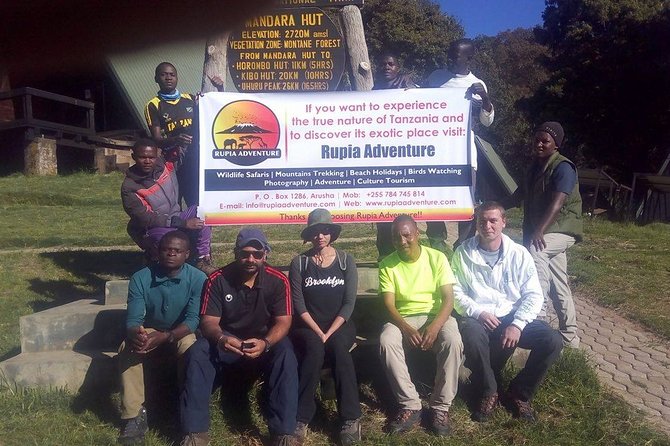
Day 4 is described as a long and tough stage, and the itinerary supports that with the trail details. The route follows a well-built path that passes the Last Water point, then heads to what is called the saddle.
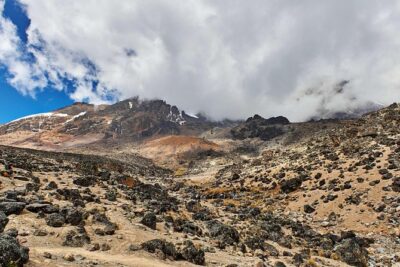
The saddle area leads you onto a nearly vegetation-less plateau that connects the main summit Kibo with Mawenzi. That change matters. When vegetation thins out, the hiking can feel more exposed and the effort can feel more constant. There is less visual cover, and you are usually more aware of how fast you are moving and how your body is handling altitude.
Your destination is Kibo Hut, typically reached in about 5 to 6 hours. Once you arrive, you get an early evening meal and, importantly, an early night. The itinerary notes that the night will be short, which hints at what is coming next.
This day is where summit-night success starts on the ground. The schedule is basically telling you to protect sleep and keep energy for the midnight start. If you want the summit experience to feel manageable rather than chaotic, you should treat day 4 like the calm setup before the storm.
Summit Night to Uhuru Peak: Midnight Ascent, Gillman’s Point, and the Sunrise Moment
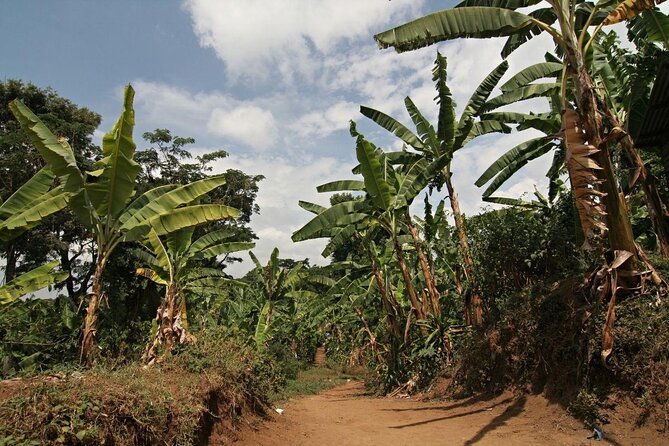
Day 5 is the Big Day, and the itinerary lays it out clearly. You begin your final ascent around midnight, and the climb is described as long and strenuous.
Along the way you pass Hans Meyer Cave at 5,220 meters. Then the climb continues upward gradually, which is important psychologically. You are not just leaping to the top. You are working your way step by step through the altitude gain until the sun begins to change the conditions.
The key timing moment is sunrise. At sunrise, you reach Gillman’s Point at 5,681 meters, the crater rim. The plan specifically says the sun starts to warm up the land after the cold of the night. That matters, because Kilimanjaro is not just a physical climb. It is a temperature and light experience too, and the itinerary is built around that transition.
After Gillman’s Point, you hike an additional 1 to 2 hours to reach Uhuru Peak at 5,895 meters. That is the highest point in the plan and the goal you came for.
After the summit, you head back to Kibo Hut for a warm meal, then you get a 1 to 2 hour break before continuing down to Horombo Hut. This return to Horombo is a smart choice in the schedule. It keeps you moving while you still have the momentum from the summit, instead of ending the day with only the descent.
A balanced note here: the itinerary is straightforward, but summit night is still summit night. Expect it to be demanding and cold, and be ready for the long, early rhythm that comes right after you hit your peak.
Day 6 Descent to Mandara and Back to the Gate: Last Lookouts, Warm Lunch, and Moshi Recovery
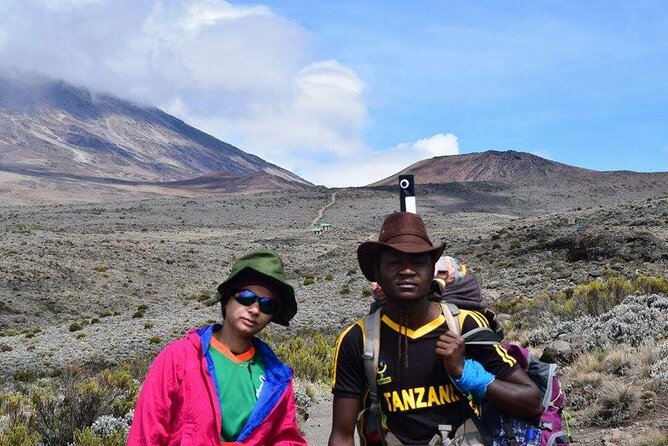
Day 6 is your last stage on the mountain. The trek passes through the heath and moor zone back toward Mandara Hut at 2,700 meters, where a warm lunch is waiting for you.
That warm lunch stop is not a small detail. After summit day and the descent to Horombo, food becomes a recovery tool. Warm meals help you reset both energy and morale before you continue back into lower altitude conditions.
From Mandara Hut, the plan says you soon pass through tropical rainforest again. After about 6 hours trekking in total, you return to the Kilimanjaro National Park Gate at 1,860 meters.
Once you say goodbye to your mountain guides, you get a short transfer back to your hotel in Moshi. And you get the well-earned reward that every mountain trek asks for but rarely includes in the excitement: you can take a warm and relaxing shower and celebrate your success in reaching the summit of Kilimanjaro.
The day-to-day structure here is what makes this route feel doable for many people. You are not left hanging with a long, unknown trek with no defined stopping point. The itinerary gives you return timing and a final finish point at the gate.
Day 7 in Moshi: Wind Down, Fly Home, or Add Zanzibar Safari Time
Day 7 is left free. That is a big quality-of-life feature. Your flight home controls most of the day, but if timing allows, you can explore Moshi town and grab souvenirs before heading to the airport.
It is also explicitly a launchpad for more Tanzania. Safari and Zanzibar add-ons are available if you want to keep traveling after Kilimanjaro. That matters because Kilimanjaro can be emotionally intense and physically exhausting. A buffer day helps you transition instead of rushing into the next adventure immediately.
If you have the energy, Moshi is a practical place to rest and reset. If you do not, that is also fine. The schedule is built so day 7 is not part of the altitude grind.
Guides, Group Size, and the Small-Group Feel (Up to 15 People)
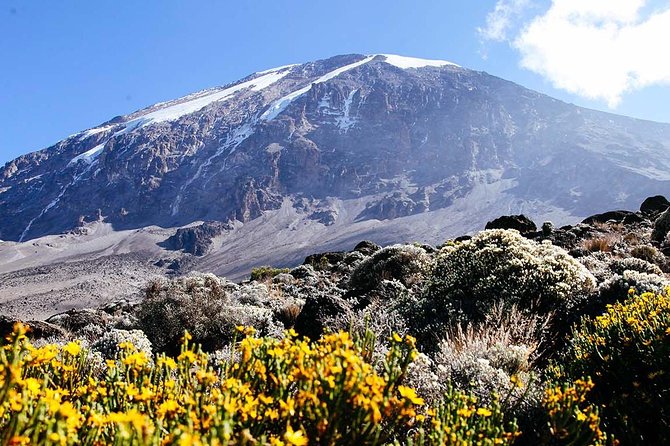
This trek runs with a maximum of 15 travelers. In practice, that means you should expect a small-group dynamic rather than a huge crowd. On popular routes, smaller groups can mean fewer bottlenecks and more room to move when the trail narrows or when you need to take breaks.
The other part that shapes the experience is the guide team. The names that show up in company feedback include Meshack and Maziku, Franky, John, and Julius. Across those accounts, the consistent themes are professional mountain knowledge and an upbeat tone, including guides described as fun, smiling, and ready with tips.
You can also see the company’s service focus in the way the itinerary is written. There is an intentional flow: pickup, guide briefing, gear check, paperwork at the gate, scheduled hut days, summit timing, and a final transfer back to Moshi. That is what good trip management looks like on paper, and it usually feels better in real life when you are tired.
Price and Value: Is $1,500 a Fair Deal for a Marangu 5-Day Climb?
At $1,500.00 per person, this is not a budget impulse buy. So you should look at what you get, not just the number.
First, you get multiple layers of support that reduce friction: pickup from the airport, transfers around your start and finish, a guide-led equipment check, and a capped group size of 15 travelers. Second, your days are built around clear hut stops and warm meals timed into the route. That structure matters for a high-altitude trek because it helps you manage energy and schedule.
Third, you get a concrete summit plan with specific waypoints and altitudes in the itinerary: Hans Meyer Cave, Gillman’s Point at sunrise, and Uhuru Peak at 5,895 meters. When a trek is specific about timing and milestones, it usually means the team has done it enough times to plan logistics, not just hope for the best.
Where value might feel weaker for some people is where you are paying for a set program. If you are the kind of traveler who wants total flexibility, fixed hut staging and a planned summit window might feel limiting. If you want a well-run program that handles the mountain rhythm for you, that fixed structure can be exactly what makes the price feel justified.
Who Should Book This Marangu Route, and Who Should Reconsider
This trek says that most travelers can participate. That is the right mindset if you are physically prepared to handle a multi-day hike with a summit night.
It is a good match if you want:
- a hut-based route with defined stops and warm meal moments
- a plan that includes early breakfasts, timed transitions, and an organized finish back in Moshi
- a summit day that targets a clear sunrise point at Gillman’s Point, then continues to Uhuru Peak
You might reconsider if:
- you are worried about a long and strenuous summit stage that starts around midnight and involves cold conditions
- you prefer a slower, more flexible itinerary than what a hut-based plan can provide
Should You Book Rupia Adventure for the 5 Days Marangu Trek?
If you want Kilimanjaro with a clear schedule, helpful logistics, and a team that has years of experience behind the scenes, this is a strong candidate. The Marangu route itself is built for structure with huts at Mandara, Horombo, and Kibo, and this program puts real attention on the setup, including the guide briefing and gear check on day 1.
My decision rule would be simple. Book it if you are ready to follow the plan on summit night and you want the mountain to be run like a well-managed journey. Pass or shop for a different option if you need extreme flexibility, because this trek is designed as a tight sequence of altitude stages and timed rest.
FAQ
Where are you picked up, and how do transfers work?
You are picked up at Kilimanjaro International Airport and transferred to your hotel in Moshi town. On the trek days, you are also collected from your lodge in Moshi for the drive to Marangu gate, and after the trek you take a short transfer back to your hotel in Moshi.
Is this a 5-day trek or a 7-day trip?
The experience is listed as 7 days approximately, and the hiking stages follow the Marangu route across the middle days. Day 1 handles arrival and preparation, and Day 7 is left free for winding down.
What route is used to reach the summit?
The itinerary follows the Marangu route with huts including Mandara Hut, Horombo Hut, and Kibo Hut, and the summit target is Uhuru Peak at 5,895 meters.
When do you start the summit climb?
You begin the final ascent around midnight on the summit stage day. You reach Gillman’s Point at sunrise and then continue onward to Uhuru Peak after an additional 1 to 2 hours.
What altitude points does the itinerary mention?
The plan mentions Horombo Hut at 3,700m, Hans Meyer Cave at 5,220m, Gillman’s Point at 5,681m, Uhuru Peak at 5,895m, Mandara Hut at 2,700m, and the Kilimanjaro National Park Gate at 1,860m.
Do you check equipment before the trek starts?
Yes. On day 1 you meet your guide for a trek briefing and an equipment check. If gear is missing, it can be rented on that day.
How long are the hike stages between huts?
The itinerary gives typical timing ranges: Mandara Hut to Horombo Hut is about 4 to 6 hours after timberline, Horombo Hut to Kibo Hut is about 5 to 6 hours, and day 6 totals about 6 hours trekking from Mandara Hut to the park gate.
How many people are in the group?
The maximum group size is 15 travelers.
What happens if the weather is poor?
This experience requires good weather. If it is canceled due to poor weather, you will be offered a different date or a full refund.
Can I cancel and get my money back?
No. The experience is non-refundable and cannot be changed for any reason. If you cancel or ask for an amendment, the amount you paid will not be refunded.
The Marangu Trail
- Private Full Day Hiking Experience to Marangu Route
★ 5.0 · 61 reviews - From Arusha/Moshi: Kilimanjaro Hike Marangu Route Day Trip
★ 4.5 · 54 reviews - Mount Kilimanjaro Day Hike Through Marangu Route to Mandara Hut
★ 5.0 · 37 reviews - Marangu waterfall & Coffee making Cultural Tour | BURIGI CHATO SAFARIS CO LTD
★ 5.0 · 12 reviews - Climb Kilimanjaro – Marangu Route 8 Day Program
★ 5.0 · 10 reviews
Kilimanjaro, Route by Route
- 8-Day Small-group Lemosho Kilimanjaro Summit Trekking
★ 5.0 · 186 reviews - 7-Day Machame Kilimanjaro Summit Tour from Arusha
★ 5.0 · 125 reviews - Mountain Kilimanjaro Day Hike
★ 5.0 · 102 reviews - 4 days Best experience Kilimanjaro Hike, Serengeti &Ngorongoro
★ 5.0 · 54 reviews - From Arusha/Moshi: Kilimanjaro Hike Marangu Route Day Trip
★ 4.5 · 54 reviews
Just added from around Arusha


Kilimanjaro Marangu Route, compared.
 ★ 5.0Kilimanjaro climb, Marangu route (6-day)From $2,90272 reviews
 ★ 5.0Climbing Kilimanjaro – Marangu RouteFrom $2,00465 reviews
 ★ 5.0Private Full Day Hiking Experience to Marangu RouteFrom $26061 reviews
 ★ 4.5From Arusha/Moshi: Kilimanjaro Hike Marangu Route Day TripFrom $10154 reviews
 ★ 5.0Mount Kilimanjaro Day Hike Through Marangu Route to Mandara HutFrom $26537 reviews
 ★ 5.0Kilimanjaro Climbing 5 days Marangu routeFrom $90022 reviews
 ★ 5.0Best Kilimanjaro Adventures 6 Days Marangu Route ExperienceFrom $1,00018 reviews
 ★ 5.0Kilimanjaro Private Climbing in 6 Days Marangu RouteFrom $2,00016 reviews
Browse the lists this tour appears in