
REVIEW · KILIMANJARO MARANGU ROUTE
5 Days Marangu Route Kilimanjaro Climbing
So many ways to climb Kili, this one is practical. The Marangu Route is the well-known Coca Cola, tourist route, and it is also the easiest and shortest way to reach the summit. I like that you sleep in mountain huts each night with communal beds, solar lights, and real cushions, not just a bare tent. I also like how organized the pace is, with meals, park fees, and guides handled so you can focus on acclimatizing and moving steadily. One drawback to plan for: it is still high altitude trekking, and the hut bunks are communal, so comfort is good, but it is not private.
If you want the summit experience without turning your trip into a logistics project, this is built for you. You start from the Kilimanjaro National Park gate around 1,830 m, follow the forest to Mandara Hut, then climb through moorland and the crater region, and finish with the torchlight push that gets you to Gillman’s Point for sunrise.
In This Review
- Key highlights to know before you go
- Marangu Route on Kilimanjaro, the Coca Cola track with hut comfort
- Price and what you’re really paying for at $1,730 per person
- Day 1, Moshi or Arusha to Kilimanjaro Park Gate and Mandara Hut at 2,700 m
- Day 2, forest to moorland and Horombo Hut at 3,720 m
- Day 3, to the Saddle and up to Kibo Hut at 4,700 m
- Day 4, 1 a.m. torchlight to Gillman’s Point and sunrise at 5,685 m
- Day 5, descend to Mandara, then forest to Moshi or Arusha
- Huts, meals, and camp comfort on solar lights and communal bunks
- Guides, safety rhythm, and why Gasto’s team style matters
- What could slow you down, and when 6 days makes sense
- Who should book this Marangu Route plan (and who should rethink it)
- Should you book Mountain Warriors for the 5 Days Marangu Route?
- FAQ
- What is included in the price of the 5 Days Marangu Route climb?
- What is not included for this Kilimanjaro package?
- Where does the climb start and when do you meet?
- What sleeping setup do you get on the Marangu Route?
- When does summit day start?
- Is there a cancellation refund if plans change?
Key highlights to know before you go
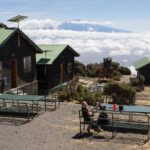
- Hut sleeping on the Marangu Route, with sponge mattresses, pillows, and solar lights at camps
- Guides and meals included, plus quality mess tents with table and chairs
- Summit timing via torchlight, starting around 1 a.m. for a sunrise at Gillman’s Point
- Plenty of structure for acclimatization, and you can choose 6 days if you want a calmer rhythm
- All park and rescue fees covered, so you are not chasing paperwork on the mountain
Other ways up Kilimanjaro we reviewed
- 8-Day Small-group Lemosho Kilimanjaro Summit Trekking★ 5.0 · 186 reviews
- 7-Day Machame Kilimanjaro Summit Tour from Arusha★ 5.0 · 125 reviews
- Mountain Kilimanjaro Day Hike★ 5.0 · 102 reviews
- 4 days Best experience Kilimanjaro Hike, Serengeti &Ngorongoro★ 5.0 · 54 reviews
Marangu Route on Kilimanjaro, the Coca Cola track with hut comfort
Marangu is famous because it is straightforward. The route is often called the Coca Cola route since it is the most tourist-friendly option, and it is also the shortest path commonly used to summit. That matters because on Kilimanjaro, time is part of acclimatization. The route’s design gives you a steady ladder upward, with two real “rest plateaus” at Horombo and Kibo Hut before summit night.
What I like for first-time climbers is the human scale of the plan. You are not sleeping in freezing gear setups every night. Instead, you are in huts each campsite, and those huts are described as having solar lights and comfortable beds. You will still feel the altitude, you will still earn every meter, but you get a calmer, less chaotic camp experience.
One more practical note: Marangu can be done in 5 days, but you can switch to 6 for better acclimatization. If you know you tend to feel altitude quickly, that extra day is worth thinking about early, not after you are already halfway up.
Price and what you’re really paying for at $1,730 per person
At $1,730 per person, this trip is not cheap. But it is also not just a “bed and a guide” deal. Your price covers a lot of the mountain friction points that usually eat budgets.
Here is what you get included:
- Overnight stays in mountain huts
- Professional, experienced mountain guides
- All park fees and rescue fees
- All meals while on the mountain
- Quality mess tents with table and chairs
- Clean, purified drinking water
- Airport transfers
- Lunch, breakfast, and dinner each day during the climb
- Pickup is offered, and you receive a mobile ticket
What is not included:
- Tanzania visa
- Tips
- Person climbing gear
So the value equation looks like this: you pay for the full mountain support system. That means fewer surprises, less hassle, and more energy left for the climb itself. And since rescue fees are included, you are not scrambling to confirm coverage once you are in the field.
If you already own all your gear and you are comfortable budgeting for a visa and tips, the main financial question becomes whether you want the hut route comfort and the guided structure. If that is your goal, this price starts to feel more “fair” than it first appears.
Day 1, Moshi or Arusha to Kilimanjaro Park Gate and Mandara Hut at 2,700 m
Your day starts with a short drive from Moshi or Arusha town to the Kilimanjaro National Park gate at 1,830 m. This first step is not just a warm-up, it is also when your trip shifts from normal life to Kili time.
After entrance formalities, you climb through attractive and unspoiled forest to reach the clearing with Mandara Hut at 2,700 m. This forest section is important for two reasons. First, it is physically manageable for most people compared to later segments. Second, it helps your body transition upward gradually before you hit moorland.
A nice detail for your first afternoon: the volcanic remains of Maundi Crater are nearby, so you can use some time for a short excursion if you have energy. If you do not, resting also works well here. The huts area offers birdlife, and monkeys are often seen.
Timing-wise, expect about 3 to 5 hours of walking on Day 1, and the day has a calm feel because you are only getting to Mandara.
Practical tip: take it easy on your breathing in the forest. The climb still counts, even if it feels friendly.
Marangu, other operators and other lengths
Day 2, forest to moorland and Horombo Hut at 3,720 m
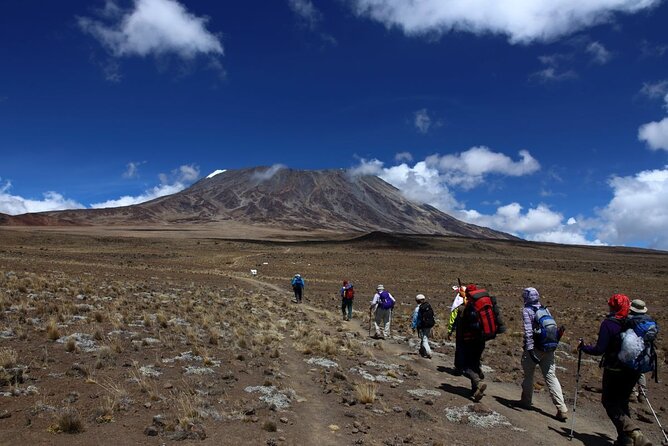
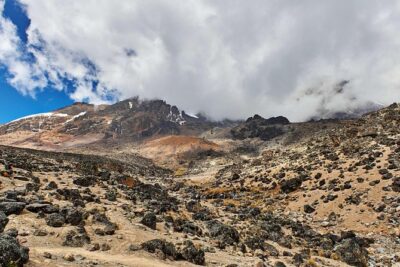
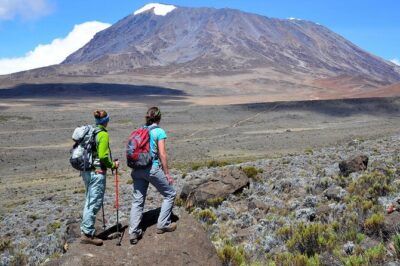
Day 2 starts with a steep ascent through forest, then the path opens into grassy moorland. In clear weather you can get views of Kibo and Mawenzi peaks. That is a big psychological moment. Up until now you have been climbing through greenery. Now you see what you came for.
You continue steadily through the moorland zone, with giant heather and occasional groundsel stands. Then you climb up to Horombo Hut at 3,720 m. This camp sits close enough to Kibo’s glaciated dome that sunrises and sunsets can feel unreal.
Horombo is also where you start to feel more “above the clouds.” That matters because the environment starts to change the way you move and the way you sleep. If you feel a little slower, that is normal. The goal is steady pacing, not speed.
Expect about 4 to 6 hours walking from Mandara to Horombo.
Practical tip: keep your water intake consistent. The higher you go, the more you notice how dehydrated you can feel, even when you are not moving fast.
Day 3, to the Saddle and up to Kibo Hut at 4,700 m
On Day 3, you climb gradually toward the Saddle between Mawenzi and Kibo. This is where the route shifts from plant-filled zones to a more lunar high-altitude environment. The terrain becomes scree, and the feeling changes fast, it suddenly feels like high altitude wilderness.
You typically reach Kibo Hut at 4,700 m by midday. The afternoon is free, and that is a real gift. You can rest, eat, and mentally set yourself up for summit night. That quiet time matters because the next day is long, and your brain does better when it is not rushed.
The summit plan hinges on this day. If you arrive at Kibo feeling tense or exhausted, it becomes harder to rest. If you arrive feeling steady, you give yourself a better chance of waking up ready for the midnight start.
Walking time is usually around 4 to 5 hours for this section from Horombo to Kibo.
Practical tip: take the afternoon to manage your energy, not to “prove” fitness. Your final climb starts with how well you recover.
Day 4, 1 a.m. torchlight to Gillman’s Point and sunrise at 5,685 m
Summit day is the famous one. You start the ascent by torchlight at about 1 a.m., which is a strange hour to process until you are actually doing it. But it is set up for one purpose, reach Gillman’s Point by sunrise.
The climb from Kibo Hut to Gillman’s Point at 5,685 m is steep over loose volcanic screen. Your progress will be slow, but the plan uses well-graded zig-zags and a steady pace to help you keep moving.
Your reward is sunrise. You rest at Gillman’s Point, take in the first light over the summit area, and let the altitude reality sink in.
And here is the choice that makes this day special: if you still feel strong, you can do a round trip from Gillman’s Point along the crater rim to Uhuru Peak at 5,896 m. This route passes close to spectacular glaciers that still occupy much of the summit area. The descent is surprisingly fast compared to the ascent, and then you return to Horombo Hut for the night.
Walking time is listed as about 11 to 15 hours total from Kibo to Gillman’s Point, but the key here is the schedule you follow. You are not just climbing, you are living a timed plan built around sunrise and summit safety.
Practical tip: on summit night, your “win condition” is consistency. Small steps, controlled breathing, and using the guide’s rhythm to keep panic out of the head.
Day 5, descend to Mandara, then forest to Moshi or Arusha
Most people think of Day 4 as the big day, but Day 5 is what lets the trip land well. You retrace your steps with a pleasant moorland walk to Mandara, then continue with a lovely forest walk out to the National Park gates to Moshi or Arusha.
That contrast is the point. The greenness and lushness of the forest are a reminder that Kilimanjaro is not just a one-note mountain. You climbed through moorland and crater terrain, now you experience the shift back toward life and shade.
Expect about 5 to 6 hours walking to finish the route portion and return to town.
Practical tip: treat the last day like recovery, not a victory lap. Your legs will still be tired, and slipping happens when fatigue takes over.
Huts, meals, and camp comfort on solar lights and communal bunks
One of the biggest reasons people choose Marangu is the camp setup. You sleep in huts at each campsite, and those huts have solar lights and comfortable beds. The bunks are communal, but they come with a sponge mattress and pillow. That is a meaningful difference in comfort compared to routes that require full tent sleeping.
Camp life also matters more than most people expect. You eat while on the mountain, and meals are included. The setup includes quality mess tents with table and chairs. That means you can sit properly between walks. It is not glamorous, but it makes a huge difference in how you recover.
You also get clean, purified drinking water. That reduces one of the biggest concerns on trek, staying hydrated without worrying about sourcing.
Practical note: communal huts can be loud and warm in places. If you are a light sleeper, pack simple ear plugs or plan to manage comfort. The mattress and pillow are helpful, but it is still a shared space.
Guides, safety rhythm, and why Gasto’s team style matters
The guide team is a major part of the experience. This is a private tour, so you are with your group, not mixed into a large crowd. That matters on Kilimanjaro, because summit day becomes easier when your plan and communication stay tight.
Mountain Warriors Tours and Safaris are behind the trip, and the guide name that comes up strongly is Gasto, sometimes called Kili King. The standout theme from his style is support, organization, and humor. You are not just being led, you are being cared for in the practical ways that count, like heavy luggage and meal timing.
A second theme is safety and pacing. The summit push is demanding, and the plan depends on your guide keeping you on a steady rhythm. You should expect torchlight coordination, sunrise timing, and a descent that is organized, not chaotic.
Finally, the trip connects the mountain climb with learning. Even if you are focused on reaching Uhuru Peak, the guide can add context about Kilimanjaro and the surrounding area, which makes the days feel less like a grind and more like a meaningful journey.
What could slow you down, and when 6 days makes sense
Marangu is called the easiest and shortest route for a reason, but easy does not mean effortless. Altitude is the real boss here. If you feel unusually wiped out early, or if you notice headaches, nausea, or poor sleep, you will want to take your body seriously.
This is where the option of adding a day helps. The plan is usually 5 days, but it can be done in 6 days for better acclimatization. That extra time can be spent resting at Horombo or climbing the small peak of Mawenzi.
Even if you are fit, I recommend thinking about 6 days if you:
- have climbed at altitude before and it got rough
- tend to feel symptoms quickly when traveling high
- want more margin for sleep and recovery
You do not need to guess blindly. Talk it through with your guide team early so your plan matches your body.
Who should book this Marangu Route plan (and who should rethink it)
This 5-day Marangu climb suits you if:
- you want hut comfort and a more supported trekking style
- you like structure, meals planned, and logistics handled
- you are aiming for the summit with the most commonly used “short” route design
- you have moderate physical fitness and you can commit to the walking time each day
You might rethink it if:
- you strongly prefer private sleeping and quiet, because the huts are communal
- you are unsure about acclimatization and want more time, then you should consider the 6-day version
- you do not have your basic climbing gear sorted, because person climbing gear is not included
Should you book Mountain Warriors for the 5 Days Marangu Route?
If you want Kilimanjaro without turning the trip into a logistics puzzle, I think this is a solid choice. The route itself is built for summit access, and the hut setup with solar lights and comfortable beds is a real quality-of-life upgrade. Add in guided support, included meals, and purified water, and you get a trip that lets you focus on pacing and recovery.
Before you book, do three quick checks:
- confirm you have the right personal climbing gear covered, since that is not included
- budget for the Tanzania visa and tips so there are no surprises
- consider whether 6 days might fit your acclimatization needs better than the 5-day rhythm
FAQ
What is included in the price of the 5 Days Marangu Route climb?
The price includes overnight stays in mountain huts, professional mountain guides, all park fees and rescue fees, and all meals while on the mountain. It also includes quality mess tents with table and chairs, clean purified drinking water, and airport transfers, plus lunch, breakfast, and dinner during the climb.
What is not included for this Kilimanjaro package?
The package does not include the Tanzania visa, tips, or person climbing gear.
Where does the climb start and when do you meet?
You start at Kilimanjaro National Park from the gate area around 1,830 m, and the meeting start time is listed as 7:30 am.
What sleeping setup do you get on the Marangu Route?
You sleep in mountain huts at each campsite. The huts have solar lights, and the bunks are communal with a sponge mattress and pillow.
When does summit day start?
Summit day starts with a torchlight ascent at about 1 a.m. so you can reach Gillman’s Point by sunrise.
Is there a cancellation refund if plans change?
Yes. Free cancellation is available if you cancel at least 24 hours before the experience starts for a full refund. If you cancel less than 24 hours before the start time, the amount paid will not be refunded.
The Marangu Trail
- Private Full Day Hiking Experience to Marangu Route
★ 5.0 · 61 reviews - From Arusha/Moshi: Kilimanjaro Hike Marangu Route Day Trip
★ 4.5 · 54 reviews - Mount Kilimanjaro Day Hike Through Marangu Route to Mandara Hut
★ 5.0 · 37 reviews - Marangu waterfall & Coffee making Cultural Tour | BURIGI CHATO SAFARIS CO LTD
★ 5.0 · 12 reviews - Climb Kilimanjaro – Marangu Route 8 Day Program
★ 5.0 · 10 reviews
Kilimanjaro, Route by Route
- 8-Day Small-group Lemosho Kilimanjaro Summit Trekking
★ 5.0 · 186 reviews - 7-Day Machame Kilimanjaro Summit Tour from Arusha
★ 5.0 · 125 reviews - Mountain Kilimanjaro Day Hike
★ 5.0 · 102 reviews - 4 days Best experience Kilimanjaro Hike, Serengeti &Ngorongoro
★ 5.0 · 54 reviews - From Arusha/Moshi: Kilimanjaro Hike Marangu Route Day Trip
★ 4.5 · 54 reviews
Just added from around Arusha
Kilimanjaro Marangu Route, compared.
 ★ 5.0Kilimanjaro climb, Marangu route (6-day)From $2,90272 reviews
 ★ 5.0Climbing Kilimanjaro – Marangu RouteFrom $2,00465 reviews
 ★ 5.0Private Full Day Hiking Experience to Marangu RouteFrom $26061 reviews
 ★ 4.5From Arusha/Moshi: Kilimanjaro Hike Marangu Route Day TripFrom $10154 reviews
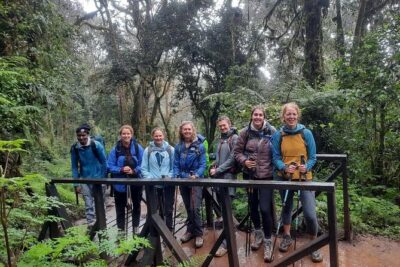 ★ 5.0Mount Kilimanjaro Day Hike Through Marangu Route to Mandara HutFrom $26537 reviews
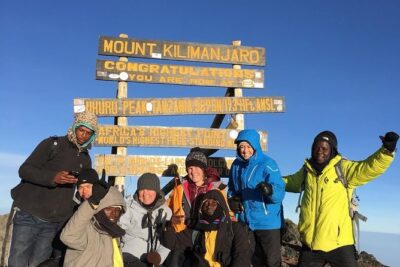 ★ 5.0Kilimanjaro Climbing 5 days Marangu routeFrom $90022 reviews
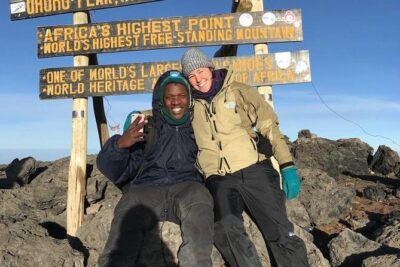 ★ 5.0Best Kilimanjaro Adventures 6 Days Marangu Route ExperienceFrom $1,00018 reviews
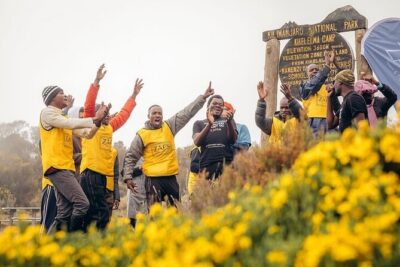 ★ 5.0Kilimanjaro Private Climbing in 6 Days Marangu RouteFrom $2,00016 reviews
Browse the lists this tour appears in