
REVIEW · KILIMANJARO MARANGU ROUTE
5 Days Classic Kilimanjaro Climb via Marangu route
Marangu is the classic, hut-based way up Kilimanjaro. This Marangu Route trek, also known as the Coca-Cola Route, is built for climbers who want a relatively gentler gradient and real comfort along the way, from dense rainforest to the crater rim.
What I like most is the full, organized support. You get friendly professional guides, cooks, and porters, plus enough treated drinking water, hot water for washing, and an emergency first-aid kit. The second big win for me is how the itinerary steps you through altitude zones, with hut stops such as Horombo Hut and Kibo Hut that keep the climb feeling structured.
One consideration: the calendar is tough on purpose. The summit stage starts around midnight and day 4 can run to 15 hours, so you need solid stamina and the patience to deal with cold and long stretches.
In This Review
- Key things that make this Marangu climb work
- Why the Marangu Route feels manageable, even when it’s not easy
- Price and logistics: what $2,178 actually covers
- Getting to Arusha and the gates without scrambling
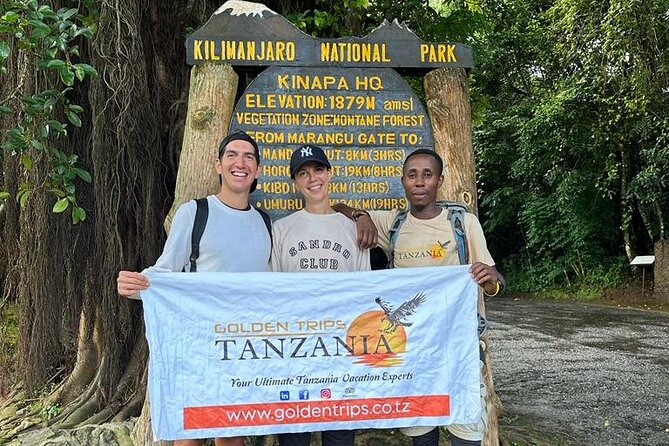
- Day 1: Marangu gate into rainforest to Mandara Hut, then Maundi Crater views
- Day 2: Timberline to Horombo Hut at 3,700m with Mawenzi and Kibo views
- Day 3: The Last Water point, the saddle, and a hard run to Kibo Hut
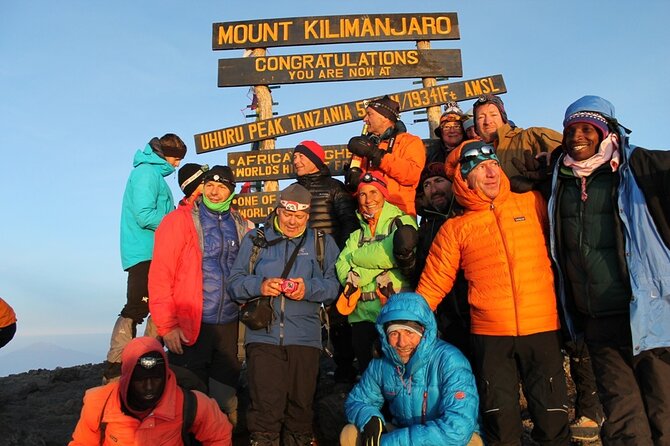
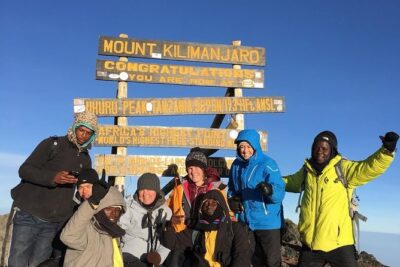
- Day 4: Midnight summit to Gillman’s Point and Uhuru Peak at 5,895m
- Day 5: Heath and moor back down to Mandara Hut for warm lunch, then rainforest to the gate
- The human side: Dixon, Bob, and the kind of team support that matters
- What to pack and how to prepare, based on this route’s timing
- Who this Marangu climb suits best
- Should you book this 5-day Marangu climb with Golden Trips Tanzania?
- FAQ
- How long is the climb?
- Where do you start, and do you get picked up?
- What meals are included during the trek?
- What support and safety items are included?
- When is the summit attempt, and what peak points are listed?
- What is not included that I should plan for?
- What are the meeting point hours?
Key things that make this Marangu climb work
- Coca-Cola Route hut style: a classic route that uses hut stops instead of camping, with a relatively steady, climbable gradient.
- Big scenery shifts in just 5 days: rainforest, timberline, heath and moor zones, then the saddle and the crater rim.
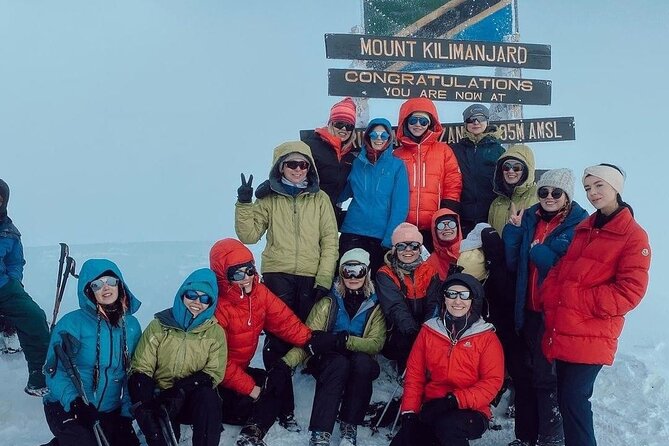
- Clear summit milestones: Hans Meyer Cave (5220m), Gillman’s Point (5681m), and Uhuru Peak (5895m) are all part of the plan.
- Included comfort that reduces stress: treated drinking water, hot water for washing, and hot meals during the trek.
- Strong team reputation: Dixon and Bob are specifically credited with making the climb feel safe and fun, with a possible bubbly celebration at the base after a successful summit.
- Private group experience: it’s only your group, so you are not stuck blending into a crowd.
Other ways up Kilimanjaro we reviewed
- 8-Day Small-group Lemosho Kilimanjaro Summit Trekking★ 5.0 · 186 reviews
- 7-Day Machame Kilimanjaro Summit Tour from Arusha★ 5.0 · 125 reviews
- Mountain Kilimanjaro Day Hike★ 5.0 · 102 reviews
- 4 days Best experience Kilimanjaro Hike, Serengeti &Ngorongoro★ 5.0 · 54 reviews
Why the Marangu Route feels manageable, even when it’s not easy
Marangu is popular for a reason. The trek is often described as the “Coca-Cola Route” and the overview calls out the relatively gentle gradient and the added comfort of hut-based hiking. In practice, that usually means you spend your energy moving forward, not fighting logistics. You also get a very Kilimanjaro-like path through distinct zones: rainforest early on, then higher moor and alpine-like terrain.
I also like that the route has a classic flow. Day 1 begins at Kilimanjaro National Park with dense forest hiking toward Mandara Hut. Day 2 pushes into higher, drier-looking zones and delivers major views. Then day 3 brings you to the Kibo area, with a long, harder day that sets up the summit attempt.
The bottom line: Marangu can feel “doable” because the plan is organized and hut stays keep things simpler. But do not confuse that with easy. Day 4 is still the big fight, and you should plan for it mentally.
Price and logistics: what $2,178 actually covers
At $2,178 per person, you are paying for much more than the trekking itself. This price includes all fees and taxes, the team Kilimanjaro Rescue fees, guides, cooks, and porters, plus transport to and from the gate area. It also includes treated water through the trek and meals: 4 breakfasts, 5 lunches, and 4 dinners.
What that means for you: you can budget with less guesswork. You are not trying to piece together separate transfers, rescue fees, or food service at multiple points. The itinerary also includes hot water for washing, which sounds like a small detail until you are coming back from the cold night of a summit push.
What is not included matters too. Travel insurance is not included, flights are not included, and tips for guides, cook, and porters are not included. So even if the tour price looks “all-in,” you still need to cover the items listed under Not Included.
Getting to Arusha and the gates without scrambling
This climb starts in Arusha. You are collected from your lodge in Arusha and taken to the Marangu gate, after which the necessary paperwork is handled and the trek begins. That “paperwork and off you go” approach helps on a first day, because it removes a common headache: trying to coordinate forms while you are already thinking about the altitude.
You also get private transport to and from Kilimanjaro International Airport to your accommodations in Arusha, and there is 1 night of accommodation in Arusha on the last day. The included transport continues with transfers to and from the Kilimanjaro gate.
The tour is private, too. You are not sharing the experience with strangers as a default setup. That can make it easier to move at a pace that suits your group.
Marangu, other operators and other lengths
Day 1: Marangu gate into rainforest to Mandara Hut, then Maundi Crater views
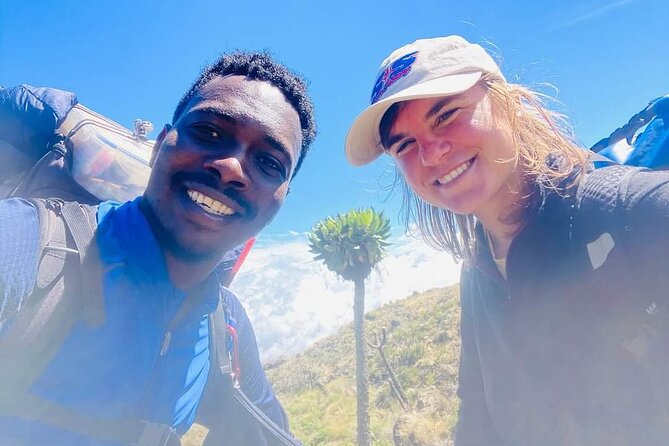
Day 1 is your entry point into Kilimanjaro National Park. After breakfast, you are picked up in Arusha and taken to the Marangu gate for paperwork. Then you start hiking right away through dense rainforest.
One of the best early-day perks here is variety. You are not just walking through “trees.” The plan specifically mentions the chance to spot primates as you head to Mandara Hut. Even if you do not get a perfect wildlife moment, rainforest hiking tends to keep the mood upbeat because it is cooler, shaded, and constantly changing.
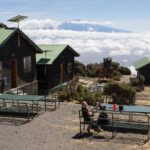
Mandara Hut is your first rest stop. After you settle, the guide takes you to Maundi Crater for a view of the Kenyan interior. This is a great way to get oriented. You start the climb with a sense of where you are on the big map, not just how sore your legs feel.
Practical note: day 1 is described as up to about 12 hours in the plan, including the transfer and overall pacing. That sounds long, but it is partly because you are transitioning from Arusha into the park and settling into hut life.
Day 2: Timberline to Horombo Hut at 3,700m with Mawenzi and Kibo views
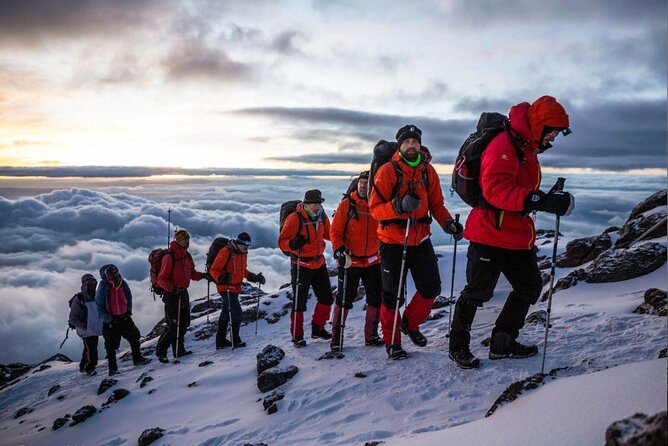
Day 2 starts early with breakfast and then moves up in a more noticeable way. You leave Mandara Hut and reach the timberline, then transition into the heath and moor zone.
The route is laid out with about 4 to 6 hours before Horombo Hut appears at 3,700m. From the hut, you get views over Mawenzi, Kibo, and the broad plain associated with the Masai steppe. If day 1 is about atmosphere, day 2 is about making the mountain real. You can see what you are aiming for, and it helps you understand the scale of the climb.
Distance listed is 12.5km, which is not just a number. It tells you that you are building time-on-your-feet gradually, instead of getting hit with a brutal push immediately.
A small reality check: at 3,700m, you should expect your body to feel “different,” even if the pace is manageable. Drink water, move steadily, and do not try to sprint your acclimatization.
Day 3: The Last Water point, the saddle, and a hard run to Kibo Hut
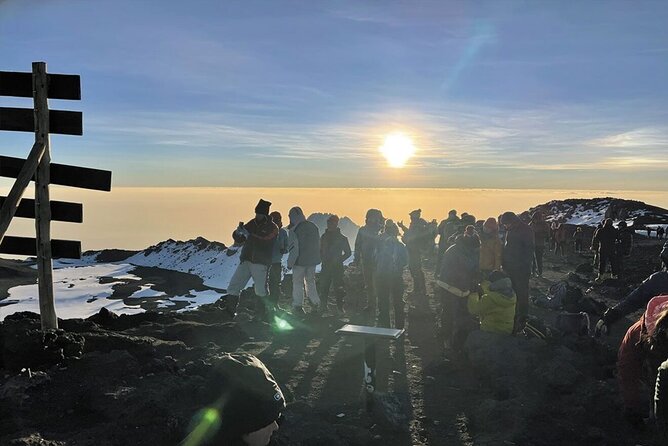
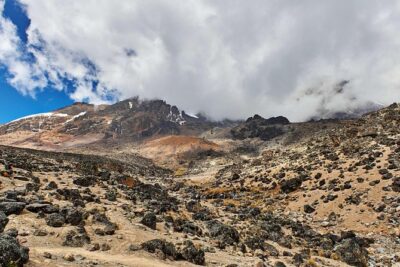
Day 3 is described as the long and tough stage. The trail passes the Last Water point, then you reach the saddle, a plateau that is nearly vegetation less and connects the main summit area (Kibo) with Mawenzi.
This is the day where you feel the mountain tighten its grip. The terrain is more exposed, and you are moving through a section where the environment feels stripped down compared to day 1 and day 2. The plan says Kibo Hut is usually reached in about 5 to 6 hours, and the distance listed is 9.5km.
That combination matters: shorter distance than day 2, but it is tough. When you plan your energy, treat day 3 like the setup for the summit night, not like a “warm up.”
At Kibo Hut, you get an early evening meal and then an early night, because your night will be short. That is the mindset you want: protect sleep so you can handle the midnight start on day 4.
Day 4: Midnight summit to Gillman’s Point and Uhuru Peak at 5,895m
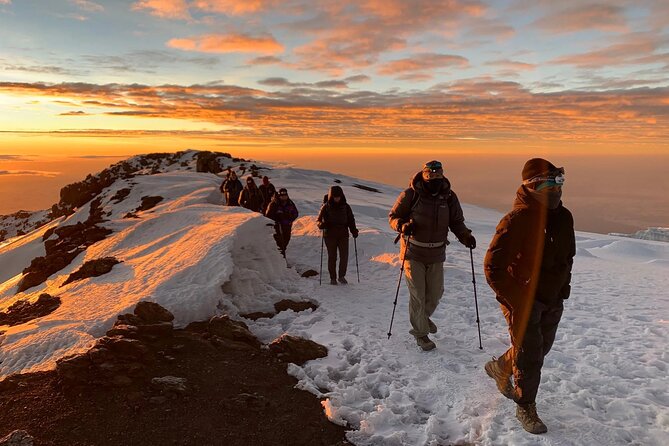
This is the day. The plan calls it the big one, and it starts around midnight with the final ascent.
You pass Hans Meyer Cave (5220m), then continue upward slowly but steadily. The route description highlights that you keep climbing and that sunrise brings relief in the form of warmth starting to return to the land.
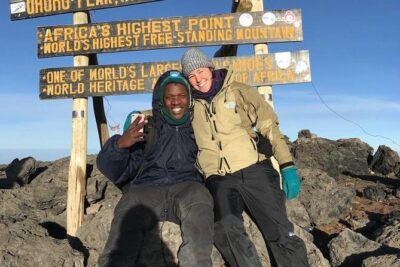
At sunrise, you reach Gillman’s Point (5681m), the crater rim. Then you hike another 1 to 2 hours to Uhuru Peak (5895m). So the summit is not just a single moment. It is a progression, with a key checkpoint at the crater rim.
The plan then includes the descent back to Kibo Hut, where a warm meal awaits. You get a 1 to 2 hour break, then you go down to Horombo Hut.
Distance listed is 22km with about 15 hours total time. That is why I keep mentioning stamina. Even if you feel fine early on, you still have a long night and a long downhike waiting for you.
If you tend to get mentally tired, this day is where it matters most. Break your focus into small steps: steady breathing, careful footing, and short moments to check in with how you feel.
Day 5: Heath and moor back down to Mandara Hut for warm lunch, then rainforest to the gate
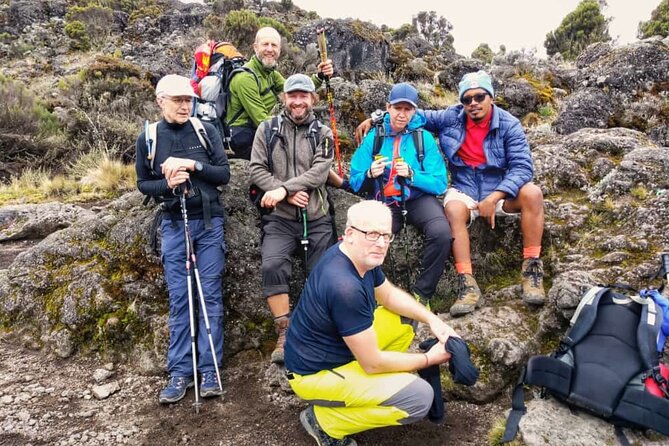
Day 5 is the “back to safety and shower” day. The trail passes through the heath and moor zone to Mandara Hut (2700m), where a warm lunch is waiting. That meal at mid-descent is a real morale booster.
After lunch, you return through the tropical rainforest and reach the Kilimanjaro National Park Gate (1860m) after a total trekking time of about 6 hours. Then you say goodbye to your mountain guides and take a short transfer back to your hotel in Arusha.
There is a simple emotional payoff built into the plan: once you are back, you can take a warm, relaxing shower and celebrate your success.
Distance listed is 20.8km. So yes, you still walk a lot on the final day. The difference is psychological. You have already done the hardest part, and you are closing the loop.
The human side: Dixon, Bob, and the kind of team support that matters
What stands out most from the team-centered feedback is how much credit the guides and crew get. In particular, Dixon and Bob are repeatedly mentioned as the people who make the trek feel both safe and memorable.
That matters because Kilimanjaro is not just about willpower. It is also about rhythm, pacing, and decision-making when you are tired or feeling altitude symptoms. When a guide team is doing well, your day feels smoother: you eat when you should, you rest when you should, and you stay calm when the mountain is testing you.
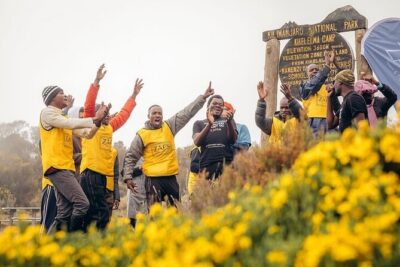
There is also a fun element in the way the team handles milestones. One shared highlight is a bubbly celebration at the base to mark reaching the summit. Even if your group does not get that exact moment, the point is clear: the crew seems to know when you need encouragement, not just instructions.
What to pack and how to prepare, based on this route’s timing
You do not need to guess about the big conditions. The itinerary tells you the key timing points: a midnight summit start and early sunrise at the crater rim. That implies cold at night, then changing temperatures as the sun comes up.
So think in layers. Bring warm clothing for the pre-dawn hours and a way to stay comfortable as you transition from cold night hiking to warmer daylight on Uhuru Peak.
Also plan for a long day. Day 4 is listed at about 15 hours, so you want gear that stays practical when you are tired: items that you can access quickly, and clothing that does not require constant adjusting.
On the practical comfort side, the tour provides treated drinking water and hot water for washing. That reduces what you need to bring for hygiene and hydration. Still, your best move is to bring your personal essentials, since personal toiletries are not included.
Who this Marangu climb suits best
This trek is a great match if you want:
- A classic Kilimanjaro experience on the Marangu Route with hut stops
- A plan that moves through multiple climate zones in a logical order, from rainforest to heath and moor
- A summit day that follows a clear, stepwise rhythm: midnight start, Gillman’s Point at sunrise, then Uhuru Peak
It may be a tough fit if you know you struggle with very long days. Day 4 is demanding by the itinerary design, and you need to handle cold nights, early meals, and early nights with focus.
Should you book this 5-day Marangu climb with Golden Trips Tanzania?
If you want the classic Kilimanjaro route with a strong support team and built-in comfort, I would seriously consider booking this. The price includes a lot of the “invisible” costs that can drag trips down: fees and taxes, rescue fees, guide team, porters and cooks, transport, treated water, hot wash water, and most meals. That usually equals fewer surprises and less stress on the mountain.
Just be honest with yourself about day 4. If midnight starts and long summit days scare you, Marangu will not magically change that. But if you like a structured plan, hut-based hiking, and a crew that supports you all the way, this is a solid choice.
FAQ
How long is the climb?
The trek is planned for 5 days, with each day described by its own hike time and distance, including a long summit day on day 4.
Where do you start, and do you get picked up?
You are collected from your lodge in Arusha and taken to the Marangu gate. You also get private transport to and from Kilimanjaro International Airport to your accommodations in Arusha.
What meals are included during the trek?
The tour includes 4 breakfasts, 5 lunches, and 4 dinners. Meals at your hotel before and after the climb are not included.
What support and safety items are included?
You get friendly professional mountain guides, cook and porters, treated and filtered drinking water throughout the trek, hot water for washing, and an emergency first-aid kit. Team Kilimanjaro Rescue fees are included as well.
When is the summit attempt, and what peak points are listed?
The summit stage begins around midnight on day 4. The plan lists Hans Meyer Cave (5220m), Gillman’s Point (5681m), and Uhuru Peak (5895m).
What is not included that I should plan for?
Travel insurance and flights are not included. Tips for guides, porters, and cook are also not included, along with personal items and toiletries.
What are the meeting point hours?
The opening hours are 8:00 AM to 6:00 PM, Monday through Sunday, during the range 12/13/2024 to 06/18/2026.
The Marangu Trail
- Private Full Day Hiking Experience to Marangu Route
★ 5.0 · 61 reviews - From Arusha/Moshi: Kilimanjaro Hike Marangu Route Day Trip
★ 4.5 · 54 reviews - Mount Kilimanjaro Day Hike Through Marangu Route to Mandara Hut
★ 5.0 · 37 reviews - Marangu waterfall & Coffee making Cultural Tour | BURIGI CHATO SAFARIS CO LTD
★ 5.0 · 12 reviews - Climb Kilimanjaro – Marangu Route 8 Day Program
★ 5.0 · 10 reviews
Kilimanjaro, Route by Route
- 8-Day Small-group Lemosho Kilimanjaro Summit Trekking
★ 5.0 · 186 reviews - 7-Day Machame Kilimanjaro Summit Tour from Arusha
★ 5.0 · 125 reviews - Mountain Kilimanjaro Day Hike
★ 5.0 · 102 reviews - 4 days Best experience Kilimanjaro Hike, Serengeti &Ngorongoro
★ 5.0 · 54 reviews - From Arusha/Moshi: Kilimanjaro Hike Marangu Route Day Trip
★ 4.5 · 54 reviews
Just added from around Arusha
Kilimanjaro Marangu Route, compared.
 ★ 5.0Kilimanjaro climb, Marangu route (6-day)From $2,90272 reviews
 ★ 5.0Climbing Kilimanjaro – Marangu RouteFrom $2,00465 reviews
 ★ 5.0Private Full Day Hiking Experience to Marangu RouteFrom $26061 reviews
 ★ 4.5From Arusha/Moshi: Kilimanjaro Hike Marangu Route Day TripFrom $10154 reviews
 ★ 5.0Mount Kilimanjaro Day Hike Through Marangu Route to Mandara HutFrom $26537 reviews
 ★ 5.0Kilimanjaro Climbing 5 days Marangu routeFrom $90022 reviews
 ★ 5.0Best Kilimanjaro Adventures 6 Days Marangu Route ExperienceFrom $1,00018 reviews
 ★ 5.0Kilimanjaro Private Climbing in 6 Days Marangu RouteFrom $2,00016 reviews
Browse the lists this tour appears in