
REVIEW · KILIMANJARO MARANGU ROUTE
5 Days cheapest Kilimanjaro Marangu Route
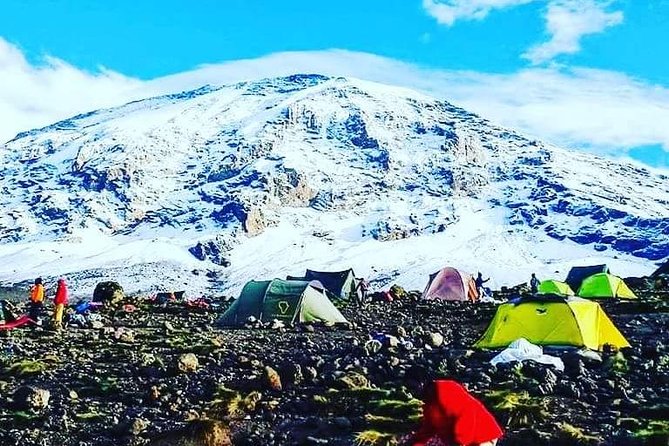
Huts make this Kilimanjaro feel human. This 5-day Marangu climb from Arusha is one of the most established ways up, with dorm-style hut sleeping instead of camping and a plan that is tightly coordinated by host Nasir. I also like that you are guided through the official park entry process before your first step, so the whole start feels organized instead of chaotic.
Here’s the tradeoff: Marangu is the easiest-feeling route on paper, but it is also the most crowded and the most likely to feel repetitive, since you go up and come back the same way. The bigger concern for me is the short acclimatization window, because the timeline can leave less room for your body to adjust.
In This Review
- Key Things I’d Watch Before You Choose Marangu
- Marangu, the Coca-Cola Route, and Why People Still Pick It
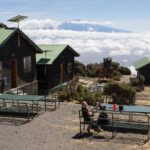
- Hut Sleeping: Bunks, Mattresses, and Real-World Comfort
- Toilets and water change as you go higher
- Day 1: Park Gate, Rainforest Steps, and Mandara Hut at 9,000 ft
- What to expect on day 1
- Day 2: Moorlands, Lobelias, Kibo and Mawenzi Views, Horombo Hut
- A practical tradeoff on day 2
- Day 3: Last Water Point, the Saddle Between Kibo and Mawenzi, Then Kibo Hut Dinner
- Why day 3 matters as much as the summit day
- Day 4: Coffee Wake-Up, Gilman’s Point, Uhuru Peak, and Down to Horombo
- What to watch for during the descent
- Day 5: Steady Descent, Mandara Return, Lush Forest to Marangu Gate, Back to Arusha
- The real win on day 5
- Price and Value: What $1,869.24 Buys You
- Who This Tour Fits Best (and Who Might Rethink Marangu)
- Quick, Practical Booking Checklist
- Should You Book This 5-Day Marangu Route with Moorland Safari and Trekking?
- FAQ
- What type of accommodation is used on the Marangu route?
- Do I need a sleeping bag if I’m staying in huts?
- How long is the whole climb, and what time does it start?
- What peaks and points are included on summit day?
- When do you prepare for the summit climb?
- Is pickup included, and how do you get back to Arusha?
- Is this a private tour?
- What is the cancellation policy?
Key Things I’d Watch Before You Choose Marangu
- Hut sleeping, not tents: Dorm bunk beds at Mandara and Kibo, plus a bigger Horombo hut.
- What “basic” means at each hut: dining halls plus toilets and water that get simpler as you go higher.
- Summit timing is serious: you prepare around 23:30 for the early push to Gilman’s Point and Uhuru Peak.
- Views on clear days: Kibo summit and Mawenzi show up from open moorlands when the weather cooperates.
- Optional extra day: an additional acclimatization day at Horombo is available on request.
Other ways up Kilimanjaro we reviewed
- 8-Day Small-group Lemosho Kilimanjaro Summit Trekking★ 5.0 · 186 reviews
- 7-Day Machame Kilimanjaro Summit Tour from Arusha★ 5.0 · 125 reviews
- Mountain Kilimanjaro Day Hike★ 5.0 · 102 reviews
- 4 days Best experience Kilimanjaro Hike, Serengeti &Ngorongoro★ 5.0 · 54 reviews
Marangu, the Coca-Cola Route, and Why People Still Pick It
Marangu is Kilimanjaro’s old-school route. It is famous because it is well established, with huts along the way, and a path that is often described as gradual. In practice, that can mean fewer wild swings in effort compared with steeper routes, which matters if you want a clear plan and a smoother routine.
I also like that this route approaches from the southeast and keeps the climb straightforward in terms of navigation. You are not constantly solving route puzzles in the way some other treks can feel. The flip side is also clear: the ascent and descent are on the same track, so you will not get the variety of landscapes you might see on routes that take different paths up and down.
Finally, Marangu is popular. That means you should be ready for crowds in the huts and on the trail, especially as you get closer to the summit window.
Hut Sleeping: Bunks, Mattresses, and Real-World Comfort
On Marangu, you sleep in huts with dorm-style accommodations. The numbers are big enough that you will feel the mountain is crowded, not just big. Mandara and Kibo Huts have 60 bunk beds each, while Horombo Hut has 120 bunk beds. You get mattresses and pillows, but you still need a sleeping bag.
This matters for comfort because hut sleeping is not the same as a private room. You are sharing space in a dorm setup, which can be fine if you pack smart and keep expectations realistic. If you sleep lightly, you might find it harder to rest well, especially around summit night when everyone is moving.
Toilets and water change as you go higher
Marangu’s washrooms are basic, but the details shift by altitude. At the lower huts you have flushing toilets and running water. Higher up, you should expect long drop toilets and buckets of water. That sounds simple, but it changes how you plan your day. You will want to stay disciplined about water use, hand cleanliness, and timing bathroom breaks.
Marangu, other operators and other lengths
Day 1: Park Gate, Rainforest Steps, and Mandara Hut at 9,000 ft
Day 1 starts with breakfast and briefing, then a drive to Kilimanjaro National Park Gate. The drive is about 45 minutes, and you register at the Kilimanjaro National Park Authority offices before you begin hiking. That registration step is more than paperwork. It helps you understand you are on a managed, official route from the start.
Your first walking segment is about 8 km (5 miles) over 3-4 hours, with an altitude gain around 840 m. You climb through rainforest to reach Mandara Hut, located at 9,000 ft (2,740 m).
One neat detail: there is a side trip option to Maundi Crater. It is a good way to add variety to day one without breaking the flow. If you like seeing more than just the straight line up the mountain, this is one of the small moments that can make the climb feel less repetitive.
What to expect on day 1
Rainforest trekking often feels slower because the trail environment is humid and shaded. The payoff is that your first hours can feel smoother than the dry, high-altitude air later on. You finish day one in a hut, so you start building your rhythm right away, not improvising overnight logistics.
Day 2: Moorlands, Lobelias, Kibo and Mawenzi Views, Horombo Hut
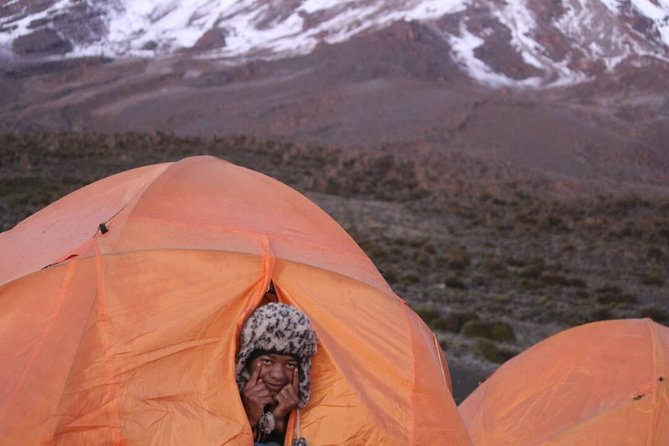
Day 2 is where Marangu starts to open up. After starting around 8:30 am following breakfast, you leave the rainforest glades after about an hour and move onto ascending open moorlands.
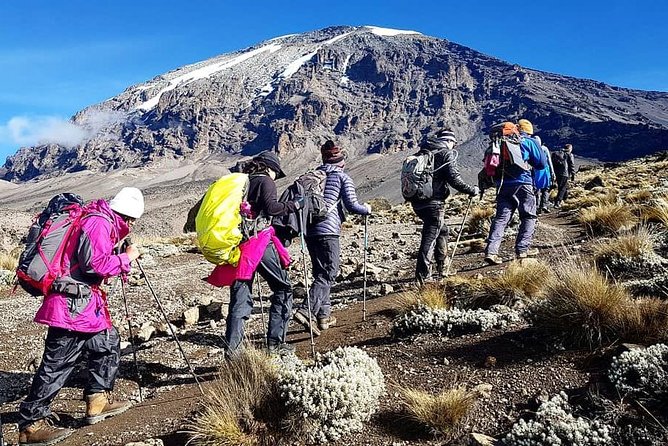
You walk about 12 km (7.2 miles) in 5-7 hours, with altitude gain around 1,000 m. The day includes the kind of moments people remember from Kilimanjaro routes: on clear days, you get stunning views of Kibo summit and Mawenzi.
Along the way you may spot plants like giant lobelias and groundsels. These are the high-elevation signatures that help you feel you are really moving into mountain zone, not just hiking a trail.
You end at Horombo Hut, and this is also a major acclimatization stop. Many climbers use Horombo as a staging point. If you want a better chance at summit success, you should ask about adding an extra day here, because extra acclimatization is available on request.
A practical tradeoff on day 2
Horombo is a big hut, and because Marangu is the most crowded route, you should expect it to feel busy. That can be motivating, since you see other climbers, but it can also mean less quiet and less sleep. If you are sensitive to noise, plan for it.
Day 3: Last Water Point, the Saddle Between Kibo and Mawenzi, Then Kibo Hut Dinner
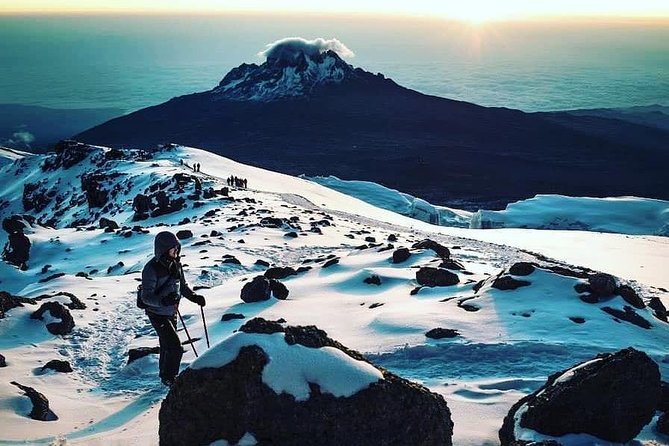
Day 3 is a classic high-altitude transition day. Your walk is about 9.5 km (5.7 miles) over 5-7 hours, with altitude gain listed as around 1,000 m. You head toward the last water point, then move into the saddle between Kibo and Mawenzi.
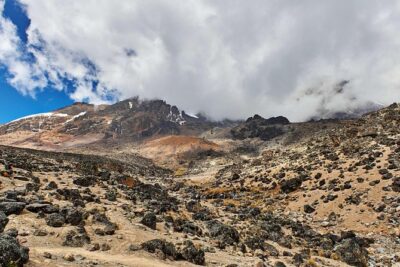
This is where the vegetation changes fast. You start with upper habitat vegetation, then it starts disappearing into a desert-like structure. That shift can feel dramatic, especially if you were expecting a steady “forest to summit” progression.
You reach Kibo, and you have dinner there. After dinner you rest with a nap, and then you begin preparation for the summit climb around 23:30.
Why day 3 matters as much as the summit day
A summit push is not just a sunrise moment. It is built on the hours you spend breathing, eating, and resting the night before. Day 3 is where you set your body up for that.
Also, the route’s compressed timing means day 3 is a critical checkpoint. If you feel off, do not ignore it. On Marangu you are following a schedule that can be challenging, so listening to your body early is smart.
Day 4: Coffee Wake-Up, Gilman’s Point, Uhuru Peak, and Down to Horombo
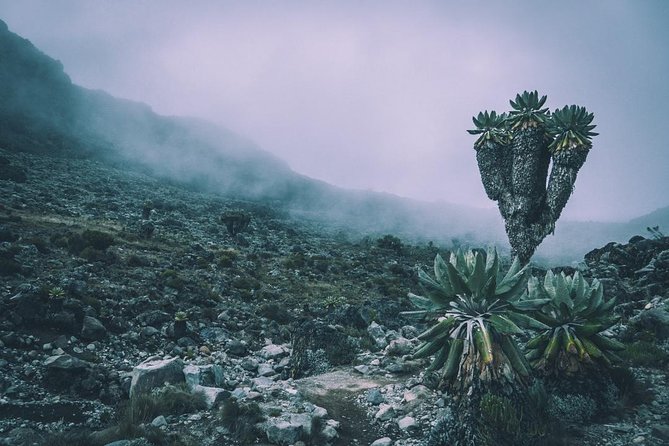
This is the big day. You get awakened very early by your guide with a cup of coffee, tea, or hot chocolate. Your guide can also help with warm-up moments, and you will be paying attention to the cold, not just the views.
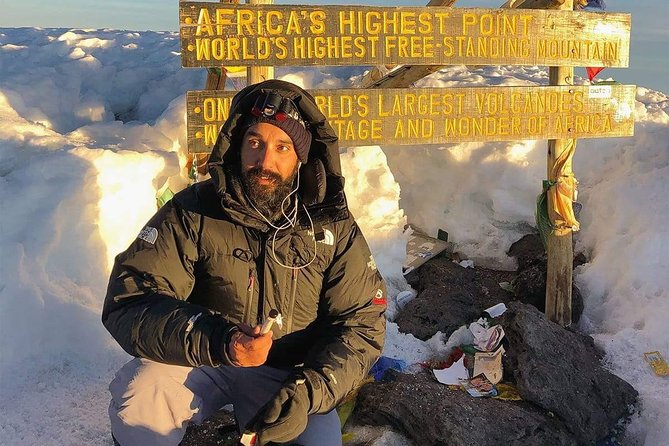
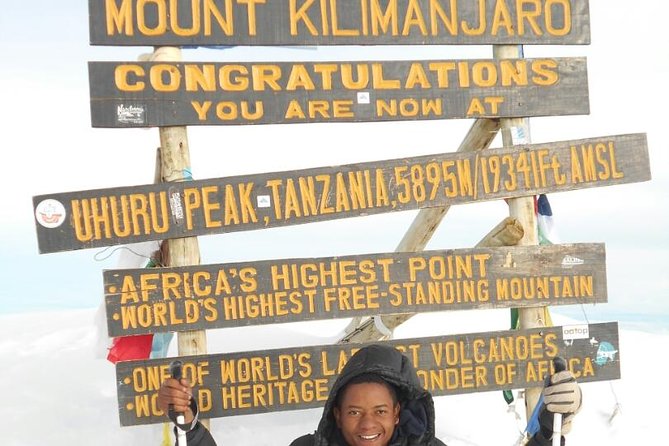
You trek to Gilman’s Point on the crater rim at 18,640 ft (5,861 m). The time estimate is 4-7 hours, and then you continue to Uhuru Peak, which is 19,340 ft (5,895 m). That final push is 1-2 hours.
Yes, you will need gear that keeps you functional, not just stylish. Bring a flash light, camera, sun glass, and warm clothes, because the summit conditions get too cold for comfort.
After taking your summit photos, you descend to Kibo Hut for breakfast and rest. Then you continue down to Horombo Hut for dinner and overnight.
What to watch for during the descent
Descending can feel almost like a relief, but it is still hard on your legs. You are tired, the air is thinner than at home, and your joints can get angry if you rush. A steady pace is usually the safest choice when the day is already long.
Day 5: Steady Descent, Mandara Return, Lush Forest to Marangu Gate, Back to Arusha
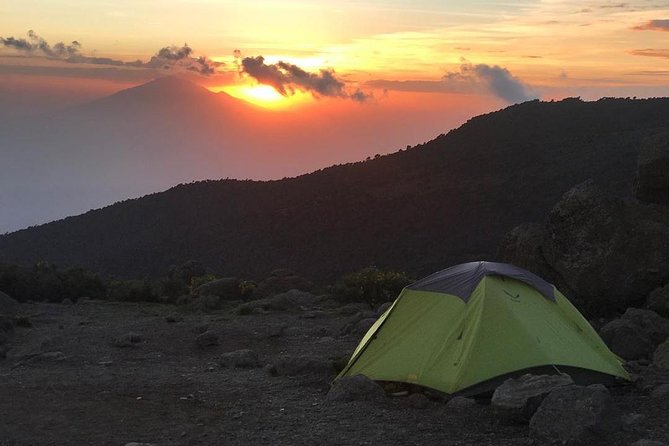
Day 5 is about coming down the same path but with the satisfaction that you are nearing the finish line. After breakfast you start a steady descent through moorland to Mandara Hut at about 2,700 m.
You then continue descending through lush forest on a good path to the National Park gate at Marangu at about 1,830 m. Your final walking segment is about 20 km (12.5 miles) over about 5 hours. Altitude gain is listed as 1,840 m, but since this is a descent day, what matters for you is that your legs will be doing most of the work now.
When you finish at the park gate, a vehicle meets you in Marangu village and drives you back to your hotel in Arusha.
The real win on day 5
This day is not about heroics. It is about managing fatigue until the car appears. If you pace your previous night and keep yourself fueled, the last day feels like a clean exit instead of a slow grind.
Price and Value: What $1,869.24 Buys You
At $1,869.24 per person for about 5 days, this is not a bargain climb, but it is also not priced like a luxury expedition. The value comes from the mix of essentials that are included in the plan.
You get admission ticket included, plus pickup offered and a mobile ticket. You also get the structure of a private tour, meaning only your group participates. Private can matter on Kilimanjaro, because it reduces the social chaos that comes with mixing with other groups at huts and on the trail.
The other value is time clarity. You start around 6:30 am, you have daily walking targets, and you know the key summit milestones: Gilman’s Point, then Uhuru Peak, with preparation around 23:30 before that push.
Still, you should factor in the big caution: Marangu’s shorter acclimatization window can be harder than the calendar suggests. If you are risk-aware and want more margin, asking for an extra acclimatization day at Horombo could be worth considering, even if it changes your timeline.
Who This Tour Fits Best (and Who Might Rethink Marangu)
This plan is listed for people with moderate physical fitness. That usually means you can handle daily walks that range from shorter pushes to longer days, and you are not starting the climb as a complete beginner.
I think Marangu is especially good if you want:
- Hut sleeping (a real plus if camping is not your thing)
- A more established route with a clear schedule
- A plan where the organizers help manage the process, with Nasir taking an active role in planning and coordination
You might rethink Marangu if:
- You hate crowds, because it is the most crowded route
- You want less repetition, because ascent and descent follow much the same path
- You are worried about acclimatization speed, because the time frame can make adjustment tough
Quick, Practical Booking Checklist
Before you lock it in, I’d check three things:
- Confirm you have a sleeping bag even though you get mattresses and pillows.
- Plan for hut basics: shared bunks, communal dining halls, and changing toilet setups as you go higher.
- Be honest about your acclimatization comfort. Ask about an extra day at Horombo if you think you need it.
That is how you turn Marangu from a “popular route” into a climb that feels manageable.
Should You Book This 5-Day Marangu Route with Moorland Safari and Trekking?
If you want Kilimanjaro with hut sleeping, a structured schedule, and organizers who coordinate well, this Marangu plan makes a lot of sense. The summit day milestones are clear, the start time is set early, and the plan is built around practical mountain logistics.
My main caution is the same one you should take seriously when choosing Marangu: the route is easier-feeling, but the overall timeline can be tight for acclimatization. If that makes you nervous, request the extra acclimatization option at Horombo and treat the climb like a process, not a race.
FAQ
What type of accommodation is used on the Marangu route?
You sleep in huts in a dormitory style setup with bunk beds. Mandara and Kibo Huts each have 60 bunk beds, while Horombo Hut has 120 bunk beds. Mattresses and pillows are provided, but you still need to bring a sleeping bag.
Do I need a sleeping bag if I’m staying in huts?
Yes. Even though you are given mattresses and pillows, the plan specifies that sleeping bags are still required.
How long is the whole climb, and what time does it start?
The climb is approximately 5 days, and the activity start time is 6:30 am.
What peaks and points are included on summit day?
The summit day includes a stop at Gilman’s Point on the crater rim at 18,640 ft (5,861 m), then the trek continues to Uhuru Peak at 19,340 ft (5,895 m).
When do you prepare for the summit climb?
Preparation begins around 23:30 on the night before the summit push, after dinner and a nap at Kibo.
Is pickup included, and how do you get back to Arusha?
Pickup is offered. On the final day, after reaching Marangu village and the National Park gate area, a vehicle meets you and drives you back to your hotel in Arusha.
Is this a private tour?
Yes. This is listed as a private tour/activity, so only your group will participate.
What is the cancellation policy?
The policy is free cancellation. You can cancel up to 24 hours in advance for a full refund, and cancellation within 24 hours does not refund the amount paid. Cut-off times use the experience’s local time.
The Marangu Trail
- Private Full Day Hiking Experience to Marangu Route
★ 5.0 · 61 reviews - From Arusha/Moshi: Kilimanjaro Hike Marangu Route Day Trip
★ 4.5 · 54 reviews - Mount Kilimanjaro Day Hike Through Marangu Route to Mandara Hut
★ 5.0 · 37 reviews - Marangu waterfall & Coffee making Cultural Tour | BURIGI CHATO SAFARIS CO LTD
★ 5.0 · 12 reviews - Climb Kilimanjaro – Marangu Route 8 Day Program
★ 5.0 · 10 reviews
Kilimanjaro, Route by Route
- 8-Day Small-group Lemosho Kilimanjaro Summit Trekking
★ 5.0 · 186 reviews - 7-Day Machame Kilimanjaro Summit Tour from Arusha
★ 5.0 · 125 reviews - Mountain Kilimanjaro Day Hike
★ 5.0 · 102 reviews - 4 days Best experience Kilimanjaro Hike, Serengeti &Ngorongoro
★ 5.0 · 54 reviews - From Arusha/Moshi: Kilimanjaro Hike Marangu Route Day Trip
★ 4.5 · 54 reviews
Just added from around Arusha
Kilimanjaro Marangu Route, compared.
 ★ 5.0Kilimanjaro climb, Marangu route (6-day)From $2,90272 reviews
 ★ 5.0Climbing Kilimanjaro – Marangu RouteFrom $2,00465 reviews
 ★ 5.0Private Full Day Hiking Experience to Marangu RouteFrom $26061 reviews
 ★ 4.5From Arusha/Moshi: Kilimanjaro Hike Marangu Route Day TripFrom $10154 reviews
 ★ 5.0Mount Kilimanjaro Day Hike Through Marangu Route to Mandara HutFrom $26537 reviews
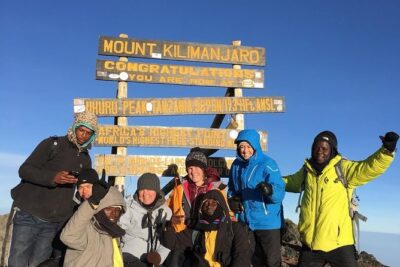 ★ 5.0Kilimanjaro Climbing 5 days Marangu routeFrom $90022 reviews
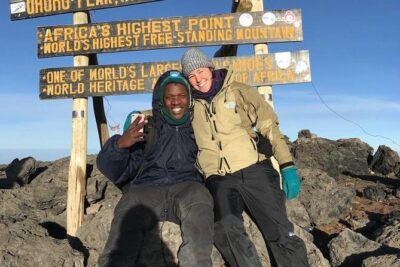 ★ 5.0Best Kilimanjaro Adventures 6 Days Marangu Route ExperienceFrom $1,00018 reviews
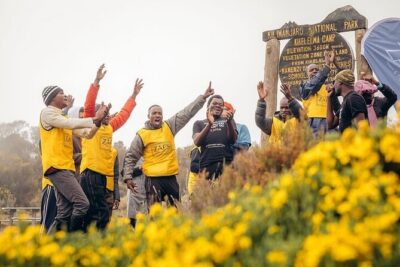 ★ 5.0Kilimanjaro Private Climbing in 6 Days Marangu RouteFrom $2,00016 reviews
Browse the lists this tour appears in