
REVIEW · 6-DAY EXPERIENCES
Tanzania Enticing Explorations – 6 Days
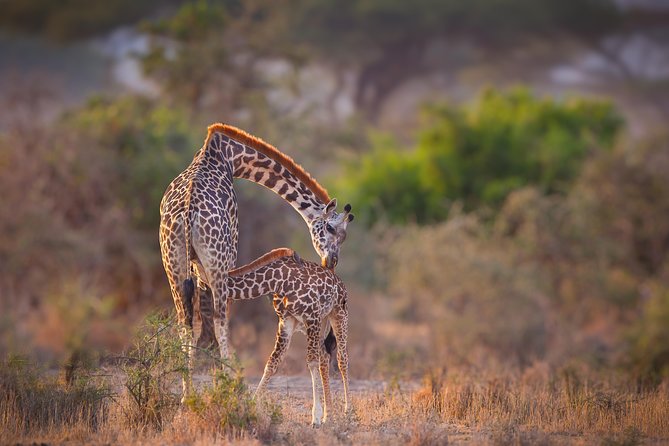
Six days, four wildlife zones, one smooth plan. I love the airport pickup and park-fee coverage, and I also like how the driver-guide handles both the driving and the wildlife spotting. The only real catch is the long stretches of road between parks, so you should be ready to ride.
This is a private tour for your group, and it runs with a simple rhythm: early starts, time in the vehicle when animals are most active, then real meals at lodges. In the feedback I’m seeing, guides like Louis, Nico, Maila, Simon, Abisai, and Edward keep things safe and efficient, with sharp eyes for cats, herds, and the small stuff you might miss.
One practical consideration: your schedule is tight around the big set pieces, especially the 6 a.m. Ngorongoro morning. Also, breakfast and lunch are covered later in the trip, but dinner is not included on the final day.
In This Review
- Key things that make this safari tick
- The best use of your time: four zones, one driving circuit
- Day 1 in Arusha: where your trip starts feeling real
- Lake Manyara: a good first safari day without trying too hard
- The Rift Valley drive to Serengeti: why the journey is part of the story
- Serengeti game drives: two shots at prime conditions
- Ngorongoro Crater: the morning descent that can change everything
- Tarangire: adding density and a second chance at the Big Cats
- Price and value: what you actually get for $3,341.18 per person
- Guides and sightings: why the human part matters in Tanzania
- How the days feel: early starts, planned meals, and road time
- Should you book this Tanzania safari?
- FAQ
- Is airport pickup and drop-off included?
- What parks are included in this 6-day safari?
- What meals are included?
- Does the price include park fees and admissions?
- Is this tour private?
- Can I cancel for a full refund?
Key things that make this safari tick
- Pickup built in: arrive at Arusha Airport and get escorted straight to your hotel.
- Park fees included: admissions are covered for the safari days.
- Game drives with a guide: you are not just driving around, you are hunting with guidance.
- Ngorongoro at sunrise: early descent from the rim boosts your odds.
- Meals planned: breakfast, lunch, and most dinners are included across the safari portion.
- Solid vehicle setup: a 4×4 Toyota Cruiser keeps you comfortable on rough tracks.
Still weighing it up? These Arusha trips came out well when we reviewed them.
- Balloon Safari & Bush Breakfast in Serengeti – Miracle Experience★ 5.0 · 1,646 reviews
- Tanzania Classic – 7 Days★ 5.0 · 1,151 reviews
- 4 Days Group Camping Safari★ 5.0 · 1,101 reviews
- 5 Days Group Camping Safari★ 5.0 · 730 reviews
The best use of your time: four zones, one driving circuit
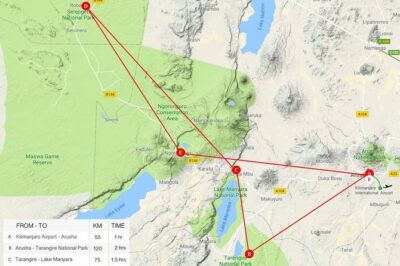
If you want a Tanzania safari that actually feels like a vacation, this kind of six-day loop works because it targets the big wildlife regions without making you stitch together a bunch of separate bookings. You start in Arusha, then move through Lake Manyara, Serengeti, and Ngorongoro, with Tarangire layered in for extra animal density.
What I like most for first-timers is that the parks feel different day to day. Lake Manyara leans into wildlife along the lake edge and woodlands. Serengeti gives you that open-plains feel and the drama of predators working under shifting light. Ngorongoro compresses an entire ecosystem into one crater, and Tarangire brings you another chance to spot lions, buffalo, wildebeest, zebra, and gazelle.
Your success will still depend on animals doing what animals do. But with a schedule this focused, you spend more time where wildlife actually shows up, and less time guessing.
Day 1 in Arusha: where your trip starts feeling real
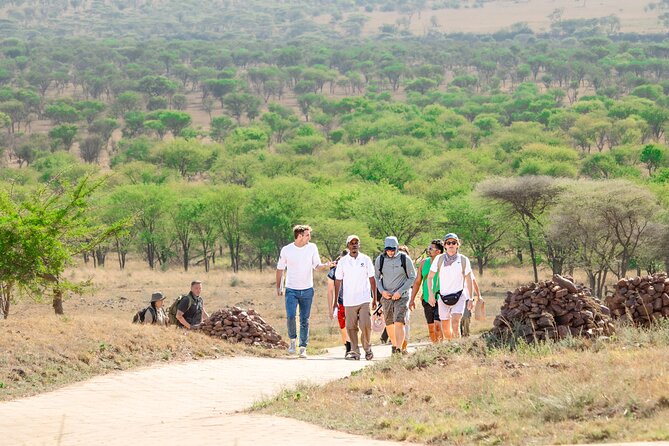
The day begins with a straightforward welcome at Arusha Airport, then transfer to your chosen Arusha hotel. This is the kind of start that matters more than people think, especially after flights, when you do not want to solve logistics on arrival.
That night is in Arusha with half board included, so you have breakfast and dinner handled. It’s also a nice buffer day to get your bearings in Tanzania and set your body up for early mornings.
Small bonus: your guide is with you from the start, so you are not walking into the safari blind. In the feedback, one theme keeps popping up: guides like Louis, Dennis, Everest Mboya, and Simon were praised for making people feel safe and taken care of.
Lake Manyara: a good first safari day without trying too hard
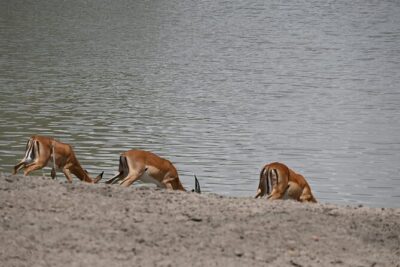
Lake Manyara National Park is where your safari kicks into gear. You leave Arusha early, then spend the day looking for wildlife across plains, acacia woodlands, and around the shallow alkaline lake.
This is a smart choice for day two because it teaches you the safari rhythm fast. You practice spotting animals at a distance, scanning for movement at the water’s edge, and learning how herds and predators can show up in different pockets depending on time of day.
You get a picnic lunchbox, and the drive back to your lodge is scheduled for the afternoon. That means you are not burning your whole day on road time. Admission is also covered for this park day, so you can focus on the wildlife, not paperwork.
A practical drawback to consider: Lake Manyara is usually more about variety in a tighter area than about long uninterrupted open-country runs. If you are expecting endless horizon drives, Serengeti will deliver that later.
The Rift Valley drive to Serengeti: why the journey is part of the story
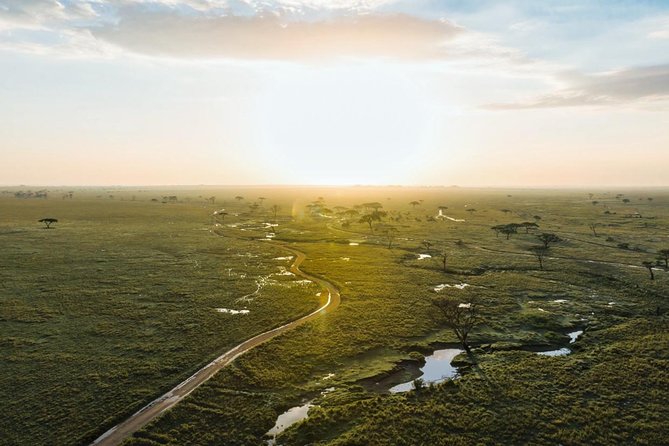
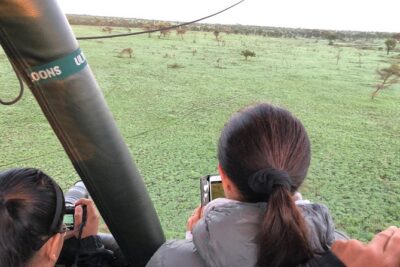
After breakfast at Lake Manyara, you head out for Serengeti, following the famous Rift Valley. This is a road day with a payoff, since you cover about 222 km over roughly five hours.
By the time you reach Serengeti, you get that classic first-time reaction: the sense of space. The value here is psychological as much as visual. Serengeti can feel like you’re looking at the system of the Serengeti, not just individual animals. That helps you understand why predators hunt the way they do, why herds keep moving, and why being patient is often the best tool.
In the early part of the trip, I’d treat the drive and arrival as training for your next two big game-drive days. You are learning how light changes, how to watch for tracks and dust, and how to read the pace of an ecosystem.
Serengeti game drives: two shots at prime conditions
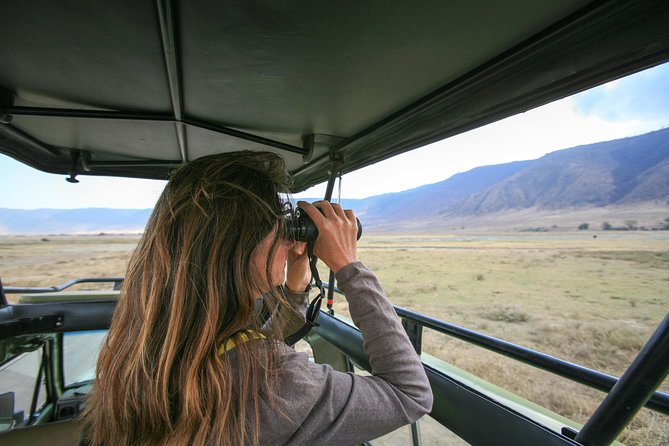
Serengeti is where you put your odds on repeat. Day three starts with time in the park, then day four begins with another morning session.
The driving time is about four hours each day, and your driver-guide explains what you are seeing while you look. That matters because Serengeti has a lot going on at once. If someone can tell you what behavior means, you spot more. If someone can spot where activity will likely build, you spend less time scanning randomly.
In guide feedback, people repeatedly credit strong spotting and timing. Names that came up include Nico, Maila, Simon, and Edward, with praise tied to finding hard-to-see animals and reaching good viewpoints before the crowds (even if you never meet any crowds).
What you should know before you go: Serengeti is huge, and sightings are never guaranteed. This tour gives you two separate game-drive windows, which is about the best way to reduce the odds of a slow day.
Ngorongoro Crater: the morning descent that can change everything
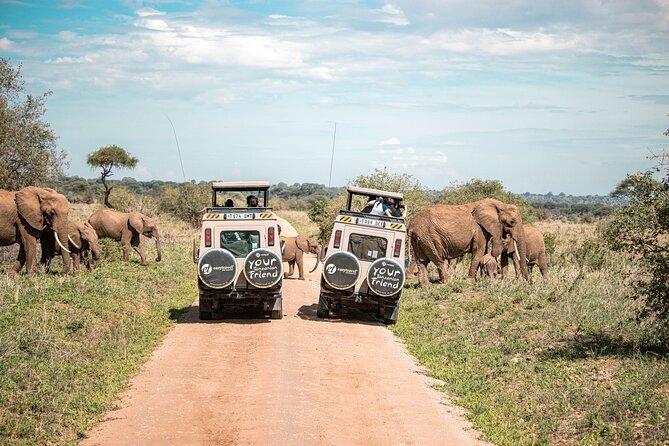
If you want the one day that feels like a storybook climax, it’s Ngorongoro. You drive from the Serengeti area into the Ngorongoro Conservation Area, then overnight at a lodge with dinner ready for you.
The next morning is the key moment: a 6 a.m. departure to reach the rim, then descend into the crater. The timing matters because crater wildlife often shows itself with more energy in the morning. You’re looking at a closed bowl of habitat, which tends to concentrate action.
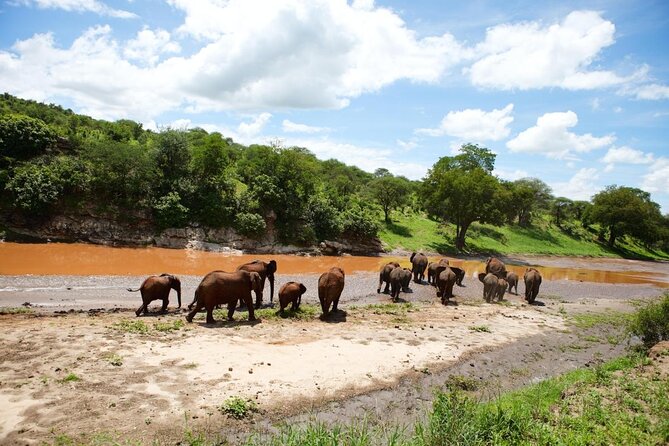
You get about four hours in the crater. The numbers here are part of the reason Ngorongoro is famous: around 120 lions, about 15,000 wildebeest, around 9,000 zebra, roughly 400 hyenas, and close to 50 black rhino. Even if you do not see every species, the chance is real enough to make this day feel special.
One of the biggest “this might happen” possibilities is black rhino. The tour description calls it out, and many safari instincts tell you why. If you want a realistic shot at rhino, this is one of the best settings in Tanzania to aim for.
After the crater day, you shift gears toward Tarangire for the afternoon and evening, so you get both a trophy day and a recovery-friendly follow-up.
Tarangire: adding density and a second chance at the Big Cats
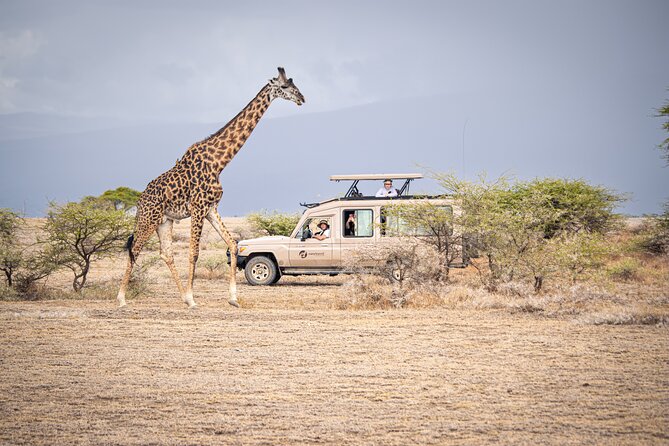
Tarangire comes right after Ngorongoro, which is a lot to ask of your body. But it works because it gives you a different style of safari. You drive about 200 km over roughly four and a half hours, then settle into another morning game drive.
Tarangire is described as nearly 3,000 km² and known for wildlife density. The tour specifically mentions buffalo, lion, wildebeest, zebra, and gazelle, and it frames this park as a place where animal densities can rival Serengeti.
That last point is important. Some people assume Tarangire is only for photos of sunsets or a one-time stop. This program treats it as a real wildlife day. You also do not have to carry the emotional weight of “missing the big day” because you already did Ngorongoro. Instead, you can enjoy Tarangire as a second chance to catch predators in motion.
On the final day, you do a morning game drive, have lunch, then drive back to Arusha Airport about 175 km over around three hours. Breakfast and lunch are included, and dinner is not included that last day, so plan for that meal on your own.
Price and value: what you actually get for $3,341.18 per person
At $3,341.18 per person for six days, this safari sits in the premium category. The value question is not just cost, it is what is bundled into that price.
Here’s what’s covered:
- A 4×4 Toyota Cruiser plus your driver-guide
- Park fees and admissions (the tour also labels them as free in the daily inclusions)
- Accommodation: 1 night in Arusha with half board, plus 4 safari nights with full board
- Meals: breakfast and lunch are included across safari days, and dinners are included for the listed number of days (with the final day dinner not included)
- Water plus soft drinks, coffee or tea on game drives
What is not covered:
- Flights, visa, and travel or medical insurance
- Tips for guide and hotel staff
- Drinks and laundry services at lodges/camps
So you are paying for logistics and time: the vehicle, the guide, the park access, and the lodging that keeps you inside the safari schedule. For many people, that is exactly what makes a safari feel like a once-in-a-lifetime trip instead of a project.
If you are on a tight budget, this may not be your match. But if you want to reduce the number of decisions and payments once you land in Tanzania, the bundled structure can feel worth it.
Guides and sightings: why the human part matters in Tanzania
In safari country, a good guide does three things: finds animals, keeps you safe, and explains enough for you to enjoy what you’re seeing.
This tour is built around a driver-guide who meets you at the airport, then stays with you across the safari days. In the feedback provided, driver-guides are praised by name for sharp spotting and for putting the car into a good position. People also credit guides with driving well and making guests feel safe, plus offering facts about wildlife and birds.
Some names that come up in the guide praise include Louis, Dennis, Everest Mboya, Abisai, Omega, Edward, Gilbert Mariki, Nico, Nicodemeus, Maila, Simon, and George. You should treat these as examples of the kind of guiding quality people are receiving, not a guarantee of assignment.
Still, the pattern is consistent: your best chance at memorable sightings is more about the guide’s eyes and judgment than about luck alone.
How the days feel: early starts, planned meals, and road time
This trip has an obvious pace. You start early on safari mornings. Day two begins with an early departure. Day four has a morning game drive. Day five starts the Ngorongoro crater day at 6 a.m., and day six repeats a morning session before heading back to Arusha.
Between parks, you travel. The program gives you approximate road times and distances, and they add up. You are doing about:
- Roughly five hours from Manyara to Serengeti (about 222 km)
- About four and a half hours from Ngorongoro area to Tarangire (about 200 km)
- About three hours returning to Arusha Airport (about 175 km)
The good part is you do not spend those stretches sitting in limbo. You have a schedule with meals planned through the included full board and half board arrangements.
One more practical note: the tour includes picnic lunchboxes on safari days. That keeps you from losing time to finding food in transit.
Should you book this Tanzania safari?
Book it if:
- You want a focused six-day safari that hits Lake Manyara, Serengeti, Ngorongoro, and Tarangire without complicated add-ons.
- You care about getting park access handled and not worrying about park fees.
- You value a guide who can find animals and explain what you’re seeing, especially for a place like Ngorongoro where timing matters.
Skip it or reconsider if:
- You dislike long road days. This route includes meaningful transfer times between regions.
- You want a more flexible, slow-travel style with lots of free afternoons. This one is built for game drives and set safari windows.
My simple final take: this is a strong choice when your goal is wildlife, not checklist chaos. With the included park fees, lodging, and guided game drives, it’s built to get you into position for the big moments, and that is what most people remember after Tanzania.
FAQ
Is airport pickup and drop-off included?
Yes. The tour includes arrival assistance at Arusha Airport and escort to your Arusha hotel, and it also includes returning to Arusha Airport at the end.
What parks are included in this 6-day safari?
You visit Lake Manyara National Park, Serengeti National Park, Ngorongoro Crater (within the Ngorongoro Conservation Area), and Tarangire National Park.
What meals are included?
Breakfast is included for 5 days, lunch for 5 days, and dinner for 5 days. On the final day, dinner is not included, while breakfast and lunch are.
Does the price include park fees and admissions?
Yes. Park fees are included, and the daily park access is listed as free in the tour schedule details.
Is this tour private?
Yes. It is a private tour/activity, and only your group participates.
Can I cancel for a full refund?
You can cancel up to 24 hours in advance for a full refund. If you cancel less than 24 hours before the start time, the amount paid is not refunded.
Just added from around Arusha
6-Day Experiences, compared.
 ★ 5.0Tanzania Wildlife Encounters – 6 DaysFrom $3,413277 reviews
 ★ 5.0Private 6-Day Tarangire Manyara Crater and Serengeti with Mid-Range LodgesFrom $2,685238 reviews
 ★ 5.06 Days Private Budget SafariFrom $2,300163 reviews
 ★ 5.06 Days Tanzania Budget Camping SafariFrom $1,600145 reviews
 ★ 5.0Kilimanjaro climb, Lemosho Route (6-day)From $3,034129 reviews
 ★ 5.0Kilimanjaro climb, Marangu route (6-day)From $2,90272 reviews
 ★ 5.06 days Tanzania budget safariFrom $2,50065 reviews
 ★ 5.06 Days 5 Night SafariFrom $2,77257 reviews
Browse the lists this tour appears in