
REVIEW · GREAT WILDEBEEST MIGRATION SAFARIS
8 Days Follow the Wildebeest Migration River Crossing Safari
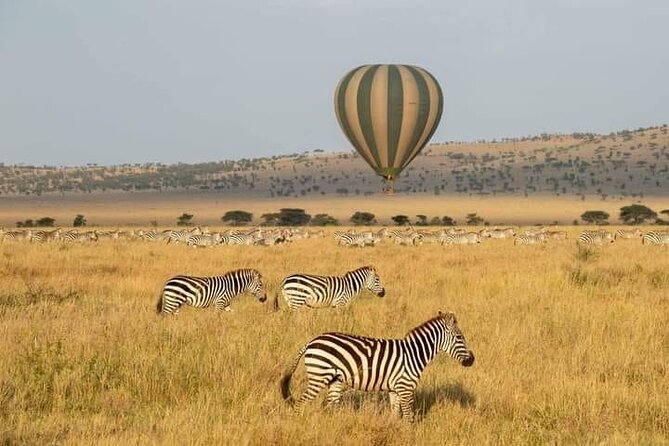
The hooves are the main event. This 8-day Tanzania safari is built to follow the wildebeest migration during calving season, with time around Lake Ndutu plus Southern and Central Serengeti before adding Ngorongoro Crater. One possible drawback is the Mara River crossing: herds may gather close by and still choose not to cross, so you cannot treat a crossing like a guaranteed photo stop.
I also like that the trip is organized around real safari flow, from arrival transfer in Arusha to park driving days that can be long, with an early start time listed at 6:00 am. You get a professional English-speaking driver-guide and unlimited bottled water during game viewing, which makes a big difference when you are spending hours out in the field.
In This Review
- Key highlights worth planning around
- The calving-season migration focus that shapes the whole trip
- Arusha arrival transfer: quick start, then you settle in
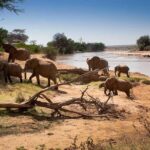
- Tarangire National Park: a quieter start with elephants and birds
- Serengeti on the endless plain: resident Big Five energy
- North Serengeti and the Mara River: where luck becomes part of the plan
- Wagakuria full-day drives: big cat odds plus migration drama
- Central Serengeti day: small animal life and bird variety, not just the main herd
- Ngorongoro Crater early game drive: the one that feels different
- Final drive back to Arusha and your onward flight
- Price and value: what $4,539 buys you in Tanzania
- Who this safari fits best, and who should think twice
- The human factor: Congema support and named guides
- Should you book this 8-day wildebeest migration safari?
- FAQ
- How long is the safari, and when does it start?
- Where does the tour start and where does it end?
- What parts of Tanzania are visited on this safari?
- Are park entry fees and Ngorongoro Crater fees included?
- Are meals included?
- Is tipping included in the price?
- Is there free cancellation?
Key highlights worth planning around
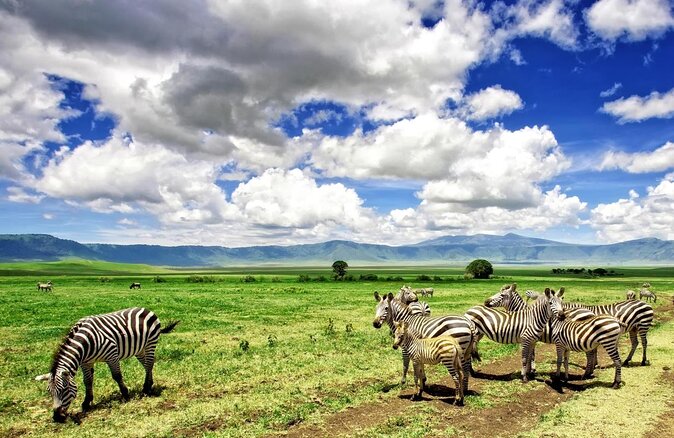
- Calving-season timing (Dec to Apr) aims your game drives at the months when wildebeest births are happening.
- Serengeti coverage goes beyond one trick: you get resident wildlife in addition to migration-focused days.
- Mara River area can pay off, but with luck: crossings are difficult to predict even when you are in the right region.
- Inside-the-park sleeping option is offered for one night at Embalakai Authentic Camp or Serengeti Serena Lodge.
- Value details are built into the price, including park entry, crater fees, unlimited game mileage, and water.
Chasing the herds? Compare these first
- 8 Days Great Wildebeest Calving Migration Safari from Arusha★ 5.0 · 254 reviews
- 10-Day Serengeti Wildebeest Migration Safari from Arusha★ 5.0 · 218 reviews
- 8 Day Spectacular Migration Serengeti mid -Range Tanzania Safari★ 5.0 · 161 reviews
- 9-Day Serengeti Migration Footsteps Tanzania Safari★ 5.0 · 96 reviews
The calving-season migration focus that shapes the whole trip
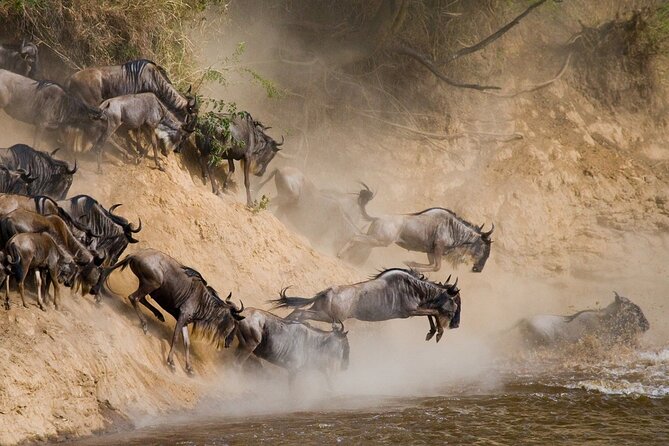
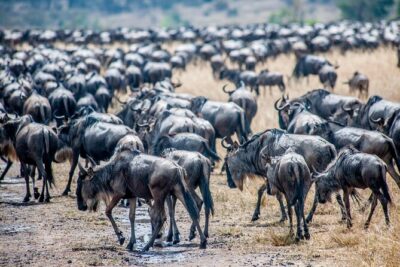
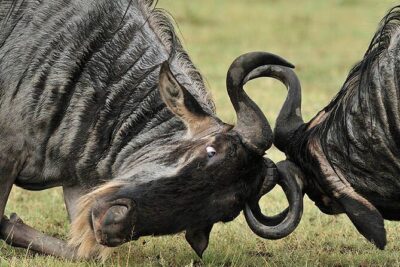
This safari is designed around the period between December and April, when the wildebeest migration is tied to births. That is what gives this route its specific flavor. Instead of treating the migration as one big moving spectacle, the plan aims to place you in the broader Serengeti ecosystem when herds are seeking fresh pasture and calves are entering the world.
You are also not traveling to only one spot. The route is positioned around Lake Ndutu in the greater Serengeti system, then moves through the Southern and Central Serengeti National Park areas. In plain terms, that means you spend time where migration activity is likely, but you are also in regions where resident wildlife stays active even when the herds are not doing anything dramatic at that exact moment.
One more thing I like: the safari frames Serengeti as more than just wildebeest. It calls out UNESCO status and the sheer scale of animals you can expect to see in the grasslands. You are given baseline numbers like roughly 200,000 zebras and 300,000 Thomson’s gazelles, which helps you understand what you are walking into when the herds overlap and the grazing pressure shifts.
Arusha arrival transfer: quick start, then you settle in
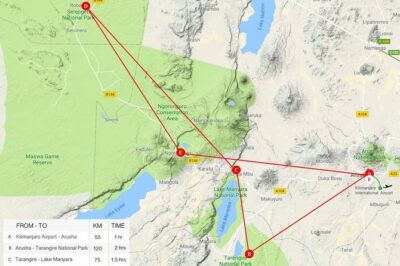
Day 1 is a straightforward landing day. You arrive at Kilimanjaro International Airport, meet your transfer driver, and get escorted into Arusha city for evening rest. The transfer is short compared to the later driving legs, about 55 km or roughly an hour.
Why this matters: Arusha is where you reset before the safari machine turns on. Even though you might be itching to get to wildlife fast, having a buffer night is practical on an 8-day trip that includes early mornings and long park drives.
Also, the transfer includes an introduction to the country from the driver. That sounds small, but in Tanzania it can help you get comfortable with how things run on the ground before you enter the more structured rhythm of the parks.
Tarangire National Park: a quieter start with elephants and birds
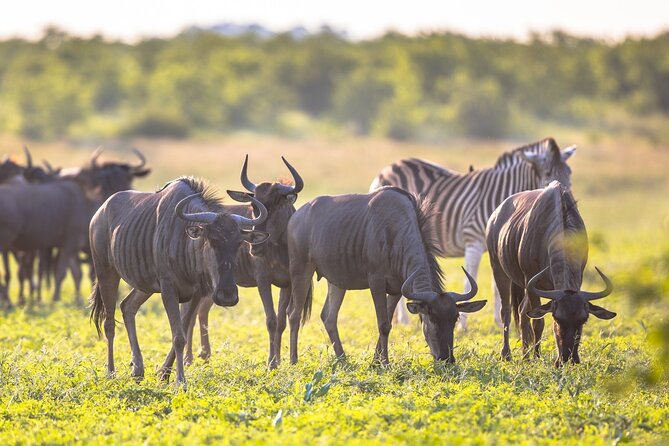
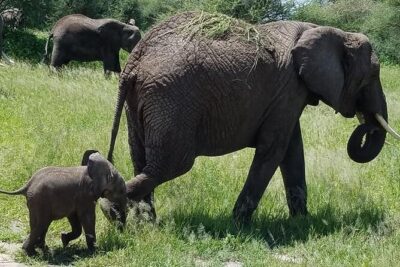
On Day 2, you head to Tarangire National Park, about 120 km and around 2 hours of driving. This is presented as a “quiet” park with a strong reputation for elephants and birding.
That mix is a good fit for the beginning of your safari. After the arrival day, Tarangire gives you a calmer entry point into game viewing. If Serengeti feels like a full-on wildlife movie set (in the best way), Tarangire can feel like the opening chapter, with elephants and birds filling the frame while you build your safari eye.
The day is a full game drive day, and you stay on full board with breakfast, lunch, and dinner included. Your driver also handles government procedures at the gate, which is the kind of behind-the-scenes work that keeps your day focused on wildlife.
Potential drawback to keep in mind: because Tarangire is described as less crowded and slightly off the main safari route, your biggest sightings can be more about chance encounters and rhythm rather than constant spectacle. If you need constant predator action every hour, you might find your pace different here than in Serengeti.
Serengeti on the endless plain: resident Big Five energy
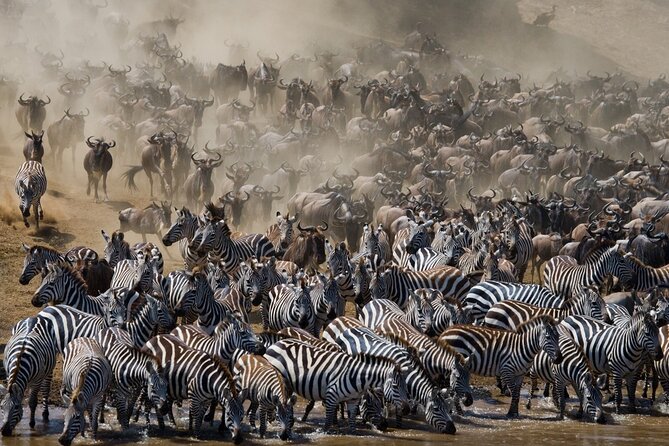
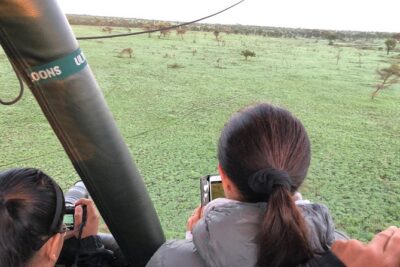
Day 3 is your push into Serengeti National Park, with the drive listed as about 245 km and roughly 4.5 hours to Seronera. Once you arrive, the safari emphasizes that Serengeti has healthy resident wildlife, including the Big Five: lion, leopard, elephant, rhino, and buffalo.
This is an important strategic element. The migration is the headline, but resident animals mean your day is not solely dependent on whether the wildebeest make a dramatic move in front of you.
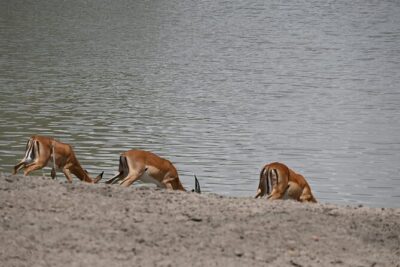
You are also given a sense of the scale and soundtrack. The safari talks about zebras and Thomson’s gazelles joining the trek for fresh grazing, and about the sound of millions of hooves on the plains. Even if you do not know how a place sounds until you are there, that description matches the experience you should expect from Serengeti in high-animal seasons.
The day ends with another long safari session, followed by overnight accommodation with full board meals included.
North Serengeti and the Mara River: where luck becomes part of the plan
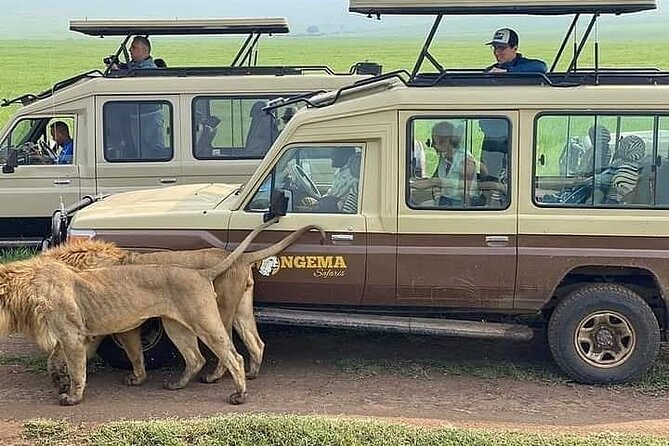
Days 4 and 5 are both aimed at North Serengeti, with a specific focus on the migration and the Mara River. You drive about 155 km, roughly 5 hours, into this region and then spend full days on safari.
This is where the itinerary really leans into the “chase” part of migration watching. The plan notes that in the Wagakuria area you can find resident wildlife with prides of lion that may include very large numbers. That is one reason these days are appealing even if the wildebeest do not cross during your exact time window.
The other reason is the Mara River. The safari explains that herds may cross north one day and then return south a few days later. It also gives you the honest reality check: finding a crossing is difficult and can come down to luck. Even seeing a herd near the river does not mean it will cross immediately. You might watch them decide to wait.
This is the key consideration for readers: if you are booking primarily for one specific wildlife scene, be ready to accept that the migration is not choreographed. What you are buying is being in the right ecosystem at the right season, with two full days devoted to the river area, plus an experienced driver working the landscape.
Wagakuria full-day drives: big cat odds plus migration drama
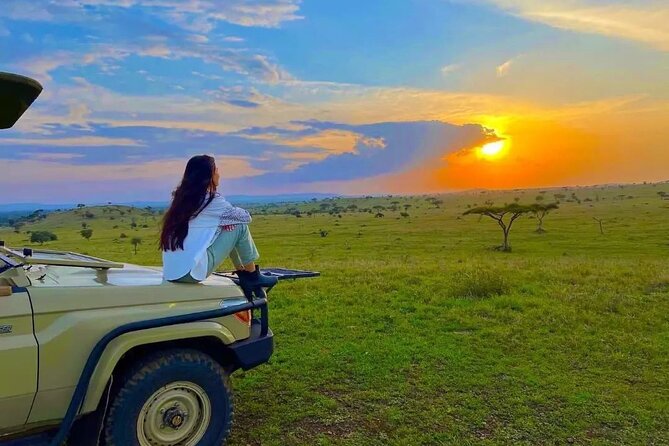
Day 5 keeps you in Serengeti National Park, focused again on the Wagakuria area. The day is described as a full game drive day, and the itinerary repeats that prides can be exceptionally large in this region and that from August to October it becomes a wildlife paradise.
If you are traveling within the Dec to Apr target window, that August to October line is still useful as a clue about general predator density and movement patterns across seasons, but your real anchor is the wildebeest-calving timeframe and the Mara River focus.
What I like here is that the plan does not treat the river as your only reason for being there. You get a mix of kopjes, woodland, riverine vegetation, and open plains described for the Wagakuria setting, with similarities to Kenya’s Masai Mara Game Reserve. In practice, that kind of habitat mix often means wildlife is spread out, and your day can include more variety than you might expect from one hotspot.
Your accommodation and full-board meals continue through this day as listed.
Central Serengeti day: small animal life and bird variety, not just the main herd
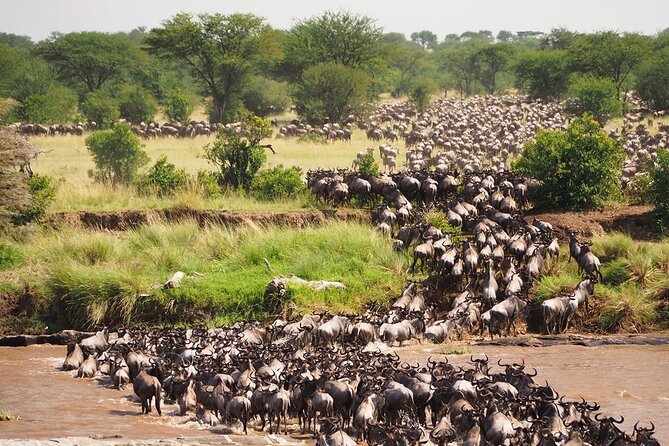
Day 6 switches gears to Central Serengeti. You drive the roughly 155 km or about 5 hours that day, then you do a full game drive in central areas.
The details here are a nice reminder that Serengeti is not only about wildebeest and big predators. The safari description calls out agama lizards and rock hyraxes on isolated granite koppies, plus dung beetles and wide bird life, with around 500 bird species recorded. It specifically names birds like ostrich and secretary bird and mentions black eagles soaring above Lobo Hills.
Why this matters for you: if you worry that a migration-focused safari will become repetitive, central Serengeti adds different kinds of wildlife viewing. You may still see the big stuff, but this day encourages you to notice what most people miss when they only look for movement at ground level.
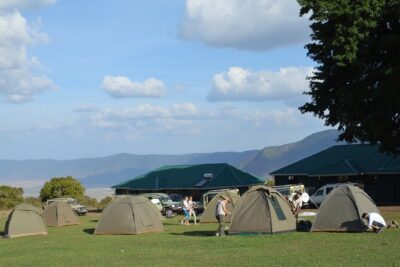
At the end of the day, you drive to camp for overnight. The plan lists two options for staying inside the park for this night: Embalakai Authentic Camp (mid-range) or Serengeti Serena Lodge (semi-luxury). Staying inside the park can make the rhythm feel more “in place” since you are not commuting as late into the evening.
Ngorongoro Crater early game drive: the one that feels different
Day 7 is your Ngorongoro day. You drive about 145 km and around 3.30 hours to the Ngorongoro Conservation Area, then you go for an early morning game drive inside the crater itself.
Ngorongoro gets special status here. The itinerary explains that the conservation area is an extensive highland region along the eastern arm of the Rift Valley, with Ngorongoro Crater as the focal point. It also states that the area was established to conserve wildlife and natural resources, and it safeguards the interests of indigenous people while promoting tourism.
Even if you have visited other crater-style parks before, the way this is framed matters. You are not just “going to see a bowl.” You are entering a protected system with conservation goals and living communities tied to it.
The day ends with an evening drive to the lodge and overnight.
Practical note: the crater portion is early, so you should expect the day to feel structured rather than laid-back. If you prefer slower mornings, this is the day that will test your patience, but it is also the day most people talk about after.
Final drive back to Arusha and your onward flight
Day 8 is the exit. After breakfast, you head back to Arusha about 245 km, around 4 hours of driving. The itinerary mentions passing by a shopping market on the way, then arranging your transfer to Kilimanjaro International Airport for your onward flight.
This is a good wrap because it gives you a final wildlife-free window to settle and organize your airport departure. Your service ends back at the meeting point.
Price and value: what $4,539 buys you in Tanzania
The listed price is $4,539 per person for this 8-day trip. Safari pricing in Tanzania can vary wildly depending on lodge level, vehicle style, and how much is included. What helps you evaluate this one is how many big line items it covers.
Here are the value anchors the plan includes:
- Park entry fees and Crater fees (listed as 24hrs single entry)
- Unlimited game mileage, so you are not paying for driving time
- Unlimited bottled drinking water during game viewing
- Professional English-speaking driver-guide
- AMREF Flying Doctor Insurance
- Full meals listed as breakfast (7), lunch (7), dinner (7)
That is a lot of “day-to-day cost pressure” handled for you. At $4,539, you do not just want animals. You want to avoid surprise add-ons that inflate the real total once you arrive.
What is not included also matters:
- Tips, with guidance of US$20 per person per day
- Alcohol drinks
- Personal items like souvenirs
- Travel insurance and medical repatriation
- International flights
My advice for your budget: treat the tips and alcohol as the two main variable costs you can control. For alcohol, since it is not included, decide early whether you want to keep it light or skip it.
If you are booking for a group, the plan also mentions group discounts, and it includes a mobile ticket. A mobile ticket can be handy if you hate paperwork and want a cleaner arrival day.
Who this safari fits best, and who should think twice
This tour fits best if you want:
- A true migration season focus (Dec to Apr) and you understand that crossings are unpredictable
- A mix of migration days plus Serengeti resident wildlife viewing
- A guided setup with a professional English-speaking driver-guide and handled park procedures
- A private format where only your group participates, which usually means less waiting around for other schedules
It might not be the best fit if:
- You need a guaranteed Mara River crossing moment. Even with two dedicated days in the north and Wagakuria area, the plan itself flags that crossings can be hard to find.
- You dislike long driving days. Transfers of about 2 to 5 hours show up repeatedly between regions, so you should be ready for the road time as part of the price of admission.
The human factor: Congema support and named guides
One reason I feel good recommending operator-style safaris like this is the presence of specific people in the experience. In the feedback tied to Congema Safaris, names like Sébastien and Musa Osman show up as key points of support, alongside mention of other team members like Sebastien again in the overall communication. The practical takeaway for you is simple: you are not just buying a vehicle and a schedule, you are buying someone’s ability to organize a circuit and keep it running smoothly.
Should you book this 8-day wildebeest migration safari?
If your dream includes seeing the Serengeti in calving season, and you are comfortable with the reality that wildlife moments depend on timing and luck, I think this is a strong choice. The value is in the package structure: park and crater fees handled, water and mileage included, and enough Serengeti days to balance migration watching with resident wildlife opportunities.
Book it if you are:
- Wildlife-focused, with patience for early mornings and longer drives
- Happy to devote time to the Mara River area without demanding a guaranteed crossing
- Looking for an organized trip where the big logistics are handled in Tanzania
Consider another option if:
- You only want one specific event, like an on-demand Mara River crossing, and you would feel frustrated if it does not happen in front of you during your exact window.
If you go in with the right mindset, this is the kind of safari that can feel like a whole ecosystem moving around you, not just a list of sightings.
FAQ
How long is the safari, and when does it start?
It is listed as an 8-day safari. The start time is 6:00 am.
Where does the tour start and where does it end?
It starts in Arusha, Tanzania, and it ends back at the meeting point in Arusha. On the final day, you are transferred to Kilimanjaro International Airport.
What parts of Tanzania are visited on this safari?
You visit Tarangire National Park, Serengeti National Park (including areas tied to the migration and Mara River focus), and the Ngorongoro Conservation Area with an early game drive inside Ngorongoro Crater.
Are park entry fees and Ngorongoro Crater fees included?
Yes. Park entry fees and Crater fees are included, listed as 24hrs single entry.
Are meals included?
Yes. The tour lists breakfast (7), lunch (7), and dinner (7), and it also notes full-board meals on multiple safari days. Unlimited bottled drinking water is included during game viewing.
Is tipping included in the price?
No. Tips are not included, and the guidance is US$20 per person per day.
Is there free cancellation?
Yes. Free cancellation is offered, and you can cancel up to 24 hours in advance for a full refund.
Following the Migration
- 8 Days Great Wildebeest Calving Migration Safari from Arusha
★ 5.0 · 254 reviews - 10-Day Serengeti Wildebeest Migration Safari from Arusha
★ 5.0 · 218 reviews - 8 Day Spectacular Migration Serengeti mid -Range Tanzania Safari
★ 5.0 · 161 reviews - 9-Day Serengeti Migration Footsteps Tanzania Safari
★ 5.0 · 96 reviews - 7 days great migration safari
★ 5.0 · 77 reviews
Just added from around Arusha
Great Wildebeest Migration Safaris, compared.
 ★ 5.08 Days Great Wildebeest Calving Migration Safari from ArushaFrom $2,999254 reviews
 ★ 5.010-Day Serengeti Wildebeest Migration Safari from ArushaFrom $5,512218 reviews
 ★ 5.08 Day Spectacular Migration Serengeti mid -Range Tanzania SafariFrom $4,257161 reviews
 ★ 5.09-Day Serengeti Migration Footsteps Tanzania SafariFrom $4,53996 reviews
 ★ 5.07 days great migration safariFrom $4,51477 reviews
 ★ 5.0Great Migration Safari In TanzaniaFrom $3,90071 reviews
 ★ 5.0Private 6-Day Great Migration Ndutu Serengeti Safari TourFrom $2,82747 reviews
 ★ 5.04 Day Great Migration Safari Serengeti & Ngorongoro CraterFrom $2,68033 reviews
Browse the lists this tour appears in