
REVIEW · SERENGETI NATIONAL PARK SAFARIS
4-Day Tarangire Serengeti, Ngorongoro & Maasai Guided group tour
Three parks in four days, done right. This Moshi-based guided group tour strings together Tarangire National Park for a full day of wildlife watching, then moves into the Serengeti for about 2 days of game drives and sunsets, before finishing with Ngorongoro Conservation Area and its famous crater. I like the way the schedule makes wildlife viewing feel practical, not rushed, especially on Day 1 when you get a real shot at Tarangire’s big elephant moments during a full day game drive with a picnic lunch.
I also love the crater morning, the early rise and the first look over the rim before you drive down into the “Garden of Eden.” Ngorongoro is said to be about 610 m deep and roughly 260 square km, and it holds an estimated animal density around 25,000, so the viewing tends to be intense once you’re down there. One possible drawback to plan for, based on how these camps operate, is that you may sleep in tents at campsite locations like Seronera or Simba, and you should expect long driving days and early starts.
In This Review
- Key highlights I’d circle
- Big-picture route: why this Moshi loop makes sense
- Tarangire National Park: elephants, dry-country antelope, and predator chances
- The route into Serengeti: highlands farms, conservation area views, and timing
- Serengeti game drives and Seronera campsite: where the plains feel endless
- Ngorongoro Conservation Area to Simba camp: big-five odds and crater-edge magic
- Ngorongoro Crater tour: sunrise views and a guided descent
- Guides, pacing, and camp meals: where the safari gets real
- Price and value at about $1,030 per person
- What you should pack for four long wildlife days
- Who this safari suits best
- Should you book this 4-Day Tarangire, Serengeti, Ngorongoro & Maasai tour?
- FAQ
- Where does the tour start, and when does it begin?
- Is airport pickup included?
- What parks are included in the 4 days?
- Are meals included in the price?
- Is WiFi available during the safari?
- Are tips included, and what is the cancellation timing?
Key highlights I’d circle
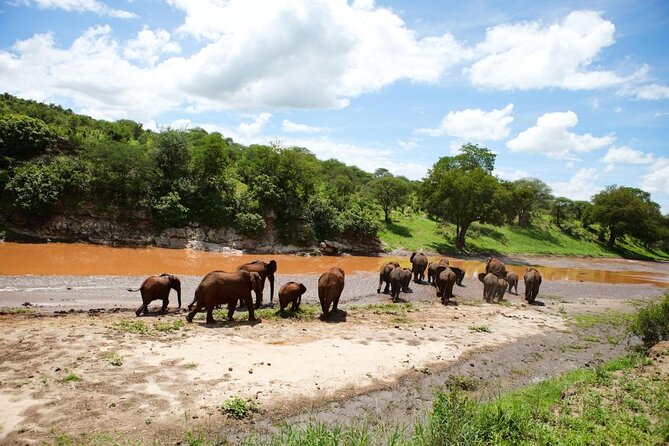
- Tarangire’s elephant power: up to 300 elephants are noted for drinking and feeding around the riverbed and dry lagoons.
- Serengeti sunsets from the road: an evening drive is built in, with dinner and overnight at Seronera campsite inside the park area.
- Crater-edge nights: you sleep near Ngorongoro’s rim at Simba campsite, so sunrise viewing is easier.
- Big-five odds on the way: your game drives include chances to see major cats and other large mammals, depending on conditions.
- Small group feel: a maximum of 18 travelers helps keep the safari more controlled.
- Camp-to-camp comfort basics: WiFi is offered inside the safari jeep, and meals are included across the days.
More of the Serengeti, drive by drive
- Safari Serengeti And Ngorongoro★ 5.0 · 288 reviews
- 5 Days Camping Tarangire, Serengeti & Ngorongoro crater & Visiting Maasai★ 5.0 · 58 reviews
- 4 Days Group Joining Camping Safari to Tarangire Serengeti Ngorongoro Crater★ 5.0 · 50 reviews
- 4 Day Private Tour Throughout Tarangire, Serengeti and Ngorongoro★ 5.0 · 42 reviews
Big-picture route: why this Moshi loop makes sense
This is a classic northern Tanzania circuit, built around three different ecosystems that show wildlife in different ways. Tarangire focuses on concentrated dry-season action, Serengeti gives you long-plains drama and migration energy, and Ngorongoro stacks animals into one enclosed, crater-shaped world.
What makes this particular 4-day format appealing is the pacing: you do one true full day in Tarangire, you get nearly two days in the Serengeti to adjust for animal movement, and you dedicate an entire day to Ngorongoro, which is where most first-time safari bucket lists land. You also start and end in the Moshi area, with pickup offered and a meeting point at Kilimanjaro Airport, which keeps the trip feeling like a true “single package” rather than a patchwork of transfers.
Tarangire National Park: elephants, dry-country antelope, and predator chances
Day 1 is your Tarangire day, and it’s structured like a proper safari day rather than a quick drive-by. After early breakfast, you head to the park for a full day game drive, plus picnic lunches, then you return for dinner and an overnight at Sun bright campsite.
Tarangire is known for wildlife gathering around the last reliable water. The most specific detail I’d pay attention to is the note about herds up to 300 elephants scraping the waterless river bed for alternative streams. That is exactly the kind of wildlife behavior you want a full day for, because elephants do not always line up on a timetable.
You also get a chance to see the park’s dry-country antelope cast, including fringe-eared Oryx and gerenuk, plus the usual Serengeti-adjacent set like zebra, buffalo, impala, gazelle, hartebeest, and eland. In practice, this means Tarangire can feel like a buffet for predators. If you’ve ever wondered why some safaris feel “alive” while others feel quiet, this is the reason: in Tarangire, animals have to share space, which increases sightings.
What to consider: a full day of game drive means dust, heat, and lots of sitting in the same vehicle. Bring sun protection and something warm for early morning and late afternoon, since temperatures can shift quickly even when it feels hot during the day.
The route into Serengeti: highlands farms, conservation area views, and timing
On Day 2, you transition from Tarangire toward the Serengeti, passing through the Ngorongoro Conservation Area along the way. The drive includes a stop for scenery and context, including a view of the Ngorongoro caldera described as an expanse created by a volcano explosion about three million years ago.
You’ll also pass through fertile highlands where wheat, coffee, and corn are grown by the Iraqw people. This part matters because it’s the contrast that makes the safari feel real. You are not just teleporting between wildlife zones, you’re traveling across living Tanzania.
The Serengeti arrival is by late evening, and the trip includes time for an evening game drive in central Serengeti so you can catch the sunset, then dinner and overnight at Seronera campsite inside the Serengeti. That’s a smart choice for first-timers, because it gives you both late-day light for better photos and a calmer animal rhythm after the long drive.
What to consider: driving time is part of the deal. Day 2 is about 8 hours in the plan, and you’ll reach camp later in the day, so don’t schedule anything else the night you arrive in Moshi.
Other ways down into the Ngorongoro Crater
Serengeti game drives and Seronera campsite: where the plains feel endless
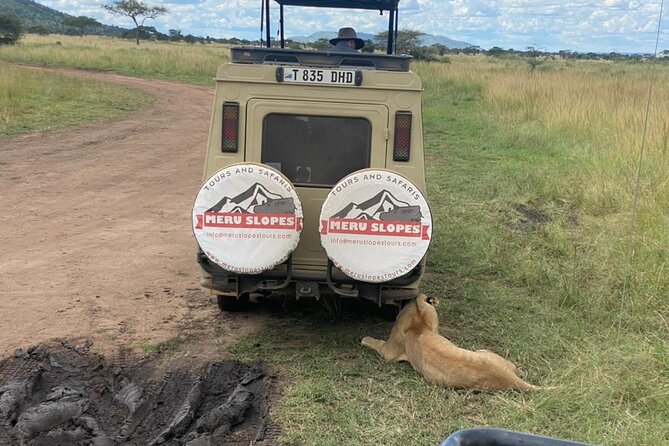
Serengeti is the “Endless Plain,” which is not just a poetic description, it’s how the day-to-day viewing feels. The big draw here is the famous wildebeest migration, and the way drought affects movement across the park. Your route is designed so predators are more likely to encounter shifting herds as animals move from one area to another.
During this time, you’re not guaranteed a set list of animals every hour. What you are buying is time. With almost two full days in the Serengeti, you have multiple chances for the day to line up: morning light, midday searching, and late afternoon positioning before evening.
Sleeping at Seronera campsite inside Serengeti is a practical advantage. You’re not hauling far after dinner and you get the feeling of being “in” the park area. From the information shared in the tour description, sunsets are a built-in moment, not an optional detour.
What I’d watch for: if you care about animal behavior, ask your guide to explain what they’re seeing, not just what they’re pointing at. On Serengeti, the same animal can tell different stories depending on whether it’s feeding, reacting to danger, or moving with the herd.
Ngorongoro Conservation Area to Simba camp: big-five odds and crater-edge magic
Day 3 starts with an early coffee, then another round of game drive in the Serengeti. You might find yourself in the right place for major “headline” animals, including the Big Five possibilities listed in the plan: lion, elephant, buffalo, rhino, and leopard. Whether you see all of them depends on timing and animal movement, but the drive is set up to create chances.
After that, you travel toward Ngorongoro. When you reach the crater’s edge, you get a first glimpse of what you will see more fully the next morning: streams, open grassland, and lots of animals. That crater preview is not just a wow moment, it helps you understand the scale of tomorrow’s viewing.
You sleep at Simba campsite directly on the crater’s edge. The description highlights orange sunset glow around the edge and you drift off with that crater atmosphere. Even if you’re not a “sunset person,” the crater-edge night helps with one practical thing, early access. Day 4 starts with sunrise viewing, and from Simba you’re already positioned for it.
Ngorongoro Crater tour: sunrise views and a guided descent
Day 4 is early riser territory. The plan rewards you with sunrise views over Ngorongoro’s edge, then after breakfast you drive down into the crater for a full crater tour.
Ngorongoro is described as a UNESCO World Heritage site and one of the seven wonders of Africa, often called the Garden of Eden. The key numbers for understanding why this works so well for game viewing are the crater depth and animal density: about 610 m deep, roughly 260 square km, and an estimated animal population around 25,000. When you put that together, you get why the viewing tends to feel faster and more dramatic than in larger parks where animals are spread out.
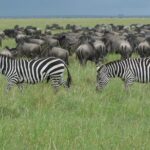
From the crater floor, the plan notes you can see wildebeest, zebras, gazelles, and elephants, and the dense concentration is the main reason you don’t have to chase sightings for as long. After the crater tour, you drive back toward Arusha.
What to consider: the crater day often involves more time looking downward and scanning across open areas, plus walking to viewpoints may be limited by your guide’s plan. Wear closed-toe shoes suited for dry ground and dust, and keep water handy.
Guides, pacing, and camp meals: where the safari gets real
This tour is a guided group experience with a maximum of 18 travelers, and that size matters. In smaller groups, it’s easier to hear instructions, easier for your guide to manage vehicle positions, and generally less chaotic around photo stops.
A big theme in the guide praise around this operator is spotting and communication. Names you may encounter include Mohamed, Lobulu, Julias, Andrew, Jacob, Abdul, Salehe, and Douglas, with frequent mentions of patient guiding and careful driving. What you should take from that is not name recognition, it’s the skill of reading the terrain and knowing where to look next.
Food quality and camp cooking also come up often. You’ll likely meet a dedicated chef on the trip, with names such as Moshi, Rashid, and Yojan showing up in praise. The practical advantage is that camp meals keep you fueled for long days. When food is handled well, you feel better, you sit longer in the vehicle with less fatigue, and you enjoy the evening drives more.
One caution: campsites do not equal hotel comfort. Based on what people have said about sleeping arrangements, you should be ready for nights in tents as part of the experience.
Price and value at about $1,030 per person
At $1,030 per person, this is not a budget safari. But it’s also not just paying for a single park day. You’re paying for a multi-ecosystem loop that includes multiple long drives, guided game drives, campsite nights at specific safari locations, and meal coverage.
What’s particularly important for value is what the package includes:
- Meals: breakfast (3), lunch (4), dinner (3)
- Guide and safari support: professional guide included
- Game drive access and park admissions: the plan lists admission ticket free across the park days
- Transport support: pickup offered and airport-related taxes handled
- WiFi in the safari jeep: during the safari
What is not included is tips, so you should budget for that.
Here’s how I’d judge value for your situation: if you want a do-it-once itinerary that covers Tarangire, Serengeti, and Ngorongoro without you coordinating transfers and park entries yourself, this price can make sense. If you’re the type who wants lots of private time, luxury lodge upgrades, or minimal camping, then you may find the overall experience better matched to a different tier of safari.
What you should pack for four long wildlife days
You don’t need to overpack, but you do need the basics for dust, heat, and early mornings.
I’d plan on:
- Sun protection: hat, sunglasses, sunscreen
- Light layers: mornings can be cool even when afternoons heat up
- A reusable water bottle for game drives
- Camera gear and binoculars if you use them (short chances for perfect viewing add up)
- Something for comfort on long vehicle days
- A small flashlight or headlamp for camp evenings, since tents and campsites can be dim
Also, keep your expectations tied to the reality of wildlife. You are going out to increase your odds of seeing animals in their patterns, not to guarantee a specific sighting list.
Who this safari suits best
This tour fits best if you want:
- A first-time Tanzania safari that hits Tarangire, Serengeti, and Ngorongoro in one trip
- A guided group experience with a cap around 18 travelers
- Time for meaningful game viewing, especially in the Serengeti and on the crater day
- Meals and core logistics handled so you can focus on wildlife and scenery
It may feel less ideal if you:
- Want a fully comfortable hotel-style stay every night
- Dislike early starts or long driving days
- Need a perfectly predictable animal itinerary, since wildlife is always in charge of the final schedule
Should you book this 4-Day Tarangire, Serengeti, Ngorongoro & Maasai tour?
If your priority is a solid overview of northern Tanzania, I’d say yes, with two conditions in mind. First, be comfortable with camping-style nights and long game-drive days. Second, treat it as a guided, high-odds viewing trip, not a guarantee checklist safari.
One more practical note: this is often booked well ahead, with an average booking window around 83 days. If you have dates in mind, lock them in early, especially if you’re traveling during popular seasons or school holidays.
If that sounds like your travel style, this tour is a strong way to get the big safari hits in a single organized circuit from Moshi.
FAQ
Where does the tour start, and when does it begin?
The tour starts at Kilimanjaro Airport with a start time listed as 7:00 am.
Is airport pickup included?
Pickup is offered, and the tour starts at Kilimanjaro Airport, so you should plan on an airport meeting and transfer as part of the experience.
What parks are included in the 4 days?
You visit Tarangire National Park, Serengeti National Park, and Ngorongoro Conservation Area, including the Ngorongoro Crater tour.
Are meals included in the price?
Yes. The tour includes breakfast (3), lunch (4), and dinner (3).
Is WiFi available during the safari?
Free WiFi is offered inside the safari jeep during the entire safari.
Are tips included, and what is the cancellation timing?
Tips are not included. Free cancellation is available, and you can cancel up to 24 hours in advance for a full refund.
Tarangire and Its Baobabs
- 5 Days Camping Tarangire, Serengeti & Ngorongoro crater & Visiting Maasai
★ 5.0 · 58 reviews - 4 Days Group Joining Camping Safari to Tarangire Serengeti Ngorongoro Crater
★ 5.0 · 50 reviews - 3-Day Ngorongoro Crater Manyara and Tarangire Safari from Arusha
★ 5.0 · 49 reviews - 4 Day Private Tour Throughout Tarangire, Serengeti and Ngorongoro
★ 5.0 · 42 reviews - 7 Days Safari. Serengeti, Tarangire, Lake Manyara & Ngorongoro Crater.
★ 5.0 · 34 reviews
Still Thinking About the Crater?
- Safari Serengeti And Ngorongoro
★ 5.0 · 288 reviews - 5 Days Camping Tarangire, Serengeti & Ngorongoro crater & Visiting Maasai
★ 5.0 · 58 reviews - 4 Days Group Joining Camping Safari to Tarangire Serengeti Ngorongoro Crater
★ 5.0 · 50 reviews - 3-Day Ngorongoro Crater Manyara and Tarangire Safari from Arusha
★ 5.0 · 49 reviews - 4 Day Private Tour Throughout Tarangire, Serengeti and Ngorongoro
★ 5.0 · 42 reviews
The Serengeti, Three More Ways
- Safari Serengeti And Ngorongoro
★ 5.0 · 288 reviews - 5 Days Camping Tarangire, Serengeti & Ngorongoro crater & Visiting Maasai
★ 5.0 · 58 reviews - 4 Days Group Joining Camping Safari to Tarangire Serengeti Ngorongoro Crater
★ 5.0 · 50 reviews - 4 Day Private Tour Throughout Tarangire, Serengeti and Ngorongoro
★ 5.0 · 42 reviews - 7 Days Safari. Serengeti, Tarangire, Lake Manyara & Ngorongoro Crater.
★ 5.0 · 34 reviews
Just added from around Moshi
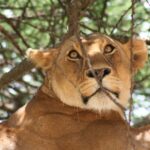
Serengeti National Park Safaris, compared.
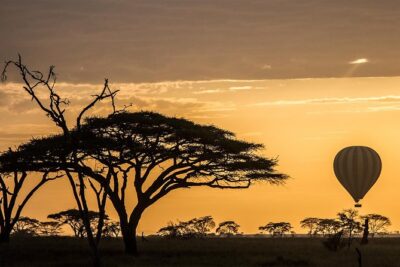 ★ 5.0Serengeti Balloon Safari and authentic bush breakfastFrom $5502,480 reviews
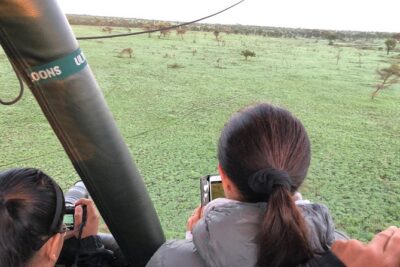 ★ 5.0Balloon Safari & Bush Breakfast in Serengeti – Miracle ExperienceFrom $5991,646 reviews
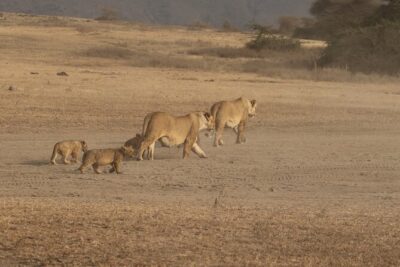 ★ 5.03 Days Serengeti & Ngorongoro Group Camping SafariFrom $815574 reviews
 ★ 5.05-Day Highlights mid-Range Crater, Serengeti, TarangireFrom $2,327296 reviews
 ★ 5.0Safari Serengeti And NgorongoroFrom $2,845288 reviews
 ★ 5.03-Day Classic Serengeti SafariFrom $1,455263 reviews
 ★ 5.0Private 6-Day Tarangire Manyara Crater and Serengeti with Mid-Range LodgesFrom $2,685238 reviews
 ★ 5.05 Days Camping Tarangire, Serengeti & Ngorongoro crater & Visiting MaasaiFrom $1,254229 reviews