
REVIEW · SERENGETI NATIONAL PARK SAFARIS
4 Day Mid-range Serengeti Safari
Crater views in four days can steal the show. This 4-day mid-range safari strings together Tarangire’s elephant country, the Serengeti’s Seronera zone, and the dramatic drop into Ngorongoro Crater for predator watching.
I love the 4×4 pop-up roof vehicle setup, because it makes it easier to look, shoot, and stay comfortable during game drives. I also love the smart pacing: you get at least one solid drive in each big stop, plus time at Seronera and the full crater experience.
One possible drawback is that it’s a packed circuit, so you should expect early mornings and long road time. Also, the accommodations are described as mixed safari lodge and tented camp nights, so it is not one single style throughout.
In This Review
- Quick hits: what makes this safari feel special
- Moshi, timing, and how this 4-day route actually plays
- Getting set up: pickup, mobile ticket, and your safari vehicle
- Day 1 in Tarangire National Park: elephants, baobabs, and a true picnic break
- Day 2 in Serengeti National Park: Seronera River and afternoon game drives
- Day 3: Olduvai Gorge stop, then Ngorongoro Wildlife Lodge at night
- Day 4: Descend over 600 meters in Ngorongoro Crater, then Lake Magadi
- Price and value: is $1,800 per person worth it?
- Lodges, meals, and what “mid-range” feels like day to day
- Guides and service style: the names people keep bringing up
- Group size, comfort, and the practical reality of long game drives
- What I would consider before booking
- Should you book this 4-day mid-range Serengeti safari?
- FAQ
- What is the meeting point for this safari?
- Does the tour include pickup?
- What vehicle is used for game drives?
- Are national park fees included?
- What meals are included?
- What is included in the price, and what is not?
- Where will I stay during the safari?
- Is there a guide, and do they speak English?
- What is the cancellation policy?
Quick hits: what makes this safari feel special
- Tarangire elephants and baobabs with a picnic lunch inside the park
- Serengeti Seronera focus, centered on the Seronera River area for wildlife activity
- Olduvai Gorge stop tied to the Leakey discoveries, then you head to the crater for the night
- Ngorongoro crater descent over 600 meters for close-up wildlife viewing
- Lake Magadi visit inside the crater, plus predator chances (lions, hyenas, jackals, cheetahs, and leopard)
- All national park fees included, plus meals and mineral water during the program
More of the Serengeti, drive by drive
- Safari Serengeti And Ngorongoro★ 5.0 · 288 reviews
- 5 Days Camping Tarangire, Serengeti & Ngorongoro crater & Visiting Maasai★ 5.0 · 58 reviews
- 4 Days Group Joining Camping Safari to Tarangire Serengeti Ngorongoro Crater★ 5.0 · 50 reviews
- 4 Day Private Tour Throughout Tarangire, Serengeti and Ngorongoro★ 5.0 · 42 reviews
Moshi, timing, and how this 4-day route actually plays
This safari is based out of Moshi, Tanzania, and it is built for people who want the headline parks without doing a long, multi-week expedition. The route is straightforward: Tarangire on Day 1, Serengeti on Day 2, Olduvai Gorge plus Ngorongoro on Day 3, and Ngorongoro crater viewing on Day 4.
The daily rhythm is designed around wildlife. Game drives run early, and the schedule is set so you are in position for the best viewing windows. You will also feel the classic safari tradeoff: you trade a slower, lazy trip for more varied scenery and a better chance at sightings.
One detail to keep in mind: the start time is listed as 12:00 am with a meeting point at Kilimanjaro Airport. That does not mean you spend the whole day driving at midnight. It usually reflects a tight pickup schedule, so confirm your exact pickup window once you book, and do not assume you will be picked up at a normal morning hour.
Getting set up: pickup, mobile ticket, and your safari vehicle
You have pickup offered, and you start at Kilimanjaro Airport. You also get a mobile ticket, which tends to make check-in smoother than juggling paper. The tour is said to be near public transportation, and most travelers can participate.
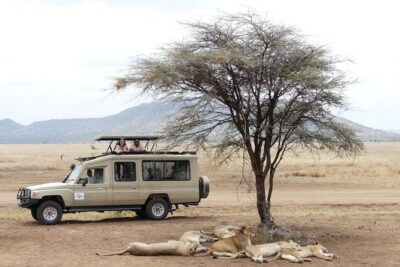
Your transport is a 4×4 pop-up roof safari vehicle. For Tanzania safaris, that roof matters more than people think. It helps with viewing angles during game drives, so you can scan for movement without constantly repositioning in the vehicle.
Group size is capped at 50 travelers. That sounds large on paper, but the key is how it is managed in your vehicle and how the guide handles the drives. In practice, your experience usually hinges on your guide’s ability to read animals and explain what you are seeing.
Day 1 in Tarangire National Park: elephants, baobabs, and a true picnic break
Your first real wildlife stop is Tarangire National Park. After breakfast, you depart and make time for last-minute purchases in Arusha Town, then head into the park.
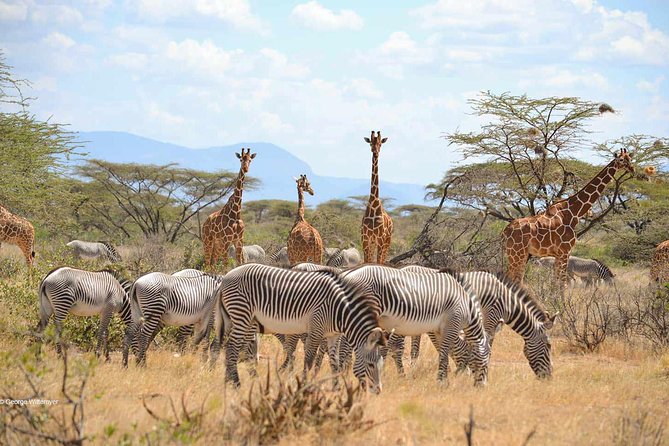
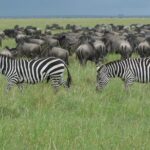
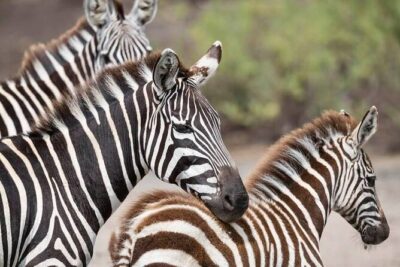
Tarangire is famous for huge elephant populations and baobab trees, and the park is described as the center of an annual migratory cycle, with figures like up to 3,000 elephants, 25,000 wildebeest, and 30,000 zebras. Even if sightings do not match every number you read, the point is clear: Tarangire is built for big-herd viewing and classic safari scenery.
You will do a game drive in the park, and you eat picnic lunch there. Picnic lunch in a park is one of those small upgrades that changes the day. Instead of rushing to a restaurant and losing prime viewing time, you stay in the action.
That evening, you sleep at Farm Dream Lodge. Lodge nights in this route help you reset after a driving-heavy day, especially because Day 2 and Day 4 include more early starts.
What to expect on Day 1: elephants, baobabs, and the feeling that you are stepping into an ecosystem that runs on daily movement. It is also a great warm-up day for getting used to safari timing, vehicle rules, and how spotting actually works.
Lodge safaris in the same bracket
Day 2 in Serengeti National Park: Seronera River and afternoon game drives
Day 2 shifts from Tarangire’s character to Serengeti National Park, with a drive via Karatu farmlands and the Ngorongoro Conservation Area. This is the “contrast day.” You begin seeing more open plains energy as you leave the highlands behind.
You arrive for lunch, then get an afternoon game drive in the Serengeti. The tour specifically aims at the Seronera area, which is described as one of the richest wildlife habitats. The big reason is the Seronera River, which provides water year-round, making it a magnet for wildlife.
If you have ever wondered why some safaris feel like constant action while others feel slow, this is one of the answers. Water concentration tends to pull animals into predictable areas, which gives your guide something to work with when planning the drive.
You end Day 2 at Domel Wildness Tented. A tented camp night can be a fun change from lodge nights, but do not assume it is luxury in the way a big-city hotel is. Think safari comfort: you are there for the experience, not for room service.
A practical note: this is an afternoon drive. That means you are not chasing the earliest dawn light like you do on some longer trips, so your best strategy is to lean into what your guide finds during that window and keep scanning consistently.
Day 3: Olduvai Gorge stop, then Ngorongoro Wildlife Lodge at night
Day 3 is one of the most interesting blend days because it mixes human evolution with classic safari thrills. You start with an early morning game drive, then head to the Ngorongoro Conservation Area.
Before you reach the crater lodge, you stop at Olduvai Gorge. It is described as having a history dating back to the dawn of time, and it is tied to discoveries by the anthropologists Drs. Lois and Mary Leakey. The tour notes the discovery of skulls nicknamed Nutcracker Man and Handy Man, presented as significant links in human evolution.
This stop is valuable because it breaks the trip up. After a couple of days focused mainly on animal behavior, you get context for how humans have studied this region for generations. It also gives your brain a different kind of “spotting” task, watching and listening instead of scanning for lions.
In late afternoon, you transfer to Ngorongoro Wildlife Lodge for dinner and overnight.
What to expect on Day 3: a shift from motion to storytelling, then back to motion with crater country. If you enjoy meaningful stops beyond only wildlife, this is a strong day to keep your attention open.
Day 4: Descend over 600 meters in Ngorongoro Crater, then Lake Magadi
Day 4 is crater day, and it is a big one. After breakfast, you descend over 600 meters into Ngorongoro Crater for wildlife viewing.
Ngorongoro is described as year-round supported by water supply and fodder, and that is a key reason it is so intense for sightings. With consistent support, animals hold their ground and predators can hunt in an environment that does not reset daily the way harsher areas can.
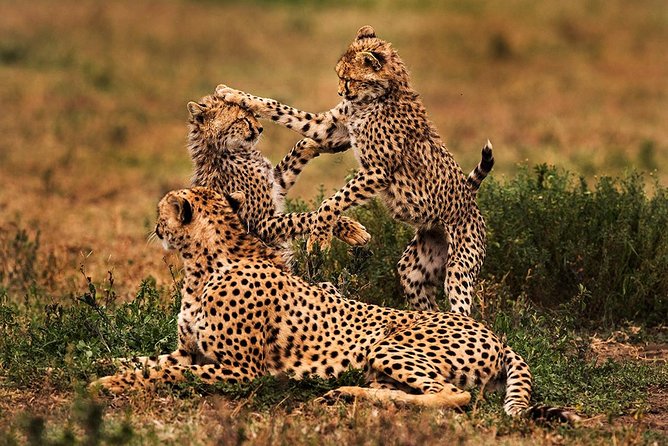
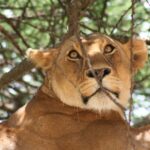
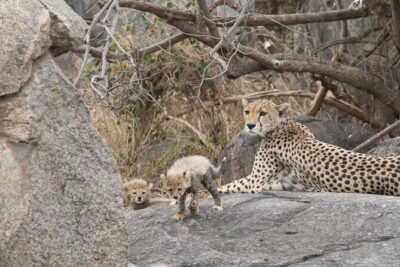
The tour lists wildlife you might see inside the crater, including wildebeest, zebra, buffalo, eland, warthog, hippo, and giant African elephants. Predator chances are a major draw too, with lions, hyenas, jackals, cheetahs, and the ever-elusive leopard noted as possible sightings.
The wording around leopard matters: it sometimes takes a trained eye to spot, which is why your guide’s ability to track and read movement is so important here.
You will also visit Lake Magadi, described as a large but shallow alkaline lake in the southwestern corner of the crater. It is one of the crater features that breaks up the view and helps make the area feel even more complete.
What to expect on Day 4: big viewing energy. You are going to spend time looking for animals that do not always stay in the same place. Your best mindset is patient focus, not sprinting from spot to spot.
Price and value: is $1,800 per person worth it?
At $1,800 per person, this is not a budget safari, but it also is not trying to be ultra-luxury. The value comes from how many of the expensive, annoying parts are already handled.
Here’s what the tour includes:
- Transportation in a 4×4 pop-up roof safari vehicle
- Professional English-speaking guide
- Meals as laid out on the plan (breakfast, lunch, and dinners)
- Mineral water
- Overnight stays in safari lodges or tented camps
- All national park fees
That last line, park fees, matters. On many safaris, park costs pile up fast. Having them included means you can plan your total spend without surprise add-ons in the middle.
What is not included is also clear:
- Visa fees
- Tips
- Alcohol and soft drinks
- Personal spending and souvenirs
- Arusha accommodation can be arranged on request
For a mid-range 4-day circuit, the included package is the big reason the price can make sense. You are paying for route coverage, park access, and the guide and vehicle time that make sightings possible.
If your priority is the absolute cheapest option, look elsewhere. If your priority is a well-run itinerary that hits Tarangire, Serengeti, and Ngorongoro with the basics covered, this sits in a practical middle ground.
Lodges, meals, and what “mid-range” feels like day to day
This safari stays overnight at:
- Farm Dream Lodge (Day 1, Tarangire)
- Domel Wildness Tented (Day 2, Serengeti)
- Ngorongoro Wildlife Lodge (Day 3, crater region)
Because the tour uses mixed accommodation styles, you will likely feel a change in atmosphere from day to day. That is not a dealbreaker. It is part of why these circuits can fit into four days. You get variety, and you avoid wasting time traveling back to a single base.
Meals are included across the plan, with dinner and lunch counts listed in the inclusions. The tour also includes mineral water, which is a nice practical touch when you are out all day.
A quick note from what people emphasize about this operator’s service style: guides are often praised for keeping things organized, and some mentions also include how the cook handled meals. That does not guarantee your exact menu each day, but it does suggest meal quality and planning are taken seriously, not treated as an afterthought.
Guides and service style: the names people keep bringing up
On this kind of safari, your guide is not just driving. They are interpreting the land and the animals, and they are also handling the pace of the group.
This operator’s guides appear in the feedback by name often enough that it is worth remembering a few:
- Godlisten, praised for experience with animals
- Praise, praised for animal knowledge and answering questions
- Ombeni, mentioned with more than 5 years experience and clear explanations
- Abbu, mentioned for solid skills and knowledgeable help, plus a strong mention of the cook and meals
- David, praised with big-five style focus
And support staff also show up in the communication side:
- Linah, praised for planning support and information handling
- Lucas, praised for quick, clear communication and answering many questions
- Safina, mentioned in connection with operator support
You should not expect every guide to do the same thing, but these names give you a clue about what the service tends to prioritize: real animal spotting help, clear communication, and smooth planning.
If you like to ask questions during the ride, this matters. An English-speaking guide plus a team that responds quickly tends to make you feel less lost and more confident on the day.
Group size, comfort, and the practical reality of long game drives
With a maximum of 50 travelers, this is not a tiny private expedition. Still, your experience depends on how the vehicle seats and how the drives are paced.
In practice, 4×4 safari vehicles can keep a group feeling manageable, especially if the guide stays active in helping everyone see and understand. The pop-up roof setup also helps reduce the common frustration of blocked views.
You should plan for long stretches in the vehicle and focus time. Safari days are not designed for “get up whenever you want” pacing. You are on game-drive timing, with stops and viewing windows based on animal movement and driver positioning.
What I would consider before booking
This safari is a strong fit if you want three major parks in four days. It may be less ideal if you need a super relaxed pace or you hate early mornings.
Two specific things to think about:
- Packed schedule: Tarangire, Serengeti, Olduvai Gorge, and Ngorongoro in four days means you will be moving most of the time.
- Accommodation style changes: you are going from lodge to tented camp, so pick your expectations accordingly.
Also, alcohol and soft drinks are not included. If you like a drink with dinner, budget for it or plan to stick with what is included.
Should you book this 4-day mid-range Serengeti safari?
Book it if you want a practical route through the big Tanzania highlights, with park fees and meals handled, and you are okay with an early, active pace. The Tarangire elephant focus, Serengeti Seronera River viewing, and the crater descent into Ngorongoro are exactly the kind of combination that makes a short trip feel complete.
Hold off if you want one single hotel style for the whole journey or you want a slower travel tempo. In that case, a longer safari might suit you better, so you do not feel like you are always rushing to the next stop.
If you are on the fence, here’s my simple decision rule: if your goal is sightings plus iconic scenery, this route is built for you. If your goal is pure relaxation, you may feel the schedule.
FAQ
What is the meeting point for this safari?
The start point is listed as Kilimanjaro Airport in Tanzania, with the experience starting at 12:00 am.
Does the tour include pickup?
Yes, pickup is offered.
What vehicle is used for game drives?
You travel in a 4×4 safari vehicle with a pop-up roof.
Are national park fees included?
Yes, all national park fees are included.
What meals are included?
Meals are included according to the travel plan, including breakfast, lunch, and dinner. Mineral water is also included.
What is included in the price, and what is not?
Included: transportation, an English speaking guide, meals, mineral water, overnight stays, and national park fees. Not included: visa fees, tips, alcohol and soft drinks, and personal spending for souvenirs.
Where will I stay during the safari?
Overnights are at safari lodges or tented camps, specifically Farm Dream Lodge (Day 1), Domel Wildness Tented (Day 2), and Ngorongoro Wildlife Lodge (Day 3).
Is there a guide, and do they speak English?
Yes. The tour includes a professional, English speaking guide.
What is the cancellation policy?
Free cancellation is offered. You can cancel up to 24 hours in advance for a full refund, and cancellations within 24 hours are not refunded.
More Lodge Safaris
- 8-Day Essence of Tanzania Safari – Luxury
★ 5.0 · 72 reviews - 7-Day Magical Tanzania Safari -Premium High End Package
★ 5.0 · 53 reviews - Tanzania Luxury Safari
★ 5.0 · 48 reviews - 5-Day Majestic Tanzania Safari – High End All Inclusive
★ 5.0 · 44 reviews - 7-Day Tanzania Odyssey Safari- High End Tour
★ 5.0 · 35 reviews
The Serengeti, Three More Ways
- Safari Serengeti And Ngorongoro
★ 5.0 · 288 reviews - 5 Days Camping Tarangire, Serengeti & Ngorongoro crater & Visiting Maasai
★ 5.0 · 58 reviews - 4 Days Group Joining Camping Safari to Tarangire Serengeti Ngorongoro Crater
★ 5.0 · 50 reviews - 4 Day Private Tour Throughout Tarangire, Serengeti and Ngorongoro
★ 5.0 · 42 reviews - 7 Days Safari. Serengeti, Tarangire, Lake Manyara & Ngorongoro Crater.
★ 5.0 · 34 reviews
Just added from around Moshi
Serengeti National Park Safaris, compared.
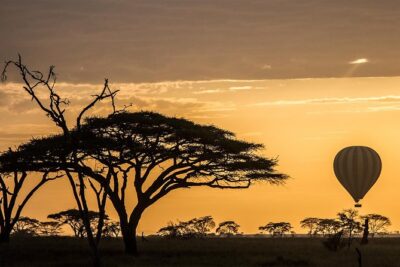 ★ 5.0Serengeti Balloon Safari and authentic bush breakfastFrom $5502,480 reviews
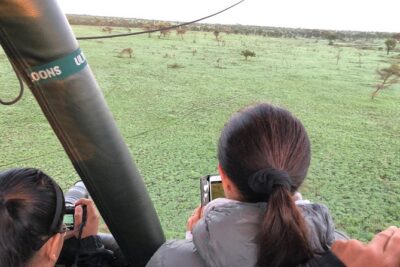 ★ 5.0Balloon Safari & Bush Breakfast in Serengeti – Miracle ExperienceFrom $5991,646 reviews
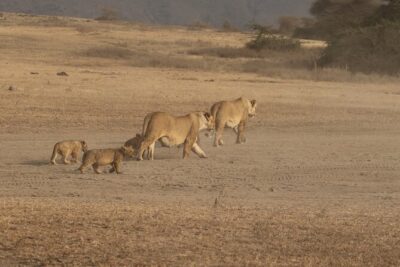 ★ 5.03 Days Serengeti & Ngorongoro Group Camping SafariFrom $815574 reviews
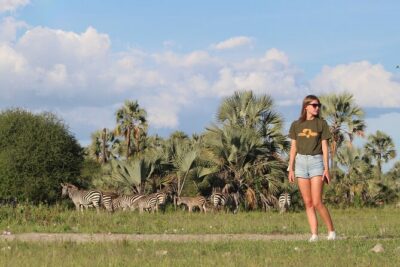 ★ 5.05-Day Highlights mid-Range Crater, Serengeti, TarangireFrom $2,327296 reviews
 ★ 5.0Safari Serengeti And NgorongoroFrom $2,845288 reviews
 ★ 5.03-Day Classic Serengeti SafariFrom $1,455263 reviews
 ★ 5.0Private 6-Day Tarangire Manyara Crater and Serengeti with Mid-Range LodgesFrom $2,685238 reviews
 ★ 5.05 Days Camping Tarangire, Serengeti & Ngorongoro crater & Visiting MaasaiFrom $1,254229 reviews
Browse the lists this tour appears in