
REVIEW · TANZANIA CAMPING AND BUDGET SAFARIS
Embark on a 5-day camping safari adventure.
Five days, three safari giants, and true camping. This Arusha route strings together Tarangire, the Serengeti ecosystem, and the Ngorongoro crater area for a classic Northern Tanzania circuit that is built to keep costs reasonable without cutting big experiences.
I especially like the private tour setup with a small group size, max 6 travelers. That matters on safari, because you spend more time watching wildlife and less time waiting on logistics.
One consideration: you should expect early game drives and long days. This itinerary starts mornings very early and includes multiple overnight tented stays, so it is not a sit-back-and-sleep-in kind of trip.
In This Review
- Key highlights at a glance
- Pickup in Arusha, then straight into Tarangire National Park
- What Tarangire day does well
- What to consider on Day 1
- Migombani Campsite and the Lake Manyara infinity pool moment
- The best use of that Day 1 downtime
- Serengeti National Park day 2: Seronera Valley and the endless plains idea
- Why day 2 is a strong starting point in Serengeti
- What to expect from the pacing
- Full day in Serengeti day 3: routing across south plains, Lobo, and river valleys
- The payoff on day 3
- The only real drawback
- Ngorongoro on day 4: from Serengeti out to the rim and Simba Campsite
- Why camping on the rim works
- Day 5 inside Ngorongoro: descending into the crater for game viewing
- What to expect from the crater day
- Price and value: why $1,250 can feel fair here
- Comfort on a camping safari, without pretending it is a hotel
- One more comfort angle: downtime that feels real
- The guide factor: names that show up and what they signal
- Who this 5-day camping safari suits best
- Should you book this 5-day camping safari?
- FAQ
- FAQ
- What time does the safari start?
- Where does the tour end?
- Is pickup offered?
- How many days is the safari?
- Which parks are included?
- Is this a private tour?
- What is the maximum group size?
- Are park fees and taxes included?
- What meals are included?
Key highlights at a glance
- Max 6 travelers, private touring: Your group stays focused, and the schedule is kept tight.
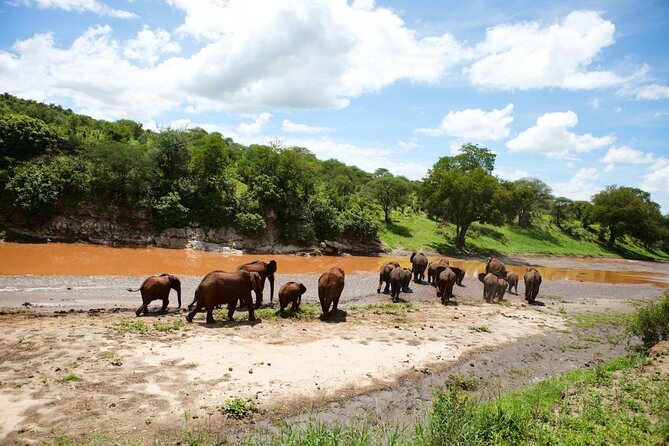
- Tarangire to Serengeti to Ngorongoro: Three major wildlife zones in about five days.
- Migombani Campsite perks: An infinity pool view toward Lake Manyara during downtime.
- Real Serengeti scale: You travel through key areas of the Serengeti ecosystem, known as endless plains.
- Ngorongoro crater game viewing: A day built around descending for wildlife in a compact 210 sq km crater.
More camping safaris at this price
- 4 Days Group Camping Safari★ 5.0 · 1,101 reviews
- 5 Days Group Camping Safari★ 5.0 · 730 reviews
- 3 Days Serengeti & Ngorongoro Group Camping Safari★ 5.0 · 574 reviews
- 5 Days Camping Tarangire, Serengeti & Ngorongoro crater & Visiting Maasai★ 5.0 · 229 reviews
Pickup in Arusha, then straight into Tarangire National Park
Your safari kicks off at AIM Mall Mbauda, Arusha with a start time of 8:00 am. If you’re coming from within Arusha, this is a practical meeting point and the tour is designed to work with normal town connections, since it notes being near public transportation.
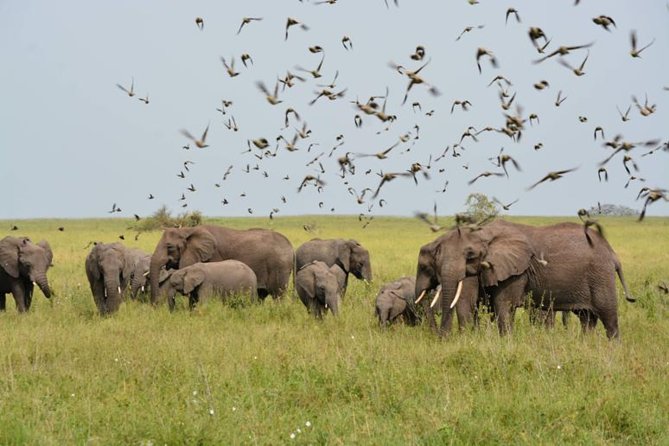
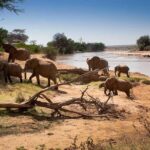
From there, the day is about getting out of town and into Tarangire National Park. The plan is a morning departure from Arusha, then game viewing through the day with a picnic lunch. This is the style I like for a first safari day: no long lectures, just time on the road and in the park, so you start stacking sightings fast.
You also get a quick glimpse of how the nights will feel. The first overnight is at Migombani Campsite, with dinner and a chance to relax after your drive day. The itinerary also calls out an opportunity to enjoy a drink by an infinity pool that looks toward Lake Manyara, which is a nice touch after a long day of sun and dust.
What Tarangire day does well
- It gives you an immediate safari rhythm: morning travel, daytime game viewing, picnic lunch, then rest.
- It avoids “wasted hours” by moving you to Migombani Campsite the same day.
What to consider on Day 1
- You’ll likely feel the first-day travel fatigue, even though the driving is part of the experience.
- Lunch is a picnic setup, so eat like you would on an all-day outing, not a restaurant meal.
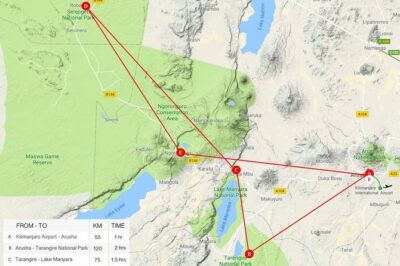
Migombani Campsite and the Lake Manyara infinity pool moment
Migombani is more than just a place to sleep. The itinerary specifically notes great views of Lake Manyara from the campsite, including from the infinity pool. That is not a small detail. One of the hidden values of camping-style safari is that you get downtime that actually feels pleasant, not just functional.
After dinner at Migombani, you’re given a chance to relax with a drink. That matters more than it sounds, especially on a multi-park trip. The difference between a good safari and a great safari often comes down to how you recover between game drives.
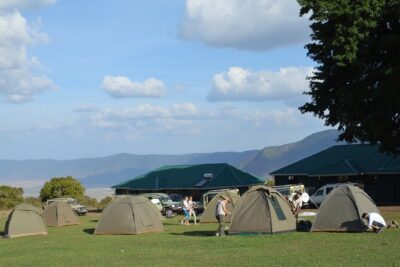
The tour runs with tented accommodation and includes all bed linen. That means you’re not dealing with the logistics of linens and sleeping gear on the ground. Still, tents are tents. If you need hotel-level quiet and climate control, this is where you should be honest with yourself.
The best use of that Day 1 downtime
If you can, plan to spend at least a few minutes by the pool view before you fully turn in. It gives you a calmer reset after a full day, and it helps the next morning feel less like a chore.
Serengeti National Park day 2: Seronera Valley and the endless plains idea
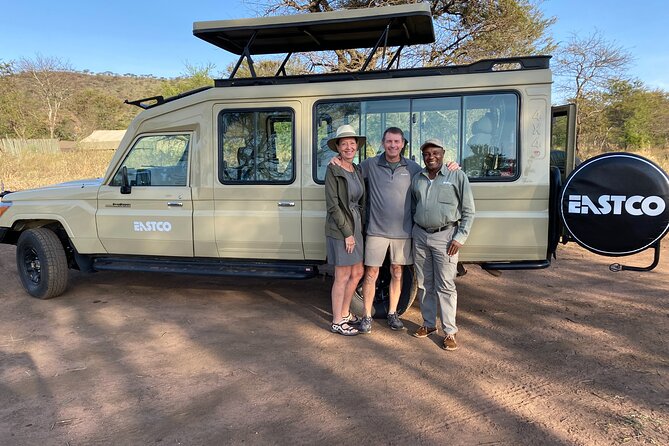
After breakfast, day two moves you from Tarangire direction into Serengeti National Park. You’ll take a picnic lunch and do game viewing throughout the day, then arrive for dinner and overnight in the Seronera Valley at your campsite.
The itinerary paints the Serengeti ecosystem as enormous, describing it as about 35,000 square kilometers, and it even shares the meaning behind the name. It comes from a Maasai word, tied to the idea of endless plains. That word choice matters because it shapes what you see out there. Even when you’re not seeing a herd on every drive, the scale makes the whole area feel open and cinematic.
This day is about orientation to the Serengeti. You’re not trying to speed through everything in one hit. Instead, you’re getting a solid first taste of how the park feels and how your guide reads the wildlife patterns.
Why day 2 is a strong starting point in Serengeti
- You arrive to the Seronera Valley area, which is central to a lot of the action on a Northern Circuit-style itinerary.
- You don’t just arrive, you also do game viewing right away.
What to expect from the pacing
- You’ll likely be spending a lot of daylight hours looking out, with plenty of stops for sightings and scanning.
- The day is set up so your campsite base is reached by dinner, so you can recharge for a full day next.
Full day in Serengeti day 3: routing across south plains, Lobo, and river valleys
Day three is a full day exploring the Serengeti, again with a picnic lunch. Dinner and overnight are back at camp in Seronera. This is the day I’d call the main Serengeti day, because you get time to cover different types of country within the ecosystem.
The itinerary breaks the Serengeti ecosystem into distinct areas and explains that the famed plains sit to the south of the park east of the Seronera Valley. It also notes rolling hills in the less-visited Lobo area to the north, and wooded riverine valleys in more remote eastern regions around Kirawira and Grumeti.
You do not get to choose the route like a video game. You follow your guide’s call based on animal presence and conditions. But knowing those area names helps you understand why the drive feels different from morning to afternoon. It’s not random. It’s a way to match terrain to wildlife behavior.
The payoff on day 3
By the end of this day, you usually feel the Serengeti in your bones. Not just as a place where animals appear, but as a system where the country itself changes how wildlife moves and where you should look.
The only real drawback
Full-day safari means fatigue can creep in. You’ll be doing a lot of scanning and sitting. If you are the type who gets restless easily, you’ll want to be mentally prepared for the long, but worth-it, pace.
Ngorongoro on day 4: from Serengeti out to the rim and Simba Campsite
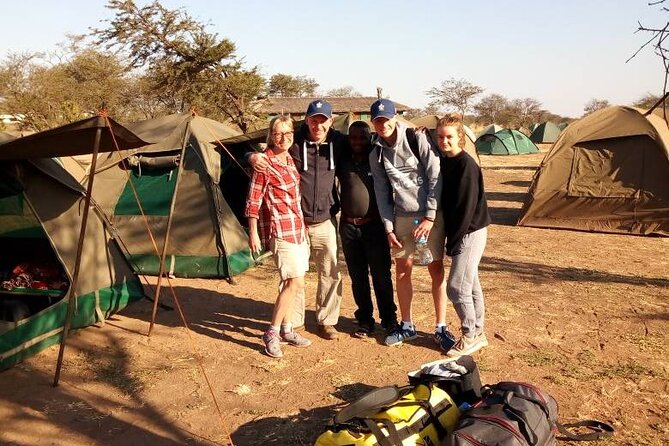
On day four, the plan is to leave the Serengeti and head toward the Ngorongoro Highlands and your campsite at the edge of the rim, called Simba Campsite. It’s an early start again, with a picnic lunch and game viewing as you travel toward the crater area.
The itinerary gives you important context for why Ngorongoro is different. The area around the crater is named the Ngorongoro Conservation Area, covering about 8,300 square kilometers. The crater was once part of Serengeti National Park, but in 1956, it became a conservation area after pressure and lobbying tied to the local Maasai community who were dispossessed when the parks were set up.
That context can quietly change how you look at the place. Instead of seeing only a wildlife show, you see a living land with human history intertwined with conservation rules.
Why camping on the rim works
Staying near the rim matters because it makes the next day’s crater descent more manageable. You’re not fighting hours of travel and light limits before you even start searching for animals.
Day 5 inside Ngorongoro: descending into the crater for game viewing
Day five is the payoff day. You depart early and descend the crater walls for a full day of game viewing. You get a picnic lunch, then you head back toward Arusha, arriving mid to late afternoon.
The crater is described as being 210 square kilometers, and the itinerary emphasizes that it is one of the big attractions on the Northern Tanzania safari circuit. The text also notes how the “endlessly praised” reputation is justified by a consistent animal presence, spread across multiple ecosystems in a relatively compact area.
This is one of the reasons Ngorongoro is a favorite for many people. Instead of having to drive long distances searching for the right terrain type, you are working within a built-in wildlife bowl. That usually translates into more consistent sightings, even when the day’s action is quieter than you hoped.
What to expect from the crater day
- You will spend much of the day focused on wildlife viewing inside the crater area.
- You’ll likely feel the day is denser. In a good way. It’s a lot of looking, a lot of stopping, and then a big reset when you climb back out.
Price and value: why $1,250 can feel fair here
The price is $1,250.00 per person for about five days. At first glance, that is not cheap. But for a Northern Circuit safari that includes multiple parks, camping nights, and a private guide plus transport, it starts to look more reasonable.
Here’s what is included:
- All taxes, park and conservation fees, and handling charges
- Private tour with a driver/guide and bottled water
- Tented accommodation with all bed linen
- Meals: breakfast (4), lunch (5), dinner (4)
What is not included:
- Tips
- Personal items
- Snacks
- Possible government imposed increases in taxes or park fees
For me, the value math is simple. You are paying for time on the road, the safari planning muscle, and the access to these protected areas. Those park fees plus the multi-day vehicle and guiding cost often add up fast if you were trying to build the trip yourself.
Comfort on a camping safari, without pretending it is a hotel
This is tented camping with bed linen included. That’s a solid baseline because it removes a big hassle. You should still picture the experience honestly: you’ll be sleeping in tents and living on a safari schedule, not a resort schedule.
A few practical notes from what the itinerary says:
- You’ll have breakfast, lunch, and dinner as listed above, so you’re not constantly hunting for meals.
- You’ll have picnic lunches, which is common on safari and usually means you eat and get back on the hunt quickly.
- The tour mentions a private tour/activity, max 6 travelers, so you should not feel squeezed into a huge group.
One more comfort angle: downtime that feels real
The infinity pool and Manyara views at Migombani are a rare and welcome comfort detail in an otherwise straightforward camping setup. It gives you a place to relax that isn’t just the back of a vehicle.
The guide factor: names that show up and what they signal
I like when a safari operator has strong guiding culture. In the feedback shared for this company, Bernard comes up with praise for driving and guiding skills, and there’s even a note about his knack with cats, including servals. Another guide name that appears is Wilson, described as a great guide and driver. Emmanuel is also cited for being efficient, kind, and knowledgeable.
Now, you cannot assume you’ll get any specific person on your dates. But the pattern matters. When multiple guide names are repeatedly paired with specific strengths like patience, efficiency, and wildlife spotting, it usually means the operator cares about the people doing the work, not just selling the seats.
Also, the tour notes that it may be operated by a multi-lingual guide. That can make a big difference if you want clear explanations while you scan for animals.
Who this 5-day camping safari suits best
This is a great fit if:
- You want the big Northern Circuit highlights in one trip: Tarangire, Serengeti, and Ngorongoro
- You’re okay with tented accommodation and a safari routine that starts early
- You like the idea of a small group and a private tour instead of a crowded bus
- You want a value-focused package where park fees are handled
It is not the best fit if you need hotel-level comfort every night or you hate the idea of spending several days in camping conditions.
Should you book this 5-day camping safari?
If your goal is to see real Tanzania safari country without overcomplicating it, I think this one earns a spot on your shortlist. The itinerary covers the core circuit in a way that stays efficient, and the inclusions are strong, especially fees handled, private guiding, and meals.
My main “pause” is the early, active pace plus camping. If you’re fine with that trade, you’re likely to love the way the days flow, from Tarangire game viewing to Serengeti plain time, then ending with crater-day intensity.
FAQ
FAQ
What time does the safari start?
It starts at 8:00 am from AIM Mall Mbauda, Arusha TZ 3424.
Where does the tour end?
The tour ends back at the same meeting point in Arusha, with arrival described as mid to late afternoon on the final day.
Is pickup offered?
Yes. The tour includes pickup offered.
How many days is the safari?
It runs for 5 days (approximately).
Which parks are included?
You’ll visit Tarangire National Park, Serengeti National Park, and the Ngorongoro Conservation Area (including the crater day).
Is this a private tour?
Yes. It is a private tour/activity and only your group participates.
What is the maximum group size?
The tour notes a maximum of 6 travelers.
Are park fees and taxes included?
Yes. The package includes all taxes, park and conservation fees, and handling charges (with the itinerary also noting admission included on the Ngorongoro day).
What meals are included?
The included meals are breakfast (4), lunch (5), and dinner (4). Bottled water is also included.
More Under Canvas
- 4 Days Group Camping Safari
★ 5.0 · 1,101 reviews - 5 Days Group Camping Safari
★ 5.0 · 730 reviews - 3 Days Serengeti & Ngorongoro Group Camping Safari
★ 5.0 · 574 reviews - 5 Days Camping Tarangire, Serengeti & Ngorongoro crater & Visiting Maasai
★ 5.0 · 229 reviews - 5 Days Budget Private Safari, Tanzania
★ 5.0 · 191 reviews
Just added from around Arusha

Tanzania Camping and Budget Safaris, compared.
 ★ 5.04 Days Group Camping SafariFrom $9001,101 reviews
 ★ 5.05 Days Group Camping SafariFrom $1,100730 reviews
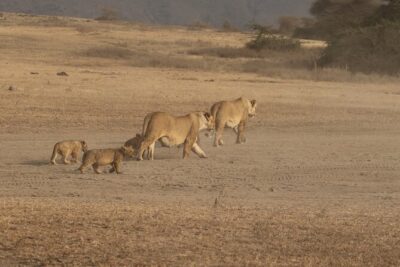 ★ 5.03 Days Serengeti & Ngorongoro Group Camping SafariFrom $815574 reviews
 ★ 5.05 Days Camping Tarangire, Serengeti & Ngorongoro crater & Visiting MaasaiFrom $1,254229 reviews
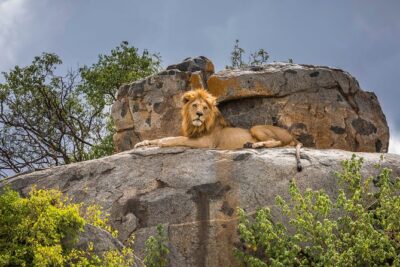 ★ 5.05 Days Budget Private Safari, TanzaniaFrom $0191 reviews
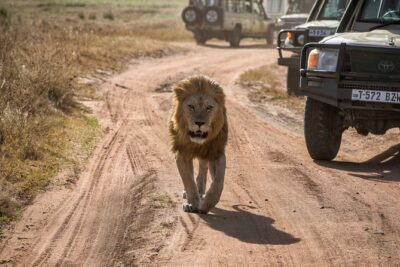 ★ 5.06 Days Private Budget SafariFrom $2,300163 reviews
 ★ 5.02 Days Tarangire and Ngorongoro Group Camping SafariFrom $550146 reviews
 ★ 5.06 Days Tanzania Budget Camping SafariFrom $1,600145 reviews
Browse the lists this tour appears in