
REVIEW · ARUSHA CITY TANZANITE AND HERITAGE TOURS
Arusha Guided Walking City Tour, Culture, Lifestyle & History
Arusha comes at you fast, on foot. I love how this tour pairs Old Boma Museum history with the Tanzanite Experience and its real-world gem story. I also like that your guide talks you through what you’re seeing as you move through town, not just points and pauses. One drawback to plan for, the Old Boma Museum entry fee is not included, so budget an extra $6 per adult.
For $26, you’re getting about 4 hours of guided city orientation, plus hotel pickup and drop-off near the city center. It’s a small group, up to 19 people, and the route is a mix of short drives and walking so you spend less time trudging and more time learning. If you want a pure food crawl, note that foods and drinks are not included.
This tour is best for you if you like culture, everyday street life, and landmarks with a backstory. Come with cash for souvenirs because shopping stops are part of the day, and meals are on your own. If you prefer a quieter pace with no markets, you might find the city energy a bit intense, especially around craft shopping.
In This Review
- Key Highlights You’ll Notice Right Away
- Price and Value: What You Actually Get for $26
- Pickup, Short Rides, and How Much Walking to Expect
- Stop 1: Old Boma Museum, German-Era History in One Building
- Stop 2: Tanzanite Experience, the Gem Story You Can Actually Visualize
- Stop 3: Arusha Clock Tower and Colonial-Era Landmarks
- Stop 4: Maasai Market Crafts, Souvenirs, and Street-Level Color
- Stop 5: Cultural Heritage Centre Art Gallery and Souvenir Shopping
- The Streets in Between Stops: What You’re Learning Beyond the Screens
- Who Should Book This Arusha Walking Tour, and Who Should Skip It
- A Quick Booking Checklist Before You Go
- Should You Book This Arusha Guided Walking Tour?
- FAQ
- How much does the Arusha guided walking city tour cost?
- How long is the tour?
- Is pickup offered?
- What admissions are included?
- Is food included?
- How much is the Old Boma Museum fee?
- What should I bring for souvenirs?
- What group size should I expect?
- What is the cancellation policy?
Key Highlights You’ll Notice Right Away

- Small-group feel (max 19) keeps questions easy and the pace manageable
- Old Boma Museum connects Arusha to its German colonial footprint, with learning time built in
- Tanzanite Experience includes admission, plus the mining, cutting, and polishing story
- Arusha Clock Tower gives you a central landmark and a quick slice of colonial-era design
- Maasai Market is an open-air stop focused on colorful, affordable crafts
- Cultural Heritage Centre brings art from Tanzania and beyond into one stop
Around Arusha on foot, a few more
- Full Day Arusha City Tour★ 5.0 · 18 reviews
- Tanzanite experience tour – Tanzanite shopping in Arusha★ 5.0 · 12 reviews
- Arusha City Culture and Historical Walking Tour★ 5.0 · 8 reviews
- Arusha Nightlife Tour★ 5.0 · 7 reviews
Price and Value: What You Actually Get for $26
At $26 per person, this half-day walk works because you’re not paying for a long list of vague stops. You’re paying for a guided route that mixes museums, a gemstone experience, and shopping areas, and you get pickup and drop-off near the city center. The included Tanzanite and cultural art gallery admissions also help keep your day predictable.
The value math changes a little because the Old Boma Museum entry fee is separate. That $6 per adult is still a reasonable add-on for what you get there: a museum visit with multiple themed exhibitions, not just a quick exterior photo stop. Also, foods and drinks are not included, so plan to grab a snack or meal on your own.
One more value point: the day is designed for real orientation. You move past major civic buildings and city-center landmarks, so by the time you finish, Arusha feels less like a map and more like a place you can navigate.
Pickup, Short Rides, and How Much Walking to Expect
Even though it’s called a walking tour, the route is practical. You’ll get pickup from your hotel near the city center, and the itinerary includes short transitions by car so you don’t spend the whole 4 hours going step after step. That matters in Arusha, where you might want to conserve energy for the museum and market portions.
Expect a mix of:
- Walking segments through the city core
- Short rides to reach the next stop efficiently
The tour time is listed as about 4 hours, and the guided city time runs from 2.5 to 6 hours depending on how the day flows. In plain terms, it’s long enough to feel like you did something meaningful, but not so long that you’ll be exhausted before the next part of your trip.
Stop 1: Old Boma Museum, German-Era History in One Building
Old Boma Museum is your first major anchor, and it’s a good place to start because it sets the tone for everything after. You pass by the East African Community counties headquarters office, an international conference building, and a big public hospital before you reach the museum area. That quick prelude helps you understand the city’s civic center, then the museum gives you the historical backdrop.
This museum is housed in the oldest building in the city, originally built by the Germans during colonial times for fort and defense purposes. Today it functions as a government museum and includes both permanent and temporary exhibitions. Your time here is about 45 minutes.
What you’ll likely see inside includes:
- Human evolution themes, with replica fossils, tools, and the oldest footprint found in East Africa
- History of BOMA covering the 1884 to 1919 period
- Ecology and wildlife photography, which adds a nature angle alongside the history
Two practical notes. First, the Natural history museum fee for the German BOMA building is not included, and it’s listed as $6 USD per adult. Second, because time is limited, you’ll get the highlights rather than every single detail. If you’re the type who likes to read every label, you might want to focus on your top two exhibition themes before you arrive.
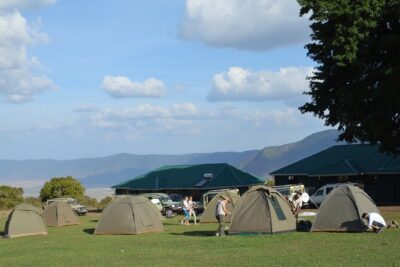

Stop 2: Tanzanite Experience, the Gem Story You Can Actually Visualize
If you want one stop that feels different from typical city sightseeing, Tanzanite is it. The Tanzanite Experience focuses on why tanzanite is so rare, because Tanzania is the only place on the planet where it is mined. The tour info also notes that tanzanite is considered around 1,000 times rarer than diamond, and that the value comes from geography and the reality of mining there.
This is an included admission stop, and you’ll spend about 30 minutes inside with a guided explanation. You’ll hear about:
- The mining process and what makes extracting the stone complex
- The skills behind cutting and polishing
- Stories and myths connected to the gemstone
After the guided portion, there’s a shop on-site. The tour info says you can find items across a wide price range, from about $100 to $3,000 and more. That wide range is useful, because it means the stop isn’t only for luxury buyers. It’s still smart, though, to treat it like a shopping visit, not a requirement. If you don’t want to buy, you can still enjoy the explanation and leave with an understanding of what you’re seeing.
My practical advice: if you think you might buy, set a rough budget before you walk in. It’s easy for gemstone shopping to get distracting once you start comparing colors and cuts.
Stop 3: Arusha Clock Tower and Colonial-Era Landmarks
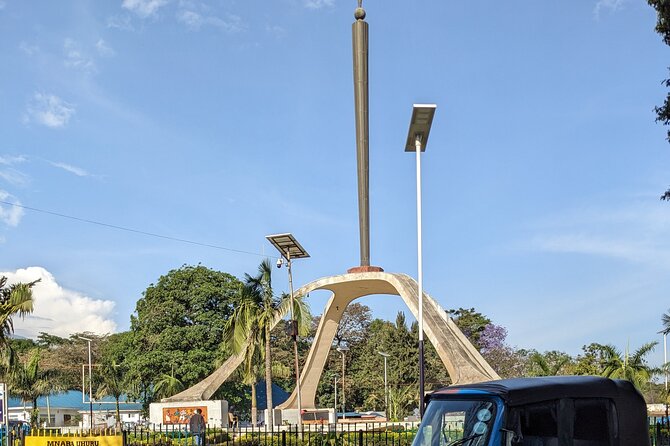
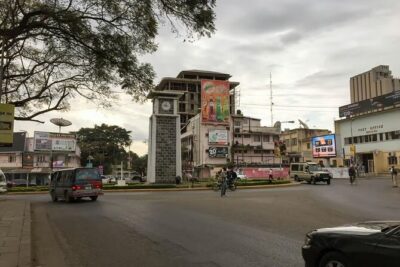
The Arusha Clock Tower is a true meeting point for the city, which makes it useful for orientation. It was built by Galanos, a Greek millionaire who came to Tanganyika in the early 20th century. The tour info also shares a famous idea that the tower sits exactly between Cairo and Cape Town, and is considered a center point for Tanzania, Kenya, and Uganda.
Whether or not you treat the geographic claim as exact, the point is that this landmark became part of the city’s identity. You’ll spend about 15 minutes here, then continue walking to another older colonial-era site, described as one of the oldest hotels and schools built during that period.
This stop is short by design. It’s your “landmark reset,” helping you connect the city’s current street life to the era when the city’s structure took shape under colonial influence.
If you’re the kind of person who likes architecture details, you’ll probably get more from this stop than if you’re only interested in museums and shopping. Still, it works as a lightweight pause so the day doesn’t feel like constant indoor time.
Stop 4: Maasai Market Crafts, Souvenirs, and Street-Level Color
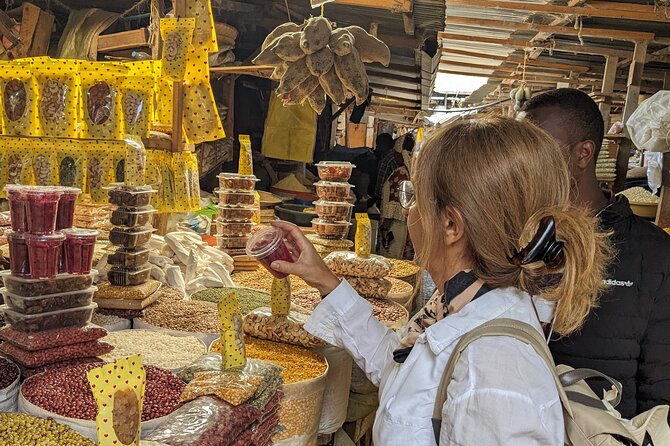
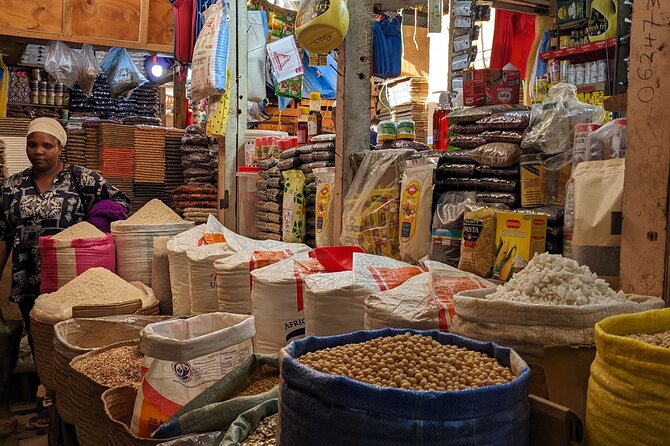
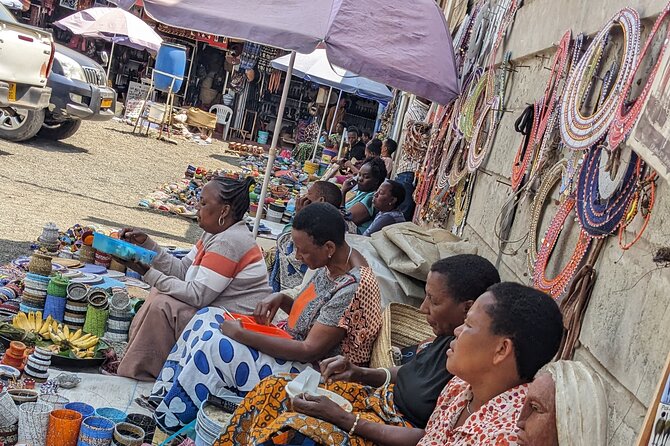
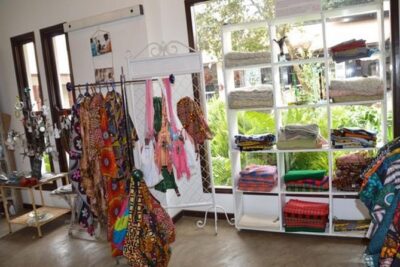
Next comes one of the most fun stops for many people: Maasai Market Curios and Crafts. It’s an open-air market, and it’s positioned as a solid place to watch and shop for affordable souvenirs. This is where you’ll see a wide mix of products, and it’s a good stop for casual browsing if you’re not sure what you want yet.
What you can expect to find includes:
- African pots and pans
- Clothing like safari t-shirts, fabric garments, and Tanzania jerseys
- Maasai shoes and sandals
- Jewelry and necklaces
- Different bag sizes
- Shukas or Maasai blankets
- Art work
The market time is about 25 minutes, which means you won’t have time for deep comparisons across every stall. So go with a simple plan: pick one category you want, like jewelry or a shuka, and focus there. If you drift into looking at everything, you’ll run out of time before you feel satisfied.
One big practical reminder: bring cash. The tour info specifically asks you to bring money for purchases and notes to bring cash. If you rely on card payments, you might find options limited in the market setting.
Stop 5: Cultural Heritage Centre Art Gallery and Souvenir Shopping

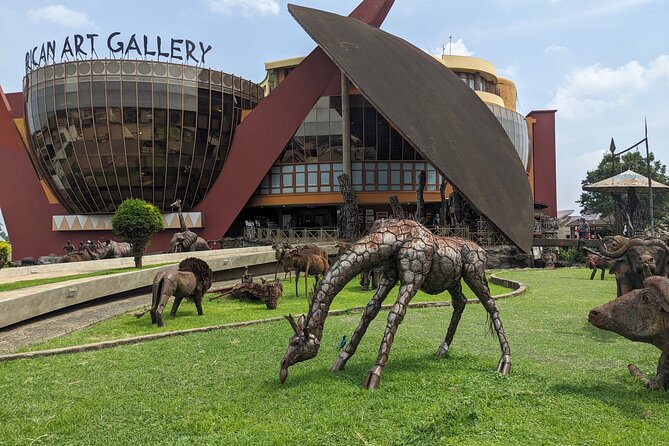
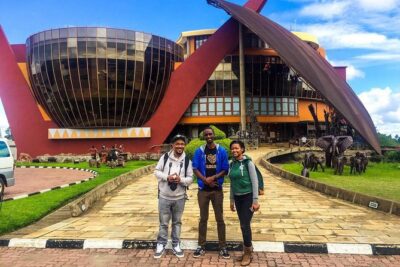
The Cultural Heritage Centre is your final cultural anchor. This is described as one of the biggest art galleries in Africa, so even if you only have a limited visit window, you’re walking into a place built to show a wide variety of work. The center includes art from different parts of Tanzania and also from other countries across Africa.
Your time here is about 40 minutes, which is enough for:
- Browsing multiple rooms or sections
- Getting a sense of what themes appear across regions
- Deciding if any pieces speak to you before your day ends
Right next to the art space is a shop where you can buy souvenirs if you want. Again, this is not just a passive stop. It’s part of the day’s structure, so if you dislike shopping during tours, you might want to mentally treat it as a quick viewing session first, then decide later whether you want to buy.
The Streets in Between Stops: What You’re Learning Beyond the Screens
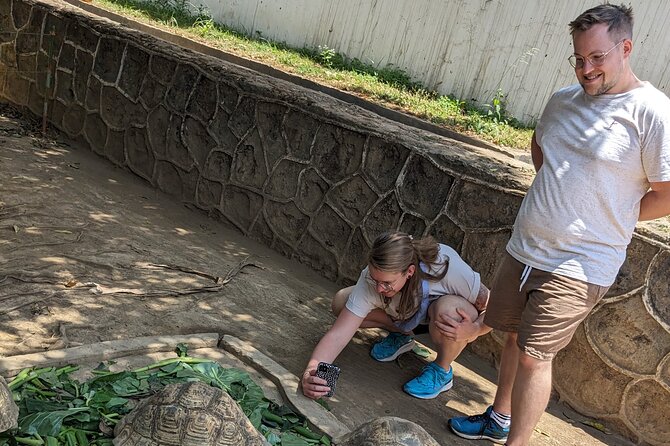
What makes this tour feel more real than a list of sites is the way it connects the museums and shops to the working city around them. Along the way, you pass major offices and public buildings, and you’re walking through areas that reflect day-to-day life, not just controlled tourist zones. That’s where you start understanding Arusha as a living city, not a stop on a route.
Also, your guide matters. Across the experiences shared for this tour, the guide Israel shows up repeatedly and gets strong praise for clear explanations and easy communication. People highlight that his English is strong and that he makes the history feel understandable. That can make a real difference, because the best part of a walking tour is learning to read the place while you’re standing in it.
Who Should Book This Arusha Walking Tour, and Who Should Skip It
This tour is a great fit if you:
- Want a first look at Arusha with a structured route
- Care about history and culture, not just photos
- Like markets but still want a guide to explain context
- Prefer a small-group experience, max 19 people
- Are traveling solo and want to feel looked after during city walking
It’s less ideal if you:
- Want a full food-focused outing, because foods and drinks are not included
- Are expecting a long, nonstop walking day, because the tour includes short rides between stops
- Only want high-end experiences and prefer to avoid markets or shopping spaces
It also isn’t a safari or wildlife day. If your goal is a nature excursion, you’ll need additional planning beyond this city tour.
A Quick Booking Checklist Before You Go
Before you lock it in, here’s what I’d prep using the details you’re given:
- Plan for a 4-hour visit window, roughly
- Expect pickup and drop-off near the city center
- Budget an extra $6 USD per adult for the German BOMA museum entry
- Bring cash for souvenirs at the market and shops
- Bring your own food or drinks since they’re not included
- Wear shoes you’re comfortable walking in, especially around market crowds
If you’re the kind of traveler who likes to know exactly what costs what, this tour is pretty transparent. The included admissions cover the Tanzanite and major art gallery portions, and the remaining museum fee is clearly stated.
Should You Book This Arusha Guided Walking Tour?
Yes, if you want an efficient, culturally grounded introduction to Arusha that feels practical. The $26 price is fair for what’s included, especially the guided museum and the Tanzanite stop, plus pickup and drop-off. You’re also getting a route that mixes history, landmarks, and real shopping moments, not just one indoor museum day.
I’d book it when you want to learn fast and get your bearings early. If you’re sensitive to market bustle or you hate shopping detours, consider shortening expectations or choosing a more museum-only experience instead.
FAQ
How much does the Arusha guided walking city tour cost?
It costs $26.00 per person.
How long is the tour?
The duration is about 4 hours (approx.).
Is pickup offered?
Yes. Pickup and drop-off are offered for hotels near the city center.
What admissions are included?
Admission to the Tanzanite museum is included, and the African art gallery and cultural heritage costs are included. The Old Boma Museum (Natural history museum, German BOMA) fee is not included.
Is food included?
No. Foods and drinks are not included.
How much is the Old Boma Museum fee?
The German BOMA Natural history museum fee is listed as $6 USD per adult, and it is not included in the tour price.
What should I bring for souvenirs?
Bring cash, since you’ll need money for purchases during market and shop stops.
What group size should I expect?
The tour has a maximum of 19 travelers.
What is the cancellation policy?
Free cancellation is available. You can cancel up to 24 hours in advance for a full refund. If you cancel less than 24 hours before the start time, the amount paid is not refunded.
Arusha on Foot
- Full Day Arusha City Tour
★ 5.0 · 18 reviews - Tanzanite experience tour – Tanzanite shopping in Arusha
★ 5.0 · 12 reviews - Arusha City Culture and Historical Walking Tour
★ 5.0 · 8 reviews - Arusha Nightlife Tour
★ 5.0 · 7 reviews - Essence of Arusha City Tour
★ 5.0 · 5 reviews
Just added from around Arusha





Arusha City Tanzanite and Heritage Tours, compared.
 ★ 5.0Full Day Arusha City TourFrom $10018 reviews
 ★ 5.0Tanzanite experience tour – Tanzanite shopping in ArushaFrom $3512 reviews
 ★ 5.0Arusha City Culture and Historical Walking TourFrom $358 reviews
 ★ 5.0Arusha Nightlife TourFrom $457 reviews
 ★ 5.0Essence of Arusha City TourFrom $1605 reviews
 ★ 5.024 Hours in Arusha—Arusha Museum, Cultural Heritage, Maasai Market, ShangaFrom $2054 reviews
 ★ 5.0Arusha city tourFrom $3004 reviews
 ★ 5.0Arusha: Cultural Heritage, Tanzanite TourFrom $293 reviews
Browse the lists this tour appears in