
REVIEW · SERENGETI NATIONAL PARK SAFARIS
8 Days Great Migration – Grumeti River
A safari here is mostly about timing. You’re chasing the Great Migration, plus classic Tanzania parks, all on one tight loop.
What I like most is the way the driving is handled for sightings, not for checklists. The tour also leans into real local stops, like the Mto wa Mbu walking tour and a Maasai village visit on the way into the Serengeti.
One thing to think about before you pay: there are a couple of serious negative reports tied to payment handling and being stranded. You’ll want to confirm the operator details and keep everything in writing before you hand over money.
In This Review
- Key highlights to know before you go
- Your safari starts in Arusha, then stacks four major wildlife zones
- How the Grumeti focus shapes your Serengeti chances
- Tarangire National Park: elephants at the river and birds on the move
- Mto wa Mbu and Lake Manyara: walking tour plus soda-lake drama
- Serengeti game drives built around real migration behavior
- Three Serengeti days: migration, then lions and leopards in central areas
- Ngorongoro Crater: surreal animal density and a rare black rhino chance
- Guides, unlimited mileage, and why this can change your sightings
- Price and value: what $4,984.62 buys you in Tanzania
- Who this safari fits best, and who should skip it
- Should you book this Grumeti Migration safari?
- FAQ
- How long is the Grumeti River Great Migration safari?
- Where does the safari start and what time?
- Is pickup offered?
- What does the safari vehicle include?
- Are park entrance fees included?
- What’s included with meals and accommodation?
- Is drinking water included?
- How many travelers are in a group?
- What is not included in the price?
- Is there free cancellation?
Key highlights to know before you go
- Grumeti River crossing focus (May to July), when wildebeest have to outsmart crocodiles and fast water
- Unlimited mileage, no driving limits while searching for animals
- Open-roof 4×4 all safari long, so you get better sightlines for photos
- Small group size (max 6 travelers), which often means more flexibility in the field
- A full day with the herds in Serengeti, plus two more Serengeti days for different hunting styles
- Ngorongoro Crater’s animal density, with close to 30,000 animals reported and a rare black rhino chance
More of the Serengeti, drive by drive
- Balloon Safari & Bush Breakfast in Serengeti – Miracle Experience★ 5.0 · 1,646 reviews
- 3 Days Serengeti & Ngorongoro Group Camping Safari★ 5.0 · 574 reviews
- 5-Day Highlights mid-Range Crater, Serengeti, Tarangire★ 5.0 · 296 reviews
- 3-Day Classic Serengeti Safari★ 5.0 · 263 reviews
Your safari starts in Arusha, then stacks four major wildlife zones
This “Grumeti River” safari is built around a simple idea: you base yourself where the migration action is, then you stay there long enough to catch it in motion. The title says 8 days, but the day-by-day plan runs about 6 days of safari driving and game viewing, so expect some extra travel time around that core loop.
You meet with a start time of 7:30 am, and pickup is offered. The tour operates with a maximum of 6 travelers, which matters in Tanzania, because game drives are not a factory line, they’re weather, water, and animal decisions.
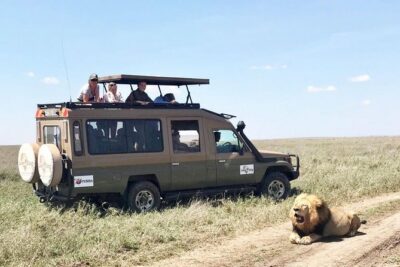
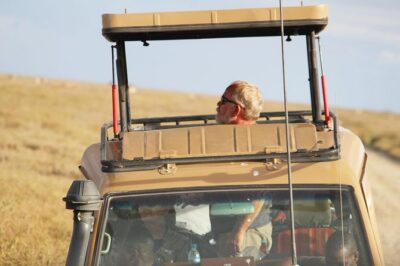
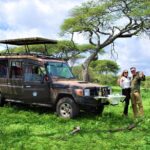
The transport is a 4×4 with a pop-up open roof for the entire safari. That helps a lot when you’re tracking motion across the plains, and it keeps your photo angles from getting trapped behind glass or high seatbacks.
How the Grumeti focus shapes your Serengeti chances
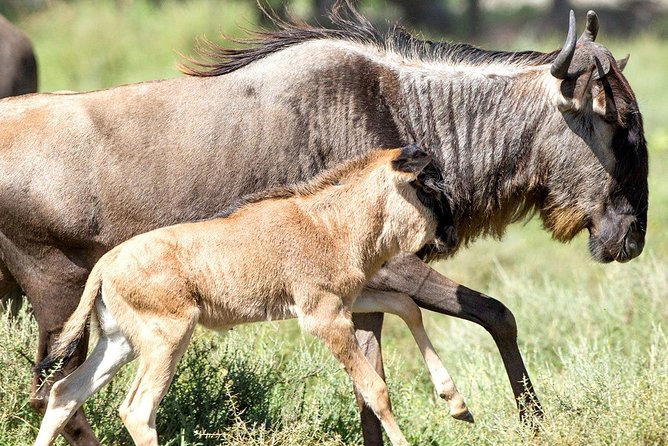
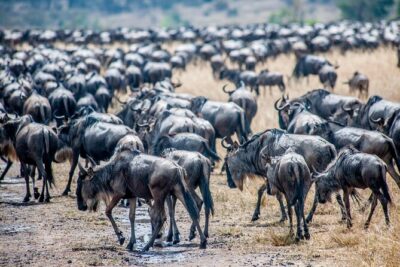
The best reason to book this style of trip is the attention to the migration window. Between May and July, wildebeest crossings can happen in the Serengeti area focused on the Grumeti River. That crossing moment is intense by nature: crocodiles wait, the water runs fast, and the herds have to commit fast.
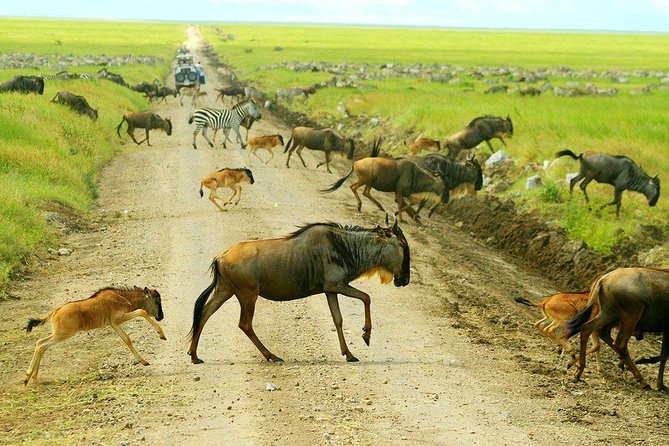
Then the plan doesn’t just give you one quick drive and call it done. You get an early start to move with the herds across the plains, described as a clockwise pattern every year. After that full day, you still have time for a central Serengeti day where lions and leopards are expected to be easier to spot.
Here’s the practical upside for you: when the migration is active, wildlife can be spread out or suddenly shift direction. A tour that stays flexible and puts time on the ground usually gives you more realistic chances than a rushed, one-drive-only approach.
Tarangire National Park: elephants at the river and birds on the move
Your first day sets the tone. After an early breakfast, you drive to Tarangire National Park with a packed lunch and go out for a game drive.
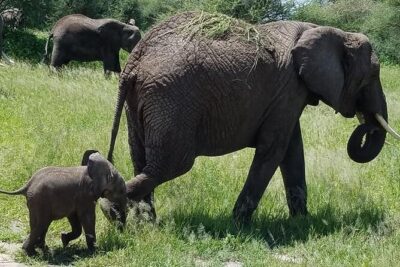
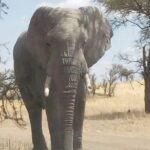
Tarangire is known for two big things that fit well with a first safari day. First, it has some of the largest concentrations of elephants. Second, it’s noted for a strong number of breeding bird species. If you like birds, this is a park that gives you more than just mammal action.
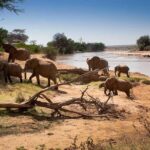
Tarangire also has that classic dry-season feel of animals clustering where water is. The Tarangire River draws large herds, and predators follow that food chain. The route you’ll likely notice is a lot of scanning across open ground, then sudden stops when you find the next group at the water.
For a realistic expectation: the park also offers variety beyond the obvious big cats. Kudu, Oryx, and Gerenuk are mentioned, which suggests the guide will try to point you toward the less common antelope shapes too.
Chasing the herds? Compare these first
Mto wa Mbu and Lake Manyara: walking tour plus soda-lake drama
After Tarangire, the tour switches gears from pure wildlife to human-scale travel. You go on a walking tour in Mto wa Mbu, a farming town known for being home to over 120 tribes from across Africa. Your walking guide takes you through rice and banana plantations, a local beer factory, a school, and a carving factory.
Why this works: it’s not just a photo stop. It gives you a sense of how people earn a living in the region, and it helps you understand why the land here feels so busy and alive even when the bush looks wild and quiet from your vehicle.
Then you head to Lake Manyara National Park. Lake Manyara is known for the pink-hued flamingos that gather around its soda lake, plus a large population of baboons and strong birdlife. You can also see giraffes, elephants, hippos, and buffalos, depending on where animals are moving that day.
A fair note for your planning: Manyara is not only about one species. It’s a mix zone, so if your heart is set on one animal, be flexible. The payoff is that you get a broad wildlife buffet plus a different tempo than the Serengeti plains.
Serengeti game drives built around real migration behavior
Once you reach the Serengeti area, the tour adds another human stop on the way: a Maasai village visit. It’s an easy place to ask questions about how communities live around wildlife and grazing land, as long as you keep expectations respectful.
In Serengeti, you start with a picnic lunch and a game drive, timed with migration season in mind. The crossing described here is the Grumeti River moment, where wildebeest have to judge water speed and predator pressure.
On later days, you get more focused migration time. You’ll rise early and do a full day moving with the herds, then you return for dinner and overnight at the lodge/camp referred to as Recommended Accommodation.
One detail that matters for you: the plan describes the herds moving in a clockwise circle every year. Even if you don’t memorize the route, that idea helps you understand why early departures are not just a schedule trick. Morning light, animal timing, and water conditions can change quickly, and the tour is set up to react.
Three Serengeti days: migration, then lions and leopards in central areas
After the full day moving with the herds, you still have one more Serengeti day designed for another kind of viewing. After breakfast, you head out for a game drive in the central part of the Serengeti, described as especially strong for lions and leopards.
This is a good structure for you if you want more than one style of safari. Migration days can feel like waiting and scanning, then suddenly boom, a herd is moving. Central Serengeti, by contrast, can offer more consistent predator sightings, since lions and leopards often anchor around areas where prey travels.
The tour messaging also points to a long list of possible sightings: cheetahs, elephants, giraffes, hippos, ostrich, pangolin, and others. Pangolin sightings are never guaranteed, so I’d treat that as a hopeful possibility, not a promise. But the broader list tells you the guide is expected to do more than stare at one species.
Even the lodge setup matters here. The plan calls out fantastic views from the lodge over the Serengeti, so you’re not only doing wildlife drives. You’re also getting that slow evening perspective that makes the day feel real.
Ngorongoro Crater: surreal animal density and a rare black rhino chance
Your final safari day goes to Ngorongoro Crater, described as sheltering close to 30,000 animals, including the Big Five. That number is the kind of claim you should take as a guide to the scale of what you’re walking into, not a spreadsheet you can count on.
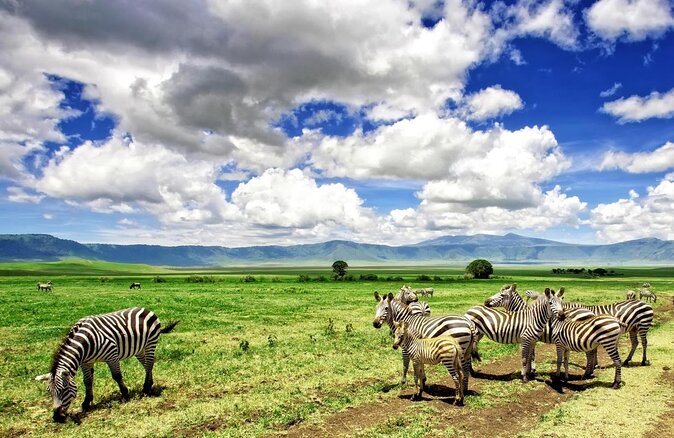
The crater setting is also described as surreal, with clouds and color changes that make it feel almost like a different planet. And wildlife here is packed into a defined bowl, which is great for game viewing. You can see zebras, buffaloes, lions, wildebeest, baboons, elephants, flamingos, ostriches, hippos, cheetahs, and the possible sighting of the rare black rhino.
Late in the day, you drive to your final Recommended Accommodation for dinner and overnight.
If you only have one question you want to answer, ask this: how the guide handles crater wildlife ethics and distance rules. The tour data doesn’t list exact vehicle behavior rules, so you should expect the guide to follow local regulations and safe viewing norms.
Guides, unlimited mileage, and why this can change your sightings
The biggest operational feature in this tour is unlimited mileage driving, with no limit on how far the driver can go while searching for animals. That matters because in migration season, the action is not always exactly where you hoped it would be when you planned your day.
Pair unlimited mileage with a guide who is expected to answer questions and explain wildlife behavior, and you get a better chance of turning random sightings into meaningful moments. You’ll also spend less time arguing with the clock, since the plan is structured to keep you out for long drives on the days when the herds are moving.
Small detail, big comfort: you’re provided unlimited drinking mineral water throughout. That seems minor until you’re in the sun for hours, scanning and waiting for movement.
On guide names from real experiences: positive write-ups mention Mike and credit his team with organization, timing, and patient driving. On the flip side, there are serious concerns in a separate account mentioning Godfrey and problems related to advance payment and later logistics.
So here’s my practical advice: treat payment and confirmation as your responsibility too. Use the booking platform you booked through, confirm the safari pickup in writing, and ask for clear details about the local operator you’ll meet on the ground.
Price and value: what $4,984.62 buys you in Tanzania
The listed price is $4,984.62 per person. On paper, that’s not cheap, and safari pricing in Tanzania has a lot of moving parts. What helps you judge value here is what’s included versus what’s left out.
Included in this tour:
- 4×4 transport with pop-up open roof
- All park entrance fees
- Full board accommodation as per the itinerary
- Unlimited drinking mineral water
- Government taxes
- A professional guide with wildlife knowledge
- Unlimited mileage driving
- Park entrance tickets free is stated for the stops
Not included:
- Tips
- Travel insurance
- International flights
Value logic that makes sense for you: you’re paying for (1) time in the right areas during the migration window, (2) professional guiding, and (3) the costs that usually stack up quickly, like park fees and taxes. Those are expenses people often forget when comparing prices.
The one mismatch to watch: the tour name says 8 days, but the working itinerary is about 6 days. If you want to compare value, ask the operator how the extra days, if any, are handled around arrival and departure. Don’t assume they are only buffer time.
Also, park days can run long. The itinerary includes drives that look like full-day effort, so the value only holds if you’re comfortable with early starts and long hours in the vehicle.
Who this safari fits best, and who should skip it
This is a strong fit if you:
- Want migration-focused timing, especially May to July Grumeti action
- Like the idea of multiple Serengeti days, not just one drive
- Prefer small group travel (max 6)
- Care about both wildlife and a bit of cultural travel, like Mto wa Mbu and a Maasai village stop
It may not be the best fit if you:
- Hate long driving days with early wakeups
- Want very specific, guaranteed wildlife species in a fixed order. Even with strong planning, animal movement changes daily.
- Are uncomfortable with the fact that there are reports of payment and logistics problems tied to specific individuals in the company. If you book, do extra confirmation work.
Should you book this Grumeti Migration safari?
If you book this tour, I’d do it for one reason: you’re targeting the migration where it matters, then you’re staying long enough to react when conditions shift. The combination of unlimited mileage, open-roof 4×4, and multiple Serengeti days is a practical recipe for better sightings.
But I would not click book blindly. There are at least two serious red flags in the negative side of reporting, including being stranded in Ngorongoro and concerns tied to advance payment and airport pickup. To protect yourself, confirm the operator details, get your pickup plan in writing, and keep proof of every payment and message.
If you want the Great Migration, and you’re willing to plan carefully on the money side, this safari can be an excellent value way to experience Tanzania’s big wildlife circuit. If you want a zero-risk, set-and-forget booking, I’d look for a different operator with cleaner reliability signals.
FAQ
How long is the Grumeti River Great Migration safari?
The duration is listed as about 6 days, even though the tour name says 8 days.
Where does the safari start and what time?
The meeting time is 7:30 am, and the location is Arusha, Tanzania.
Is pickup offered?
Yes, pickup is offered.
What does the safari vehicle include?
You travel in a 4×4 with a pop up open roof for the entire safari.
Are park entrance fees included?
Yes. All park entrance fees are included, and admission ticket fees are listed as free for the park days.
What’s included with meals and accommodation?
The tour includes full board accommodation as mentioned on the itinerary.
Is drinking water included?
Yes, unlimited drinking mineral water is included.
How many travelers are in a group?
The maximum group size is 6 travelers.
What is not included in the price?
Tips, travel insurance, and international flights are not included.
Is there free cancellation?
Yes, free cancellation is offered. You can cancel up to 24 hours in advance for a full refund.
Following the Migration
- 8 Days Great Wildebeest Calving Migration Safari from Arusha
★ 5.0 · 254 reviews - 10-Day Serengeti Wildebeest Migration Safari from Arusha
★ 5.0 · 218 reviews - 8 Day Spectacular Migration Serengeti mid -Range Tanzania Safari
★ 5.0 · 161 reviews - 9-Day Serengeti Migration Footsteps Tanzania Safari
★ 5.0 · 96 reviews - 7 days great migration safari
★ 5.0 · 77 reviews
The Serengeti, Three More Ways
- Balloon Safari & Bush Breakfast in Serengeti – Miracle Experience
★ 5.0 · 1,646 reviews - 3 Days Serengeti & Ngorongoro Group Camping Safari
★ 5.0 · 574 reviews - 5-Day Highlights mid-Range Crater, Serengeti, Tarangire
★ 5.0 · 296 reviews - 3-Day Classic Serengeti Safari
★ 5.0 · 263 reviews - Private 6-Day Tarangire Manyara Crater and Serengeti with Mid-Range Lodges
★ 5.0 · 238 reviews
Just added from around Arusha
Serengeti National Park Safaris, compared.
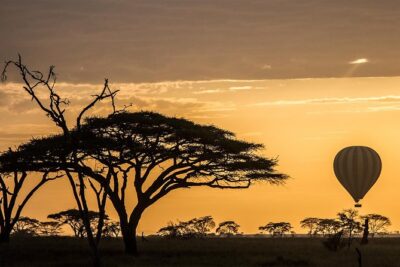 ★ 5.0Serengeti Balloon Safari and authentic bush breakfastFrom $5502,480 reviews
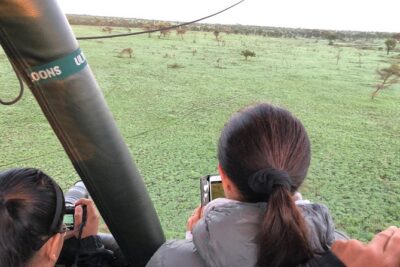 ★ 5.0Balloon Safari & Bush Breakfast in Serengeti – Miracle ExperienceFrom $5991,646 reviews
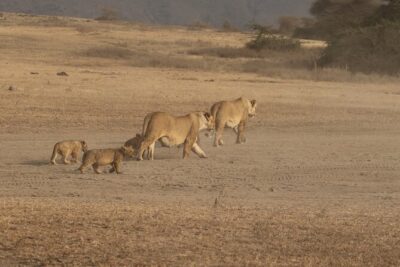 ★ 5.03 Days Serengeti & Ngorongoro Group Camping SafariFrom $815574 reviews
 ★ 5.05-Day Highlights mid-Range Crater, Serengeti, TarangireFrom $2,327296 reviews
 ★ 5.0Safari Serengeti And NgorongoroFrom $2,845288 reviews
 ★ 5.03-Day Classic Serengeti SafariFrom $1,455263 reviews
 ★ 5.0Private 6-Day Tarangire Manyara Crater and Serengeti with Mid-Range LodgesFrom $2,685238 reviews
 ★ 5.05 Days Camping Tarangire, Serengeti & Ngorongoro crater & Visiting MaasaiFrom $1,254229 reviews
Browse the lists this tour appears in