
REVIEW · SERENGETI NATIONAL PARK SAFARIS
8 Day private wildebeest migration safari Serengeti Ngorongoro
Watching wildebeest move in motion is unforgettable. This 8-day private safari is built around the Great Migration in Serengeti, then adds Ngorongoro Crater for a high-density predator day, plus Lake Manyara and a scenic finish near Mount Kilimanjaro.
I especially like the way the route is season-matched. You spend multiple days tracking the herds where they are most likely to be, whether that means Ndutu in the south, the Grumeti area in the central corridor, or the Mara River crossing season.
One possible consideration: this is a long, full-on wildlife schedule with early starts and long driving days, and sightings can never be guaranteed. If you’re expecting zero-waiting, relaxed sightseeing the whole trip, you may want to rethink the intensity.
In This Review
- Key things that make this safari work
- Planning the rhythm: from Arusha arrival to Serengeti tracking
- Day 1 in Arusha: arrival time matters more than you think
- Day 2 Lake Manyara: green scenery plus tree-climbing lions
- Overnight at Karatu lodge: a useful base for the real push
- Serengeti basics that actually improve your odds
- Day 3 Serengeti entry: get oriented on the plains
- Day 4 to Day 5: tracking the migration, not just driving through it
- Big-cat chasing from the ground, with time to watch
- When the route shifts: Serengeti to Ngorongoro for predator density
- Day 6 sunrise game drive: leaving central Serengeti with purpose
- Day 7 Ngorongoro Crater: descend 600 meters into a wildlife bowl
- A high-altitude finish: Materuni Waterfalls and Chemka Hot Springs
- Day 8 off the safari circuit: Materuni Waterfalls near Kilimanjaro
- Chemka Hot Springs: swimming with small fish
- What the private format changes for you
- You get your own vehicle and schedule control
- Price and value: is $3,200 per person fair for this itinerary?
- How to think about the $3,200 cost
- Where the value can depend on your expectations
- Who should book this safari
- Should you book the 8-day private migration safari to Serengeti and Ngorongoro?
- FAQ
- How does the safari time the wildebeest migration in Serengeti?
- Is this a private safari?
- Where do you spend nights during the safari?
- What parks are included besides Serengeti and Ngorongoro?
- Are park admission tickets included?
- Is there free cancellation?
Key things that make this safari work
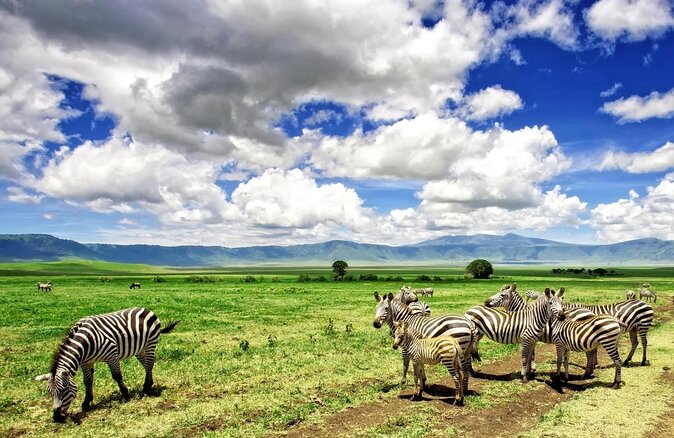
- Season-based migration tracking across the right Serengeti region: Ndutu, Central/Grumeti, or Mara River crossing timing
- Big-cat focus with extended tracking time in Serengeti, plus a predator-heavy day in Ngorongoro Crater
- A low-crowd approach for game drives, including controlled areas designed to get you viewing time without fighting traffic
- Real-world variety beyond the plains: Lake Manyara tree-climbing lions and the Kilimanjaro foothill experience at Materuni
- Helpful, responsive guiding with guides such as Ally (Lunge) and David noted for strong animal knowledge and attentive service
More of the Serengeti, drive by drive
- Balloon Safari & Bush Breakfast in Serengeti – Miracle Experience★ 5.0 · 1,646 reviews
- 3 Days Serengeti & Ngorongoro Group Camping Safari★ 5.0 · 574 reviews
- 5-Day Highlights mid-Range Crater, Serengeti, Tarangire★ 5.0 · 296 reviews
- 3-Day Classic Serengeti Safari★ 5.0 · 263 reviews
Planning the rhythm: from Arusha arrival to Serengeti tracking
Day 1 in Arusha: arrival time matters more than you think
Your trip starts in Arusha. After you land at JRO, you get picked up and transferred to a reserved hotel, usually with a quick briefing before you sleep. The key value here is that you’re not guessing logistics after a flight. You also get a chance to align tomorrow’s timing with how you’re feeling.
If you have extra time the next day before the safari starts, you can ask for options in advance. That kind of flexibility helps a lot when you’re juggling flight delays, jet lag, or just want a calm first morning.
Day 2 Lake Manyara: green scenery plus tree-climbing lions
Day 2 is a full day in Lake Manyara National Park. You leave the hotel after breakfast, with about two hours on the road to get you into the park with daylight for your first game drive.
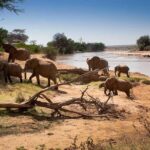
Lake Manyara’s appeal is simple: it feels different from the open Serengeti plains. The park mixes tropical forest with lots of birds and animals you might not see as easily in the grassland ecosystems. Expect chances for baboons, monkeys, waterbuck, elephants, and many other species, plus the famous possibility of tree-climbing lions in the right habitat.
Practical note: this is a good day to build your safari eyes. You’ll learn how the drivers read movement and sound in the bush, which makes the next days in Serengeti more productive.
Other ways down into the Ngorongoro Crater
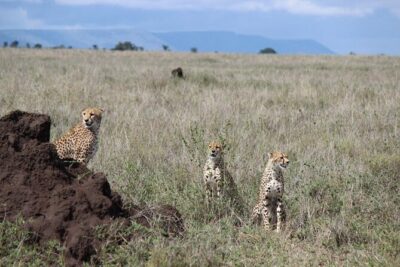
Overnight at Karatu lodge: a useful base for the real push
You’ll sleep around Karatu. That matters because it positions you to head into Serengeti early the next morning. When you’re chasing predators and migration behavior, “being on time” is half the battle.
Serengeti basics that actually improve your odds
Day 3 Serengeti entry: get oriented on the plains
Early breakfast at around 7:00 am, then game drive en route into Serengeti. This is where the safari shifts from setup mode into full migration country. Serengeti is huge and famous for endless plains, massive herds, and predators that hunt those herds.
On this day you get a longer game drive window, listed at about 8 hours, with dinner and overnight in the heart of Serengeti. You can expect a typical mix of Savannah wildlife: crocodiles and hippos tied to waterways like the Grumeti River, plus giraffes, antelopes, gazelles, and more.
The value of this day isn’t only wildlife volume. It’s the orientation. You start learning the rhythms of the landscape, where predators tend to wait, and how drivers position the vehicle to see action without burning daylight.
Day 4 to Day 5: tracking the migration, not just driving through it
These two days are where the safari earns its name. You’ll spend about 11 hours each day on migration tracking, and the exact direction is tied to the time of year.
Here’s the season logic used on this itinerary:
- Dec to March: southern Serengeti, especially Ndutu
- April to June: Central Serengeti and the Grumeti River corridor
- July to October: Mara River region, with the annual crossing period
This matters because migration is not one big moving line you can follow anywhere. The herds shift with rainfall, grass growth, and river conditions. By following the season, you’re matching your timing to how the ecosystem works.
What you’ll likely feel during these days is the difference between “seeing animals” and “tracking behavior.” Predators respond to movement. When the herds are active, you often get more hunting opportunities, tighter viewing action, and a better chance of seeing the drama that makes big-cat sightings so satisfying.
Big-cat chasing from the ground, with time to watch
The itinerary repeatedly emphasizes hunting activity during night and early morning, which is why the safari includes early starts and longer tracking days. In plain terms: you don’t just arrive at the park and hope.
Also, the plan calls out game drives in controlled areas, which can help you spend more time actually watching instead of stuck in congestion.
When the route shifts: Serengeti to Ngorongoro for predator density
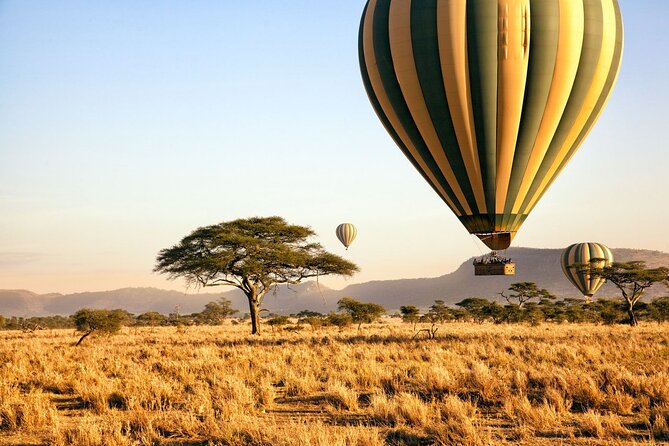
Day 6 sunrise game drive: leaving central Serengeti with purpose
Day 6 starts early, with a cup of tea or coffee and a packed breakfast so you don’t lose prime viewing time. The goal here is predator behavior, since predators tend to be more active during night and early morning.
The safari also describes a drive out of central Serengeti toward the eastern area, aiming to increase your chances of seeing animals like cheetahs and lions, including lions on rocky lookouts. There’s a sunrise-focused component as well, which can be stunning and also useful for spotting.
Why I like this kind of day: it breaks the pattern. After two long days tracking herds, you’re still “in the hunt,” but the focus becomes observing predators and their positions across different habitats.
You also get the added benefit of moving away from heavy crowding when the driver selects controlled areas, giving you more viewing time per stop.
Day 7 Ngorongoro Crater: descend 600 meters into a wildlife bowl
Ngorongoro is different from Serengeti in a way that’s hard to explain until you see it. Instead of open plains, you’re descending into a concentrated crater environment where food and water pull animals together.
Your day includes a direct drive to the crater, then a descent over 600 meters. From there you can view wildlife from the crater floor, supported by year-round water and fodder. Expect multiple species: wildebeest, zebra, buffalo, warthog, hippo, and giant African elephants, depending on where the day’s activity is centered.
The predator angle is a major reason people love this area. The crater can hold lions, hyenas, jackals, cheetahs, and sometimes leopards. Leopard sightings can require patience and sharp eyes, so what matters most is having a guide who knows what to scan for and when to pause.
You’ll also visit Lake Magadi, described as a large shallow alkaline lake in the southwest corner. It’s part of the crater experience, adding a visual and ecological contrast to the grasslands and animal movement.
This crater day is about density. You’re more likely to see many species in a shorter span than you would in larger open country, which is why it’s such a strong complement to migration tracking.
A high-altitude finish: Materuni Waterfalls and Chemka Hot Springs
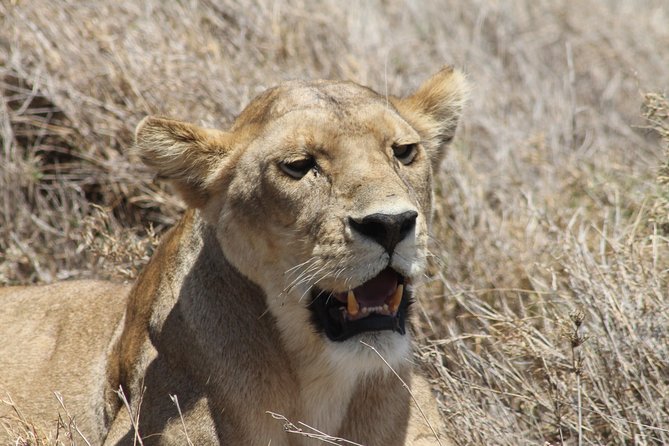
Day 8 off the safari circuit: Materuni Waterfalls near Kilimanjaro
Instead of ending at Arusha and calling it a day, the itinerary includes a scenic nature finish. You’ll be picked up from your hotel in Arusha or Moshi, then driven to Materuni Waterfalls.
You’ll travel to about 2,500 meters above sea level, with a local safari guide along the way. The focus here is the Kilimanjaro slopes and what’s growing there, not safari game drives. You might see birds and chameleons, and you’ll pass coffee and banana trees on the route.
At the waterfall, you may swim in pools with clean water. That’s one of those rare moments where you’re not watching animals from a vehicle, you’re refreshing yourself in a landscape shaped by elevation and rainfall.
You then head back for a coffee tour in the village. If you want a more local ending to a migration safari, this is exactly that: hands-on culture and everyday production rather than another scenic overlook.
Chemka Hot Springs: swimming with small fish
After the village portion, you go to Chemka hot spring. It’s described as a natural pool with small fish. You’ll swim there while enjoying drinks until evening.
Bring swimming clothes. That’s a small detail, but it’s the difference between enjoying the last day and scrambling to figure it out.
Finally, you drive to Kilimanjaro airport. In safari terms, it’s a smooth landing point for your next trip.
What the private format changes for you
You get your own vehicle and schedule control
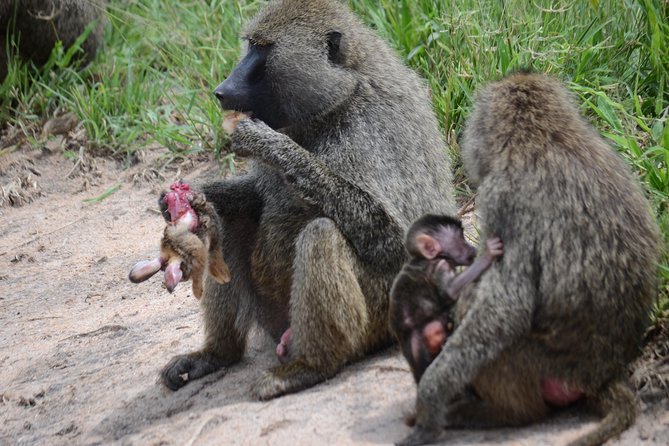
This is listed as a private safari, with only your group participating. That matters because migration tracking is about adjusting to conditions: herd movement, predator activity, and the best viewing angles.
You’re not stuck with someone else’s pace. If the guide thinks the action is shifting, you can usually move as a unit. If you need a restroom break or a quick reset after a long day, you’re not negotiating with strangers.
This is also why early mornings and long tracking days can feel manageable. The day is designed around timing, not around fitting everyone into a shared itinerary.
Price and value: is $3,200 per person fair for this itinerary?
How to think about the $3,200 cost
At $3,200 per person for an 8-day private safari, you’re paying for three big things: time in the right ecosystems, private logistics, and specialized migration timing.
A helpful sign on value is that park admissions are listed as free for the Serengeti tracking days (days 3 to 5) and included on Ngorongoro Crater and the final activities (days 7 to 8). That reduces the usual surprise costs people get on safari budgets.
Also, your itinerary includes more than just plains. It includes Lake Manyara, Ngorongoro Crater, Materuni Waterfalls, and Chemka Hot Springs. If you’re the type who wants a safari plus a meaningful finishing day near Kilimanjaro, you’re not paying extra for one-dimensional sightseeing.
Where the value can depend on your expectations
The main place where value can vary is how strongly you care about migration timing. If you want the most exciting migration moments, the season-based Serengeti tracking is the whole point. If you mainly want classic big animals with fewer variables, you might not need a migration-focused route.
Another dependency is guide skill and driving decisions. This operation has guides named like David and Ally (Lunge) who are described as attentive and strongly animal-focused, which is exactly what you want in migration country. A great guide can turn a borderline sighting into a memorable one by reading behavior and choosing good positions.
Who should book this safari
This safari fits best if you:
- Want a wildebeest migration trip with real tracking time, not quick stops
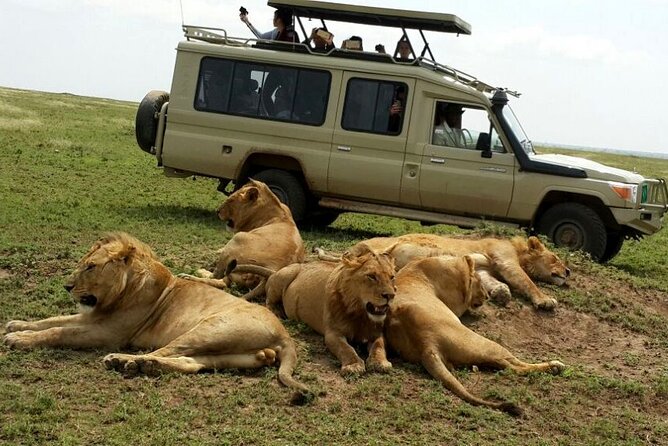
- Love big cats and predators, including a dedicated crater day where predators are common
- Prefer private guiding and schedule control
- Enjoy a mix of ecosystems, forest edges at Lake Manyara, crater density at Ngorongoro, and a nature and culture finish near Kilimanjaro
It can also work well for families, since guides are described as attentive even with children, including ages like 8 and 11. Just remember that the days are long and early, so packing patience matters.
Should you book the 8-day private migration safari to Serengeti and Ngorongoro?
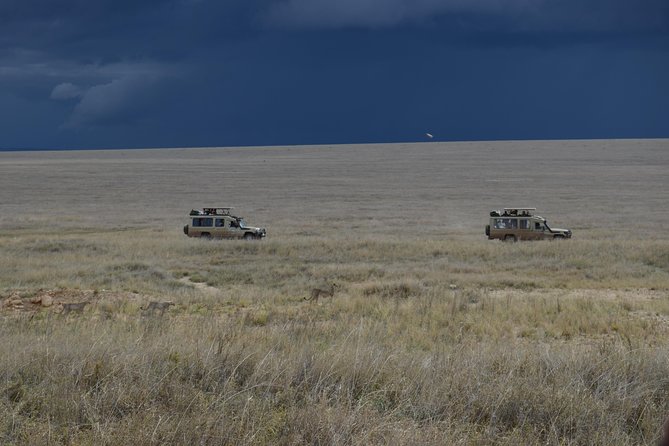
If your dream is to see the Great Migration while also stacking your odds for predators in Serengeti and Ngorongoro, this is a solid match. The season-based movement across Serengeti regions is the key strength, and the added crater day gives you a second hunting environment with dense wildlife.
I’d book it if you can handle early starts and long days, and if you understand one honest truth about safari: migration is wild, not scheduled. The route is designed to follow the herd, but nature decides the final show.
FAQ
How does the safari time the wildebeest migration in Serengeti?
The itinerary tracks the migration based on season. It shifts by region, with southern Serengeti and Ndutu from Dec to March, Central Serengeti and the Grumeti River from April to June, and the Mara River area from July to October.
Is this a private safari?
Yes. It is listed as private, so only your group participates.
Where do you spend nights during the safari?
You spend the night in Arusha on Day 1. You also spend nights in the Serengeti after entering the park, and then you continue into the Ngorongoro area. The itinerary also includes an overnight at Karatu lodge on Day 2.
What parks are included besides Serengeti and Ngorongoro?
Lake Manyara National Park is included on Day 2. The final day includes Materuni Waterfalls and Chemka Hot Springs near Mount Kilimanjaro, with activities that start from Arusha or Moshi.
Are park admission tickets included?
Park admissions are listed as free for days in Serengeti (Day 3 to Day 5). Admission tickets are listed as included for Ngorongoro Crater (Day 7) and for the Day 8 activities.
Is there free cancellation?
Yes. Free cancellation is offered if you cancel at least 24 hours before the experience’s start time for a full refund. If you cancel within 24 hours, the amount you paid is not refunded.
Following the Migration
- 8 Days Great Wildebeest Calving Migration Safari from Arusha
★ 5.0 · 254 reviews - 10-Day Serengeti Wildebeest Migration Safari from Arusha
★ 5.0 · 218 reviews - 8 Day Spectacular Migration Serengeti mid -Range Tanzania Safari
★ 5.0 · 161 reviews - 9-Day Serengeti Migration Footsteps Tanzania Safari
★ 5.0 · 96 reviews - 7 days great migration safari
★ 5.0 · 77 reviews
Still Thinking About the Crater?
- 3 Days Serengeti & Ngorongoro Group Camping Safari
★ 5.0 · 574 reviews - 5 Days Camping Tarangire, Serengeti & Ngorongoro crater & Visiting Maasai
★ 5.0 · 229 reviews - 4 Days Join Group tour Tarangire Serengeti and Ngorongoro crater
★ 5.0 · 219 reviews - 4-Day Safari from Arusha: Tarangire, Serengeti and Ngorongoro
★ 5.0 · 173 reviews - 2 Days Tarangire and Ngorongoro Group Camping Safari
★ 5.0 · 146 reviews
The Serengeti, Three More Ways
- Balloon Safari & Bush Breakfast in Serengeti – Miracle Experience
★ 5.0 · 1,646 reviews - 3 Days Serengeti & Ngorongoro Group Camping Safari
★ 5.0 · 574 reviews - 5-Day Highlights mid-Range Crater, Serengeti, Tarangire
★ 5.0 · 296 reviews - 3-Day Classic Serengeti Safari
★ 5.0 · 263 reviews - Private 6-Day Tarangire Manyara Crater and Serengeti with Mid-Range Lodges
★ 5.0 · 238 reviews
Just added from around Arusha
Serengeti National Park Safaris, compared.
 ★ 5.0Serengeti Balloon Safari and authentic bush breakfastFrom $5502,480 reviews
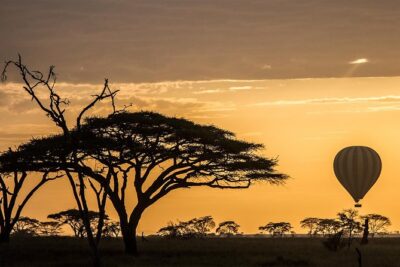
 ★ 5.0Balloon Safari & Bush Breakfast in Serengeti – Miracle ExperienceFrom $5991,646 reviews
 ★ 5.03 Days Serengeti & Ngorongoro Group Camping SafariFrom $815574 reviews
 ★ 5.05-Day Highlights mid-Range Crater, Serengeti, TarangireFrom $2,327296 reviews
 ★ 5.0Safari Serengeti And NgorongoroFrom $2,845288 reviews
 ★ 5.03-Day Classic Serengeti SafariFrom $1,455263 reviews
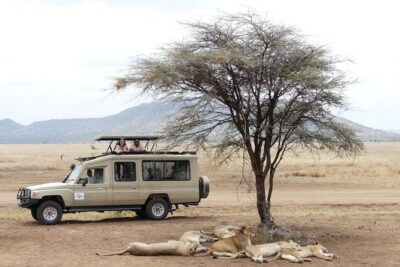 ★ 5.0Private 6-Day Tarangire Manyara Crater and Serengeti with Mid-Range LodgesFrom $2,685238 reviews
 ★ 5.05 Days Camping Tarangire, Serengeti & Ngorongoro crater & Visiting MaasaiFrom $1,254229 reviews
Browse the lists this tour appears in