
REVIEW · KILIMANJARO MACHAME ROUTE
6 days Machame route climbing Mt.Kilimanjaro
Kilimanjaro gets real fast. This 6-day Machame Route climb from Moshi focuses on smooth logistics, full board on the mountain, and clear safety support all the way to the summit push. I like the way the operator handles details like treated water, hot washing water, and even portable oxygen tanks. One thing to consider up front: the cold nights and steep days are no joke, so you should come fit and ready.
What I liked most is the practical feel of the trip. You get a packed lunch on climb days, three hot meals daily while on the mountain, 4-season tents, and double layered sleeping mats. I also like that the plan builds acclimatization into the hike, including the tough Lava Tower segment followed by a descent to Barranco.
The main drawback is that you are camping in exposed places, including nights that can drop well below freezing. If you hate cold, rain, or sleeping on the side of a mountain, you may find this route more demanding than expected.
In This Review
- Quick highlights before you commit
- Why the Machame route feels like a real Kilimanjaro journey
- Price and what you are really paying for
- Getting from Moshi to the climb: the practical start you want
- Day 1: Machame Village to Machame Camp in montane forest
- Day 2: Shira plateau approach, moorland gradients, and a cold exposed night
- Day 3: Lava Tower grind, then a descent that helps acclimatize
- Day 4: Great Barranco Wall, Karanga Valley down to Barafu
- Day 5: The 23:30 start, Stella Point sunrise, and the climb to Uhuru Peak
- Day 6: Celebrations, certificates, and the easy feeling of descending to forest
- What the support setup means for your comfort and safety
- Best fit: who should choose this Machame climb
- Should you book this Machame route with Kilisa Tours and Safaris?
- FAQ
- How long is the Machame route climb?
- Where does the experience start and what time is it scheduled?
- What is included in the price?
- What are the accommodations like during the trek?
- Are meals provided?
- Is there oxygen or medical support included?
- What are the certificate colors for reaching certain summits?
- What happens if poor weather cancels the trek?
Quick highlights before you commit
- Safety gear is part of the package, including portable oxygen tanks and an ox meter, plus a team rescue fee
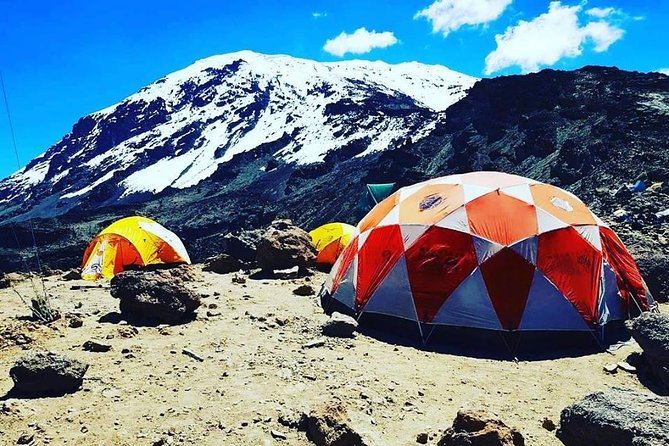
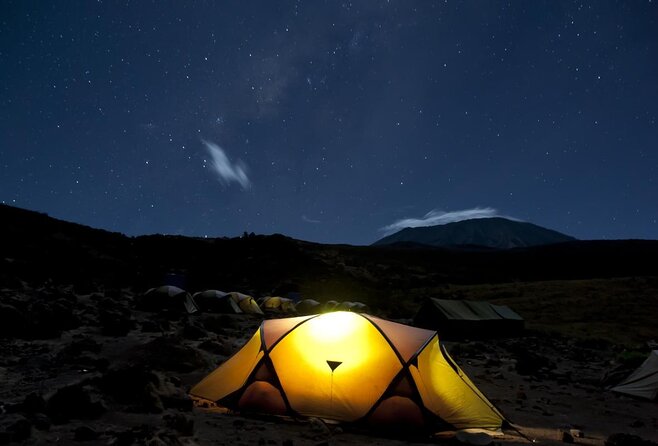
- Camping comfort matters, with 4-season tents and double layered sleeping mats for the cold nights
- Acclimatization is built into the route, with a classic Lava Tower to Barranco pattern
- The pre-dawn summit push is scheduled tightly, starting around 23:30, with Stella Point and sunrise timing
- Your end-of-trip certificate is altitude-based, green for Stella Point and gold for Uhuru Peak
- Group size stays small, with a maximum of 15 travelers
Still weighing it up? These Tanzania trips came out well when we reviewed them.
- 2 Day Serengeti Safari Experience from Mwanza★ 5.0 · 198 reviews
- Balloon Safari & Bush Breakfast in Tarangire – Miracle Experience★ 5.0 · 169 reviews
- Joining Safari from Mwanza★ 5.0 · 54 reviews
- Full-Day Private Serengeti Safari from Mwanza★ 5.0 · 47 reviews
Why the Machame route feels like a real Kilimanjaro journey
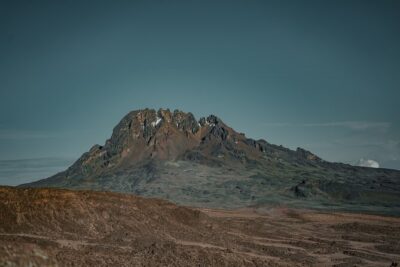
If you want a Kilimanjaro trek that feels like you are moving through Kilimanjaro’s ecosystems step by step, the Machame route gives you that. You start in montane forest, transition into moorland, then move into semi-desert and alpine desert terrain, and finally reach the stone scree and ice-capped summit zone.
This matters because it changes the hike day to day. One day you are dealing with slippery forest mud. Another day is about rocky ridges, wind, and thinning air. And when you get to the summit attempt, the world narrows down to headlamps, breathing rhythm, and keeping your pace steady.
It also has a reputation for being mentally tough. The route includes a challenging middle section around Lava Tower, and the summit day is a long grind even when conditions are good. That is not a warning sign to avoid it. It is a heads-up so you can plan your effort correctly.
Price and what you are really paying for
At $2,290 per person for about 6 days, this trek is not the cheapest option. But it is also not just a ticket to the mountain gate. The included cost covers a full package that adds up fast if you price it separately.
Here is what is included that tends to make the climb feel safer and more comfortable:
- Private transport to and from Kilimanjaro International Airport to Moshi
- Two nights accommodation in Moshi
- Transport to and from the Kilimanjaro gate
- Park entry fees and camping fees
- Team Kilimanjaro Rescue fees
- 4-season tents and double layered sleeping mats
- Guides, cook, and porters, plus an emergency first-aid kit
- Portable oxygen tanks and an ox meter
- Enough treated and filtered drinking water, plus hot water for washing
- 3 hot meals daily while on the mountain
What is not included is also important for your budget: travel insurance, flights, and tips for guides and porters.
So the value question becomes simple. If you want a well-run climb where a lot of the cost drivers are handled for you, this package makes sense. If you already have your own gear, you are skipping accommodation, and you have to find your own safety and rescue setup, you might find other options cheaper. But based on what is included here, you are paying to remove friction from the trip.
Getting from Moshi to the climb: the practical start you want
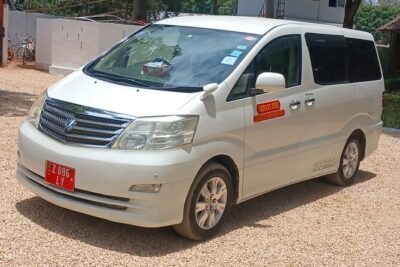
The experience begins around 8:30 am on Kilimanjaro Airport Road, and pickup is also offered from your hotel. In plain terms, that reduces the most common stress for first-time climbers: wondering how you get to the gate, who has your paperwork, and when you start hiking.
Once you are at the start, you will drive to Machame Village. In the village you can buy mineral water, then you get a packed lunch. Depending on road conditions, you may do a muddy 3 km walk to reach Machame gate if the vehicle cannot reach the gate area cleanly.
That detail matters because early delays can mess with your day one energy. A trip that handles this smoothly lets you focus on one thing: settling into a steady climbing rhythm.
Day 1: Machame Village to Machame Camp in montane forest
Day 1 is about getting altitude underway while learning what the route feels like. You hike around 18 km for roughly 7 hours in montane forest.
Here is what to expect:
- You register at the gate office before entering the forest climb
- Rain is possible, and the trail can become soggy, muddy, and slippery
- You stop for a welcome lunch about halfway
- You reach the Machame camping area in the late part of the day
This is the day where your pacing habits get set. If you go too fast trying to “earn” the trek, you will pay for it later. The forest terrain makes that easy to do because it can feel manageable early on.
Practical tip based on the route conditions: treat day one as your warmup. The goal is to move steadily, keep your footing careful, and let your legs adapt to walking at altitude even before things get dramatic.
Day 2: Shira plateau approach, moorland gradients, and a cold exposed night
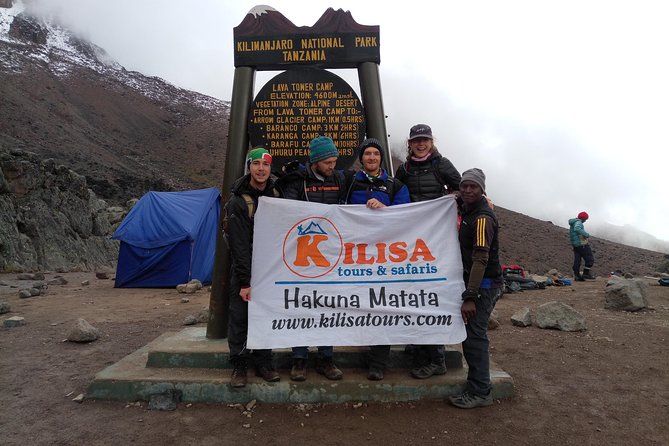
Day 2 is around 9 km for about 6 hours and transitions you into moorland. The morning starts early at Machame camp.
Your climb pattern looks like this:
- An hour or so of ascent through forest
- A gentler stretch of about two hours through moorland
- Lunch and rest
- Then a rocky ridge push toward the Shira plateau
As you climb, the views open up. You will get a look in an easterly direction toward the Western Breach and its glaciers. When you reach the Shira campsite at 3,840 meters, it is not just a “camp.” It is exposed, and that affects everything, including sleep.
One of the key realities of Kilimanjaro is that even if you do everything right, the mountain still controls the temperature. The night at Shira can drop below freezing.
Also, pay attention to the water routine. The porters boil water for drinking and washing, then dinner follows. That helps reduce the usual “should I drink this?” confusion when you are out there for days.
Day 3: Lava Tower grind, then a descent that helps acclimatize
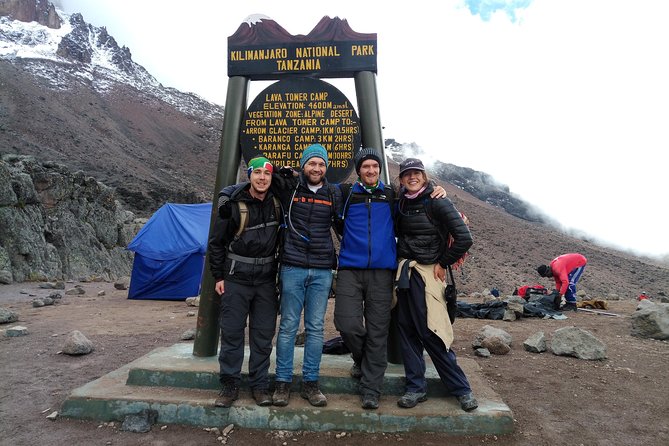
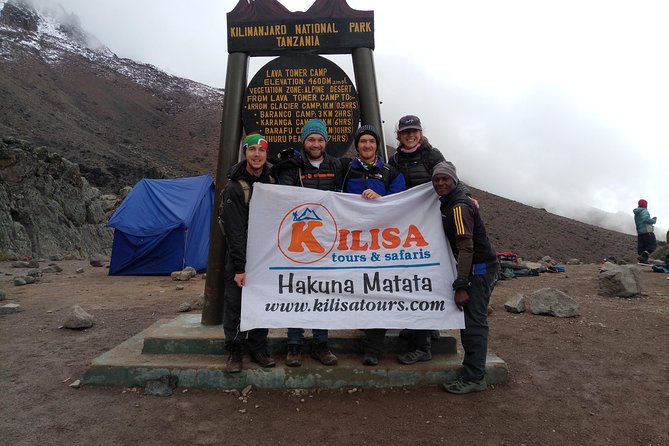
Day 3 is the toughest stretch so far. You hike around 15 km for about 7 hours, in semi-desert around Lava Tower. The route turns east and becomes rocky.
What happens:
- After about five hours of walking, you reach 4,630 meters
- You break for lunch in a designated area
- Then you continue to Lava Tower on a rocky scree path
- This is where some climbers may start to feel symptoms like breathlessness, irritability, and headaches
If you are worried about altitude, this is the day to respect your body. Those symptoms are not something to brush off. They are your cue to slow down, follow your guide’s pacing advice, and speak up early.
Then comes the acclimatization payoff. After lunch and the Lava Tower push, you descend almost 680 meters to Barranco camping area, reaching around 4,600 meters. That descent helps you absorb the altitude without treating the mountain like a straight line upward.
It is a classic Kilimanjaro strategy: go up high enough to stimulate acclimatization, then back down to consolidate it.
Day 4: Great Barranco Wall, Karanga Valley down to Barafu
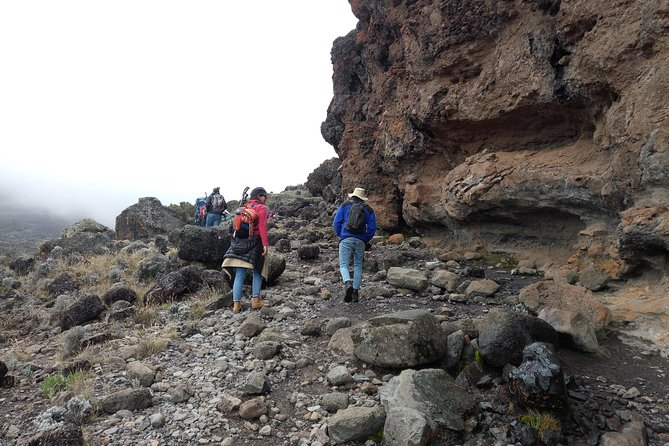
Day 4 is about 13 km for about 7 hours in alpine desert. You start after spending the night at the Great Barranco Wall.
The wall itself looks intimidating at first, but the route often feels easier than you expect once you are on it and your breathing settles. You then top out just below the Heim Glacier, which gives you a sense of how big Kilimanjaro looks when you are close to it and not staring at it from far away.
From there the route heads down through the Karanga Valley across ridges and valleys, and it joins the Mweka route. You turn left up a ridge and reach Barafu Hut after another hour or so.
A small detail on this day is actually a big one for your comfort: there is no water at Barafu camp. The last water stop is in the Karanga Valley. If you tend to under-drink earlier in a day, this is the moment to correct that habit so you are not stressed later.
Day 5: The 23:30 start, Stella Point sunrise, and the climb to Uhuru Peak
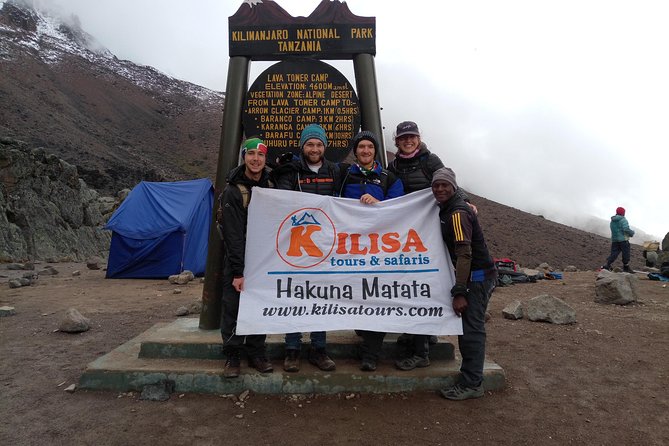
This is the day everyone remembers, and it has two phases: the long climb to Stella Point and then the final push to the summit.
You start around 23:30. You’ll have tea and biscuits, then shuffle off into the night.
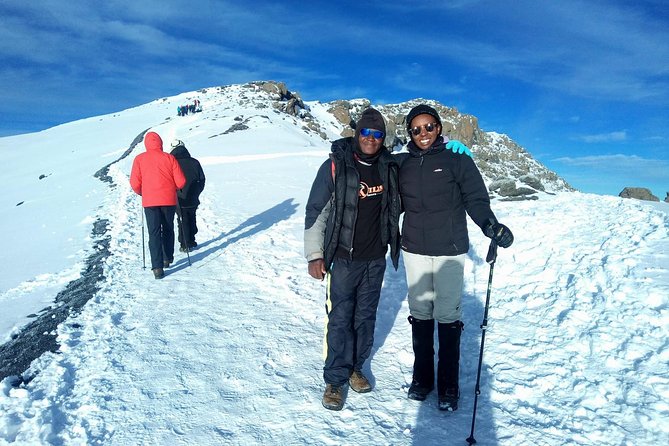
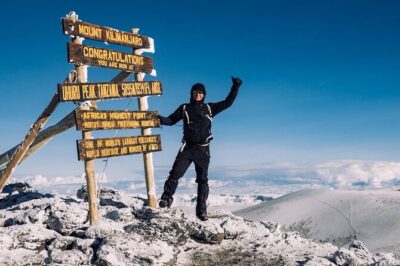
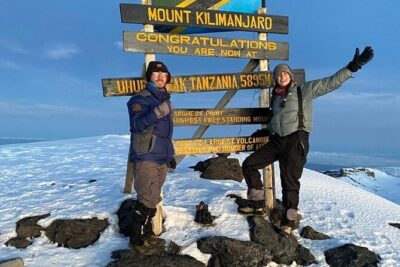
You move north-westerly through heavy scree toward Stella Point on the crater rim. For many climbers, the walk to Stella Point is the hardest part on the whole route, mentally and physically. At Stella Point (5,685 meters) you stop briefly and, if weather cooperates, you get one of the best sunrise views you are likely to see in your life.
After Stella Point:
- You continue for about 2 hours to Uhuru Peak (5,895 meters)
- There is often snow all the way on this ascent
This day rewards the small things. Your pace, your ability to keep going even when your body complains, and your willingness to take short rests before you lose momentum.
Reality check to keep you grounded: the summit is not only about fitness. It is also about weather and conditions. This trek is scheduled for the climb, but it still depends on what the mountain allows.
Day 6: Celebrations, certificates, and the easy feeling of descending to forest
You rise for breakfast, then the staff often marks the finish with celebration: dancing and singing on the mountain. It is also when you present your tips to the guide, assistant guides, chef(s), and porters.
Then it is downhill time. You descend about 3 hours back to Mweka Gate, then spend around 1 hour descending into the Mweka village, about 3 kilometers. You get a hot lunch, and then you drive back to Moshi for showers and more celebration.
The certificate part is surprisingly meaningful and very specific:
- The National Park requires every hiker to sign names to receive completion certificates
- Reaching Stella Point (5,685 meters) earns a green certificate
- Reaching Uhuru Peak (5,895 meters) earns a gold certificate
That system is helpful because it gives you a clear marker of what you achieved, even if conditions shift during the summit attempt.
What the support setup means for your comfort and safety
What makes this operator’s approach feel strong is that it is not just about having guides. It is about building a safety net around the climb.
You get:
- Friendly and professional guides, cooks, and porters
- An emergency first-aid kit
- A team rescue fee included in the package
- Portable oxygen tanks and an ox meter
- Enough treated and filtered drinking water
- Hot water for washing
- 4-season tents and double layered sleeping mats
In other words, you spend more of your energy actually climbing and acclimatizing, not troubleshooting the basics.
And on the service side, the operator’s local reputation comes through in how smooth the trip planning and airport handling is described. Support around booking and advice appears in guest stories, and a driver named Nicholson is mentioned as going out of his way to help with Moshi time when there was waiting time.
I like that kind of flexibility because Kilimanjaro rarely fits neatly into one schedule. A calm, experienced team helps you ride the bumps without stress.
Best fit: who should choose this Machame climb
This is best for you if:
- You have a strong physical fitness level and can handle 6 days of hiking with altitude
- You want a camping experience with real comfort upgrades like 4-season tents and double layered mats
- You prefer a structured climb with included meals, water treatment, and support staff
- You want the route progression that uses acclimatization, not just a simple push upward
It may not be the right match if:
- You struggle with cold nights, since some nights can drop well below freezing
- You get easily discouraged by long, rocky days and the mental weight of the pre-dawn summit start
If you do choose it, go in with respect for the route, not fear. The plan gives you a lot of support, but the mountain still decides your pace.
Should you book this Machame route with Kilisa Tours and Safaris?
If your priority is a well-run Kilimanjaro climb with strong safety-minded support and included camping comfort, I think this is a solid choice. The price includes the things that usually surprise people later, like camping fees, park entry, treated water, hot wash water, and oxygen gear.
I would book if you want:
- A true Machame route progression through distinct ecosystems
- Included meals every day on the mountain
- Small group size up to 15
- A team setup that includes rescue planning and oxygen equipment
I would pause if you know you will hate very cold, exposed nights, or if you cannot commit to a physically demanding trek over multiple days.
If you want one simple decision rule, use this: if you are ready to train and move at altitude, this package is built to support that. If you are hoping for an easy walk, this mountain will not cooperate.
FAQ
How long is the Machame route climb?
It is about 6 days, based on the trek schedule provided.
Where does the experience start and what time is it scheduled?
It starts at Kilimanjaro Airport Road, with a start time of 8:30 am.
What is included in the price?
Included items are private transport between Kilimanjaro International Airport and Moshi accommodations, 2 nights in Moshi, transport to and from the gate, park entry and camping fees, rescue fees, tents, sleeping mats, guides, cook and porters, 3 hot meals daily while on the mountain, treated drinking water, hot water for washing, oxygen tanks and an ox meter, and an emergency first-aid kit.
What are the accommodations like during the trek?
You camp, with 4-season mountain tents and double layered sleeping mats provided.
Are meals provided?
Yes. While on the mountain you get 3 hot meals daily (breakfast on 6 days, lunch on 5 days, and dinner on 5 days as listed).
Is there oxygen or medical support included?
Yes. The package includes portable oxygen tanks and an ox meter, plus a first-aid kit.
What are the certificate colors for reaching certain summits?
You receive a green certificate for reaching Stella Point (5,685 meters) and a gold certificate for reaching Uhuru Peak (5,895 meters).
What happens if poor weather cancels the trek?
This experience requires good weather. If it is canceled due to poor weather, you will be offered a different date or a full refund.
Just added from around Tanzania
Kilimanjaro Machame Route, compared.
 ★ 5.0Kilimanjaro climb, Machame Route (7-day)From $3,377262 reviews
 ★ 5.0Climbing Kilimanjaro – Machame RouteFrom $2,322170 reviews
 ★ 5.0Climbing Kilimanjaro through 7 days Machame RouteFrom $2,425151 reviews
 ★ 5.07-Day Machame Kilimanjaro Summit Tour from ArushaFrom $2,695125 reviews
 ★ 5.07 Days Kilimanjaro via Machame route affordable priceFrom $2,400110 reviews
 ★ 4.2#1. Best Kilimanjaro Day hike Tour-Machame Route-ISMANIFrom $11547 reviews
 ★ 5.07 Days Machame route – KilimanjaroFrom $2,85045 reviews
 ★ 5.0The Best of Machame Route in 6 Days: Your World’s Summit GuideFrom $1,15044 reviews
Browse the lists this tour appears in