
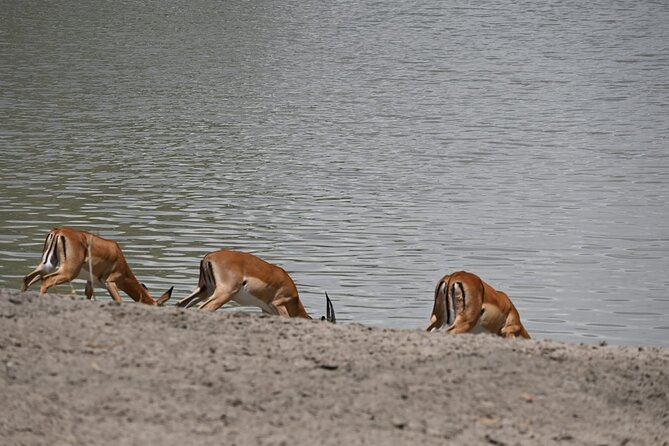
REVIEW · TANZANIA CAMPING AND BUDGET SAFARIS
5 Days Group Camping Safari
A safari that starts with baobabs and ends in a crater. This 5-day camping safari through Tanzania’s big names, Tarangire, Lake Manyara, Serengeti, and Ngorongoro, is the kind of trip that turns wildlife sightings into real memories, not just photos. You get game drives led by an English-speaking guide and nights outdoors under the African sky.
What I like most is the focus on finding animals with a serious guide, not just rushing from stop to stop. I also like the small group setup, limited to 6 people, which keeps the experience relaxed and personal. One possible drawback: camping means you need to pack smart and handle basic conditions, plus the trip has a 10kg luggage limit.
In This Review
- Key Highlights You Can Actually Use
- Why This 5-Day Camping Safari Works for First-Timers
- Small Group, Serious Game-Spotting, and Emanuel’s Reputation
- Day 1 in Tarangire: Baobabs, Elephant Herds, and a Bush Camp
- Day 2 at Lake Manyara: Tree-Climbing Lions, Flamingos, and Drama
- Day 3 in Serengeti: Plains Time and Big-Migration Timing
- Day 4: Morning Serengeti Again, Then the Ngorongoro Transfer
- Day 5 in Ngorongoro Crater: High-Density Wildlife and a Black Rhino Chance
- Camping Nights, Meals, and What Comfort Level to Expect
- Transport, Wildlife Rules, and How to Stay on Good Terms With Nature
- Price and What You Get for $1,350
- What to Pack: 10kg Limit, Warm Nights, and Binoculars
- Who This Safari Fits Best, and Who Should Think Twice
- Should You Book Suricata Safaris for This 5-Day Camping Route?
- FAQ
- What parks are included in this 5-day camping safari?
- How big is the group on this safari?
- Are park entrance fees included?
- What is included in the price and what is not?
- What should I pack and are there luggage limits?
- What is the cancellation and payment flexibility?
Key Highlights You Can Actually Use
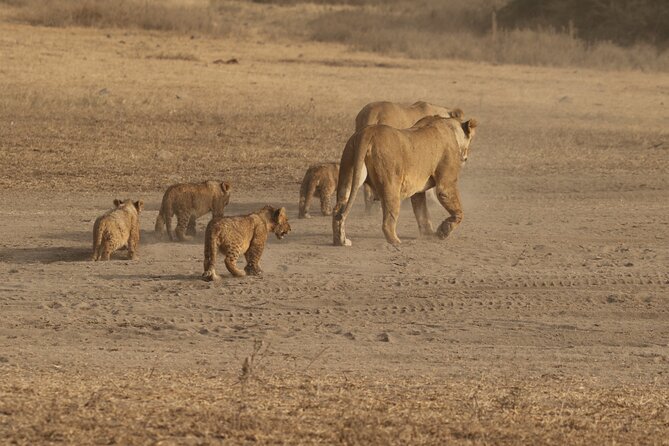
- Small group size (max 6) means more attention from your guide when animals appear.
- Four iconic parks in five days is an efficient route that still gives you full game-viewing days.
- Camping nights under the stars lets you experience the bush sounds, not just drive past them.
- English-speaking guide with strong driving skills improves your chances of good sightings.
- Ngorongoro Crater concentration is a wildlife “pressure cooker,” with species density in one place.
More camping safaris at this price
- 4 Days Group Camping Safari★ 5.0 · 1,101 reviews
- 5 Days Group Camping Safari★ 5.0 · 730 reviews
- 3 Days Serengeti & Ngorongoro Group Camping Safari★ 5.0 · 574 reviews
- 5 Days Camping Tarangire, Serengeti & Ngorongoro crater & Visiting Maasai★ 5.0 · 229 reviews
Why This 5-Day Camping Safari Works for First-Timers
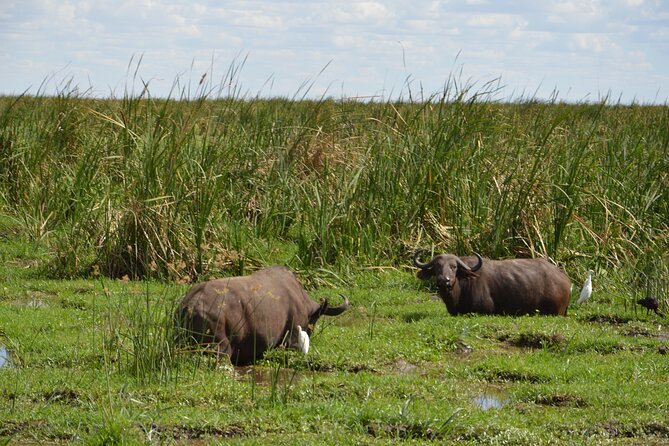
If Tanzania is on your bucket list, this itinerary is built for people who want the classic highlights without spending a week crisscrossing. The route connects Tarangire, Lake Manyara, Serengeti, and Ngorongoro, so you see very different ecosystems, then end in one of the most wildlife-dense areas in the region.
I like that the pace is realistic. You are not doing a marathon of half-days. Instead, you get long stretches for game viewing, plus camping at designated sites so you can actually rest, eat, and be ready for the next drive.
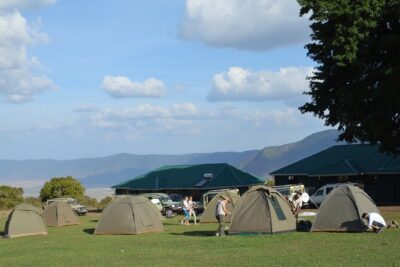
The camping element is also a big part of the value. Staying in the bush area changes how the days feel. Morning comes fast, evenings are quiet in a way cities never do, and you are close enough to hear the park at night. It is not for people who want constant comforts, but it is ideal if you want the safari to feel like safari.
Small Group, Serious Game-Spotting, and Emanuel’s Reputation
This trip keeps numbers tight, limited to 6 participants. That matters more than people expect. When an animal appears, you want space to reposition, and you want the group to move as one. A smaller group also helps your guide keep track of what you have seen so far, so you are not stuck with the same disappointment loop.
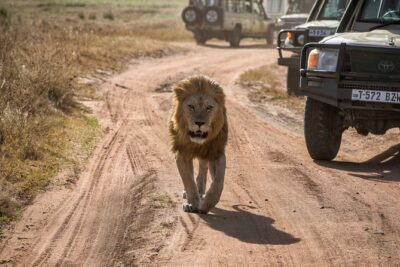
The guiding is in English, which is practical when you want explanations on behavior and where to look next. One guide named Emanuel comes up as a standout example of calm driving and strong spotting skills, including tough sightings like a rare black rhino. He also is credited with finding a pair of lions that people described as being on their honeymoon. That kind of detail is a clue: this safari isn’t just about the route, it is about how you are watching.
Day 1 in Tarangire: Baobabs, Elephant Herds, and a Bush Camp
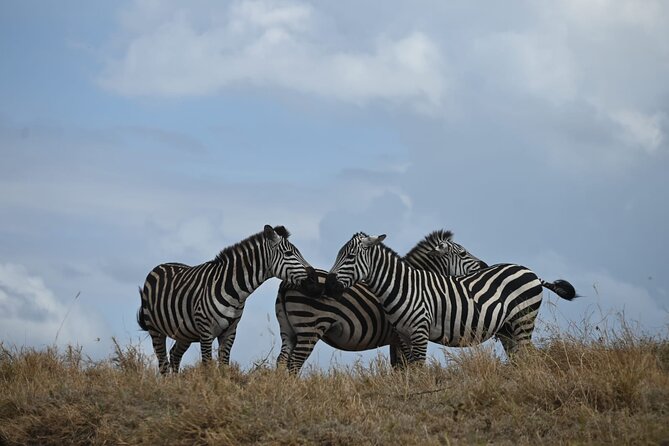
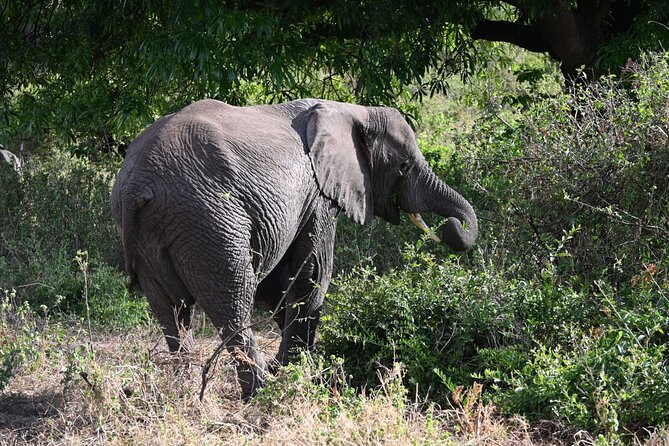
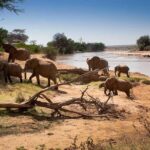
Your first day begins at Tarangire National Park, known for two things that work together visually and emotionally: huge elephant herds and old baobab trees. Tarangire is also the kind of park where animals can appear in clusters, so your guide can shift the vehicle when the timing is right.
In practice, what you should plan for is a full day of game viewing, then a return to camp in the bush area. This is where the camping setup starts to feel real. You drive out to find wildlife in the day, and you come back to wind-down time surrounded by the sights and sounds of the African bush.
Tip: pack in neutral colors. This is not about “looking safari-cool,” it is part of the rules and helps you blend in. Also, avoid bright colors, because the trip explicitly warns against them.
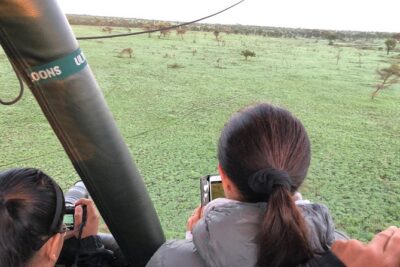
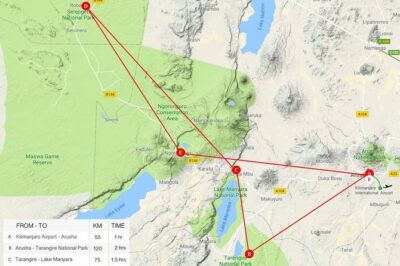
Day 2 at Lake Manyara: Tree-Climbing Lions, Flamingos, and Drama
Day 2 heads to Lake Manyara National Park, which is famous for dramatic scenery and a wide mix of wildlife. You are not just chasing big mammals either. The park is also associated with birds like flamingos, so even if the action on land slows for a moment, you can still enjoy the view and scan the edges of the lake area.
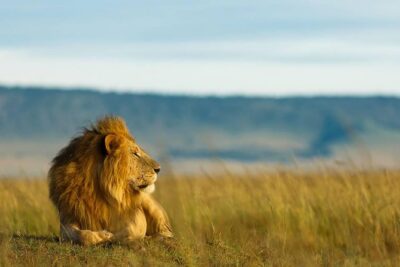
The highlight people aim for here is the possibility of tree-climbing lions. That is not something you can schedule, but the fact that it is a known feature of Manyara tells you why guides focus on this park. If you get the chance to see it, it changes how you think about lion behavior.
After the game drive, you settle into a relaxing night at a designated campsite. That rhythm is part of why this safari works. You do a full wildlife day, then you actually get a breather and sleep close to the action.
Day 3 in Serengeti: Plains Time and Big-Migration Timing
On Day 3 you enter the Serengeti National Park, and the tone changes immediately. This is the big one. The drive, the openness, the way animals can appear at different distances, it all feels like you are inside a wildlife system, not just driving to a checklist.
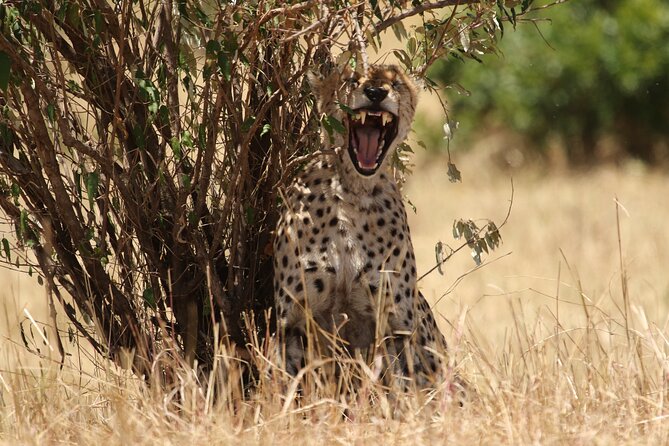
You will hear about the Great Migration because it is a star attraction. The reality: it depends on the season. If you are there during the right window, you might see it. If not, you can still have excellent wildlife encounters in the Serengeti’s open habitats, including major predators and classic plains animals.
If you care about seeing a variety of species, the Serengeti is where the trip tends to deliver. The whole point of this route is that it gives you time in different parks, rather than making you depend on one place to do everything.
Then you camp in the Serengeti at one of the private campsites. That private setup helps the night feel more sheltered and focused, rather than like a busy campground.
Day 4: Morning Serengeti Again, Then the Ngorongoro Transfer
Day 4 starts early with a morning game drive in the Serengeti. Morning matters in safari terms because animal activity can be stronger and the light makes spotting easier. Also, it gives you one last strong chance before moving on.
After the morning drive, you transfer to the Ngorongoro Conservation Area. The scenic drive through the highlands is part of the day, and it is a good reminder that safari days are not just about seeing animals. You are also building the sense of place.
Then you set up camp for the night, getting ready for what is basically the safari finale. Ngorongoro is often described as a special kind of wildlife setting, and the next morning is where the density comes in.
Day 5 in Ngorongoro Crater: High-Density Wildlife and a Black Rhino Chance
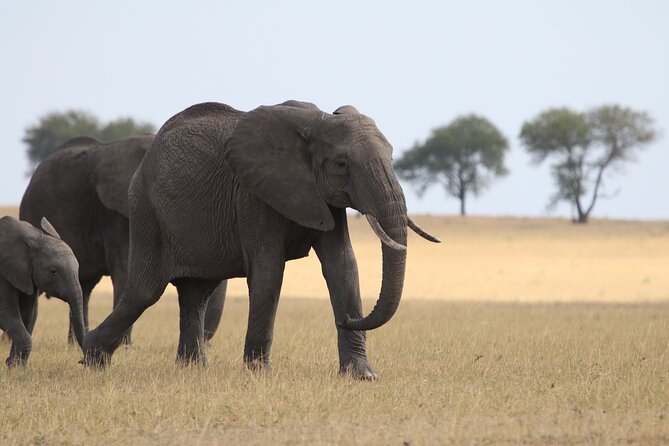
Your final day is a morning game drive in the Ngorongoro Crater. This is one of the areas with the highest chance of seeing a lot of different wildlife in a short span of time. The crater floor can hold a dense mix of animals, including lions, elephants, buffalo, and even the rare black rhino.
If you like “best possible chance” trips, this is the part that makes the itinerary feel worth it. You are not waiting all day in a single region hoping something happens. You are in an environment that supports a lot of wildlife.
You also get a picnic lunch during the day, then you return to Arusha to wrap up the safari. That ending matters. After five days in parks, it is helpful to have a clear finish point instead of stretching the day endlessly.
Camping Nights, Meals, and What Comfort Level to Expect
Camping is the big differentiator here. The trip includes accommodation and meals during the safari, and there is mineral water during the safari. In other words, you are not stuck figuring out daily logistics for food while you are traveling through remote areas.
Based on what people highlight about this trip, the meals are a real strength. People describe the food as delicious, and that is not a small detail. On safari, you tend to get hungry fast, and if meals are bland, the whole experience gets less fun.
As for comfort, plan for practical reality. You are outdoors. You will want layers for night temperatures. The trip notes that it can drop to around 5°C at night, so bring that warm sweater, socks, and a jacket.
Also, the experience specifically notes packing details that many first-time campers forget:
- Bring a towel for shower and toilet paper
- You get binocular help, but your own binoculars can improve the experience
- The vehicle can be dusty, so keep clothing choices simple
Transport, Wildlife Rules, and How to Stay on Good Terms With Nature
This safari uses a 4×4 safari vehicle with a professional English-speaking guide. In safari terms, good driving is not about comfort only. It affects sightlines, timing, and your ability to react when animals move closer or farther.
The rules for responsible wildlife viewing are clear:
- Do not feed animals
- Do not wear bright colors
- Do not touch animals
Follow those, even when an animal seems calm. The point is your safety and the animal’s wellbeing. It also keeps you from ruining the experience for the group.
One more practical thing: you are likely to do a lot of scanning. Bring neutral clothing, pack light, and accept that the day will be longer than you expected even when you feel like you are not “doing much.”
Price and What You Get for $1,350
At $1,350 per person for five days, the real question is not just the cost. It is what is included.
Included items are strong for a trip like this:
- 4×4 transportation in the parks
- A professional English-speaking guide
- Park entrance fees
- Accommodation and meals during the safari
- Mineral water during the safari
Not included items are also clearly stated:
- Visa
- International and domestic flights
- Travel insurance
For value, this pricing structure usually helps you avoid surprise spending once you arrive. If you are comparing to DIY safari costs, the guide plus entrance fees plus coordinated transfers add up quickly. The small group also suggests you are paying for a higher-touch experience than big-van tours.
Where price can change in real life is seasonality, flight costs, and whether you bring extra gear you later regret. If you pack within the limits, you make the trip smoother.
What to Pack: 10kg Limit, Warm Nights, and Binoculars
Here is where this safari becomes much easier when you plan early.
The luggage limit is 10kg per person. If you have extra luggage, it can be stored in the hotel storage room. Duffel bags are recommended, which tends to make loading and re-stowing easier than hard suitcases in dusty vehicles.
Clothing guidance is specific:
- neutral colors like white, beige, and green
- a warm sweater and jacket for nights
- socks for comfort
- avoid bright colors
Bring mosquito repellent with a high mint concentration, especially if you are sensitive to bites. Also, the trip recommends bringing binoculars, though guides share one available in the vehicle.
Do not forget shower and toilet basics. The guidance says to bring a towel and toilet paper.
If you want the simplest packing approach, aim for layers you can mix and match, plus one “easy to wear” outfit for daytime game drives and one warmer layer set for the evening.
Who This Safari Fits Best, and Who Should Think Twice
This safari is a strong match if you want:
- a classic Tanzania route in five days
- a small group experience
- camping nights with organized meals
- an English-speaking guide and a real focus on wildlife viewing
It is less ideal if you have mobility or health concerns that make uneven conditions hard. The trip is marked as not suitable for:
- people with back problems
- wheelchair users
- babies under 1 year
- people over 95 years
Also, if camping is a dealbreaker for you, this route will feel physically demanding. You are trading hotel comfort for proximity to the bush and the night sky.
Should You Book Suricata Safaris for This 5-Day Camping Route?
I would book this safari if you want a classic Tanzania itinerary with efficient routing, tight group size, and a guide-led approach that focuses on sightings, not just driving. The fact that people associate this trip with strong guiding and good meals is a practical sign you will feel looked after from pickup to camp to return.
I would pause if you hate camping, dislike early mornings, or you cannot work within the 10kg packing limit and warm-night clothing needs. Ngorongoro and the Serengeti are amazing, but this safari is still built on daily movement and basic outdoor sleeping.
If you are the kind of traveler who wants to wake up in the bush and spend your days scanning for animals with an experienced driver, this is an excellent value bet for Tanzania.
FAQ
What parks are included in this 5-day camping safari?
You visit four parks: Tarangire National Park, Lake Manyara National Park, Serengeti National Park, and the Ngorongoro Conservation Area with game drives in the Ngorongoro Crater.
How big is the group on this safari?
It is a small group limited to 6 participants.
Are park entrance fees included?
Yes. Park entrance fees are included in the safari price.
What is included in the price and what is not?
Included are 4×4 safari transportation, an English-speaking guide, park entrance fees, accommodation and meals during the safari, and mineral water during the safari. Not included are visa, international and domestic flights, and travel insurance.
What should I pack and are there luggage limits?
You are limited to 10kg of luggage per person. Neutral clothing is recommended, and you should bring warm layers because nighttime temperatures can drop to around 5°C. Binoculars are recommended, and a towel and toilet paper are also recommended to bring. Mosquito repellent with a high mint concentration is suggested.
What is the cancellation and payment flexibility?
You can cancel up to 24 hours in advance for a full refund. The tour also offers a reserve now and pay later option.
More Under Canvas
- 4 Days Group Camping Safari
★ 5.0 · 1,101 reviews - 5 Days Group Camping Safari
★ 5.0 · 730 reviews - 3 Days Serengeti & Ngorongoro Group Camping Safari
★ 5.0 · 574 reviews - 5 Days Camping Tarangire, Serengeti & Ngorongoro crater & Visiting Maasai
★ 5.0 · 229 reviews - 5 Days Budget Private Safari, Tanzania
★ 5.0 · 191 reviews
Just added from around Arusha
Tanzania Camping and Budget Safaris, compared.
 ★ 5.04 Days Group Camping SafariFrom $9001,101 reviews
 ★ 5.05 Days Group Camping SafariFrom $1,100730 reviews
 ★ 5.03 Days Serengeti & Ngorongoro Group Camping SafariFrom $815574 reviews
 ★ 5.05 Days Camping Tarangire, Serengeti & Ngorongoro crater & Visiting MaasaiFrom $1,254229 reviews
 ★ 5.05 Days Budget Private Safari, TanzaniaFrom $0191 reviews
 ★ 5.06 Days Private Budget SafariFrom $2,300163 reviews
 ★ 5.02 Days Tarangire and Ngorongoro Group Camping SafariFrom $550146 reviews
 ★ 5.06 Days Tanzania Budget Camping SafariFrom $1,600145 reviews
Browse the lists this tour appears in