
REVIEW · ARUSHA NATIONAL PARK AND MOUNT MERU
4 Days Mount Meru Trekking
Mt Meru rewards you quickly, even before day one. This 4-day trek feels like a complete Tanzania hike package, starting with hotel pickup from Arusha and then moving straight into the climb with armed park ranger supervision for real peace of mind. You pass open grasslands, rainforest, then higher moorland, with overnight stops in mountain huts that keep the days focused on walking and the nights on recovering.
Two big things I like: the tour includes meals and park fees, so you are not doing surprise math mid-trek, and the guiding is hands-on. Guides such as Gideon, Emmanuel, Laurent, Frank, Victor, and Maziku show up in real-world feedback as patient, careful, and tuned to the mountain, with cooks like Samuel and Samora keeping energy up (and even cake for a celebration once). One drawback to plan for: hut lodging can be basic and cold, and on summit morning breakfast may be light, so pack warm layers and a small backup snack.
In This Review
- Key highlights worth caring about
- Why Mt. Meru in 4 days is such good value
- Arusha to Momella Gate, and what that first drive sets up
- Day 1: grasslands to Maio Falls, then Miriakamba Hut tea
- Day 2: wooden steps, rainforest clouds, then Saddle Hut at 3,550m
- Day 3: headlamps, Rhino Point, volcanic ash, and Socialist Peak sunrise
- Day 4: northern route descent, wildlife chances, and Aquiline Hotel comfort
- The guides and crew: why names keep showing up
- Pace, difficulty, and fitness: what to expect without guessing
- Price breakdown: where the money goes, and how to judge value
- What to pack for cold huts and a real summit morning
- Should you book this Mt. Meru trek with Rupia Adventure?
- FAQ
- What time does the Mt. Meru trek start?
- Where do you start from in Arusha?
- Is hotel pickup included?
- Is the tour suitable for most people?
- How long is the trek?
- What is the group size limit?
- Are meals and park fees included?
- What happens if weather is bad?
- What is the cancellation window for a full refund?
Key highlights worth caring about
- Up to 4 hikers keeps the pace more adjustable for your group.
- Momella Gate start begins after a scenic drive through Arusha National Park.
- Armed ranger support adds safety on remote, high-altitude terrain.
- Overnight huts at Miriakamba Hut and Saddle Hut give a true multi-day rhythm.
- Summit timing for sunrise targets Socialist Peak, with big crater views.
- Food that fits needs has included vegetarian options and gluten-free requests in prior climbs.
Arusha National Park and Meru, other options
- 4 Days Mount Meru Trekking★ 5.0 · 55 reviews
- Private Meru Coffee Tour in Nkoaranga★ 5.0 · 23 reviews
- 4 Days Mount Meru Climbing | Hiking | Trekking Tour★ 5.0 · 13 reviews
- 1 Day: Arusha National Park★ 5.0 · 9 reviews
Why Mt. Meru in 4 days is such good value
Mt. Meru sits high on the scale, but this trek is short enough to feel doable, even if you are not a hardcore mountaineer. You are walking across changing ecosystems, starting near Momella Gate and then pushing up through rainforest moodiness, then into cooler heather and moorland.
The price, $1,000 per person, is not cheap on paper. But it is easier to justify when you notice what is wrapped in: pickup from your Arusha hotel, the park fees, meals along the way, and guided supervision with an armed ranger. For many people, the value is less about the mountain itself (you can read about that anywhere) and more about removing logistics stress so you can focus on your footing.
Arusha to Momella Gate, and what that first drive sets up
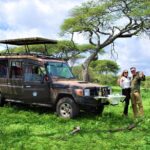
You start around 9:00am, with collection from your Arusha hotel. Then you ride through Arusha National Park, which is more than a transfer. It is a warm-up, with the kind of wildlife spotting that can set the tone early.
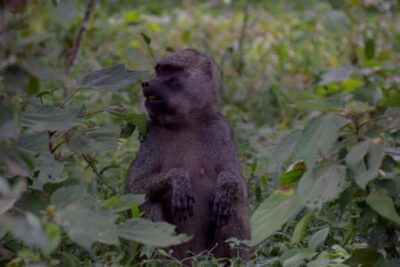
When you reach Momella Gate and handle formalities, the climb begins right away. Even in the first stretch through open grasslands, you might see giraffes and buffaloes. That matters because it helps you relax into the trek. You are not “starting with stress,” you are starting with sights and a ranger right there with you.
Day 1: grasslands to Maio Falls, then Miriakamba Hut tea
On day one, the walk is steady and scenic, and you get a clear sense of how Mt. Meru moves through ecosystems. After about two hours, you reach Maio Falls, a natural pause point where a picnic-style break fits the rhythm of the day.
From there, you continue toward the fig tree arch. It is the sort of landmark that breaks up the hike and gives your brain something to aim at beyond the next step. Then you arrive at Miriakamba Hut with time for afternoon tea and snacks.
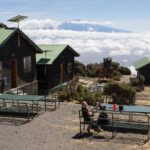
This is one of the better designed days for first-timers. You still feel like you are earning altitude, but you do not get slammed from minute one. Also, the hut night is part of the experience, even if it is not luxury. One honest lesson from past hikers: the basic cabins can be cold and dark, so come prepared with warmth and a headlamp you can trust.
Day 2: wooden steps, rainforest clouds, then Saddle Hut at 3,550m
Day two starts cooler, partly because altitude is doing its job. You walk along wooden steps on a steep track, and the vegetation can feel totally different from the morning you began.
A common feature here is the low-cloud, rainforest atmosphere. You can feel the mountain shift from open views into that damp, shadowy green. After about two hours uphill, you reach Mgongo wa Tembo, often described as elephant back, at around 3,200m, where you take a well-earned break.
Then the trek changes again. The rainforest gives way to heather and moorland, which is a big clue that you are heading toward the “big hike” part of the mountain. You reach Saddle Hut at about 3,550m around midday.
In the afternoon, there is an option to hike to Little Meru at 3,820m. That extra move is great if you feel good, but also it is a reminder to pace yourself. Day three is the one that tests your stamina, so treat this as a bonus, not a requirement.
Day 3: headlamps, Rhino Point, volcanic ash, and Socialist Peak sunrise
This is the main event day, and it begins at night. After a small snack and tea, you leave camp with headlamps and follow the trail through bush land to Rhino Point at about 3,821m.
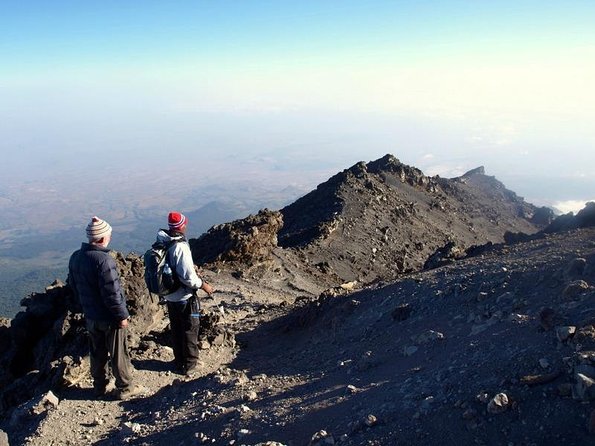
From Rhino Point onward, the ground gets rougher and the route gets steeper. You may need hands-on climbing moves at times, and you are dealing with volcanic ash, rocks, and gravel. The feeling is very different from the earlier days, because now you are walking on crater terrain.
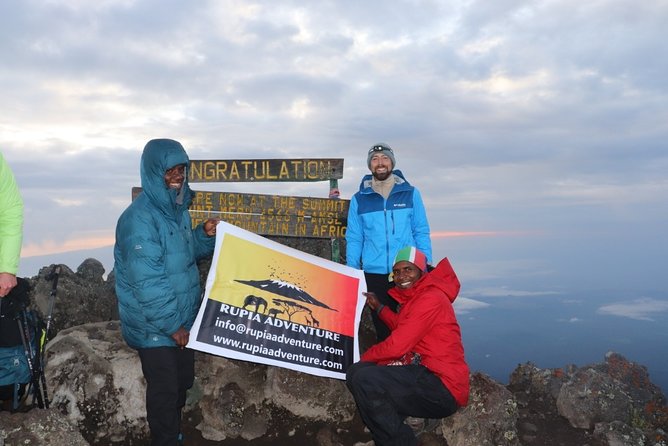
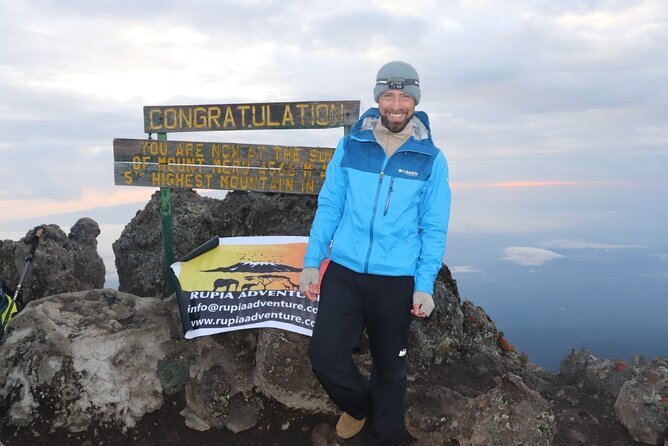
Then you follow the crater rim toward the summit, Socialist Peak. The climb takes roughly 4 to 5 hours, and when you get there, you are rewarded with sun rising above Mt. Kilimanjaro in good conditions, plus a dramatic view into Mt. Meru’s crater and the central ash cone.
If you are doing this for a special reason, pay attention to the way the crew handles celebrations. There is at least one past climb where the cook provided cake at the summit as a memory. That kind of detail is not guaranteed, but it tells you what the team mindset can be like.
When you come down, you return the same route back to Saddle Hut for a break before the final descent.
Day 4: northern route descent, wildlife chances, and Aquiline Hotel comfort
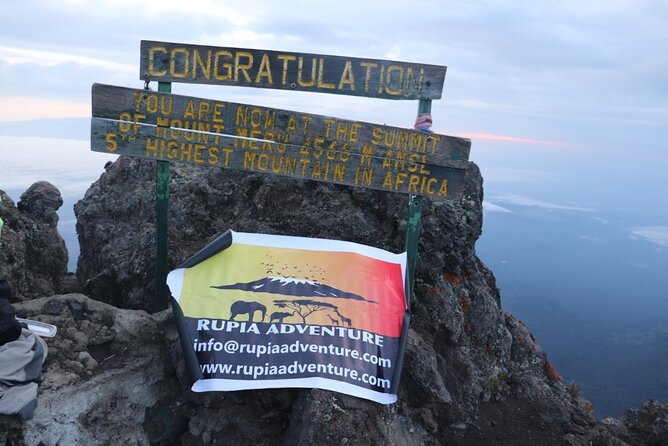
Day four is your payoff for surviving the summit push. After breakfast, you take the northern route for a 2 to 3 hour trek back to Momella Gate.
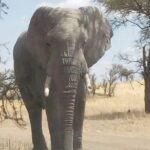
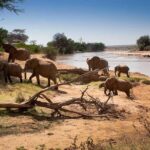
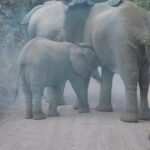
This descent is shorter than the ascent, but it is still real hiking. Depending on conditions and timing, you may spot elephants and buffaloes again, plus giraffes and black and white colobus monkeys.
When you reach the gate, you say farewell to your hiking crew. Then the driver takes you back to the Aquiline Hotel in Arusha, where you can celebrate and spend the night.
That last part matters more than it sounds. After a summit night and a descent, you want a clean end to the day. Being dropped back at a known place helps you avoid extra chaos.
The guides and crew: why names keep showing up
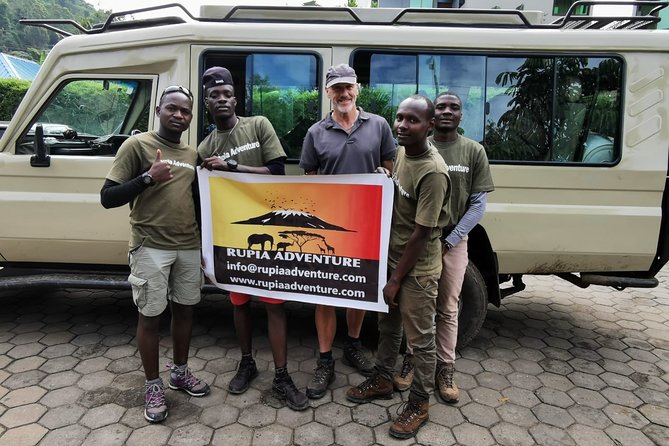
One of the strongest signals in the feedback is consistency. People repeatedly call out specific guide names like Gideon, Emmanuel, Laurent, Maziku, Frank, Victor, and Matt for professional mountain leadership and good first aid. That is a big deal on a volcano climb where altitude fatigue and uneven footing can sneak up on you.
The cooking team also gets credit. Cooks like Samuel, Samual, David, and Samora are described as keeping meals tasty and practical, including vegetarian meals and handling gluten-free requests. That gives you a clearer idea of what to expect: you are meant to eat, refuel, and keep moving.
Also, they tend to provide trekking equipment in some cases, and they use a team approach with porters supporting the loads. If you are the kind of person who worries about being a burden, a crew with that mindset can take a lot of pressure off.
Pace, difficulty, and fitness: what to expect without guessing
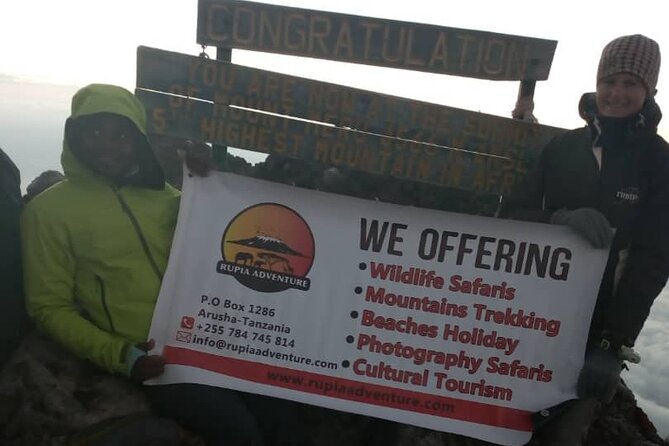
The trek is often described as ideal for active people. The day-to-day difficulty is not identical, though. The first two days and the last day are frequently described as easy to medium depending on experience. That usually lines up with what this route does: you ease in through grasslands and then climb steadily.
Then day three changes everything. That summit push is where your legs feel it most, and it is also where headlamp night climbing can make the world seem steeper. You need stamina and good mental focus.
Also, health can affect the outcome. There is at least one case where someone felt ill on day two and could not summit, but still hiked Little Meru the following day. That tells you the route includes options, but it also reinforces a key truth: this is a mountain, not a theme park.
Price breakdown: where the money goes, and how to judge value
At $1,000 per person for about four days, you are paying for more than guided walking. You are paying for:
- Hotel pickup and drop-off in Arusha
- Park fees and the ranger-guided structure
- Meals while you are on the route and at the huts
- A supported logistics setup with cooks and porters
When people complain about “what they did not get,” it is usually about small things like not enough food at one moment. One clear note from prior climbs: summit morning breakfast can be light, so plan to bring a small extra snack if you know you get hungry quickly.
Another fairness point: tipping culture is part of the experience in Tanzania, but one person specifically disliked being pushed toward a tip policy conversation that felt too money-focused and not explained well. If tipping matters to you, ask early what is expected and keep it in your budget. The goal is to remove awkward surprises, not to create drama on the mountain.
What to pack for cold huts and a real summit morning
Even with included meals, your personal kit can make or break comfort. Here is what I would prioritize based on what has been described:
- Warm layers for cold nights at the huts, plus something for wind on the summit day
- A reliable headlamp for the night start on day three
- Gloves or at least something warm for hands if you run cold
- A small backup snack for summit morning, since breakfast may be minimal
- Good hiking shoes with traction for volcanic ash, rocks, and gravel
One more comfort tip: the cabins can be cold and dark. A light source you control, plus a warm sleeping layer, helps you sleep better so the next day does not feel like punishment.
Should you book this Mt. Meru trek with Rupia Adventure?
Book it if you want a guided, safety-minded hike with ranger supervision, tight logistics, and a route that mixes wildlife spotting with classic volcano views. This is also a strong pick if you prefer a small group, since the tour caps at four travelers and adjusts to the walking pace.
Skip or rethink it if you want hotel-style comfort. The hut nights can be basic and chilly, and summit morning food may not be as heavy as you expect. Also, if you are sensitive to the way tipping conversations are handled, ask directly in advance so you feel good about expectations.
If you like the idea of reaching Socialist Peak at sunrise, watching the crater spread out below you, and finishing back in Arusha with your driver ready, this is a solid choice.
FAQ
What time does the Mt. Meru trek start?
The start time is 9:00am.
Where do you start from in Arusha?
You are collected from your hotel in Arusha, then drive to Arusha National Park and continue to Momella Gate.
Is hotel pickup included?
Yes. Pickup from your Arusha hotel is included.
Is the tour suitable for most people?
The tour notes that most travelers can participate.
How long is the trek?
It runs for 4 days, approximately.
What is the group size limit?
The maximum group size is 4 travelers.
Are meals and park fees included?
Yes. Meals and park fees are included in the price.
What happens if weather is bad?
The experience requires good weather. If it is canceled due to poor weather, you will be offered a different date or a full refund.
What is the cancellation window for a full refund?
You can cancel up to 24 hours in advance for a full refund. If you cancel less than 24 hours before the start time, the amount paid is not refunded.
Arusha Park and Mount Meru
- Private Meru Coffee Tour in Nkoaranga
★ 5.0 · 23 reviews - 4 Days Mount Meru Climbing | Hiking | Trekking Tour
★ 5.0 · 13 reviews - 1 Day: Arusha National Park
★ 5.0 · 9 reviews - Arusha National Park: Private Jeep Tour
★ 4.8 · 9 reviews - 3 Days Mount Meru trekking
★ 4.5 · 7 reviews
Just added from around Arusha
Arusha National Park and Mount Meru, compared.
 ★ 4.8Arusha National Park Full-Day SafariFrom $19525 reviews
 ★ 5.0Private Meru Coffee Tour in NkoarangaFrom $3523 reviews
 ★ 5.04 Days Mount Meru Climbing | Hiking | Trekking TourFrom $2,60013 reviews
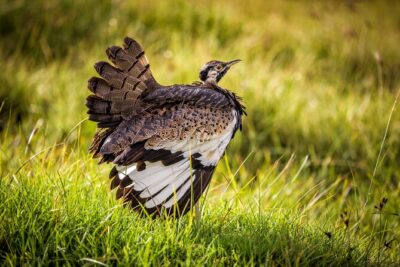 ★ 5.01 Day: Arusha National ParkFrom $4409 reviews
 ★ 4.8Arusha National Park: Private Jeep TourFrom $2009 reviews
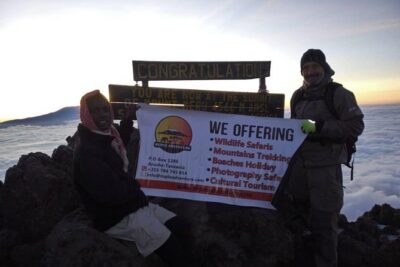 ★ 4.53 Days Mount Meru trekkingFrom $8007 reviews
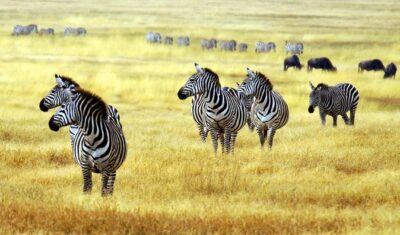 ★ 5.07 Day Joined Safari Serengeti,Ngorongoro,Manyara,Tarangire,Arusha National ParkFrom $1,6156 reviews
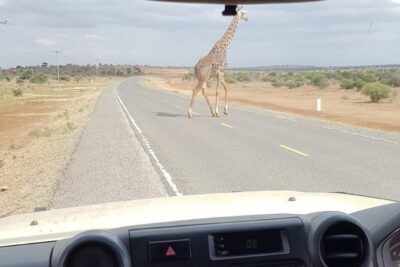 ★ 5.0Arusha National Park Half Day TourFrom $1976 reviews
Browse the lists this tour appears in