
REVIEW · WALKING TOURS
Arusha: City Walking Tour Historic and Modern Highlights
Markets meet museum stories in Arusha. This 3-hour walking tour is a smart mix of everyday street life and big-picture context, starting at Soko Kuu and rolling into Arusha’s famous Clock Tower and a museum inside a German fort, guided in English by people like Elia.
I like how much a good local guide changes the whole experience, and local guide Elia shows you how Arusha works on a day-to-day level, including Central Market stops and explanations of local plants and trees. I also love the small, hands-on moments, like snack sampling and chatting with artisans who make beadwork and fabrics. The one drawback is simple: it is still a walking tour, so bring comfy shoes and expect a fair amount of time on foot.
In This Review
- Key highlights you will feel on the walk
- Why a walking tour works so well in Arusha
- Starting at Soko Kuu Central Market, where you learn by looking
- The Clock Tower Monument, a landmark with geography built in
- Natural History Museum in a German fort, where the day gets deeper
- Snacks, artisan chats, and beadwork you can actually inspect
- Getting comfortable for the 3-hour walk
- Price and value: what $45 per person buys you
- Who should book this tour, and who should skip it
- Should you book this Arusha walking tour?
- FAQ
- How long is the Arusha city walking tour?
- What is included in the price?
- Are meals included?
- What places will we visit during the tour?
- What language is the guide?
- What should I bring?
- Is smoking allowed during the tour?
- Is the tour suitable for people with mobility impairments or wheelchair users?
- Can I cancel for a refund?
- Is pay later available?
Key highlights you will feel on the walk

- Soko Kuu Central Market route focused on produce, spices, and handmade crafts
- Clock Tower Monument that marks Arusha’s location halfway between Cairo and Cape Town
- Natural History Museum in a German colonial fort with human evolution and local culture context
- Traditional snack sampling plus time to interact with local artisans
- Beadwork and fabric street stops that you can look closely at, ask questions about, and even buy if you want
- Time with your guide so you can ask questions and understand what you are seeing
Still weighing it up? These Arusha trips came out well when we reviewed them.
- Balloon Safari & Bush Breakfast in Serengeti – Miracle Experience★ 5.0 · 1,646 reviews
- Tanzania Classic – 7 Days★ 5.0 · 1,151 reviews
- 4 Days Group Camping Safari★ 5.0 · 1,101 reviews
- 5 Days Group Camping Safari★ 5.0 · 730 reviews
Why a walking tour works so well in Arusha

Arusha is not the kind of place where the best moments happen only at big monuments. The city works best when you move at street speed: you catch conversations, see what people buy, notice how shops are set up, and learn what locals care about today.
This tour is built for that. You get an English-speaking guide, included hotel pickup and drop-off, and a compact route that strings together market life, a landmark, and museum learning without turning the day into a transport grind.
If you are the type of traveler who likes orientation plus stories, you will get a lot out of the format. If you only want photo stops and minimal walking, you may find the pacing a bit more active than you prefer.
Starting at Soko Kuu Central Market, where you learn by looking
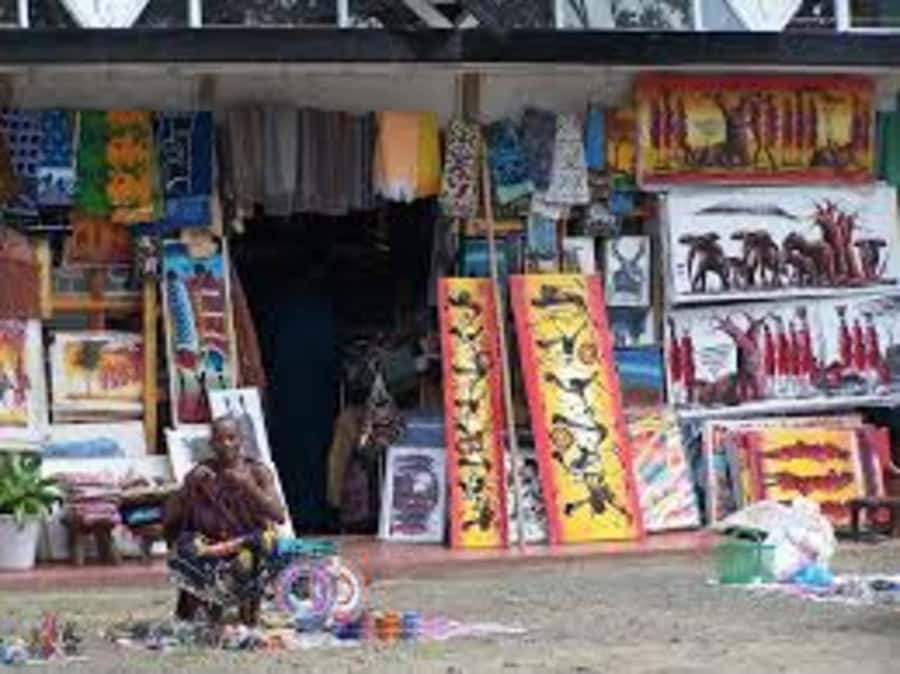
Your first big stop is Soko Kuu (Central Market), the kind of place where the senses do half the work. Expect stalls with fresh produce, spices, and handmade crafts. Even if you are not buying, the market teaches you something useful: what is traded locally, what catches shoppers’ attention, and what the day-to-day economy looks like.
The best part is not just seeing the market. With the right guide, you learn how to read it. In the experiences shared by past visitors, guides like Elia focused on everyday life in Arusha and also explained local plants and trees you might notice around town. That turns a quick market walk into an education you can carry with you the rest of your trip.
Practical tip: bring your camera, but also be ready to ask questions. Market visits are where local explanations matter most, because the meaning is in the details you might otherwise miss.
The Clock Tower Monument, a landmark with geography built in
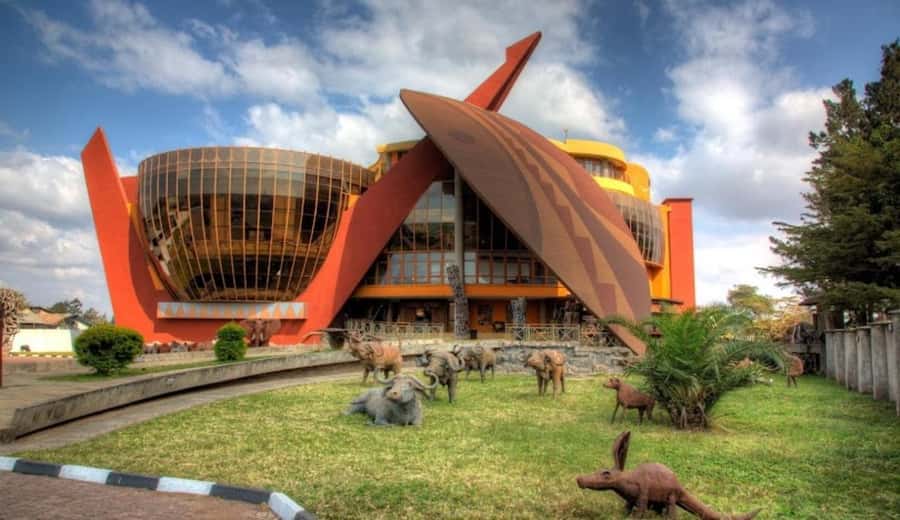
After the market, you visit the Clock Tower Monument. It is an iconic pause point, and the story behind it adds real context to the city.
The tower symbolizes Arusha’s position halfway between Cairo and Cape Town. That fact is simple, but it changes how you think about Arusha. You start to see it as a real waypoint in a much larger geographic story, not just a town you pass through on the way to safari.
This is also a good “breather” moment on a walking tour. You can regroup, take photos, and let the guide’s commentary sink in before you shift from market energy to museum focus.

Natural History Museum in a German fort, where the day gets deeper
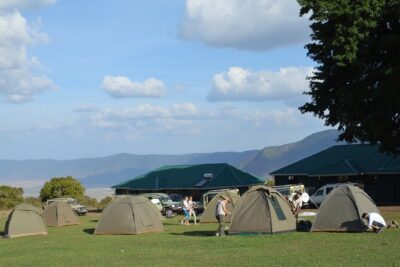
Next comes the Natural History Museum, housed in a German colonial fort. That setting matters. A building with that history gives the exhibits extra weight, because you are not just looking at objects, you are learning inside a place that has its own layered past.
Inside, the museum covers human evolution and local culture. For many first-time visitors, this is the payoff that makes Arusha feel more than a launchpad for other regions. You get context for where people are coming from and how local knowledge fits into the bigger timeline of human life.
The guide helps you connect the dots. Instead of drifting through rooms, you have someone steering your attention to what is relevant and explaining it in English in a way that keeps the visit moving.
If you are not a museum person, this is still worth considering, because the subject matter is broad and the location is memorable. The museum stop also helps balance the tour so it is not only about buying and browsing.
Snacks, artisan chats, and beadwork you can actually inspect
A walking tour earns its value when it includes moments that feel personal. Here, you get exactly that through traditional Tanzanian snack sampling and interaction with local artisans.
You will stop to taste traditional snacks, then move into city street scenes where you can look at and talk about beadwork and fabrics. This is not a quick glance-and-go type of stop. You have time to ask questions and engage with the people making the items, which helps you understand what you are seeing.
Why this matters: markets and museums teach information, but artisan conversations teach meaning. You see craftsmanship up close, hear how locals describe their work, and get a sense of what is valued beyond just the final product.
Practical tip: take your time with fabrics and beadwork. If you want to buy something, check construction and materials before committing. If you are not buying, you can still learn a lot from careful watching and respectful conversation.
Getting comfortable for the 3-hour walk
This is a 3-hour walking experience, and comfort is not optional. The tour asks you to bring comfortable shoes, and that is the difference between enjoying the route and feeling cranky halfway through.
Also pack water and a sun hat. Arusha can be bright, and you do not want to spend your afternoon thinking about heat. Light clothing helps, and sunscreen is a smart move.
A few small things to keep in mind:
- Bring your camera since the route includes landmark and market photo moments.
- You can smoke, but you cannot smoke during the activity. Plan for that if you are a smoker.
- You will be walking, so if you have any mobility limitations, this one may not be the right fit.
Hotel pickup and drop-off are included, which helps you stay focused on the walk itself rather than logistics. That inclusion makes the tour feel easier than doing the same route alone.
Price and value: what $45 per person buys you
At $45 per person for about 3 hours, this is not an ultra-cheap market stroll. You are paying for guide time, hotel pickup and drop-off, and the fact that you will not just pass sights, you will have context while you are there.
Here is what that price is effectively covering:
- A guided walking route through the central area
- Stops at Soko Kuu and the Clock Tower Monument
- A museum visit inside the Natural History Museum setting
- Snack sampling
- Interaction time with artisans, especially around beadwork and fabrics
- English interpretation so the museum and market explanations land clearly
Could you see parts of Arusha on your own? Sure, but you would miss the “why.” You would also miss the guided explanations that turn normal street sights into stories, and you might not know what questions to ask at the market or with artisans.
Where the value might be less perfect is if you prefer your time to be fully independent, or if you do not enjoy walking. Also, meals and drinks are not included, so you will want to plan your food around the tour.
Who should book this tour, and who should skip it
This tour is a great match if you want:
- A first look at Arusha that includes both street life and a museum stop
- A local guide who can answer questions and explain what you are seeing
- Market energy without having to figure everything out alone
- Artisan conversations and snack sampling as part of the experience
It is not the best fit if:
- You have mobility impairments or need wheelchair access
- You are uncomfortable with walking for several hours
- You want only minimal stops or only big, fast photo points
Should you book this Arusha walking tour?
If you are visiting Arusha for a short window and you want a practical introduction that goes beyond safari planning, this is a strong choice. The mix of Soko Kuu, the Clock Tower, and the Natural History Museum gives you orientation and context, while the snack and artisan stops make it feel human and current, not like you are just checking boxes.
Book it if you like asking questions and connecting with what local life looks like on the ground. Skip it if walking is difficult for you, or if you prefer your day to be strictly independent with no guide-led stops.
FAQ
How long is the Arusha city walking tour?
The tour lasts 3 hours.
What is included in the price?
Hotel pickup and drop-off, a guided walking tour in Arusha, an opportunity to sample traditional Tanzanian snacks, and interaction with local artisans.
Are meals included?
No. Meals and drinks are not included.
What places will we visit during the tour?
You will visit Soko Kuu (Central Market), the Clock Tower Monument, and the Natural History Museum, plus street stops for snacks and artisan interactions.
What language is the guide?
The live tour guide speaks English.
What should I bring?
Bring comfortable shoes, a sun hat, a camera, and water.
Is smoking allowed during the tour?
No, smoking is not allowed.
Is the tour suitable for people with mobility impairments or wheelchair users?
No. It is not suitable for people with mobility impairments or wheelchair users.
Can I cancel for a refund?
Yes. You can cancel up to 24 hours in advance for a full refund.
Is pay later available?
Yes. You can reserve now and pay later.
Just added from around Arusha




Walking Tours, compared.
 ★ 5.0Stone Town Private Walking TourFrom $26371 reviews
 ★ 4.6Zanzibar: 3 Hours Private Stone Town walking Tour with GuideFrom $24301 reviews
 ★ 4.5Zanzibar: Stone Town Historical Cultural Walking Guided TourFrom $21179 reviews
 ★ 4.7Stonetown: Food Markets and Street Food Walking TourFrom $35151 reviews
 ★ 5.0Arusha Guided Walking City Tour, Culture, Lifestyle & HistoryFrom $26150 reviews
 ★ 5.0Zanzibar Stone Town Walking TourFrom $25145 reviews
 ★ 5.0Stone Town Historical Walking TourFrom $20143 reviews
 ★ 5.0Walking City Tour in Zanzibar IslandFrom $33122 reviews
Browse the lists this tour appears in