
REVIEW · MULTI-DAY NORTHERN CIRCUIT SAFARI PACKAGES
6-Day Tanzania Adventures Safaris – Group Joining Camping Safaris
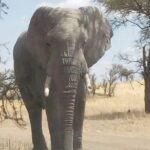
Seeing elephants on your first day helps.
This 6-day Northern Tanzania group joining camping safari strings together Tarangire, the Serengeti, Ngorongoro Crater, and Lake Manyara with a private 4×4 and included meals. What makes it especially interesting is how it mixes different ecosystems in a short time, so you are not just repeating the same kind of drive.
I like the balance here: camping under the stars and game drives with an English-speaking guide, plus the practical support of camping gear and a chef. I also love that the group size is capped at 7 travelers, which usually makes it easier to move through the parks without chaos.
One consideration: this is active safari time, with long drives and early starts, and you are sleeping at campsites each night. If you want a lot of downtime or hotel-style comfort, this style may feel a bit intense.
In This Review
- Key things I’d clock before you go
- A practical 6-day route through Tarangire to Lake Manyara
- Price and what you really get for $1,904.77 per person
- Group joining safari, small group feel, and your own vehicle
- Day 1: Tarangire National Park elephants and baobab country
- Day 2: Serengeti entry through highlands to kopjes and predators
- Day 3: More Serengeti game drives and the migration timing question
- Day 4: Big Five odds, then the shift to Ngorongoro crater edge camping
- Day 5: Ngorongoro Crater early morning descent and dense wildlife viewing
- Day 6: Lake Manyara with tree-climbing lions and the return to Arusha
- Camping safari details that make or break the experience
- Guides and service quality, what the operation seems to be like
- Who should book this 6-day Tanzania adventures safari?
- Should you book Kipok Africa Adventures for this itinerary?
- FAQ
- FAQ
- What parks will I visit on this 6-day safari?
- Where does the safari start and end?
- What time does the tour start?
- How many travelers are in the group?
- Are park fees, camping, and meals included?
- What transportation do we use during the safari?
- What is not included in the price?
Key things I’d clock before you go
- Up to 7 people max, so you keep a small-group feel even as a group joining trip
- Private 4×4 custom built vehicle with your own knowledgeable driver guide and fuel included
- National park fees and park-entry tickets are covered, so you are not piecing costs together
- Camping safari setup includes tents, sleeping mats, chairs, and tables
- Big animal focus in Tarangire elephants and the Serengeti migration, then crater viewing next
Longer northern circuit routes, side by side
- Tanzania Classic – 7 Days★ 5.0 · 1,151 reviews
- Tanzania Wildlife Encounters – 6 Days★ 5.0 · 277 reviews
- Group Safari 7 Days in Tanzania’s Main Parks★ 5.0 · 240 reviews
- 4 Days Join Group tour Tarangire Serengeti and Ngorongoro crater★ 5.0 · 219 reviews
A practical 6-day route through Tarangire to Lake Manyara
If your goal is “major Northern Tanzania parks, efficiently,” this route does the job. You start in Arusha, move through Tarangire National Park, spend substantial time in the Serengeti, then switch to the dramatic drop into Ngorongoro Crater, finishing with Lake Manyara National Park.
The itinerary is built around one simple idea: different parks, different “best moments.” Tarangire is elephant country. The Serengeti is about herds and predator possibilities. Ngorongoro gives you that concentrated viewing from above and below. Lake Manyara adds trees, birds, and that famous lion behavior you may or may not catch.
Price and what you really get for $1,904.77 per person
At $1,904.77 per person for about 6 days, you are paying for more than driving. The price is framed as a true package safari, because it includes national park fees, camping safari logistics, a professional English-speaking guide, and a private 4×4 with fuel.
On top of that, meals are largely handled for you: 5 breakfasts, 6 lunches, and 5 dinners are included. You also get camping equipment like tents, sleeping mats, and camp furniture, which is a big deal if you would otherwise have to rent gear in Tanzania or figure it out in-country.
What is not included is the usual list: international flights, Tanzania visa, and tips and personal expenses. So the best way to judge value is to ask whether you want to outsource the whole moving-part problem. If yes, this price starts to look fair.
Group joining safari, small group feel, and your own vehicle
This is a group joining trip with a maximum of 7 travelers, which is one of the reasons it feels manageable. You are not in a huge bus situation, so you are more likely to get fluid game drive time and less stopping for everyone’s personal pace.
You also get your own private 4×4 rather than sharing one vehicle with a large number of unknown people. That matters in the real world because game viewing is all about timing and positioning, and the driver needs to run a plan.
The trip also runs from 7:30 am and ends back at the meeting point in Arusha. In other words, you should plan your travel timing to match that morning start, because you do not want to arrive in Tanzania late and scramble the day-of.
More camping safaris at this price
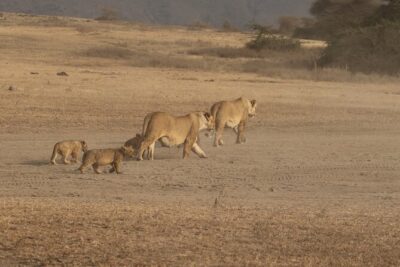
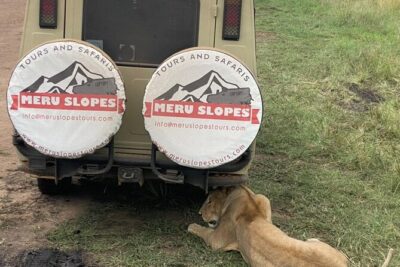
Day 1: Tarangire National Park elephants and baobab country
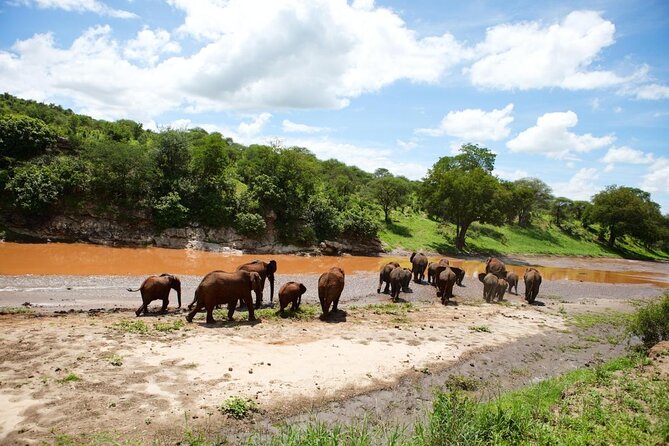
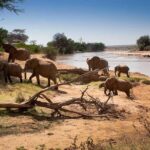
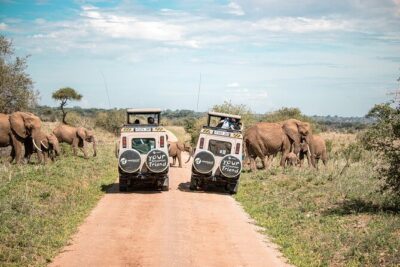
Day 1 begins with a drive into Tarangire National Park, known for big elephant herds and the classic mix of savannah and baobab trees. You will see a lot of wildlife here, including buffalo, zebras, giraffes, various antelopes, and impressive bird life, with over 550 bird species.
Tarangire stands out because the elephants are used to safari vehicles, and that can translate into closer, calmer sightings compared to parks where animals keep more distance. After a long game drive, you sleep at a campsite just outside the park, which gives you a clean break between driving time and camp time.
Practical expectations: plan on a full day. This is not a quick taste. The schedule lists about 7 hours for the day’s core activity, plus lunch and dinner back with the group.
Day 2: Serengeti entry through highlands to kopjes and predators
On Day 2, you travel toward the Serengeti National Park. The drive takes you through lush highlands where corn, coffee, and wheat are mentioned, which is a reminder that the safari is also about movement, not just animal viewing.
In the Serengeti, you get the wide open feel people talk about, described as endless plains by the Maasai name. You also get kopjes, those scattered rock formations where predators often survey the area.
You are in for an all-day safari push, and the tour keeps the day structured around game drive time, with lunch and dinner included. This is the day where you will likely start noticing how the park changes minute to minute, from open grazing zones to rocky vantage points.
Day 3: More Serengeti game drives and the migration timing question
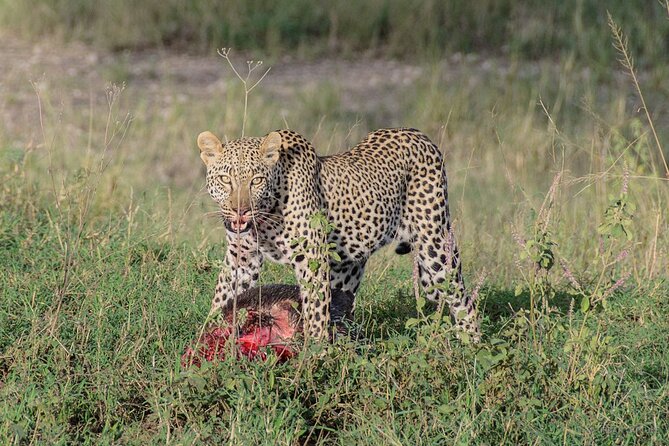
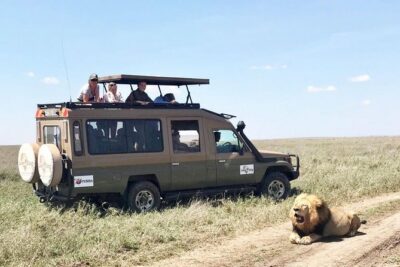
Day 3 is another full day of game drives in the Serengeti. You will be looking for impalas, buffalo, crocodiles, hippos, and of course zebras and wildebeest tied to migration movement. Predators like leopards, cheetahs, and lions are possibilities too.
The tour describes migration as rainfall-dependent, shifting movement between northern and southern areas. It gives you seasonal context: in November and December, animals move toward the southern grassy plains, while in April to June they return to the north during the longer rainy season.
Here is the honest value of setting expectations like this. If you are traveling during a particular month, you can mentally align your chances with where the herds may be moving. The tour does not guarantee specific sightings, but it helps you understand why sightings vary from one trip to the next.
You sleep at a campsite in the Seronera area, keeping you centered for continued Serengeti time.
Day 4: Big Five odds, then the shift to Ngorongoro crater edge camping
Day 4 starts with another early breakfast and more Serengeti game drives. The tour specifically points to possible “Big Five” sightings, mentioning lion, elephant, buffalo, rhino, and leopard as targets you might spot.
Then you begin the travel day toward Ngorongoro Crater. You arrive at the edge, with the first glimpse of what tomorrow’s crater descent will look like. The overnight is at a campsite directly on the crater’s edge, and you are told to expect an orange sunset glow around camp.
That crater-edge night is more than scenery. It is a mental shift in safari rhythm. You are going from long open plains viewing into a concentrated bowl environment where animal density is the big story.
Day 5: Ngorongoro Crater early morning descent and dense wildlife viewing
Day 5 is an early riser day, because you start with sunrise views from the edge. After breakfast, you drive down into the crater.
The tour calls Ngorongoro a UNESCO World Heritage site, formed millions of years ago, described as 610 m deep and around 260 square kilometres. What matters for your safari is density: it cites an animal population estimate of about 25,000, with quick-view possibilities for wildebeest, zebras, gazelles, elephants, and more than 500 bird species.
The big practical point: you are not hunting for animals by searching across endless distance. You are moving through a concentrated setting designed by geology to hold wildlife.
The tour also hints at chance for endangered black rhino horns. You should treat rhino sightings as luck-based, but the crater setting is exactly the kind of place where luck can pay off.
Day 6: Lake Manyara with tree-climbing lions and the return to Arusha
Your last day goes to Lake Manyara National Park, described as a smaller park around a shallow alkaline lake of roughly 200 km². This park is known for variation: grassy plains, primate-filled woodlands, and baobab dotted cliffs.
Wildlife targets include hippos, elephants, baboons, wildebeest, and the peculiar tree-climbing lions (a famous behavior, even if you do not always see it). Birdlife is a major feature too, with over 400 species listed, which is a nice change of pace if you have been mainly focused on big mammals.
After a long game drive, you leave the flamingo area behind and head back to Arusha, arriving in the early evening.
Camping safari details that make or break the experience
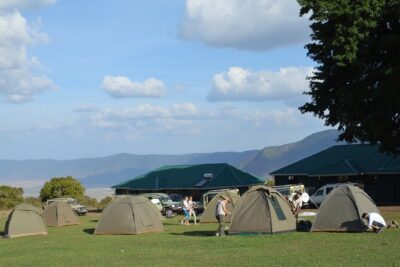
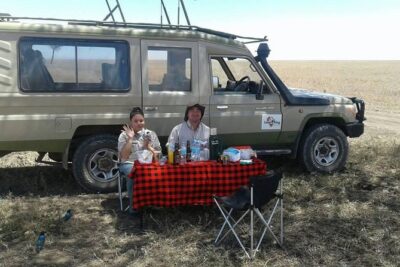
This is a camping safari, and that means you should think about comfort level and flexibility. The tour includes tents, sleeping mats, chairs, and tables, which is better than “rough it” camping where you bring everything yourself. Meals are also included, so you are not dealing with a daily hunt for food after long drives.
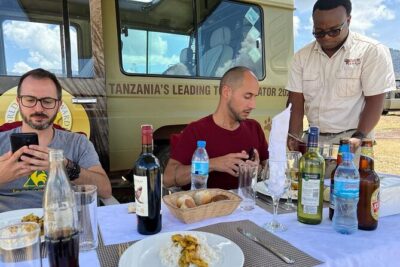
Chef support comes through in feedback tied to this operator. Names like Joaquin show up in the experience of guests describing good food at camp. There is also mention of private rooms being used as a surprise in some cases during Serengeti and Manyara stops, which suggests the operator can sometimes adjust accommodations when possible.
I also appreciate that the tour includes a professional English-speaking guide and camping logistics, not just a driver. In safari terms, that matters because you want someone who can explain what you are seeing and keep the game drive focused rather than just “driving around hoping.”
Guides and service quality, what the operation seems to be like
Communication and leadership show up in the feedback around Amani. People describe easy contact through WhatsApp and quick responses during planning, which makes a difference when you are trying to line up dates, questions, and expectations before you arrive.
On the ground, specific guide names like Giovanni and Elías come up, both tied to keeping sighting efforts going until late in the day. The “find the animal” drive style matters because the best sightings are not always at the start of a day.
If you are a solo traveler, this small-group setup can feel reassuring. One review specifically calls out a great group setup for a solo woman traveler, with an excellent guide and solid camp food. Even if you travel with nerves, a smooth, well-run team can do a lot to calm them.
Who should book this 6-day Tanzania adventures safari?
I think this tour fits best if you want a classic Northern Tanzania highlight circuit without the hassle of building it yourself. You also want to be active, because this is packed with game drive time and daily movement across regions.
It is a strong match for:
- Couples and solo travelers who like small groups and want a shared experience
- People who are happy camping as long as the essentials are included
- Wildlife-focused travelers who care about Tarangire elephants, Serengeti migration context, and Ngorongoro crater density
It might be a tougher fit if:
- You need lots of downtime and quiet
- You expect a hotel comfort level every night
- You do not want early starts, since the days run from morning and the itinerary is structured around game drives
Should you book Kipok Africa Adventures for this itinerary?
If you want value, clear structure, and a route that hits the big Northern Tanzania stars, I would say this is worth serious consideration. The package includes the things that normally inflate the cost and stress of safari planning, like park fees, the private 4×4 with fuel, guide time, camping gear, and most meals.
My only hesitation is the camping piece. If you know you are okay sleeping at campsites and waking early for game drives, you will likely find this trip satisfying and well balanced. If you want maximum comfort and minimal activity, you might consider a more lodge-based safari instead.
FAQ
FAQ
What parks will I visit on this 6-day safari?
You will visit Tarangire National Park, Serengeti National Park, Ngorongoro Crater, and Lake Manyara National Park.
Where does the safari start and end?
The tour starts in Arusha, Tanzania and ends back at the meeting point in Arusha.
What time does the tour start?
The start time is listed as 7:30 am.
How many travelers are in the group?
The maximum group size is 7 travelers.
Are park fees, camping, and meals included?
Yes. The tour includes national park fees, a camping safari according to the itinerary, and meals listed as 5 breakfasts, 6 lunches, and 5 dinners.
What transportation do we use during the safari?
The tour provides a private 4×4 custom built safari vehicle with an English-speaking guide/driver and includes fuel.
What is not included in the price?
Not included are international flights, Tanzania visa, tips, and personal expenses such as laundry and communication.
More Under Canvas
- 4 Days Group Camping Safari
★ 5.0 · 1,101 reviews - 5 Days Group Camping Safari
★ 5.0 · 730 reviews - 3 Days Serengeti & Ngorongoro Group Camping Safari
★ 5.0 · 574 reviews - 5 Days Camping Tarangire, Serengeti & Ngorongoro crater & Visiting Maasai
★ 5.0 · 229 reviews - 5 Days Budget Private Safari, Tanzania
★ 5.0 · 191 reviews
Longer Trips Through the North
- Tanzania Classic – 7 Days
★ 5.0 · 1,151 reviews - 7-Day Premium Luxury Tanzania Safari All-Inclusive
★ 5.0 · 426 reviews - Tanzania Wildlife Encounters – 6 Days
★ 5.0 · 277 reviews - Group Safari 7 Days in Tanzania’s Main Parks
★ 5.0 · 240 reviews - 4 Days Join Group tour Tarangire Serengeti and Ngorongoro crater
★ 5.0 · 219 reviews
Just added from around Arusha
Multi-Day Northern Circuit Safari Packages, compared.
 ★ 5.07-Day Premium Luxury Tanzania Safari All-InclusiveFrom $4,840426 reviews
 ★ 5.0Tanzania Wildlife Encounters – 6 DaysFrom $3,413277 reviews
 ★ 5.0Group Safari 7 Days in Tanzania’s Main ParksFrom $3,000240 reviews
 ★ 5.04 Days Join Group tour Tarangire Serengeti and Ngorongoro craterFrom $1,090219 reviews
 ★ 5.05-Day Private Northern Tanzania Safari from ArushaFrom $2,780182 reviews
 ★ 5.05 Days Best of Tanzania Luxury Safari Northern CircuitFrom $3,744174 reviews
 ★ 5.08 Day Spectacular Migration Serengeti mid -Range Tanzania SafariFrom $4,257161 reviews
 ★ 5.0Multi-Day Tanzania Odssey Safari from ArushaFrom $4,164120 reviews
Browse the lists this tour appears in