
REVIEW · SERENGETI NATIONAL PARK SAFARIS
5 Days Serengeti Camping Safari
Safari mornings hit different in northern Tanzania. This 5-day Serengeti camping safari strings together Tarangire, the Ngorongoro Crater, and Lake Manyara, with pickup from Arusha and all meals plus park fees handled.
I love the early timing, especially the 6:15 am crater descent, because it gives you the best shot at spotting harder-to-see animals like black rhino. I also love the food setup, with chefs such as Richard and Tito earning praise for tasty meals in the middle of the bush.
One possible drawback: expect a lot of time in the truck between parks, and a few highlights, like tree-climbing lions at Lake Manyara, are never guaranteed.
In This Review
- Key highlights at a glance
- How this 5-day route really plays out from Arusha
- Tarangire National Park: baobabs, elephant families, and predator chances
- Serengeti National Park and the Ngorongoro crater viewpoint: when you want the wow factor
- Day 3 in Serengeti: early game drive, then Simba campsite near the crater
- Ngorongoro Crater on Day 4: the 6:15 am descent for black rhino odds
- Lake Manyara National Park on Day 5: flamingos, hippos, hot springs, and birds
- Camping life, meals, and why the crew matters more than you think
- Price and value: is $1,100 per person a good deal?
- Who should book this Serengeti camping safari, and who should skip it
- Should you book it
- FAQ
- What does the price include on this 5-day safari?
- Do I need to buy park tickets separately?
- Where do you get picked up, and what time does Day 1 start?
- How long is the safari, and how much time should I plan for each area?
- Are meals provided, and is food a major part of the experience?
- Is the Maasai village visit included?
- What animals and activities should I specifically look out for?
- How big is the group, and what is the cancellation rule?
Key highlights at a glance
- Early starts that matter, including a dawn crater descent for better wildlife odds
- Big-name safari areas, Tarangire, Serengeti, Ngorongoro Crater, and Lake Manyara in one trip
- Camping plus real meals, with multiple guides and chefs praised for dependable, filling food
- Ngorongoro Crater viewpoint plus full descent day, saving the most complex wildlife day for the start
- Optional Maasai village visit, for culture add-on if you want it
- Lake Manyara extras, flamingos, hippo pool viewing, and hot spring time for a change of pace
More of the Serengeti, drive by drive
- Balloon Safari & Bush Breakfast in Serengeti – Miracle Experience★ 5.0 · 1,646 reviews
- 3 Days Serengeti & Ngorongoro Group Camping Safari★ 5.0 · 574 reviews
- 5-Day Highlights mid-Range Crater, Serengeti, Tarangire★ 5.0 · 296 reviews
- 3-Day Classic Serengeti Safari★ 5.0 · 263 reviews
How this 5-day route really plays out from Arusha
This is a classic northern circuit, designed to keep you moving through Tanzania’s top wildlife zones without making you plan anything complicated. You start with pickup from your Arusha hotel, then spend the next days switching between parks that each have their own “wildlife personality.”
What I like about the structure is that it matches where animals tend to be easiest to spot. You get open-country game drives in Tarangire and Serengeti, then you shift to the crater, where animals are often easier to spot because the views are bowl-shaped. You finish at Lake Manyara, which trades some of the big-grassland drama for birds, hippos, and the chance to see unique behaviors.
The pace is active. Some days are long, and early mornings are part of the bargain. If you hate waking up before sunrise or you get stiff from road time, plan to bring small comfort items, like a scarf for dust and a light layer for chilly mornings.
Tarangire National Park: baobabs, elephant families, and predator chances
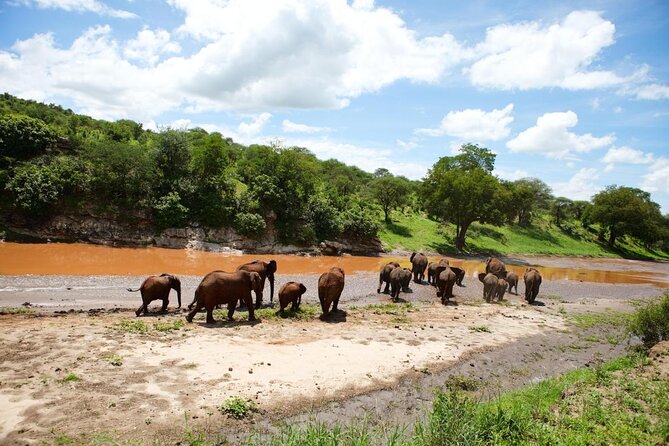
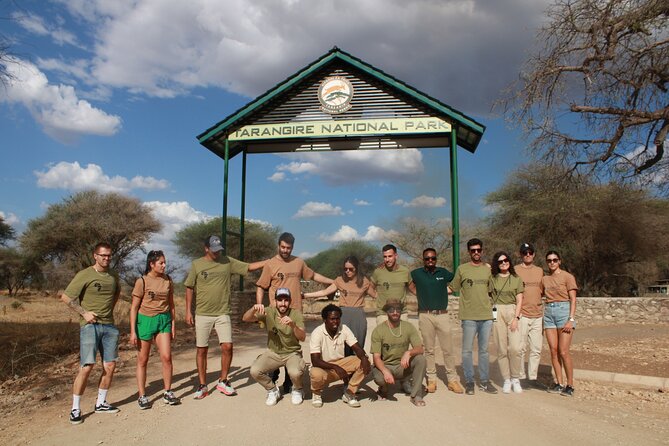
Your first stop puts you in Tarangire National Park, about a 2-hour drive from Arusha, with a day designed for wildlife spotting right away. Tarangire is known for two things you can feel quickly once you arrive: the ancient baobab trees and the density of elephants.
The elephant action here is not just random sightings. The idea is that you can watch real “family dynamics,” because groups are often together and moving in predictable ways as they feed and travel. That matters if you want more than a quick photo. You are more likely to notice how calves behave, how groups react to nearby activity, and how elephants shift when predators are around.
Tarangire also offers a good chance at predators, and the plan is to run game drives based on where sightings are reported. Lions, cheetahs, and leopards are the targets because they can be harder to spot than the easy-to-see herbivores. Even if predators stay elusive, the scenery and herd behavior usually keep the day satisfying.
Practical tip: game drives run on animal time, not strict schedules. Bring binoculars if you have them, and be ready to pause often. In parks like this, patience beats speed.
Serengeti National Park and the Ngorongoro crater viewpoint: when you want the wow factor
After breakfast, the trip shifts toward the Serengeti area, with the drive passing through the Ngorongoro Conservation Area Authority. This is a long travel day, around 6 hours including stops, but the payoff is that you reach two major “big view” moments without wasting a day.
There are two parts that set up your Serengeti experience.
First, you get a brief stop at the Ngorongoro Crater gate and viewpoint. It is short, but it gives you the shape of the place, and that helps when you later descend. A crater is one of those landscapes where the scale is hard to understand until you see it from above.
Second, there is an optional stop at a Maasai village for cultural context. The visit is described as an optional add-on, with traditions linked to warrior stories, lion hunting history, and drinking raw animal blood as part of old customs. The important note in the description is that many of these traditions are said to be in the past, except for blood drinking, which is mentioned as something you can learn about. If you go, keep the vibe respectful. Ask questions, and remember this is a living community, not a stage set.
Why this day is valuable for your wildlife goals: you are not just chasing animals at random. You are being positioned in the right region, with the crater as your future “high odds” wildlife day.
One consideration: because the driving time is real, you may not feel like you get a full game drive immediately on arrival. The day is partly about transit and setup.
More camping safaris at this price
Day 3 in Serengeti: early game drive, then Simba campsite near the crater
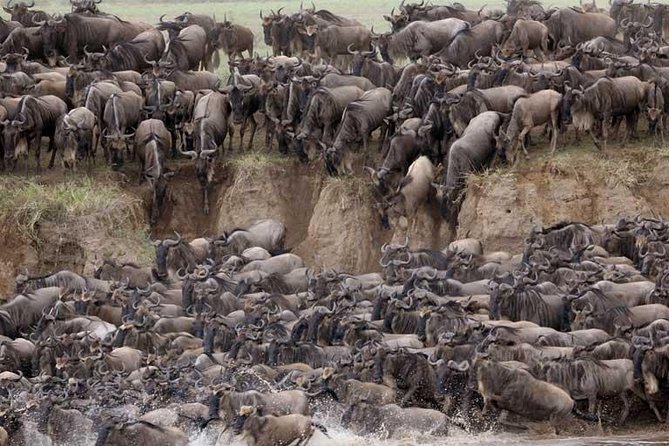
Day 3 starts early with breakfast, then you head out for an early game drive in Serengeti. This is often when animals are most active, and it matches the safari logic of starting before heat and traffic thin out movement.
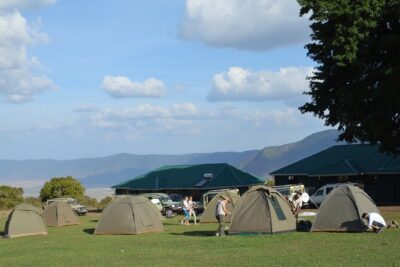
The rest of the day shifts into a pacing rhythm: you spend the morning spotting, then you return to the camp area for lunch, packing, and a bit more driving as you exit Serengeti. The plan is to head to Simba campsite, about a 2-hour drive, near the rim of Ngorongoro crater.
One of the useful bits here is that animals can be spotted at the campsite. That means you are not stuck staring at tent walls all evening. Even if you do not get another “big moment,” you might see movement close by, especially as light changes.
What you should do to maximize Day 3:
- Keep your camera ready in the afternoon driving segments, not just during the morning game drive.
- Use the camp time to rest your body. You want energy for the dawn descent day that’s coming.
And here’s the honest downside: it is still camping. Expect rougher sleep than a hotel bed, and accept that nighttime sounds and cold or heat can affect you.
Ngorongoro Crater on Day 4: the 6:15 am descent for black rhino odds
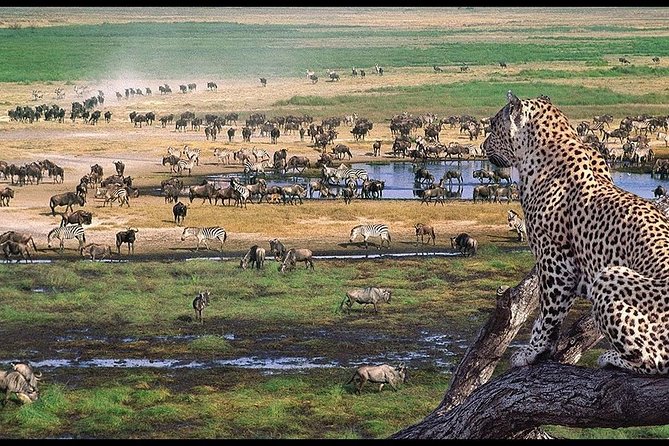
This is the day many safari fans are waiting for. After an early breakfast, you descend the Ngorongoro Crater at 6:15 am. That early start matters because it gives you daylight while animals are more likely to move and feed.
The description also explains a key wildlife advantage: the crater is described as a “floor crater,” so many animals become easier to spot because you are viewing them across a wide bowl. You are not searching up and down cliffs. You are watching a field of activity.
Your target for the hardest animal is black rhino. Black rhino are noted as the hardest to spot, but the crater setting is presented as the best place to try, since other animals can be easier to spot once you are down in the caldera.
After lunch, there is another game drive, and then you ascend back to camp area, pack, and move toward Fig lodge and campsite near Lake Manyara National Park.
This is a full day, with two distinct “wildlife phases” plus a long move afterward. If you want a one-line summary of why this day is the center of the trip, it is that it combines early access with the right viewing setup for animals that are normally tough to find.
Practical tip: crater air can feel different from street-level parks, so bring a warm layer for the early start, even if the day later feels warmer.
Lake Manyara National Park on Day 5: flamingos, hippos, hot springs, and birds
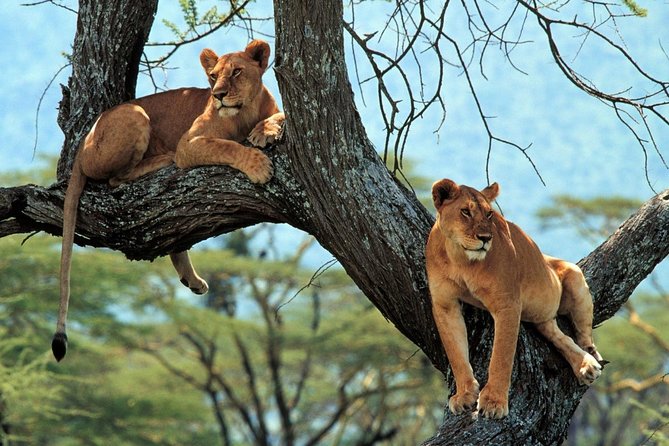
You finish at Lake Manyara National Park, and the tone shifts from big-grassland drama to variety. This is where the flamingos live and where you might get the classic Lake Manyara feature: tree-climbing lions, mentioned as famous but rarely seen.
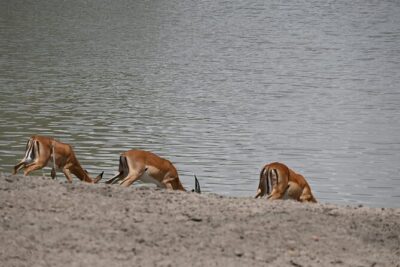
You go on a game drive focused on birds and animals, with the chance to see vultures and eagles, plus monkeys and other mammals. The plan also includes a hippo pool visit for close looking at hippos. That part is usually the most satisfying “stop and watch” experience, because hippos are not shy about being hippos.
The last twist in the schedule is the hot springs mentioned as part of the visit. It gives you a break from constant scanning and driving, and it is a nice way to end the trip with something different from the usual safari rhythm.
A realism note: tree-climbing lions are described as rarely seen. So treat that as a bonus, not a guarantee. If lions are the only reason you booked, keep your expectations flexible and look for the birds and hippos with fresh eyes.
Camping life, meals, and why the crew matters more than you think
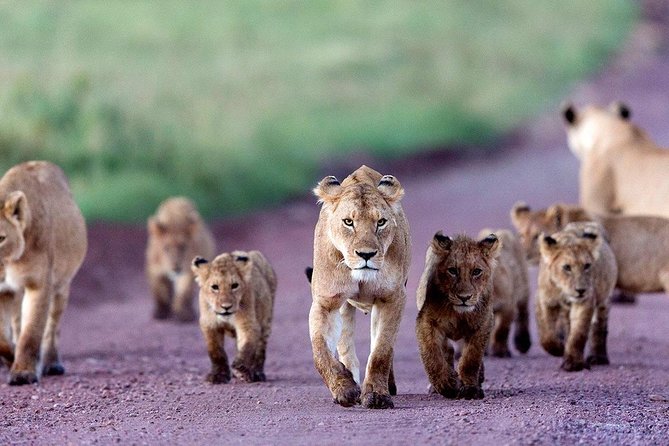
This safari is camping, and that changes how you experience the trip. You are not checking into a hotel. You are living on the schedule, eating when meals are served, and resting when the day ends.
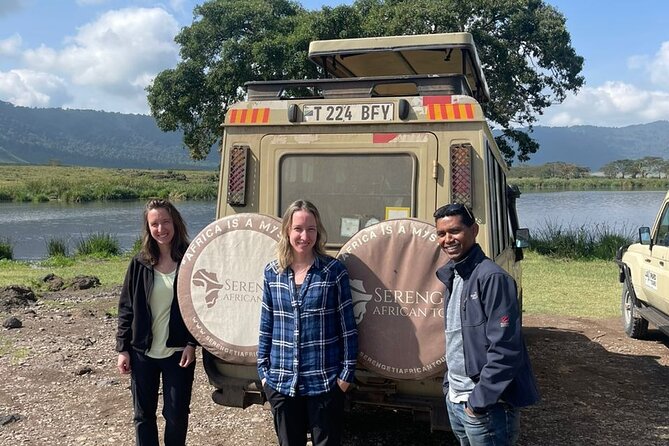
What makes this setup better than most “budget” safari versions is the repeated emphasis on the chef and the food quality. In past experiences tied to this tour, chefs such as Richard and Tito were praised for delicious meals and for handling special diets, including gluten intolerance. There are also mentions of proper plates and cutlery, which is a small thing that actually makes a big difference when you are eating outdoors.
You can also expect a guide who is trying actively to find wildlife, not just driving along a fixed route. Names that showed up in feedback include David, Emmanuel, Lucas, Kelvin, Brison, and Safina in an admin or coordination role. If your guide is someone like these, you’ll likely feel the difference in how they communicate sightings and how hard they work to keep the group engaged.
If you want to get the most out of a camping safari, pack for practical comfort:
- A headlamp or small flashlight for tent and camp walking at night
- Layers for cool early mornings and warmer afternoons
- Sun protection, because game drives can be long
- A small day bag so you are not digging for items in a rush
Also, build a little routine. Breakfast, drive, snacks if you bring them, and then photo time. When you know what comes next, you get more enjoyment and less stress.
Price and value: is $1,100 per person a good deal?
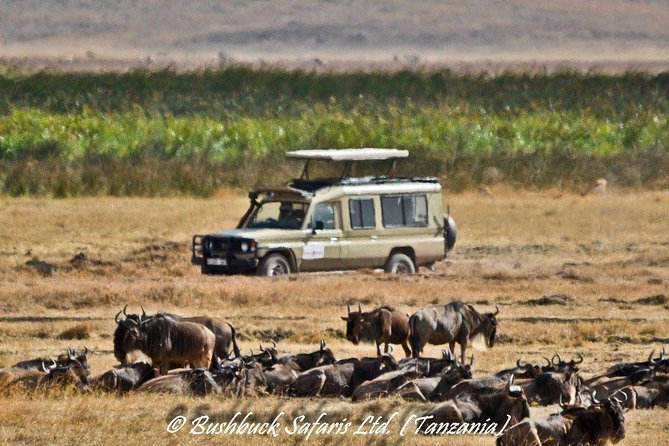
At $1,100 per person for about 5 days, the real question is what you are getting for your money, not just the number.
From the included details, your trip covers:
- Transport during the safari
- All meals (breakfast, lunch, dinner listed across the days)
- All park fees
- A guided experience through the major zones: Tarangire, Serengeti, Ngorongoro, and Lake Manyara
That combination tends to be the biggest value driver in safari pricing. Park fees and transport are usually the parts that add up fast if you try to DIY. Here, the cost is bundled, and you get a clear plan for where your days go.
What I consider good value in this particular format:
- You do major parks in one circuit without needing to stitch separate providers together.
- You get multiple “wildlife attempts,” not just one long drive and a couple of short sightings.
- You have camping nights near Ngorongoro rim areas, keeping you close to the next day’s early descent.
What might not feel like a bargain:
- If you want private lodges and quiet nights, camping and group timing will feel less worth it.
- If you want guaranteed tree-climbing lions, the trip can only offer a chance, not a promise.
Bottom line: $1,100 looks fair if you want the northern circuit with included meals and park fees, and if you are comfortable with early mornings and shared safari logistics.
Who should book this Serengeti camping safari, and who should skip it
This is a strong fit if you want:
- A well-paced wildlife circuit across four major parks
- Camping adventure with included meals, plus a crew that focuses on finding animals and keeping food quality high
- A group setting that works for solo visitors too, since the tour is set for a maximum group size of 50
You might want to rethink if:
- You dislike long drives. This safari includes several travel-heavy days.
- You are extremely sensitive to early wake-ups and cooler mornings.
- You only care about a single “rare” moment like tree-climbing lions. That sighting is described as rarely seen.
If you’re the kind of person who enjoys the slow build, watching elephants at Tarangire, then stepping into Serengeti morning energy, then hitting the crater at dawn, you’ll probably love the arc of this trip.
Should you book it
Yes, I’d book this if your goal is a classic northern Tanzania safari that covers the big wildlife zones with park fees and meals included, and you are okay with camping and group pacing. The strongest selling points are the early wildlife timing and the consistent praise for the guides and chefs, including names like Linah for coordination and chefs like Richard and Tito for meal quality.
But if you need hotel-level comfort, perfect schedules, and guaranteed rare sightings, you may be happier choosing a different style of safari.
If you do book, pack for early starts and road time, and keep your expectations wide. The best moments often come when you stop fixating on one animal and start paying attention to how the whole ecosystem moves.
FAQ
What does the price include on this 5-day safari?
The package price includes transport, all meals (breakfast, lunch, dinner), and all park fees. Tips and visas are not included.
Do I need to buy park tickets separately?
No. The tour includes park fees, and the day plans list admission ticket coverage as free or included depending on the day segment.
Where do you get picked up, and what time does Day 1 start?
Pickup is offered from your hotel in Arusha. Day 1 pickup is scheduled for 7:30 am.
How long is the safari, and how much time should I plan for each area?
It runs for about 5 days. The drives between parks are significant, with a noted example of roughly 6 hours on a day moving toward Serengeti through the Ngorongoro Conservation Area Authority.
Are meals provided, and is food a major part of the experience?
Yes. Breakfast, lunch, and dinner are included across the days. Multiple mentions of chef performance suggest the meals are a highlight, including praise for food quality and proper service items.
Is the Maasai village visit included?
It is described as optional. You can choose whether to visit and explore Maasai culture during the stop.
What animals and activities should I specifically look out for?
You are in the right places to look for elephants in Tarangire, predators during game drives, black rhino efforts during the early crater descent, and flamingos plus birds at Lake Manyara. Lake Manyara also includes a hippo pool stop and hot springs.
How big is the group, and what is the cancellation rule?
The group size is capped at a maximum of 50 travelers. Cancellation is free, and you can cancel up to 24 hours in advance for a full refund.
More Under Canvas
- 4 Days Group Camping Safari
★ 5.0 · 1,101 reviews - 5 Days Group Camping Safari
★ 5.0 · 730 reviews - 3 Days Serengeti & Ngorongoro Group Camping Safari
★ 5.0 · 574 reviews - 5 Days Camping Tarangire, Serengeti & Ngorongoro crater & Visiting Maasai
★ 5.0 · 229 reviews - 5 Days Budget Private Safari, Tanzania
★ 5.0 · 191 reviews
The Serengeti, Three More Ways
- Balloon Safari & Bush Breakfast in Serengeti – Miracle Experience
★ 5.0 · 1,646 reviews - 3 Days Serengeti & Ngorongoro Group Camping Safari
★ 5.0 · 574 reviews - 5-Day Highlights mid-Range Crater, Serengeti, Tarangire
★ 5.0 · 296 reviews - 3-Day Classic Serengeti Safari
★ 5.0 · 263 reviews - Private 6-Day Tarangire Manyara Crater and Serengeti with Mid-Range Lodges
★ 5.0 · 238 reviews
Just added from around Arusha
Serengeti National Park Safaris, compared.
 ★ 5.0Serengeti Balloon Safari and authentic bush breakfastFrom $5502,480 reviews
 ★ 5.0Balloon Safari & Bush Breakfast in Serengeti – Miracle ExperienceFrom $5991,646 reviews
 ★ 5.03 Days Serengeti & Ngorongoro Group Camping SafariFrom $815574 reviews
 ★ 5.05-Day Highlights mid-Range Crater, Serengeti, TarangireFrom $2,327296 reviews
 ★ 5.0Safari Serengeti And NgorongoroFrom $2,845288 reviews
 ★ 5.03-Day Classic Serengeti SafariFrom $1,455263 reviews
 ★ 5.0Private 6-Day Tarangire Manyara Crater and Serengeti with Mid-Range LodgesFrom $2,685238 reviews
 ★ 5.05 Days Camping Tarangire, Serengeti & Ngorongoro crater & Visiting MaasaiFrom $1,254229 reviews
Browse the lists this tour appears in