
REVIEW · MULTI-DAY NORTHERN CIRCUIT SAFARI PACKAGES
3 Days Northern Tanzania Adventure Camping Safari
Wild Africa in just three days. This Northern Tanzania adventure camping safari links Tarangire, Ngorongoro Crater, and Lake Manyara into a tight circuit with a private guide, 4×4 driving, packed lunches, and real wildlife odds. What I like most is the focus on big, iconic places plus the practical setup, like water and soft drinks on safari and a basic outdoor medical kit. Another win is that you get to hear local culture context, including lessons around Maasai ways of life, not just animal-spotting. One possible drawback: with so much driving packed in, it is not a slow, low-effort trip, and camping may feel too basic for some comfort-first travelers.
You start early, usually around 7:00 a.m., and you keep moving through the day. In Tarangire and Lake Manyara, the vibe is classic savanna and Rift Valley scenery. In Ngorongoro, you trade open plains for a crater floor packed with animals and predators, including one of Tanzania’s last remaining black rhino populations.
In This Review
- Key things I’d watch for on this safari
- Tarangire, Ngorongoro, and Lake Manyara in one packed 3-day loop
- The 7:00 a.m. starts that make wildlife days better, not worse
- Tarangire National Park: elephants, baobabs, and dry-season river life
- Ngorongoro Crater game drive: where black rhino live and predators do well
- Lake Manyara National Park: Rift Valley soda lake, flamingos, and tree-climbing lions
- Your private guide and the people factor that changes everything
- Camping comfort and 4×4 driving on a short Tanzania safari
- Big Five ambitions, plus realistic expectations
- Price and value: what $1,128.21 buys you here
- Practical notes: vegetarian meals, tickets, and what to handle yourself
- Who should book this Northern Tanzania adventure camping safari?
- Should you book this 3-day Northern Tanzania camping safari?
- FAQ
- What parks are included in this 3-day safari?
- Where is the pickup, and what time does it start?
- How long is the safari?
- Is this a private safari?
- Are park fees and taxes included?
- Are meals included?
- Is camping equipment provided?
- Can I request vegetarian meals?
- What is not included in the price?
- Can I cancel and get a full refund?
- Is there a minimum number of people required?
Key things I’d watch for on this safari
- Three parks, one Northern Circuit-style loop: Tarangire to Ngorongoro to Lake Manyara keeps variety high.
- Private 4×4 with guided game drives: you are not sharing decision-making with strangers.
- Elephants and predators are a theme: Tarangire elephants in dry season, crater predators year-round.
- Meals and safari basics included: breakfast at 7:00 a.m., packed lunches during drives, water and soft drinks.
- Camping gear is included: check what your accommodation setup looks like for sleeping comfort.
- Vegetarian option available: request it at booking.
Longer northern circuit routes, side by side
- Tanzania Classic – 7 Days★ 5.0 · 1,151 reviews
- Tanzania Wildlife Encounters – 6 Days★ 5.0 · 277 reviews
- Group Safari 7 Days in Tanzania’s Main Parks★ 5.0 · 240 reviews
- 4 Days Join Group tour Tarangire Serengeti and Ngorongoro crater★ 5.0 · 219 reviews
Tarangire, Ngorongoro, and Lake Manyara in one packed 3-day loop
Northern Tanzania is the kind of place where you can spend a whole week bouncing between parks. This itinerary does the opposite, which is the point. You cover Tarangire National Park, Ngorongoro Crater, and Lake Manyara National Park in about 2 days and 12 hours, with a mix of long drives and long game drives.
That schedule is great if you want maximum wildlife variety without taking two weeks off work. It is less great if your ideal safari includes long naps, late starts, and slow meals. Expect early mornings, a full day’s rhythm, and the reality that you are spending serious time in a vehicle.
The value also comes from what is included. You get park fees and government taxes, all meals as per the itinerary, water and soft drinks, camping equipment, and a customized 4×4 for game drives. For a private safari, that “all the core logistics are handled” feeling matters.
The 7:00 a.m. starts that make wildlife days better, not worse
Most of the day structure is built around breakfasts at 7:00 a.m. (and an Arusha pickup around 7:00 a.m. for the Tarangire day). That is early, yes. But it is early for a reason.
On game drives, animals often feel more active when the light is good and temperatures are lower. Even in places described as having year-round water and fodder, like the Ngorongoro Crater, predators tend to move with changing conditions. Starting in the morning helps you catch more of that rhythm.
You also get packed lunches, so you are not losing time to restaurant stops or complicated logistics. The tradeoff is that you will carry your day in your head: safari, lunch, safari again. If you like structure, you will probably enjoy this. If you like freedom to wander on your own, you might feel a little boxed in by the schedule.
Tarangire National Park: elephants, baobabs, and dry-season river life
Tarangire is one of those parks that feels different from day one. The scenery is built around acacia woodland and giant baobab trees, with swamp areas in the southern parts of the park. The mix matters because it shapes where animals can feed and drink.
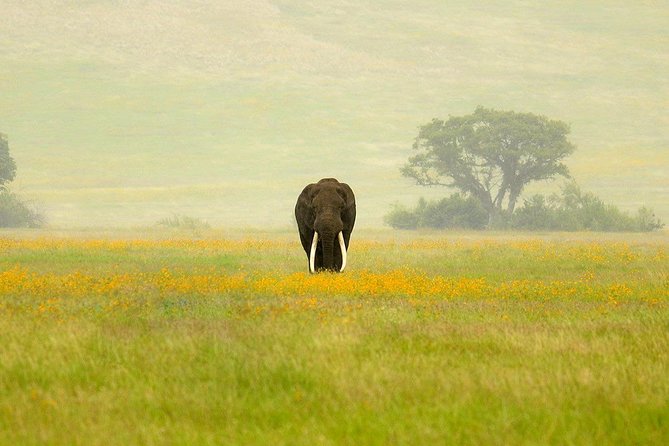
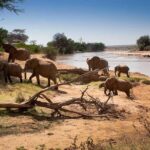
The headline draw is elephant action. During the dry season, herds of up to 300 elephants scratch the dry river bed for underground streams. That detail is useful because it tells you what you are actually looking for. You are not only scanning for movement in grass. You are also watching ground-level behavior at dry riverbeds where animals cluster.
Tarangire is also described as a major wildlife concentration outside the Serengeti ecosystem. That is helpful when you are doing a short safari and want a high chance of seeing multiple species without relying on luck alone. Alongside elephants, you might encounter wildebeest, zebra, buffalo, impala, gazelle, hartebeest, and eland, plus the kind of predator opportunity that comes when prey density is high.
What you should know before you go: Tarangire can be dusty and hot in daytime. You will want sun protection and a comfortable layer for early morning. The good news is that the safari includes water and soft drinks, so you will not be guessing how to stay hydrated.
Where this stop shines: It is a strong first park. It wakes your eyes up and sets expectations for the rest of the trip.
Possible drawback: Because it is the first day, you may feel a bit rushed if you expected an easy acclimation. That is not a failure of the tour, it is just the nature of fitting three parks into a short window.
More camping safaris at this price
Ngorongoro Crater game drive: where black rhino live and predators do well
Ngorongoro Crater is the big “wow” destination in this circuit. The numbers alone help you understand why: about 19.2 km in diameter, roughly 610 m deep, and around 304 sq km on the crater floor. It is a natural bowl that concentrates animals because it supports a year-round supply of water and fodder.
The itinerary has you taking breakfast at 7:00 a.m., driving to the rim, and descending for a game drive. This is the point where your safari becomes more “watching” than “seeking.” The crater is described as one of the most densely crowded African wildlife areas in the world, with an estimated 30,000 animals.
The standout conservation note here is that you are in black rhino country, with some of Tanzania’s last remaining black rhino. Even if you never see a specific animal on a single drive, knowing that the ecosystem supports them makes Ngorongoro feel purposeful, not just scenic.
This is also where predator odds go up. The crater supports large populations of predators, and with prey species present you often get more natural drama in the wild. The animal list includes wildebeest, zebra, buffalo, eland, warthog, hippo, and giant African elephants, and the overall mix is heavy enough that it can keep your guide busy spotting and re-checking distances.
What you should know before you go: Crater floors can be cooler than rim areas depending on weather, but you will still spend hours outdoors. Dress in layers and plan for a long sit-and-watch day.
Possible drawback: Ngorongoro is a highlight for a reason, which means expectations run high. If your only goal is one specific sighting, you might feel frustrated by how wildlife works. If your goal is overall density and predator-prey energy, this stop tends to deliver.
Lake Manyara National Park: Rift Valley soda lake, flamingos, and tree-climbing lions
Lake Manyara National Park is dramatically positioned at the base of the Great Rift Valley’s western escarpment. That setting is not just pretty. It shapes the habitats you drive through, and those habitats shape the animals you are likely to see.
The park includes a massive but shallow soda lake. That detail matters because soda lakes can create unique conditions, which also explains the flamingo angle. Lake Manyara is known for large flocks of flamingos, and when that lake is active, you can get strong bird views.
Elephants remain a big draw too, and Lake Manyara is described as one of Africa’s largest concentrations of elephants. Then there is the signature feature that makes people talk: tree-climbing lions. The tour info frames Lake Manyara as one of the best places to hope for that unusual behavior.
Even the historical nod in the description matters for context. Ernest Hemingway is credited with calling it the loveliest place he had seen in Africa. You do not have to care about Hemingway to appreciate that the scenery is the kind that makes you pause mid-scan and just look at where you are.
What you should know before you go: This park can feel less “straight savanna” than you expect because of the Rift Valley setting and the lake influence. Your guide will likely steer you toward the most productive areas based on where animals are and where conditions are right.
Possible drawback: Because this is the last park on a short circuit, your energy level will matter. If you are tired, the key is to keep your eyes moving and trust your guide’s sense of where action could show up next.
Your private guide and the people factor that changes everything
This safari is private, meaning your group drives and game drives with your own guide and team. In real terms, that usually means better pacing. It also means the guide can focus on your interests instead of balancing a group’s energy.
The tour is led by a driver guide with deep knowledge of wildlife and culture, and the experience is described as strong on communication from start to finish. In feedback tied to this kind of safari setup, names like Suleiman and Rickson show up with thanks for smooth days and caring attention, including for kids.
You may not think of “communication” as a safari feature, but it is huge. A good guide can help you understand what you are seeing: why elephants are on a dry riverbed, why predator action is possible in a crater bowl, and how habitats in the Rift Valley create different animal patterns.
Also, the safari description includes learning about traditional ways of the Maasai tribe. Even if you do not get a long lecture, you can expect your guide to build cultural context around what you are seeing and where you are moving through.
Camping comfort and 4×4 driving on a short Tanzania safari
Because this is a camping safari, camping equipment is included. That matters because you avoid the chore of renting gear or wondering whether you brought the wrong items. It also means you should ask the operator what the camping setup is like in practice for your dates, since “camping” can range from very basic to more comfortable depending on the itinerary.
Your transportation is a customized 4×4 safari vehicle. That is the right tool for Tanzania’s northern park routes. You are also included with all accommodation as per the itinerary, which suggests the nights are already planned and not left to chance.
The practical inclusions go further. You get a basic outdoor medical kit, plus water and soft drinks. Those are not glamorous, but they are the stuff that keeps a long day from turning into a miserable one.
What you should pack for camping days (general, not tour-specific):
- Sun protection and a hat
- A small day bag with your essentials
- Layers for early and later hours
- A reusable water bottle, even though water is provided, because it is easier to sip frequently
Possible drawback: Camping nights can be the weak point for people who want hotel-level comfort. If that is you, confirm how your camping setup will work before booking.
Big Five ambitions, plus realistic expectations
The tour overview calls out the Big Five. In practical safari terms, you should treat that as a goal with strong odds rather than a guarantee. Ngorongoro is the strongest anchor for one of the hardest species to plan around: black rhino. Predators are also a key theme in the crater description.
Tarangire and Lake Manyara support their own big-name excitement: elephants at Tarangire in dry-season concentrations, and Lake Manyara’s tree-climbing lions as the standout behavioral hook.
Here is the balanced way to think about it. You are not just visiting three parks. You are visiting three ecosystems with different animal patterns. If you go in ready to see what the day gives you, you tend to enjoy the safari more than if you lock onto a checklist.
Price and value: what $1,128.21 buys you here
At $1,128.21 per person for a roughly 2 days and 12 hours safari package, price is a real question. The value is in what you do not have to manage.
This cost includes:
- All related park fees and government taxes
- Your professional driver guide
- Accommodation as per the itinerary
- A customized 4×4 vehicle for game drives
- Game drives as per the itinerary
- Camping equipment
- All meals as per the itinerary
- Water and soft drinks
- A basic outdoor medical kit
Not included items are the usual ones: personal expenses, tips, travel insurance, laundry, souvenirs, plus flights and visas. Optional activities like balloon safaris are also not included.
So, what are you paying for? You are paying for the logistics engine. In northern Tanzania, that engine is the hard part: driving distances, park entry coordination, meal planning, and making sure you are on the right roads at the right hours. On a private safari, you are also paying for time with your guide and your own vehicle rather than shared group juggling.
Who feels this price is fair: people who want a private setup, like the idea of camping with equipment handled, and want a short itinerary that hits the core parks people actually plan around.
Who might balk: if you want full luxury accommodations, long unstructured downtime, or if you are price-sensitive enough that you would rather do a longer safari with more nights in each location.
Practical notes: vegetarian meals, tickets, and what to handle yourself
A vegetarian option is available, but you need to request it at booking. That is a big deal because safari meals can be limited if you do not communicate dietary needs early.
Park admission is effectively handled for you. The itinerary notes free admission for Tarangire and Lake Manyara, and included admission for Ngorongoro. Even though those are listed per stop, the overall package includes park fees and government taxes anyway.
You will still want to plan for your personal extras. Tips are not included. Travel insurance is not included. That means you should budget for those or confirm your own coverage.
If you are thinking about balloon safaris or extra extensions, those are optional and not part of the core package. That is normal, but it helps to know you may need additional time if you want to add them.
Who should book this Northern Tanzania adventure camping safari?
This is a strong fit if you:
- Want a private safari with your own vehicle and guide
- Prefer camping but do not want to manage gear rentals
- Want the big-name circuit in a short time, with real focus on wildlife
- Like an itinerary that prioritizes morning starts and long game drives
- Appreciate cultural context, including learning about the Maasai way of life
It is not the best fit if:
- You dislike early mornings and long days in a vehicle
- You need hotel-style comfort every night
- You want lots of free time with no schedule
Should you book this 3-day Northern Tanzania camping safari?
If your goal is to see major ecosystems and maximize wildlife time without turning it into a two-week project, I would say yes. The package is built around the big hits: elephants at Tarangire, predator-heavy Ngorongoro, and Lake Manyara’s special identity with tree-climbing lions and flamingos.
The biggest “check before you go” item is camping comfort. Confirm what your accommodation looks like in practice for your dates, and pack for outdoors time. If you handle that, you should end up with a memorable Northern Tanzania circuit that feels efficient, well organized, and guided by people who clearly care about making the days work.
FAQ
What parks are included in this 3-day safari?
The safari includes Tarangire National Park, Ngorongoro Crater, and Lake Manyara National Park.
Where is the pickup, and what time does it start?
Pickup is offered from your hotel in Arusha at around 07:00 a.m. on the Tarangire day.
How long is the safari?
The duration is about 2 days and 12 hours.
Is this a private safari?
Yes. It is a private tour/activity, and only your group participates.
Are park fees and taxes included?
Yes. All related park fees and government taxes are included.
Are meals included?
Yes. All meals are included as per the itinerary. There is also packed lunch during game drives, plus breakfast at 7:00 a.m. on the park days.
Is camping equipment provided?
Yes. Camping equipment is included.
Can I request vegetarian meals?
Yes. A vegetarian option is available, and you should advise the provider at the time of booking.
What is not included in the price?
Personal items such as tips, travel insurance, laundry, and souvenirs are not included. Optional activities like balloon safaris and tour extensions are also not included. Flights and visas are not included.
Can I cancel and get a full refund?
You can cancel for a full refund up to 24 hours in advance of the experience start time. If you cancel less than 24 hours before the start time, the amount paid will not be refunded.
Is there a minimum number of people required?
Yes. A minimum of 2 people per booking is required.
More Under Canvas
- 4 Days Group Camping Safari
★ 5.0 · 1,101 reviews - 5 Days Group Camping Safari
★ 5.0 · 730 reviews - 3 Days Serengeti & Ngorongoro Group Camping Safari
★ 5.0 · 574 reviews - 5 Days Camping Tarangire, Serengeti & Ngorongoro crater & Visiting Maasai
★ 5.0 · 229 reviews - 5 Days Budget Private Safari, Tanzania
★ 5.0 · 191 reviews
Longer Trips Through the North
- Tanzania Classic – 7 Days
★ 5.0 · 1,151 reviews - 7-Day Premium Luxury Tanzania Safari All-Inclusive
★ 5.0 · 426 reviews - Tanzania Wildlife Encounters – 6 Days
★ 5.0 · 277 reviews - Group Safari 7 Days in Tanzania’s Main Parks
★ 5.0 · 240 reviews - 4 Days Join Group tour Tarangire Serengeti and Ngorongoro crater
★ 5.0 · 219 reviews
Just added from around Arusha
Multi-Day Northern Circuit Safari Packages, compared.
 ★ 5.07-Day Premium Luxury Tanzania Safari All-InclusiveFrom $4,840426 reviews
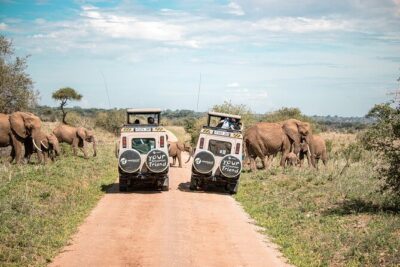 ★ 5.0Tanzania Wildlife Encounters – 6 DaysFrom $3,413277 reviews
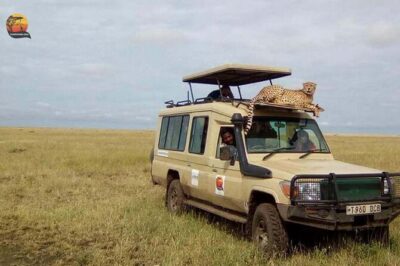 ★ 5.0Group Safari 7 Days in Tanzania’s Main ParksFrom $3,000240 reviews
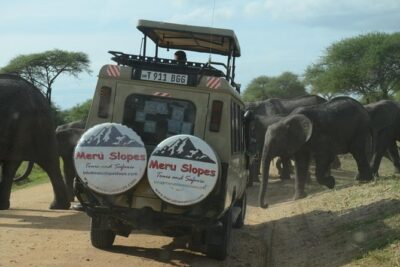 ★ 5.04 Days Join Group tour Tarangire Serengeti and Ngorongoro craterFrom $1,090219 reviews
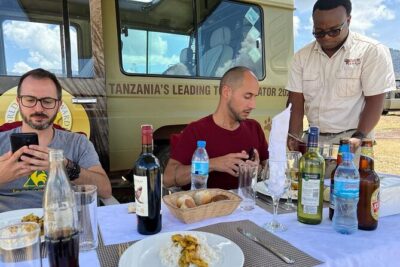 ★ 5.05-Day Private Northern Tanzania Safari from ArushaFrom $2,780182 reviews
 ★ 5.05 Days Best of Tanzania Luxury Safari Northern CircuitFrom $3,744174 reviews
 ★ 5.08 Day Spectacular Migration Serengeti mid -Range Tanzania SafariFrom $4,257161 reviews
 ★ 5.0Multi-Day Tanzania Odssey Safari from ArushaFrom $4,164120 reviews
Browse the lists this tour appears in