
REVIEW · NGORONGORO CRATER SAFARIS
2 Days Camping Safari, Lake Manyara & Ngorongoro Crater
Two parks, one overnight camp, fast and wild. I like the small group setup (maximum 6 people) and the fact that camping gear and meals are covered, so you can focus on the animals instead of logistics. The only real drawback to plan around is time, Ngorongoro gets packed into a short window, so it can feel like a sprint if you love long drives and lots of stops.
I also like that the schedule is built around two signature habitats. Lake Manyara brings tree-climbing lions and a huge concentration of baboons, while Ngorongoro adds a dramatic crater descent and a chance to spot predators like lions and hyenas, plus the elusive leopard if you keep your eyes sharp.
One more heads up, there’s at least one past cancellation story in the mix, so I’d treat confirmation details seriously and keep your email confirmations handy until you’re at the start point.
In This Review
- Quick hits before you go
- Two parks in 48 hours: what the pace really feels like
- Arusha start at 8:30am, plus a quick stop in town
- Lake Manyara National Park: baboons, acacia, and tree-climbing lions
- Overnight camping in the Manyara area: what is covered
- Ngorongoro Crater in daylight: descending 600 meters for wildlife
- Lake Magadi and your picnic lunch: a crater scene worth pausing for
- Small groups and guides: Jeff and Fred show up in the stories
- Practical packing for a camping safari in Tanzania
- Price check: is $455 worth it for Manyara plus Ngorongoro?
- Who this Lake Manyara and Ngorongoro tour fits best
- Should you book this 2-day camping safari from Arusha?
- FAQ
- How long is the safari?
- Where does the tour start and end?
- What time does the tour start?
- Is pickup from Arusha hotels included?
- How many people are in the group?
- Do you provide camping gear?
- Are meals included?
- What places do you visit during the tour?
- Is there a picnic during the safari?
- Is free cancellation available?
Quick hits before you go
- Max 6 people for a more personal pace during game drives and crater spotting
- Tree-climbing lions and world-class baboons at Lake Manyara
- Overnight camping with everything provided so you are not scrambling for gear
- A 600-plus meter descent into Ngorongoro Crater for wildlife-viewing
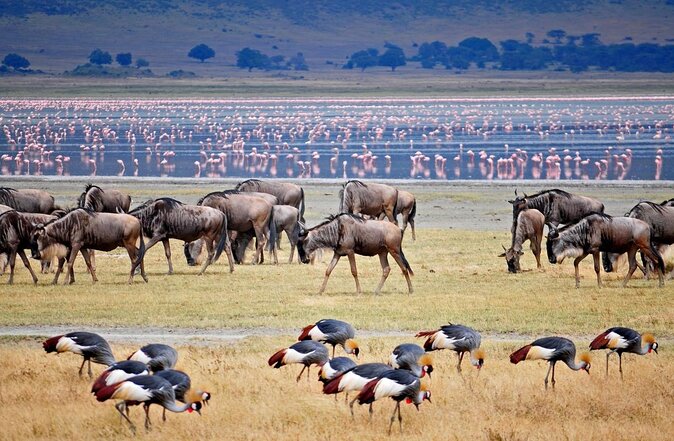
- Lake Magadi inside the crater for a classic alkaline-lake scene with flamingos and hippos
- Round-trip transport from Arusha hotels plus a mobile ticket
Other ways down into the Ngorongoro Crater
- 3 Days Serengeti & Ngorongoro Group Camping Safari★ 5.0 · 574 reviews
- 5 Days Camping Tarangire, Serengeti & Ngorongoro crater & Visiting Maasai★ 5.0 · 229 reviews
- 4 Days Join Group tour Tarangire Serengeti and Ngorongoro crater★ 5.0 · 219 reviews
- 4-Day Safari from Arusha: Tarangire, Serengeti and Ngorongoro★ 5.0 · 173 reviews
Two parks in 48 hours: what the pace really feels like
This is a tight, two-day safari built for people who want the highlights without adding an extra night. Day 1 focuses on Lake Manyara National Park, then you sleep at a campground. Day 2 is all about Ngorongoro Crater, with a game drive and a picnic lunch before returning to Arusha.
The upside is you see two of Tanzania’s best-known wildlife stages in one package. The tradeoff is that you cannot linger at one spot the way you might on a longer safari.
If you like your days structured and action-packed, this will suit you. If you prefer slow, repeat viewing, you may find this itinerary a bit brisk, especially inside the crater.
Arusha start at 8:30am, plus a quick stop in town
The tour starts at 8:30am, with pickup offered and transport arranged around Arusha. The itinerary also includes a stop in Arusha Town for last-minute purchases before you head toward the parks, which is a nice touch if you need sunscreen, snacks, or water refills.
Because the day begins early, you will want to be ready the night before. Think about charging your phone, keeping a light layer in reach, and having any cash you might need for small items.
You are also issued a mobile ticket, which keeps things simple and reduces paperwork. Just make sure your phone is charged, or have a backup way to access the ticket info.
Lake Manyara National Park: baboons, acacia, and tree-climbing lions
Lake Manyara National Park is small compared to the big names, but it packs a lot of variety into a compact area. You’ll pass through acacia woodlands, water forests, baobab-strewn cliffs, hot springs, swamps, and the lake itself. That mix matters because different animals and birds use different parts of the park.
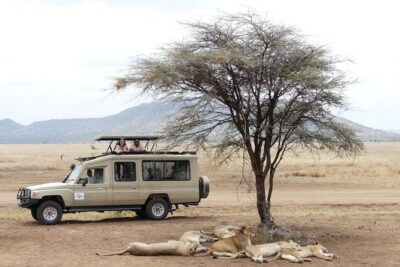
One of the best-known draws is the largest concentration of baboons anywhere in the world, which means you can get great sightings without hunting for them. It also helps that Lake Manyara is famous for lions that sometimes climb trees, a behavior you do not expect to see everywhere.
The park is also described as supporting incredible bird life. Even if your main goal is mammals, the bird scenes can keep the drive interesting between bigger animal moments.
Practical note: with a short safari day, you want to stay mentally flexible. If the best sighting is close to the ground, you will enjoy it more if you are not fixated on only scanning for the biggest “headline” animals.
Lake Manyara trips we also sat with
Overnight camping in the Manyara area: what is covered
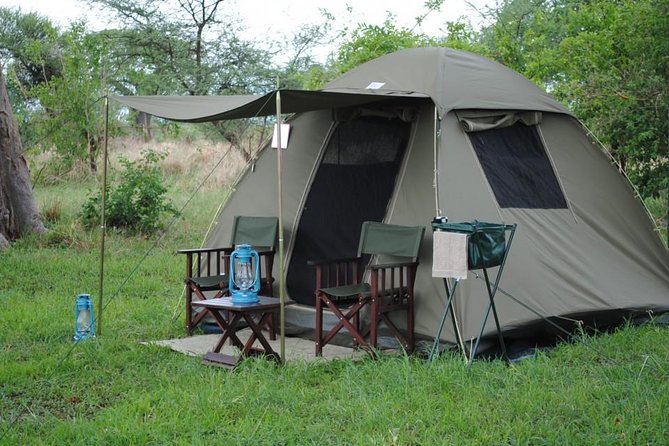
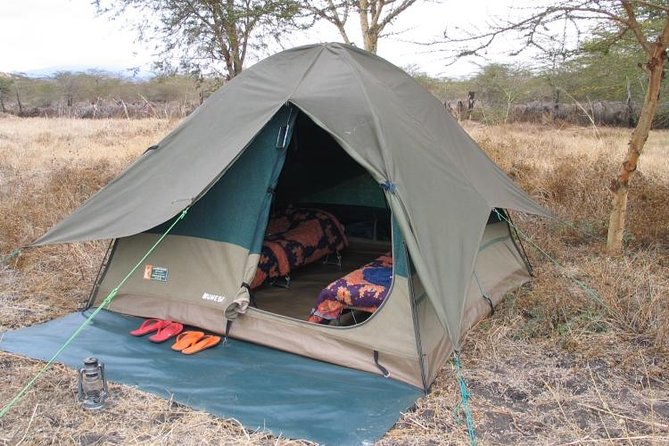
This tour includes an overnight camp, which is part of why it is such good value for two days. You get everything you need for camping, and all meals are included, so you can travel lighter and spend less time thinking about gear.
That matters because a camping safari can turn into a stress test if you have to source equipment on the spot. Here, the intent is to handle the basics so you can focus on wildlife time and rest.
What you should expect from the setup is not spelled out in detail, so I’d think of this as practical camping, not a high-end lodge experience. Your comfort will depend on what you personally need to sleep well, but the key point is that the camping essentials are handled.
If you enjoy being out under the night sky and you’re comfortable with the idea of camping rather than hotel rooms, this overnight stop is one of the strongest parts of the trip.
Ngorongoro Crater in daylight: descending 600 meters for wildlife
Day 2 is where the itinerary turns dramatic. You start early, then you descend more than 600 meters into Ngorongoro Crater to view wildlife. That drop is not just a scenic detail, it changes the whole feel of the drive, because the crater becomes a contained stage where animals gather around year-round water supply and fodder.
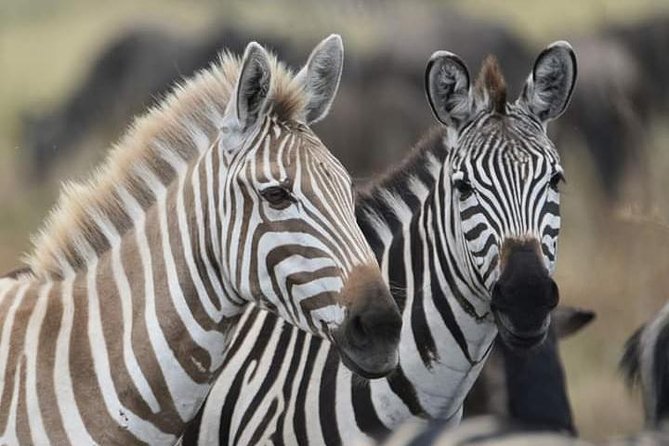
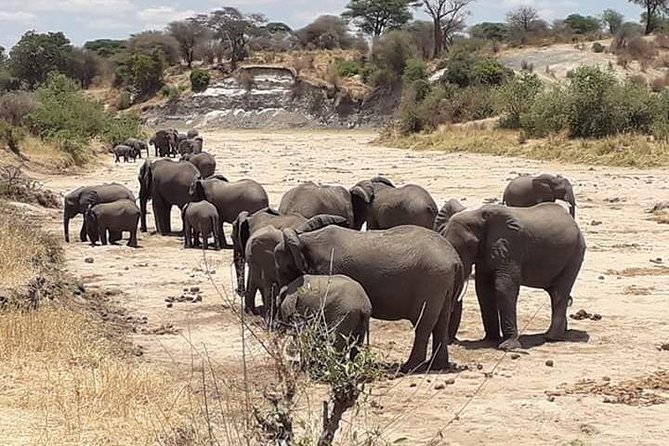
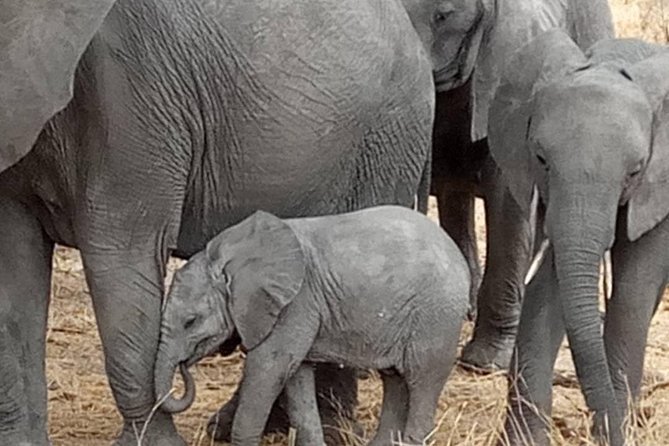
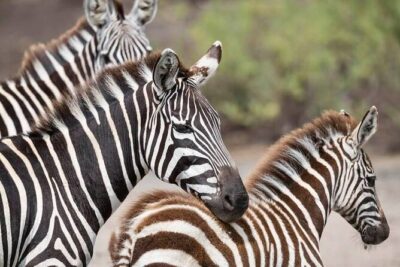
Ngorongoro is also listed as a UNESCO area, and it functions as a conservation setting. The practical result for you is that there tends to be reliable wildlife viewing, including herds of wildebeest, zebra, buffalo, eland, warthog, hippo, and giant African elephants.
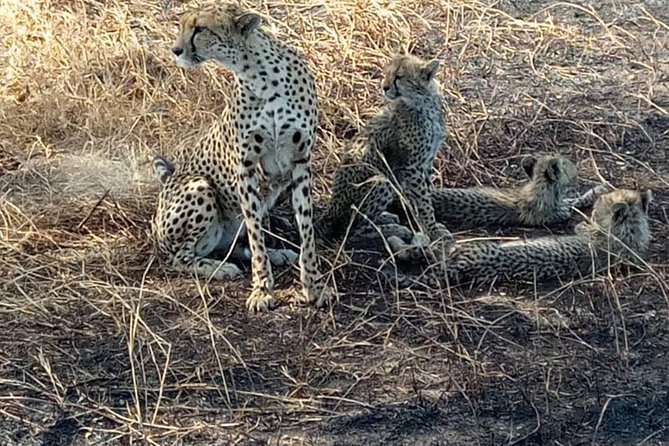
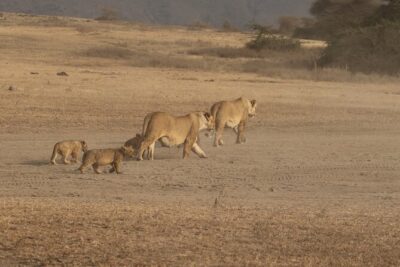
The crater is famous for predators too. You may spot lions, hyenas, jackals, cheetahs, and, if you’re lucky and observant, leopard. Leopard is called out as elusive, which is a polite way of saying you should not expect it on a checklist, you should expect it as a bonus.
The game drive timing matters here. You get a classic crater experience, but because the itinerary is only one day inside, you will want to keep your eyes moving and your expectations realistic.
Lake Magadi and your picnic lunch: a crater scene worth pausing for
Inside the crater, you visit Lake Magadi, which is a large but shallow alkaline lake in the southwestern corner. This is a standout stop because it changes the visual environment from grassland to waterline viewing.
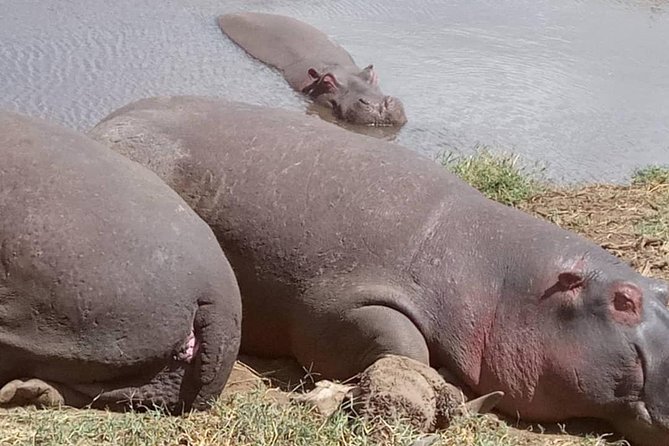
Lake Magadi is also associated with flamingos and hippos, plus other water-related wildlife. Even if you do not catch every animal, the scene is built for spotting, and it gives you a different kind of viewing than a standard road safari.
You’ll also have a picnic lunch during the crater portion. This is one of those simple perks that can make the day feel less rushed. When you’re descending into the crater and then driving for wildlife sightings, having a set lunch break helps your energy stay steady.
If you tend to get hangry on safaris, bring a small mindset shift: the day is long in the field, but breaks are part of the plan.
Small groups and guides: Jeff and Fred show up in the stories
This tour caps at six travelers, and that small size can change how the day feels. You are more likely to have personal attention during stops, and the guide can respond faster when something interesting appears roadside.
The guide experience seems to matter a lot. In past trips tied to this operator, guides named Jeff and Fred are mentioned with praise for skills spotting animals and for a friendly, engaging style. That matters because game drives are partly about luck and partly about who can read the terrain and react quickly.
Also, the overall tone from the positive feedback is consistent: people felt prepared, enjoyed the pacing, and appreciated the hospitality around the safari.
No tour runs perfectly, though. One negative account mentions a late cancellation notice, even after confirmation and charges, which is a reminder to verify details close to departure and keep documentation accessible.
Practical packing for a camping safari in Tanzania
You do not need a huge packing list for this trip, but you do want to be smart. Camping and long drives tend to be where comfort is won or lost.
Here’s what you should consider bringing, based on the camping and safari setup implied by this kind of itinerary:
- A light rain layer, since weather can shift quickly
- Sunscreen and a hat, for both park drives and crater sun
- Comfortable closed-toe shoes you can wear on uneven ground
- A small day bag for water, snacks, and a layer
- Power bank and charging cables, since you’ll rely on your phone for your mobile ticket access and photos
If you wear glasses or use contacts, pack spares. Dust and sun are real on safari drives.
And because it’s an overnight, keep a small bag with your “sleep essentials,” not everything in your main luggage.
Price check: is $455 worth it for Manyara plus Ngorongoro?
At $455 per person for roughly two days, the value depends on what you care about. This package includes round-trip transportation from Arusha hotels, all meals, and camping essentials. It also covers the key wildlife segments, Lake Manyara on day 1 and Ngorongoro on day 2.
When those pieces are bundled, the cost can feel reasonable because you are not paying separately for transport, food, and an overnight plan. The small group cap adds another layer of potential value since you are not spread across a huge vehicle.
Still, I’d sanity-check the basics when you book. Ask what’s included beyond meals and camping gear, like park fees, and whether your exact pickup point is locked in for your lodging. The tour information confirms transport and camping inclusions, but it does not spell out every behind-the-scenes line item.
If you want a structured intro to Tanzania’s northern safari circuit without a long time commitment, this two-day combo is one of the more efficient ways to do it.
Who this Lake Manyara and Ngorongoro tour fits best
This tour makes sense for:
- People who want a classic crater day and a Manyara day without adding extra nights
- Anyone who likes the idea of camping, but wants it handled with provided gear
- Groups who prefer small-scale guiding (up to six people)
- First-time visitors to Tanzania who want big wildlife moments like tree-climbing lions, baboons, and crater predators
It may not be the best fit if:
- You want a long, slow Ngorongoro day with lots of stops
- You are very sensitive to schedule pressure and early starts
- You strongly prefer lodge-style comfort rather than camping
One review note strongly hinted that allocating more time at Ngorongoro matters. In plain terms, two days can deliver the highlights, but it cannot deliver unlimited time.
Should you book this 2-day camping safari from Arusha?
I think you should book if you want an efficient wildlife hit, and you’re happy with an overnight camping style that comes with meals and camping gear included. The itinerary covers a lot of Tanzania’s big wildlife stories in a short window, and the small group format helps your day feel less like cattle transport.
Before you hit the confirm button, do two simple things:
- Double-check your pickup details and the start time tied to your location.
- Keep your booking confirmation and messages accessible, especially since there is at least one cancellation story you might want to treat as a caution flag.
If you go in with the right mindset, you’ll likely love the mix of Lake Manyara’s baboons and tree-climbing lions, then the awe factor of descending into Ngorongoro for a real game drive and picnic.
FAQ
How long is the safari?
It runs for about 2 days.
Where does the tour start and end?
It starts at Kilimanjaro International Airport, and ends with a drop-off at your hotel in Arusha.
What time does the tour start?
Start time is 8:30am.
Is pickup from Arusha hotels included?
Pickup is offered, and the tour also includes round-trip transportation from Arusha hotels.
How many people are in the group?
The group size is capped at a maximum of 6 travelers.
Do you provide camping gear?
Yes, everything you need for camping is provided.
Are meals included?
Yes, all meals are included.
What places do you visit during the tour?
You visit Lake Manyara National Park and then Ngorongoro Crater, including a stop at Lake Magadi, plus a picnic lunch.
Is there a picnic during the safari?
Yes, there is a picnic lunch during the Ngorongoro portion.
Is free cancellation available?
Yes. You can cancel up to 24 hours in advance for a full refund, and it requires at least a minimum number of travelers to run. If it is canceled because the minimum is not met, you will be offered a different date or a full refund.
More Under Canvas
- 4 Days Group Camping Safari
★ 5.0 · 1,101 reviews - 5 Days Group Camping Safari
★ 5.0 · 730 reviews - 3 Days Serengeti & Ngorongoro Group Camping Safari
★ 5.0 · 574 reviews - 5 Days Camping Tarangire, Serengeti & Ngorongoro crater & Visiting Maasai
★ 5.0 · 229 reviews - 5 Days Budget Private Safari, Tanzania
★ 5.0 · 191 reviews
Down at Lake Manyara
- Private 6-Day Tarangire Manyara Crater and Serengeti with Mid-Range Lodges
★ 5.0 · 238 reviews - 3 Days Tarangire, Ngorongoro & Lake Manyara Group Camping Safari
★ 5.0 · 102 reviews - 3 Days Private Safari – manyara, Ngorongoro & Tarangire
★ 5.0 · 94 reviews - 05 Days Tarangire, Serengeti, Ngorongoro and Lake Manyara
★ 5.0 · 54 reviews - 5 Days 4 Nights Tarangire, Serengeti , Ngorongoro & Manyara Wildlife Safari
★ 5.0 · 40 reviews
Still Thinking About the Crater?
- 3 Days Serengeti & Ngorongoro Group Camping Safari
★ 5.0 · 574 reviews - 5 Days Camping Tarangire, Serengeti & Ngorongoro crater & Visiting Maasai
★ 5.0 · 229 reviews - 4 Days Join Group tour Tarangire Serengeti and Ngorongoro crater
★ 5.0 · 219 reviews - 4-Day Safari from Arusha: Tarangire, Serengeti and Ngorongoro
★ 5.0 · 173 reviews - 2 Days Tarangire and Ngorongoro Group Camping Safari
★ 5.0 · 146 reviews
Just added from around Arusha

Ngorongoro Crater Safaris, compared.
 ★ 5.03 Days Serengeti & Ngorongoro Group Camping SafariFrom $815574 reviews
 ★ 5.0Safari Serengeti And NgorongoroFrom $2,845288 reviews
 ★ 5.05 Days Camping Tarangire, Serengeti & Ngorongoro crater & Visiting MaasaiFrom $1,254229 reviews
 ★ 5.04 Days Join Group tour Tarangire Serengeti and Ngorongoro craterFrom $1,090219 reviews
 ★ 5.04-Day Safari from Arusha: Tarangire, Serengeti and NgorongoroFrom $1,753173 reviews
 ★ 5.02 Days Tarangire and Ngorongoro Group Camping SafariFrom $550146 reviews
 ★ 5.04 Days Tarangire Serengeti Ngorongoro CraterFrom $900117 reviews
 ★ 5.03 Days Tarangire, Ngorongoro & Lake Manyara Group Camping SafariFrom $700102 reviews
Browse the lists this tour appears in