
REVIEW · MULTI-DAY NORTHERN CIRCUIT SAFARI PACKAGES
Private 8 day Northern Circuit Kilimanjaro Climb
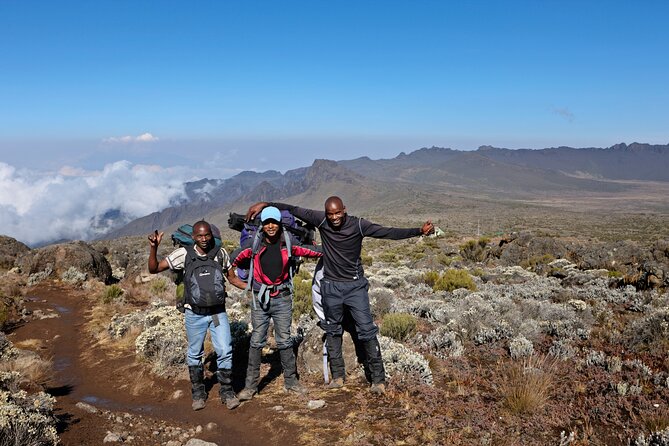
Circle Kilimanjaro, not just one side. I love the Northern Circuit concept, because you start in the west, wrap around to the north, and then ascend via Marangu on the east, so you get a full-on look at Kibo and beyond. I also like the pacing of an 8-day climb, with time built in for acclimatization, which helps you approach the summit night with less panic and more patience. It is also a private setup, so the focus stays on your team.
The main consideration is effort plus altitude. You start feeling effects along the way, and the summit push is scheduled to begin after you are woken around 11pm to midnight, with the final stretch demanding real grit when your body is already tired.
In This Review
- Key Things That Make This Northern Circuit Different
- Why the Northern Circuit Wraps Around Kili Like a Full Tour
- Price and What $2,999 Actually Buys You
- Day 1: Londorossi Gate to Mti Mkubwa, Where the Mountain Introduces Itself
- Day 2: From Forest to Heather and Shira Ridge Views to Shira One
- Day 3: Moir Hut, Petrified Lava, and a Sunset Acclimatization Climb
- Day 4: The 4300m Slog, Kibo’s Northern Face, and Second Pofu
- Day 5: Northern Slopes Up and Down to Third Cave Campsite
- Day 6: School Hut at 4717m, East-Slope Traverse, and Prep for Summit Night
- Day 7: Midnight Departure, Hans Meyer Cave, Gillman’s Point, and Uhuru Peak
- Day 8: Mweka Gate, Certificates, and Back to Arusha
- How the Team Approach Affects Your Summit Odds
- Altitude Reality Check: What to Do When Your Head Starts Talking
- Should You Book This Northern Circuit Climb?
- FAQ
- How long is the Northern Circuit Kilimanjaro climb?
- Where does the trek start and what happens first?
- Are meals included?
- Is pickup offered?
- Is this tour private?
- What time do you start the summit night?
- Is free cancellation available?
Key Things That Make This Northern Circuit Different
- A route that circles Kili so you see more of the mountain, not just the classic “one valley” view
- Longer acclimatization built into the itinerary (8 days total), which improves how you handle height
- Steep high points at key moments, including a hard slog up to 4300m on Day 4
- A proper summit-night plan that routes you via Hans Meyer Cave and Gillman’s Point to Uhuru Peak
- Camp life that stays organized, with tents set up on arrival and meal waking handled by staff
Longer northern circuit routes, side by side
- Tanzania Classic – 7 Days★ 5.0 · 1,151 reviews
- Tanzania Wildlife Encounters – 6 Days★ 5.0 · 277 reviews
- Group Safari 7 Days in Tanzania’s Main Parks★ 5.0 · 240 reviews
- 4 Days Join Group tour Tarangire Serengeti and Ngorongoro crater★ 5.0 · 219 reviews
Why the Northern Circuit Wraps Around Kili Like a Full Tour
If your goal is to truly understand Kilimanjaro, the Northern Circuit is a smart match. Instead of climbing and descending on the same general side, this route circles the mountain. You start at the Londorossi area, move through the western approach, then swing around toward the north, and eventually come up on the east via what aligns with Marangu-style routes. On the way down, you drop toward the south, and the route connects with other climb lines you may recognize, including Lemosho, Rongai, Marangu, and Mweka.
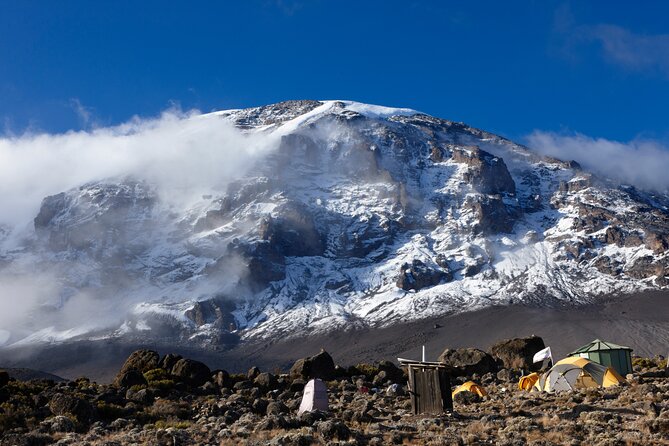
What that means for you in real life is simple: you keep seeing new angles of the mountain. Kibo’s snow-covered top doesn’t just appear once. It pops into view along the trek, then shows up again and again as you gain altitude and change direction. Even Mawenzi has time to slowly loom larger, so your brain gets to process the height in steps rather than all at once.
This is also described as one of the least traveled Kili options. That matters more than you might think. Less crowd shuffle can mean less waiting at junctions, fewer bottlenecks on the path, and a calmer rhythm for your group. On a climb where timing and pacing are everything, calm is a real advantage.
Price and What $2,999 Actually Buys You
At $2,999 per person, you are paying for a fully guided, private 8-day experience with a lot included. The biggest value is not just “someone walks with you.” It is how the plan is built around safe acclimatization and a route that takes long enough to let your body adjust.
Look at what is covered:
- All meals are included for the trek (breakfast 7 times, dinner 7 times, lunch 8 times)
- A private group means you are not sharing your experience with strangers
- Pickup is offered, and you get a mobile ticket
- Your team handles the key mountain logistics: registration help, camp setup support, and meal timing support (especially important on the summit night)
Could you do Kilimanjaro cheaper? Sure, in some versions, people cut corners on comfort and organization. But you are paying for the structure that helps you stay focused, not distracted by chaos. If you want the mountain to feel like the main event, this package aims to keep things running so you can concentrate on your breathing and your feet.
Day 1: Londorossi Gate to Mti Mkubwa, Where the Mountain Introduces Itself
Day 1 starts with driving into Kilimanjaro National Park and reaching Londorossi Gate for registration formalities. After that, you continue by vehicle about 12km to the trail start point. The drive can range from roughly 45 minutes to 1 hour 30, depending on road conditions, so build a bit of wiggle room into your expectations.
Then the walking begins at around 2389m at the route start. The first section to Big Tree Camp (Mti Mkubwa) is short on paper: about 5km and just under 400m of elevation gain. That is exactly the point. This day is about settling into the rhythm. You go from vehicle mode to hiking mode without throwing you immediately into a “why did I sign up for this” spiral.
You end at Mti Mkubwa Camp at 2785m. A big comfort detail is that each night you arrive to find your tent already erected, with a snack waiting. After a first day walk, that kind of setup matters. You spend less time doing chores and more time letting your legs loosen up and your head calm down.
Other ways up Kilimanjaro we reviewed
Day 2: From Forest to Heather and Shira Ridge Views to Shira One
Day 2 is one of the more varied days. You continue through forest for a while, then you leave the trees behind and climb into grasses, wild flowers, and the heather and moorland zone. That change in terrain also changes the feel of the climb. The ground can feel different underfoot, and the air can feel less filtered, so you may notice height earlier than you expected.
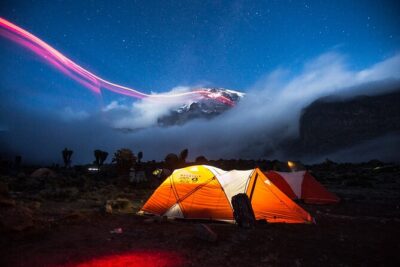
As you keep climbing, you round the northern slopes of Shira Ridge, and there is even a glimpse of your final destination, the snow-covered Kibo summit. That moment is useful. Seeing the top early helps you keep motivation connected to the plan.
The day ends at Shira One Camp (3504m) on the western edge of the Shira Plateau, with views across the plateau toward Kibo. They also note that mild headaches can be normal. If you get one, treat it like a prompt: slow down, hydrate, and keep your breathing steady. Do not try to “out-walk” altitude problems.
Day 3: Moir Hut, Petrified Lava, and a Sunset Acclimatization Climb
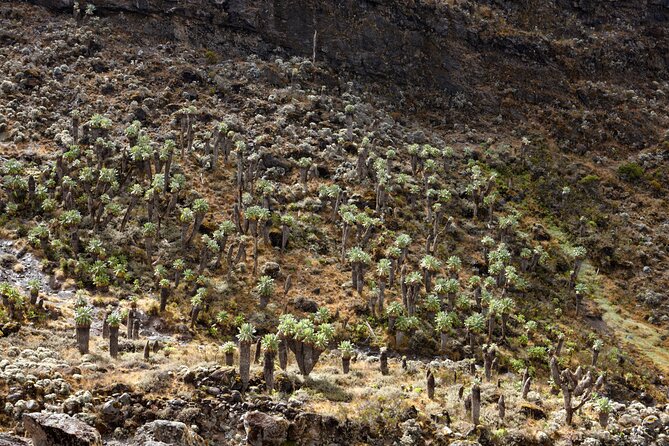
Day 3 starts with a junction area near Simba Camp and connects with the 4WD emergency track running from Shira 2 back down. From there, the route takes about 135 minutes along a path between boulders, around or over petrified lava flows, and through grassy swards. This is the kind of terrain that keeps your attention. You are not just trudging up, you are also navigating the ground.
After about an hour more, you pass an impressive cave just before the Moir Huts (4161m). The walking time here is about 6 hours total, and the day’s ascent gain is noted as 657m over 9.7km. That is a meaningful climb, but not a “crush you in one day” style.
Here is a smart part of the plan: after you reach camp, you can do a sunset acclimatization climb to about 4300m, taking you 1.9km total and adding 139m of height for the excursion. The goal is not speed. The goal is giving your body a practice round at higher altitude while still returning to sleep at camp.
Day 4: The 4300m Slog, Kibo’s Northern Face, and Second Pofu
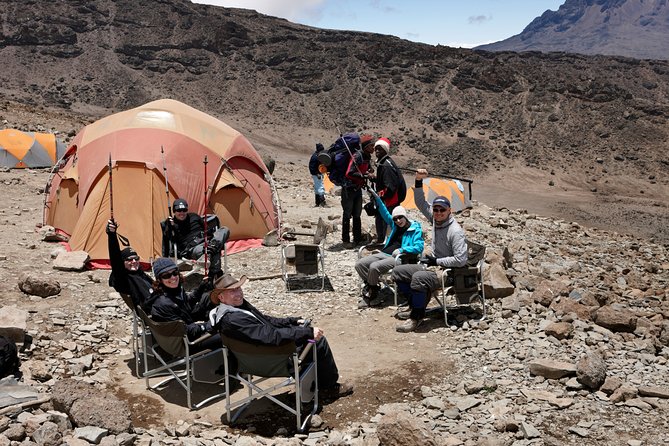
Day 4 is where you feel the route’s logic. They say you reach 4402m before falling to Second Pofu Camp at 4033m. That setup is typical of acclimatization days. You push up, then you come down to recover.
It also includes perhaps the steepest climb of the day. The walk begins with a relentless slog up to exactly 4300m. You make your way around Kibo’s northern face, drop into several valleys, then climb back out of them. If you like steady progress more than roller coaster effort, this is a day to accept that you will be working hard, then working hard again.
They also emphasize that altitude symptoms are possible. Mild headaches are mentioned as normal. My practical advice: when you feel off, do not try to compensate by rushing. On this climb, you win by being consistent, not by heroics.
Day 5: Northern Slopes Up and Down to Third Cave Campsite
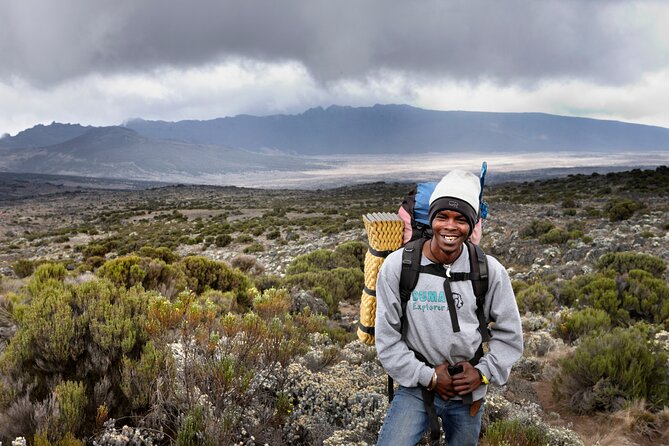
Day 5 is described as an up and down stage of 6.8km, with about 4 hours walking time. The gradients are not quite as dramatic as the previous day, but you can still feel puffed by the time you reach Third Cave Campsite.
The route keeps Kibo on your right side as you move, and Mawenzi gradually looms larger ahead of you. The saddle between them is not clearly visible until the next stage, which is a good reminder that mountain views often come in phases. You earn them as you change elevation and direction.
Why this day matters: it keeps you moving without turning the climb into a full-on survival test. That balance helps you preserve energy for what is coming.
Day 6: School Hut at 4717m, East-Slope Traverse, and Prep for Summit Night
Day 6 begins with a gentler traverse along the eastern slopes of Kilimanjaro, then you start the climb up from Third Caves (3936m) toward School Hut (4717m). The distance is 4.9km, and the gain is 781m. Shorter than some days, but not easy. That combination means your pace needs to be controlled, not fast.
They also note you should aim to arrive early to mid-afternoon. That timing is about sleep and recovery. Once you reach camp, the instructions are clear: get as much rest as possible because you will be woken around 11pm to midnight to begin the summit assault. Staff will wake you for meals, so you do not have to manage that on your own, but they still encourage you to try to eat even if you do not feel like it. On summit night, calories help more than your stomach feelings do.
This is the day where you can feel two emotions at once: excitement and dread. If you keep your routine simple, the climb stays manageable.
Day 7: Midnight Departure, Hans Meyer Cave, Gillman’s Point, and Uhuru Peak
This is the big day, and the schedule is demanding. Around midnight of Day 6, you depart camp for the summit. They mention the night is difficult, especially the final 550m. That final push is where mental focus matters as much as legs.
The route climbs from School Hut (4717m) via:
- Hans Meyer Cave (5259m)
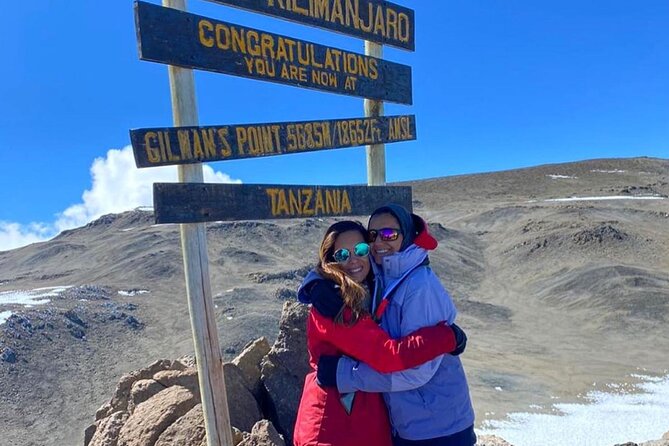
- Gillman’s Point (5719m)
- onward to Uhuru Peak (5895m)
At the summit, your guide advises how much time you can spend based on your condition, your timings, and the weather. This is one of the better ways to run a summit. Instead of treating the top as a photo-stop only, the plan respects altitude reality and safety.
After a rest at the top, the descent begins. You continue down about 4.86km back to Barafu Camp. That part is quicker than the ascent, which is a nice change. At Barafu, you take breakfast and relax for about an hour before continuing descent another 6.6km.
One more highlight: reaching Gilman’s Point is described as one of Kilimanjaro’s three summits, and it comes with a certificate once you reach the crater rim area at 5756m. Even if conditions affect your final timing, that point is a milestone in the day’s plan.
Day 8: Mweka Gate, Certificates, and Back to Arusha
Day 8 is when the mountain lets you breathe again. After breakfast, you hike from the campsite down to Mweka Gate (1633m). Those who made it to the summit or to Gillman’s Point collect certificates there.
Then a car is waiting to take you back to your hotel in Arusha. The plan also includes descending via the Mweka Trail and completing your climb at the gate, plus collecting certificates.
This is the day you finally feel how the trek is shaping your sense of time. It can feel short and quiet compared to the summit night, but it still takes a real effort to walk downhill after days of altitude. Treat it like a victory lap with purpose.
How the Team Approach Affects Your Summit Odds
A private climb lives or dies on crew support, and this one has a strong track record. In multiple experiences, people have praised the team as kind and talented, with guides who keep things organized and focused on getting you safely to the top.
You may work with guides and staff such as Colman, Emmanuel, Imran, Humphrey, and porters like Dickson and Mariam. What matters most is the pattern behind those names: guides who keep you healthy, keep you moving at a pace that respects altitude, and help you stick to the plan instead of improvising under stress.
There is also mention of accommodating vegetarian needs, and even small thoughtful touches like a birthday cake. Those details are not about luxury. They are about morale. When your body is working hard, small wins help you keep going.
Altitude Reality Check: What to Do When Your Head Starts Talking
Kilimanjaro altitude is not a test you pass once. It is a signal system. This route explicitly notes that mild headache symptoms can happen. The practical advice built into the plan is to go pole pole and drink lots to avoid altitude issues.
Here is how you can apply that on this itinerary:
- When you feel a headache, do not speed up to compensate. Slow down and stabilize your breathing.
- Keep hydration consistent, not heroic.
- Let your body acclimatize during the built-in down-to-recover rhythm, especially on days like Day 4 where you gain high and then come down to camp.
- Follow the guide’s summit timing guidance. If they limit your time at Uhuru Peak, that is not a “no fun” decision. It is a safety decision.
If you go in thinking altitude is the enemy, you get tense. If you treat it like weather, you respond better.
Should You Book This Northern Circuit Climb?
You should strongly consider booking if you want a less crowded route that actually circles the mountain, giving you more complete views, and you prefer a plan that invests time in acclimatization. The 8-day length makes it feel less rushed, and the summit schedule via Hans Meyer Cave, Gillman’s Point, and Uhuru Peak is clear and structured.
You may want a different option if you are looking for an easy trek. This route includes steep segments, a high camp strategy, and a summit night that starts after you are woken around 11pm to midnight. You also need to be ready for mild altitude symptoms, which are explicitly mentioned as normal.
FAQ
How long is the Northern Circuit Kilimanjaro climb?
It is an 8-day climb, with the itinerary starting at 9:00 am and ending with a descent to Mweka Gate and return back to Arusha.
Where does the trek start and what happens first?
You drive to Londorossi Gate for registration, then continue by vehicle for about 12km to the trail start point before the first hiking section.
Are meals included?
Yes. Lunch is included 8 times, breakfast is included 7 times, and dinner is included 7 times.
Is pickup offered?
Pickup is offered, and after the trek a car is waiting to take you back to your hotel in Arusha.
Is this tour private?
Yes, it is private, meaning only your group participates.
What time do you start the summit night?
You are woken around 11pm to midnight to begin the summit assault from School Hut.
Is free cancellation available?
Yes. You can cancel for a full refund up to 24 hours in advance of the experience start time.
Kilimanjaro, Route by Route
- 8-Day Small-group Lemosho Kilimanjaro Summit Trekking
★ 5.0 · 186 reviews - 7-Day Machame Kilimanjaro Summit Tour from Arusha
★ 5.0 · 125 reviews - Mountain Kilimanjaro Day Hike
★ 5.0 · 102 reviews - 4 days Best experience Kilimanjaro Hike, Serengeti &Ngorongoro
★ 5.0 · 54 reviews - From Arusha/Moshi: Kilimanjaro Hike Marangu Route Day Trip
★ 4.5 · 54 reviews
Longer Trips Through the North
- Tanzania Classic – 7 Days
★ 5.0 · 1,151 reviews - 7-Day Premium Luxury Tanzania Safari All-Inclusive
★ 5.0 · 426 reviews - Tanzania Wildlife Encounters – 6 Days
★ 5.0 · 277 reviews - Group Safari 7 Days in Tanzania’s Main Parks
★ 5.0 · 240 reviews - 4 Days Join Group tour Tarangire Serengeti and Ngorongoro crater
★ 5.0 · 219 reviews
Just added from around Arusha
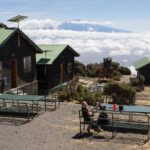
Multi-Day Northern Circuit Safari Packages, compared.
 ★ 5.07-Day Premium Luxury Tanzania Safari All-InclusiveFrom $4,840426 reviews
 ★ 5.0Tanzania Wildlife Encounters – 6 DaysFrom $3,413277 reviews
 ★ 5.0Group Safari 7 Days in Tanzania’s Main ParksFrom $3,000240 reviews
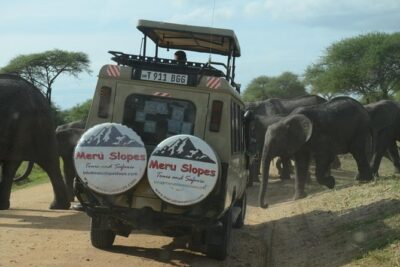 ★ 5.04 Days Join Group tour Tarangire Serengeti and Ngorongoro craterFrom $1,090219 reviews
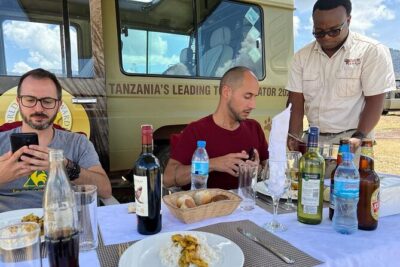 ★ 5.05-Day Private Northern Tanzania Safari from ArushaFrom $2,780182 reviews
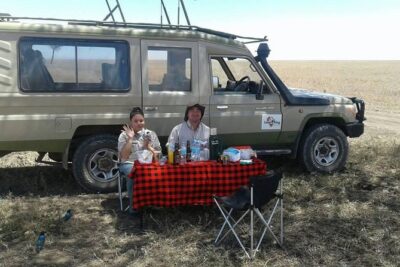 ★ 5.05 Days Best of Tanzania Luxury Safari Northern CircuitFrom $3,744174 reviews
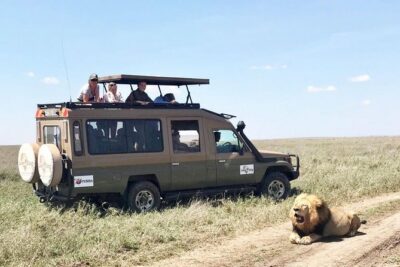 ★ 5.08 Day Spectacular Migration Serengeti mid -Range Tanzania SafariFrom $4,257161 reviews
 ★ 5.0Multi-Day Tanzania Odssey Safari from ArushaFrom $4,164120 reviews
Browse the lists this tour appears in