
REVIEW · SERENGETI NATIONAL PARK SAFARIS
From Arusha: 6 Day Classic Game Drive Serengeti & Ngorongoro
Six days, serious safari magic in northern Tanzania. This classic game drive wraps four big wildlife areas into one smooth circuit, with park fees and full board included, so you can focus on the driving slow and the animals close. I love the mix of habitats here, from Lake Manyara’s birdlife and tree-climbing cats to Ngorongoro’s crater drama.
I also really like the rhythm of the trip: you get full game drive time inside the parks each day, then you sleep close enough to keep the experience feeling safari-first, not logistics-first. The guide team gets repeat praise for spotting skills and for keeping the time in the jeep worthwhile, with names like David Lasway, Godlisten Nassari, Peter Malley, and Khalid Talib showing up in past experiences.
One consideration: you are spending a lot of hours in a safari vehicle across multiple regions, so if you hate long drives or you’re sensitive to early starts, you may find the schedule a bit intense.
In This Review
- Key safari highlights you will actually feel
- Getting started in Arusha at 8:00 am, then straight into safari mode
- Lake Manyara: birds, baboons, and the tree-climbing lion chance
- Ngorongoro Conservation Area to Ndutu: Maasai land between parks
- Ndutu Lake during migration and calving: why timing matters
- Serengeti National Park: wide plains, big cats, and migration-scale wildlife
- Ngorongoro Crater day: the Big Five bowl and the best lookout effect
- Overnight stays and full board: why meals matter on safari
- Price and value: what $2,864 buys in reality
- Who should book this classic game drive
- Should you book this 6-day classic game drive from Arusha?
- FAQ
- What time does the safari start?
- Is pickup included?
- Which parks and areas are included?
- Are park fees included in the price?
- What meals are included?
- Is this a private tour?
- What are the cancellation rules?
Key safari highlights you will actually feel
- Lake Manyara’s tree-climbing lions in a small park with big variety
- Ndutu Lake calving season country where predator-prey action is often constant
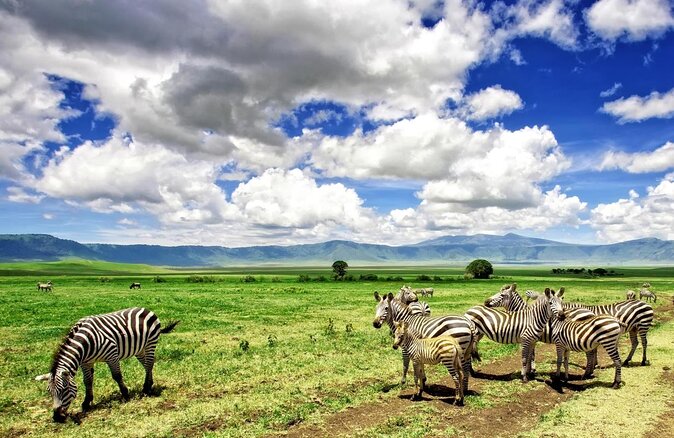
- Serengeti’s classic plains and the migration story told by the wildlife itself
- Ngorongoro Crater for Big Five odds inside a volcanic bowl
- Full board included so meal planning is easy during long park days
- Guide spotters and drivers are repeatedly credited for better wildlife sightings
More of the Serengeti, drive by drive
- Balloon Safari & Bush Breakfast in Serengeti – Miracle Experience★ 5.0 · 1,646 reviews
- 3 Days Serengeti & Ngorongoro Group Camping Safari★ 5.0 · 574 reviews
- 5-Day Highlights mid-Range Crater, Serengeti, Tarangire★ 5.0 · 296 reviews
- 3-Day Classic Serengeti Safari★ 5.0 · 263 reviews
Getting started in Arusha at 8:00 am, then straight into safari mode
Your day starts early, with pickup and a planned start time of 8:00 am. From Arusha, the drive to Lake Manyara takes about two hours, which is a good warm-up before you commit to longer wildlife days. This matters because on safari, your best hours are usually the early ones, and the schedule is built to get you moving when animals are active.
You will be in a private setup, meaning your group stays together and your driver-guide can tailor the pace. The tour also notes a mobile ticket, which helps if you are trying to keep things simple on the ground. You will want to bring a camera strap that you can wear comfortably for hours, since you will be up and down between windows and vehicle positions all week.
Practical tip: bring a small day bag with sunscreen, a hat, water, and a light layer. Many people pack like it is a normal vacation, then forget that safari weather can switch quickly when the sun drops behind the trees.
Lake Manyara: birds, baboons, and the tree-climbing lion chance
Lake Manyara National Park is the kind of place that feels busy even when you are not seeing the headline animal yet. The park is small enough that you notice habitat variety fast: alkaline soda lake waters attract impressive birdlife, and the road winds through a groundwater forest area where you can spot baboon troops along the roadside.
The bird element is no side show here. The lake supports more than 400 bird species identified, and the highlight is often the huge numbers of flamingoes moving through the shallows. If you like wildlife beyond the Big Five, this day gives your eyes a lot to work with, and it is also a calmer way to enter the safari week.
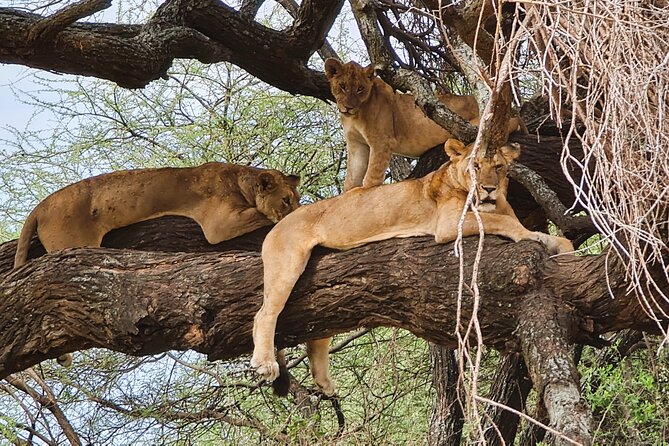
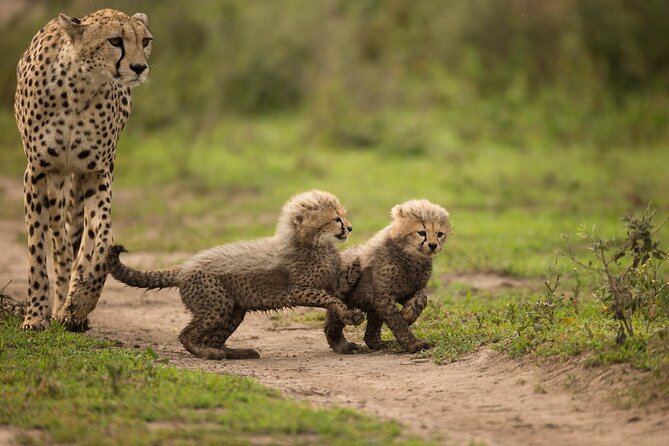
Then there is the famous moment: the tree-climbing lions that live among mahogany and acacia trees. You are not guaranteed a climb every day, but the park is famous enough for this behavior that you will feel like you are watching for it all day, and that changes how you look through the trees and shadows.
A small reality check: Lake Manyara days can feel more stop-and-scan than some open-plains parks. If you are the type who gets restless unless you see big action every hour, keep your expectations flexible. That said, this is a great first safari stop because it is packed with variety and it sets you up for the more intense predator country later.
Ngorongoro Conservation Area to Ndutu: Maasai land between parks
On the way to the Ndutu area, you pass through the Ngorongoro Conservation Area, home to the Maasai tribe. Even if your focus is wildlife, this is one of the most meaningful in-between stretches of the trip because it reminds you that conservation in Tanzania is not only about animals and fences, it is also about people living alongside the land.
You also start picking up wildlife and scenery while driving, and that makes the “transfer day” feel like part of the safari instead of dead time. The time allocation is noted as about four hours from the conservation area to Ndutu, which gives you a decent pace without turning the day into a marathon.
One thing I would plan for: how you feel about cultural context. If you are curious, you can use this drive to ask your driver-guide questions about what you see. If you are mainly there for the animals, you can still treat this day as a scenic buffer while you save your energy for the full game drives in Ndutu and Serengeti.
Other ways down into the Ngorongoro Crater
Ndutu Lake during migration and calving: why timing matters

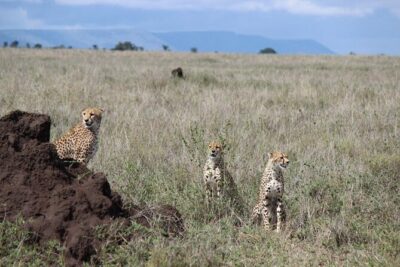
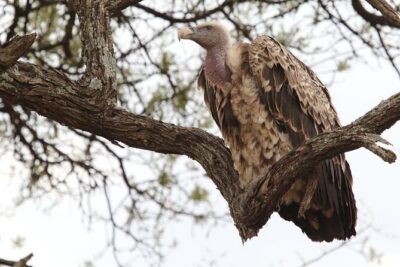
Ndutu Lake is where the safari year’s best drama often concentrates. This area is famous during the Great Migration season (typically November to April) and the calving season (commonly December to February). When timing lines up, you can get predator-prey action that feels constant, especially around areas where herds gather.
You are scheduled for an afternoon game drive around Lake Ndutu on Day 2 and a full day game drive there on Day 3. That structure matters, because wildlife in this region often changes by the hour. Two drives also increase your odds of seeing different animal behavior, like predators hunting, herds moving, and the constant attention game.
The details to pay attention to here:
- Lion sightings are common in this area during the action.
- The riverbank is described as home to one of the world’s densest populations of leopards.
Even if you do not see every leopard you hope for, the point is that the habitat and the season are built for high intensity. You will be scanning constantly, and your driver-guide will be doing the same. People often credit guides like Emmanuel Adson and Godbless for knowledge and for keeping the driving smart, not random, and that kind of guidance makes a real difference when animals are tucked into grass or partially hidden by distance.
A heads up on emotions: Ndutu can feel surprisingly fast. You may watch big cats move in and out of visibility, then suddenly the whole scene shifts. If you want slow travel, this is not that week. If you love seeing ecosystems at work, this is where the safari earns its reputation.
Camera tip that helps: use a lens you can handhold for long periods, then prioritize stable spotting over constant zooming. You will lose more moments trying to reframe than you will by sticking to one comfortable setup.
Serengeti National Park: wide plains, big cats, and migration-scale wildlife
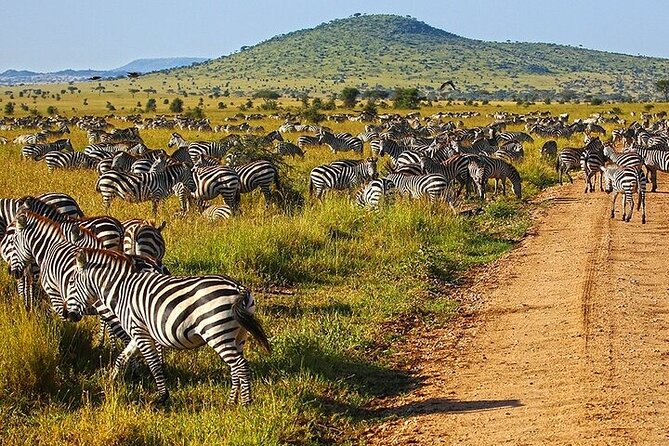
Serengeti National Park is the one everyone talks about, and the reason is scale. The park spans about 14,763 square kilometers, and it is huge enough that you get the classic “endless plains” feeling. This is also the main stage for the annual wildebeest migration, described here as millions of animals moving across open grazing.
The numbers given are intense: roughly six million wildebeest hooves pounding the plains, with other herds joining in, like more than 200,000 zebras and 300,000 Thomson’s gazelle. When the migration is active, it is not just a visual spectacle. It changes predator behavior, too, because food density rises and moves like a wave.
Your Day 4 time is scheduled for a full day game drive. The wildlife list you can expect to look for includes buffalo, elephant, giraffe, lion, hippo, and hyena. That mix is why Serengeti days often feel like you are getting multiple safaris in one, because different species show up better in different zones and different times of day.
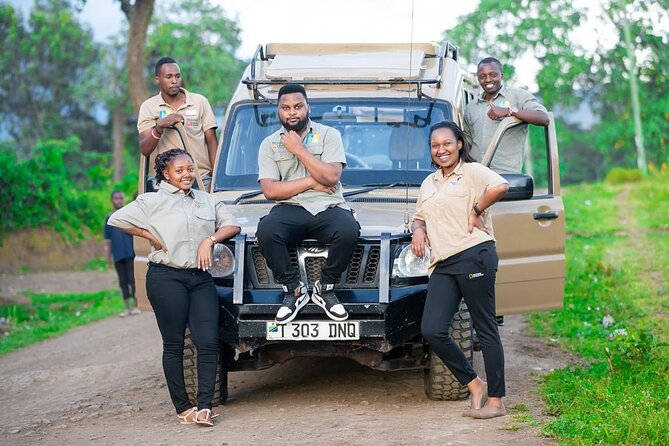
One practical note: with a place this large, the best sightings often come from your driver-guide’s route choices and timing. Past experiences credit guides like David Lasway and Peter Malley with knowing safari routes and animal habitats well. If you care about seeing more than just one moment, choose this tour format because it gives you real time inside Serengeti instead of a rushed drive-through.
Another reality check: Serengeti is not a guarantee machine. You are increasing odds by being there, but wildlife is still wildlife. Your best strategy is simple: take the moments that happen, then let your guide reposition for the next opportunity.
Ngorongoro Crater day: the Big Five bowl and the best lookout effect
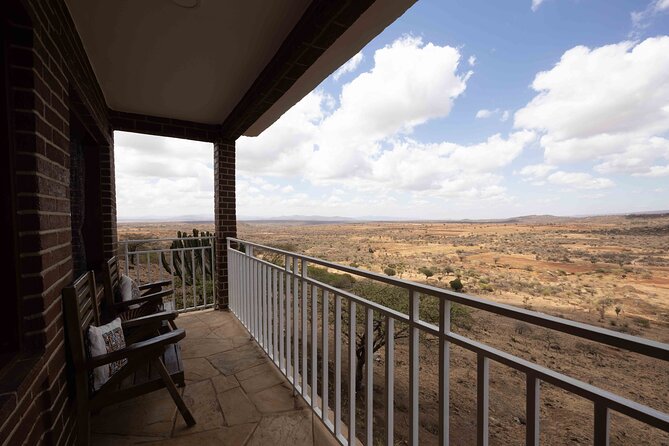
Ngorongoro Crater is the day that makes the week feel complete. The crater is described as the world’s largest intact volcanic caldera, and that shape matters. Because it is a bowl with natural rims, animals concentrate and move through a contained area, so you often get more “in one view” wildlife than you might in wider parks.
Your day is a full day game drive inside the crater. The tour specifically frames it as your best chance to see the Big Five. Even if you do not catch all five, you should expect a strong lineup, and the crater’s beauty adds another layer to the day. The details given include cloud hovering around the tip of the rim and a cool mountain breeze near the lookout, which is exactly the kind of atmospheric change you remember after the safari week ends.
A practical consideration: crater mornings can feel cooler and evenings can shift fast compared to what you expect from the plains. Bring a layer that you can keep easy access to, not something buried deep in your suitcase.
Why this day is valuable for first-timers: you are not only seeing animals, you are seeing how geology shapes animal behavior. The rim view alone helps you understand why wildlife patterns feel so different here than they do elsewhere in the circuit.
Overnight stays and full board: why meals matter on safari
This tour includes overnight stays in “unique accommodations close to the national parks,” and it uses a full board meal plan. You are covered with breakfast (5), lunch (5), and dinner (5), plus transport and the driver-guide, and park fees are included.
Why I like this setup for your planning: it removes the mental load of hunting for food after long drives. Safari days can make you hungry in waves, and it is easier if meals are already handled. It also lets you stay focused on being in the right place at the right time, because you are not trying to coordinate lunch stops on the fly.
The accommodations themselves are repeatedly praised in past experiences, including comments about lodges and tents being excellent and service being strong. People also mention the lodges and tent stays as a highlight, which tells me this is not a bargain-basement approach where you just sleep somewhere and move on.
One more small comfort detail from experience: multiple guide credits note care like keeping the jeep clean every night. That sounds minor until you have spent a day with dust and then you open the vehicle to a more comfortable space the next morning.
Price and value: what $2,864 buys in reality
At $2,864 per person, this is not a cheap safari. The value comes from what is bundled, not just the number on the page.
Included elements:
- Park fees
- Transport and driver-guide
- Overnight stays close to the parks
- Full board meals (breakfast, lunch, dinner across the days)
Not included:
- Tourism Development Levy of $1.50 pp/pn and village tax of $1.00 pp/pn paid at check-in
- Drinks, personal expenses, and tips (optional)
So where does the value land? If you were to plan these parks individually, you would likely spend a similar total once you add park entry, a vehicle and driver, and a multi-day accommodation schedule. The biggest quality-of-life win here is that the tour takes care of the structure, so you spend your time on game drives instead of on route juggling.
If you want the best “cost per animal hour,” focus on what is included here: enough park time in each area, plus guiding that is credited repeatedly for spotting and for pushing for better sightings. People also cite guides like Khalid Talib for not only finding wildlife but also sharing Maasai culture context. That kind of interpretation makes the time feel more meaningful, even when sightings are routine.
Who should book this classic game drive
This tour is a strong match if you want a full safari arc without cutting corners: Lake Manyara for variety, Ndutu for calving-season intensity, Serengeti for migration-scale wildlife, and Ngorongoro for the crater bowl effect.
It also fits solo travelers who want a private setup, couples on a honeymoon style trip, and photographers who want consistent daylight time for animal behavior. Past experiences include hobby photographers specifically valuing the time and the quality of sightings.
If you dislike long drives, this might feel intense. The schedule moves between regions, and even when you are driving, you are on safari time. The tour also calls for moderate physical fitness, so you are not signing up for hiking, but you should be ready for long sits, getting in and out of the vehicle, and time outdoors.
Should you book this 6-day classic game drive from Arusha?
Yes, I think you should book it if your priorities are clear: you want the major northern circuit highlights in a single week, and you want the logistics handled with full board and park fees taken care of. This itinerary gives you multiple bites at the apple in Ndutu, solid time in Serengeti, and the crater day that people often remember most.
I would pause if you are on a tight budget or if you know you get cranky with long days in a vehicle. In that case, look at shorter circuits or travel dates that reduce transfer pressure, because your comfort level matters as much as your wildlife odds.
FAQ
What time does the safari start?
The start time is listed as 8:00 am.
Is pickup included?
Yes, pickup is offered from your place of stay or from the airport in Arusha.
Which parks and areas are included?
You visit Lake Manyara National Park, the Ngorongoro Conservation Area (on the way), Lake Ndutu area for game drives, Serengeti National Park, and the Ngorongoro Crater.
Are park fees included in the price?
Yes, the tour includes park fees. You also pay a Tourism Development Levy of $1.50 pp/pn and a village tax of $1.00 pp/pn at check-in.
What meals are included?
The tour includes breakfast (5), lunch (5), and dinner (5) under a full board meal plan.
Is this a private tour?
Yes. It is described as private, so only your group participates.
What are the cancellation rules?
Free cancellation is offered if you cancel up to 24 hours in advance of the experience’s start time for a full refund.
More Time in the Vehicle
- Tanzania Simba Safari – 5 Days
★ 5.0 · 217 reviews - Living Among Lions
★ 5.0 · 191 reviews - Big Five Luxury Safari in Tanzania
★ 5.0 · 68 reviews - 4-Day Simba Safari – Mid Range Tour
★ 5.0 · 47 reviews - 5 Days 4 Nights Tarangire, Serengeti , Ngorongoro & Manyara Wildlife Safari
★ 5.0 · 40 reviews
Still Thinking About the Crater?
- 3 Days Serengeti & Ngorongoro Group Camping Safari
★ 5.0 · 574 reviews - 5 Days Camping Tarangire, Serengeti & Ngorongoro crater & Visiting Maasai
★ 5.0 · 229 reviews - 4 Days Join Group tour Tarangire Serengeti and Ngorongoro crater
★ 5.0 · 219 reviews - 4-Day Safari from Arusha: Tarangire, Serengeti and Ngorongoro
★ 5.0 · 173 reviews - 2 Days Tarangire and Ngorongoro Group Camping Safari
★ 5.0 · 146 reviews
The Serengeti, Three More Ways
- Balloon Safari & Bush Breakfast in Serengeti – Miracle Experience
★ 5.0 · 1,646 reviews - 3 Days Serengeti & Ngorongoro Group Camping Safari
★ 5.0 · 574 reviews - 5-Day Highlights mid-Range Crater, Serengeti, Tarangire
★ 5.0 · 296 reviews - 3-Day Classic Serengeti Safari
★ 5.0 · 263 reviews - Private 6-Day Tarangire Manyara Crater and Serengeti with Mid-Range Lodges
★ 5.0 · 238 reviews
Just added from around Arusha
Serengeti National Park Safaris, compared.
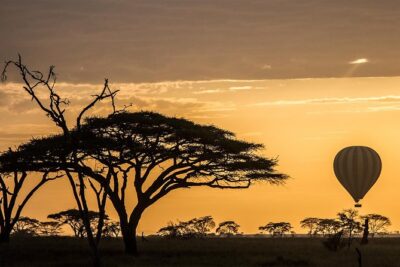 ★ 5.0Serengeti Balloon Safari and authentic bush breakfastFrom $5502,480 reviews
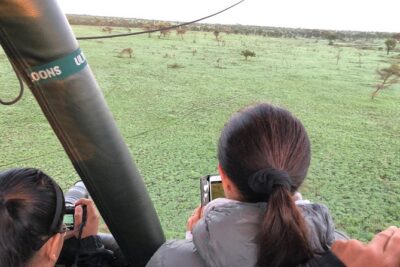 ★ 5.0Balloon Safari & Bush Breakfast in Serengeti – Miracle ExperienceFrom $5991,646 reviews
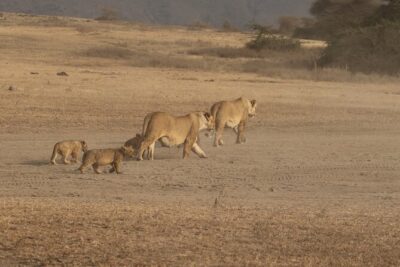 ★ 5.03 Days Serengeti & Ngorongoro Group Camping SafariFrom $815574 reviews
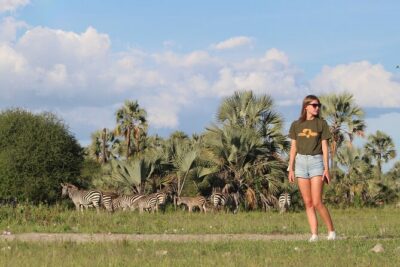 ★ 5.05-Day Highlights mid-Range Crater, Serengeti, TarangireFrom $2,327296 reviews
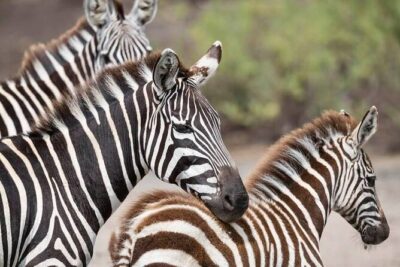 ★ 5.0Safari Serengeti And NgorongoroFrom $2,845288 reviews
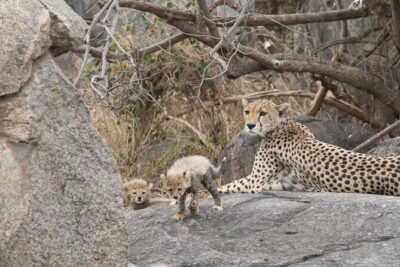 ★ 5.03-Day Classic Serengeti SafariFrom $1,455263 reviews
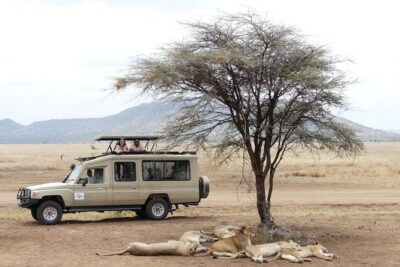 ★ 5.0Private 6-Day Tarangire Manyara Crater and Serengeti with Mid-Range LodgesFrom $2,685238 reviews
 ★ 5.05 Days Camping Tarangire, Serengeti & Ngorongoro crater & Visiting MaasaiFrom $1,254229 reviews
Browse the lists this tour appears in