
REVIEW · NGORONGORO CRATER SAFARIS
3 Days Tanzania Safari Tarangire, Manyara, & Ngorongoro Crater.
Three days, three parks, one wild goal: Big Five. This small-group safari is built for people who want the best shot at animals without juggling logistics, with transport, meals, and camps handled end to end. You drive out from Arusha and then hit Lake Manyara, Ngorongoro Crater, and Tarangire on a tight schedule, with game viewing from an open roof vehicle on parts of the trip.
I love that your day rhythm is simple: you eat well and you sleep on-site at the camps, not in a random hotel shuffle. Some groups also noted how smoothly meals were handled, including praise for chef Ben for the food, and that kind of support matters when every day is a long one in the truck.
The main thing to consider is the pace. This is a safari where you spend many hours scanning plains and acacia trees from a vehicle, and one practical drawback is that the long game-drive focus can feel tiring after day one. If you get restless easily, plan for patience and plenty of early mornings.
In This Review
- Key highlights at a glance
- A 3-day northern circuit that actually stays manageable
- Price and value: what $670 per person is really buying
- Day 1 at Lake Manyara: flamingos, monkeys, and acacia country
- Day 2 inside Ngorongoro Crater: the Big Five in a dramatic bowl
- Day 3 Tarangire National Park: baobabs and river elephants
- Comfort and timing: what your days feel like in real life
- Guides that can spot trouble and keep the day flowing
- Who this safari suits best, and who should think twice
- Should you book this 3-day Tanzania safari?
- FAQ
- Where does this safari operate from?
- How long is the safari?
- Which parks and sites are included?
- How big is the group?
- What is the price per person?
- Are meals and accommodation included?
- Is pickup included?
- Are park admission tickets included?
- Will I receive a ticket on my phone?
- What is the cancellation refund window?
- What if weather is poor or there are too few travelers?
Key highlights at a glance
- Small group size (max 7) keeps it more personal than the giant convoy style
- Open-roof game viewing helps you actually see the landscape while you search for animals
- Ngorongoro picnic lunch inside the crater gives you a proper mid-drive break
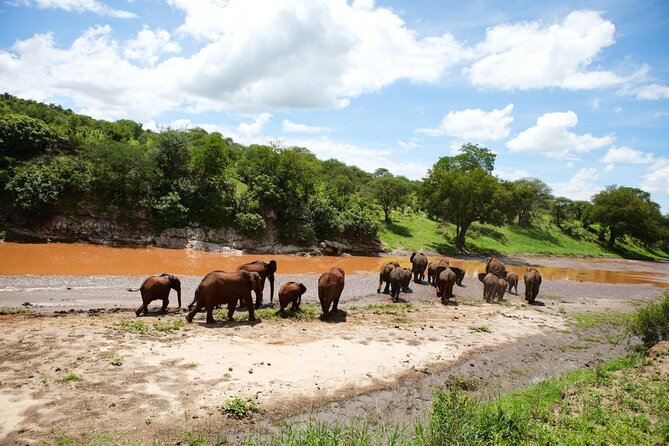
- Tarangire River elephants draw the largest elephant herds in northern Tanzania
- Camps with tents and cots, plus meals included, simplify your evenings
- Big Five potential with lion, elephant, buffalo, rhino, and leopard in Ngorongoro
Other ways down into the Ngorongoro Crater
- 3 Days Serengeti & Ngorongoro Group Camping Safari★ 5.0 · 574 reviews
- 5 Days Camping Tarangire, Serengeti & Ngorongoro crater & Visiting Maasai★ 5.0 · 229 reviews
- 4 Days Join Group tour Tarangire Serengeti and Ngorongoro crater★ 5.0 · 219 reviews
- 4-Day Safari from Arusha: Tarangire, Serengeti and Ngorongoro★ 5.0 · 173 reviews
A 3-day northern circuit that actually stays manageable
If you only have three days in Tanzania, this route makes sense. The northern circuit is compact, and this itinerary hits three different ecosystems fast, which is a huge advantage when you are short on time. You are not just driving from one place to the next for the sake of ticking boxes. You are moving from the lake habitat of Lake Manyara, to the dramatic bowl of Ngorongoro Crater, and then to Tarangire’s river and baobab country.
The small-group setup is part of why it feels doable. With a maximum of 7 travelers, you are less likely to feel like you are watching from the edge of a crowd. It also tends to make the driving plan easier for your guide when animals pop up far off in the distance and you need everyone to be ready at the same moment.
One more practical win: the tour keeps the important stuff inside the package. You get transport throughout, plus meals and accommodation in camps. That means you spend your mental energy on the safari, not on finding food, negotiating transport, and figuring out where you sleep after a day of driving.
Price and value: what $670 per person is really buying
At $670 per person for about three days, the biggest value is not the number itself. It is what the price bundles: vehicle transport for the full route, meals, and camp accommodation, plus the core park-time experience.
A lot of “cheap” safari deals on the market look lower until you add up the extras. Here, you avoid some of that stress because meals are included and your overnight stays are handled at the camps. That matters in real life. When you return after a long drive, you want dinner already sorted and a bed already waiting.
Also, the parks on this route are not the tiny backroads kind of stops. You are covering Lake Manyara National Park, Ngorongoro Conservation Area, and Tarangire National Park, which are all major Tanzania safari destinations. If you are trying to maximize animal sightings with limited time, paying for a packaged plan can be a smart trade. You are trading some flexibility for less friction.
One small planning note: this safari is often booked about 108 days in advance on average. That suggests availability can tighten up for popular dates, especially in the busy season. If your dates are firm, booking sooner is usually the calmer move.
Day 1 at Lake Manyara: flamingos, monkeys, and acacia country
Lake Manyara is smaller than some of the famous parks, but it packs variety. Your day starts with a briefing, then you travel to the park for a full game drive. One of the standout seasonal attractions here is the lake itself. The shallow, alkaline Lake Manyara covers a large area, and in season it becomes a major feeding and nesting area for thousands of flamingos. Even when you are focused on mammals, the color of the birds on the water can be a real reset for the eyes.
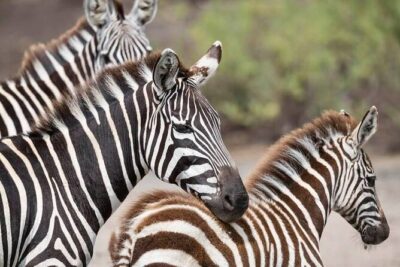
The park also has a mix of habitats that supports different animal styles. In forest areas, you may see troops of monkeys, and out on the grassy plains there is room for giraffes, buffalo, zebra, and wildebeeste. In acacia woodlands, elephants and lions are possible. What I like about this kind of park is that it does not force you into one specific game-drive pattern. You can go from lake-edge bird watching to woodland scanning to open-plains tracking in the same day.
A practical detail you should care about: parts of this experience use an open roof vehicle. That makes a difference for how the day feels. You are not boxed in by glass the whole time, and you can better read the terrain around you when animals step into view.
The drawback of Lake Manyara, in a realistic safari sense, is that it can be a “big sights plus mixed luck” day. The chance for many species is there, but your exact sightings depend on timing and where animals are moving. Still, it is a great first day because it sets the tone with birds, scenic habitat, and the feeling that you are entering Tanzania’s safari rhythm right away.
Tarangire again, with different operators
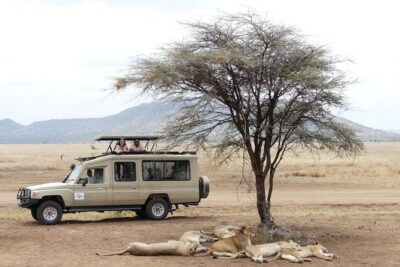
Day 2 inside Ngorongoro Crater: the Big Five in a dramatic bowl
Ngorongoro Crater is the kind of place that makes you stop planning and start looking. This is not a typical flat savanna game drive. You drive into the Ngorongoro Conservation Area and then descend into the crater, which is about 600 meters deep and roughly 20 kilometers wide. That bowl shape can concentrate animals and also makes the whole drive feel like you are watching wildlife in a natural amphitheater.
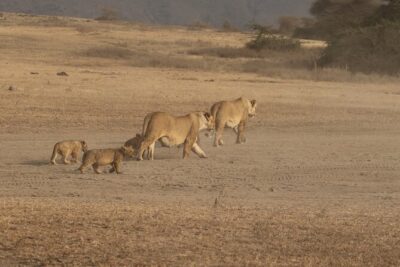
Your day begins early, then you drop down for a game drive with a strong shot at the classic names. The crater is famous for Big Five possibilities, including lion, elephant, buffalo, rhino, and leopard. Even if you do not get all five, Ngorongoro is still one of the best places in Tanzania to see a wide range of mammals in one day, and you may also spot spotted hyenas, rare wild dogs, and a long list of birds.
The big advantage here is variety in a limited time window. In a single descent you get a strong chance of multiple species groups, from larger herbivores to predators. That is exactly what you want when you only have a short safari.
One detail that stands out for comfort is the break for lunch. You stop for a picnic lunch inside the crater, then continue game viewing afterward. That mid-day pause helps you reset before you head back out. It also means you are not losing half your day to travel or waiting around for food.
The main consideration is that mornings and crater roads demand patience. You are moving between viewpoints and terrain types, and your guide will be watching animals while also managing the logistics of a place that is physically demanding to drive in. If you go in with the mindset that this is a long looking day, you will enjoy it more.
Day 3 Tarangire National Park: baobabs and river elephants
Tarangire feels different from the lake and crater days. You head to Tarangire National Park on the northern circuit after breakfast. This park is known for its endless grasslands, huge baobab trees, and the Tarangire River, which flows year-round. There are also seasonal swamps, which can shift where animals gather.
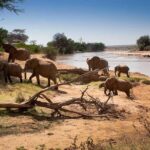
The headline attraction is the elephant concentration. Tarangire is home to the largest elephant herds in northern Tanzania, and animals gather at the river. When the watering holes are active, elephants can show up repeatedly as the day progresses. That gives you a more consistent chance for sightings, especially compared to a park where animals are more spread out.
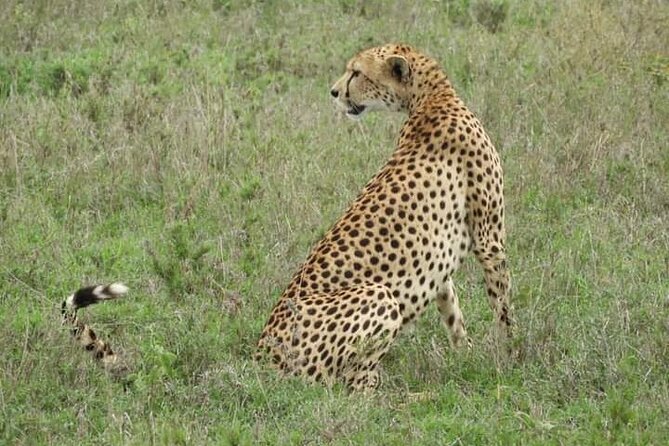
Beyond elephants, you might see a mix of grazers and browsers like giraffes, bushbucks, hartebeests, dik-diks, waterbucks, warthogs, and reedbucks. Buffalo, zebra, and wildebeeste can also be part of the sightings, and predators like lions may be hunting nearby. Leopards show up only occasionally, and cheetahs are rarely spotted, so you should treat big cat success as possible but not guaranteed on this three-day window.
The big practical win on the last day is that your drive rhythm matches what Tarangire is good at. The park’s open country and river draw patterns help your guide plan routes that give you repeated shots at wildlife. When the day is done, you leave the park in the afternoon and return to Arusha by early evening, which means you are not arriving back at your base late at night.
Comfort and timing: what your days feel like in real life
Safari days are long by nature, and this one is no exception. Each day is structured around game viewing, which means you are on the move in the vehicle for hours at a time. On day one at Lake Manyara and day three at Tarangire, you also have the extra factor of learning how the habitat shapes animal sightings, forest edges for monkeys, open plains for grazing species, and woodland pockets for different mammals.
The good news is that this tour is built to reduce fatigue outside the game drive. Meals are handled for you, and camp accommodation is provided each night. Some groups described the camp setup as comfortable, with tents that have cots and a relaxing dining area. That kind of setup matters because it gives you a real place to unwind instead of trying to scramble for food or comfort after a full day outdoors.
I also like that communication is part of how the trip is run. Several groups highlighted good communication before and after the safari. That helps you plan your arrival and get clarity on what to expect, which can reduce stress when you are in a new country and heading straight into wild country.
Guides that can spot trouble and keep the day flowing
On safari, the difference between a good day and a great day is often your guide’s ability to find animals and keep your group organized. In the feedback tied to this operator, names like Norelle, Malaki, Isaac, and Innocent appear often as drivers, and they are credited with being able to spot predators and keep the search moving when animals are hiding.
The other key skill is pacing. A guide who knows when to slow down, where to check a thicket, and how to read animal movement patterns helps you spend your time looking instead of just driving. If you get one of these praised guides, you can reasonably expect a focus on scanning for predators and keeping sightlines open for the group.
Also, the chef support matters more than people think. When meals are handled well, you stay energized for the next drive. Some feedback specifically praised chef Ben for food, which tells me the camp side is taken seriously, not treated like an afterthought.
Who this safari suits best, and who should think twice
This tour fits best if you want a smooth, low-hassle plan and you are short on time. If you have three days and you want a real chance at iconic sightings across three different parks, this itinerary is a practical match. The max 7 travelers factor also makes it a good choice if you like a small group vibe and want it to feel personal.
You should think twice if you hate early mornings or if long stretches of game driving wear you down. Safari spotting takes time. Even with great guiding, you might spend hours waiting for the right moment when animals step into view.
It is also worth noting the tour is described as budgeted compared to some operators. That does not mean it is uncomfortable or chaotic, but it is a hint that you should not expect the kind of high-touch extras that cost extra elsewhere. If your priority is the wildlife experience and you are happy with solid basics, that is usually the right mindset.
Should you book this 3-day Tanzania safari?
Yes, if your goal is to see a lot of Tanzania in a short time, and you want a plan where the important pieces like transport, meals, and camp stays are already managed. This is a strong choice for first-timers too, because it concentrates on top parks without forcing you to stitch together multiple vendors.
Book it especially if you like the idea of a small group and you are comfortable with long game drives. The route is built around variety, flamingos and woodlands on day one, crater big-cat country on day two, and river-elephant energy on day three.
Skip it if you need a super flexible schedule or you cannot handle early starts and long hours scanning for animals. In safari life, patience is part of the price.
FAQ
Where does this safari operate from?
This experience is based in Arusha, Tanzania, with pickups offered.
How long is the safari?
It runs for 3 days (approx.).
Which parks and sites are included?
You will visit Lake Manyara National Park, Ngorongoro Crater (Ngorongoro Conservation Area), and Tarangire National Park.
How big is the group?
The tour has a maximum of 7 travelers.
What is the price per person?
The price is $670.00 per person.
Are meals and accommodation included?
Yes. Meals are taken care of, and accommodation in camps is provided.
Is pickup included?
Pickup is offered.
Are park admission tickets included?
Lake Manyara and Tarangire National Park admission tickets are listed as free, while Ngorongoro Crater admission is listed as included.
Will I receive a ticket on my phone?
Yes, mobile ticketing is listed as a feature.
What is the cancellation refund window?
You can cancel up to 3 days in advance of the experience start time for a full refund.
What if weather is poor or there are too few travelers?
If the experience is canceled due to poor weather, you will be offered a different date or a full refund. If it’s canceled because the minimum number of travelers is not met, you will also be offered a different date or a full refund.
Down at Lake Manyara
- Private 6-Day Tarangire Manyara Crater and Serengeti with Mid-Range Lodges
★ 5.0 · 238 reviews - 3 Days Tarangire, Ngorongoro & Lake Manyara Group Camping Safari
★ 5.0 · 102 reviews - 3 Days Private Safari – manyara, Ngorongoro & Tarangire
★ 5.0 · 94 reviews - 05 Days Tarangire, Serengeti, Ngorongoro and Lake Manyara
★ 5.0 · 54 reviews - 5 Days 4 Nights Tarangire, Serengeti , Ngorongoro & Manyara Wildlife Safari
★ 5.0 · 40 reviews
Tarangire and Its Baobabs
- 5-Day Highlights mid-Range Crater, Serengeti, Tarangire
★ 5.0 · 296 reviews - Private 6-Day Tarangire Manyara Crater and Serengeti with Mid-Range Lodges
★ 5.0 · 238 reviews - 5 Days Camping Tarangire, Serengeti & Ngorongoro crater & Visiting Maasai
★ 5.0 · 229 reviews - 4 Days Join Group tour Tarangire Serengeti and Ngorongoro crater
★ 5.0 · 219 reviews - 4-Day Safari from Arusha: Tarangire, Serengeti and Ngorongoro
★ 5.0 · 173 reviews
Still Thinking About the Crater?
- 3 Days Serengeti & Ngorongoro Group Camping Safari
★ 5.0 · 574 reviews - 5 Days Camping Tarangire, Serengeti & Ngorongoro crater & Visiting Maasai
★ 5.0 · 229 reviews - 4 Days Join Group tour Tarangire Serengeti and Ngorongoro crater
★ 5.0 · 219 reviews - 4-Day Safari from Arusha: Tarangire, Serengeti and Ngorongoro
★ 5.0 · 173 reviews - 2 Days Tarangire and Ngorongoro Group Camping Safari
★ 5.0 · 146 reviews
Just added from around Arusha

Ngorongoro Crater Safaris, compared.
 ★ 5.03 Days Serengeti & Ngorongoro Group Camping SafariFrom $815574 reviews
 ★ 5.0Safari Serengeti And NgorongoroFrom $2,845288 reviews
 ★ 5.05 Days Camping Tarangire, Serengeti & Ngorongoro crater & Visiting MaasaiFrom $1,254229 reviews
 ★ 5.04 Days Join Group tour Tarangire Serengeti and Ngorongoro craterFrom $1,090219 reviews
 ★ 5.04-Day Safari from Arusha: Tarangire, Serengeti and NgorongoroFrom $1,753173 reviews
 ★ 5.02 Days Tarangire and Ngorongoro Group Camping SafariFrom $550146 reviews
 ★ 5.04 Days Tarangire Serengeti Ngorongoro CraterFrom $900117 reviews
 ★ 5.03 Days Tarangire, Ngorongoro & Lake Manyara Group Camping SafariFrom $700102 reviews