
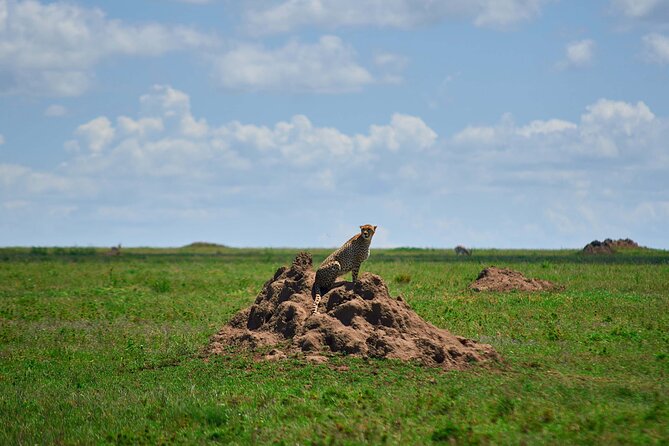
REVIEW · NGORONGORO CRATER SAFARIS
3-Day Manyara, Tarangire and Ngorongoro Crater
Lake Manyara to Ngorongoro is a wild combo. In three days you get big-view wildlife moments, from climbing-lion country to a crater that funnels animals into a tight stage. It’s the kind of safari route that feels efficient without feeling rushed, and you still have time for real sightings.
What I like most is the mix of habitats, because it keeps the wildlife surprises coming. I also really appreciate the “you’re taken care of” feel, with a professional driver-guide and meals planned across the days.
One thing to consider is that this is an early-start, long-drive style safari. If you hate waking up before sunrise or you want lots of downtime, the schedule might feel a bit intense.
In This Review
- Key things that make this safari work
- Manyara, Tarangire, and Ngorongoro in three days
- Lake Manyara and Mto wa Mbu: climbing lions and a picnic in the park
- Ngorongoro Crater: a six-hundred-plus-meter bowl for herds and predators
- Tarangire National Park: elephants, baobabs, and seasonal movement
- Price and logistics, what you’re really paying for
- The real rhythm of your day: early starts, big windows, and scanning
- What to expect from the guide and group setup
- How I’d plan your expectations for sightings
- Who should book this 3-day circuit, and who should adjust
- Should you book Joagro Safaris for Manyara, Tarangire, and Ngorongoro?
- FAQ
- Where does the tour start?
- What time does the safari begin?
- How long is the tour?
- Is this a private tour?
- Which parks are included?
- What meals are included?
- Is drinking water provided?
- Are park fees and taxes included?
- What ticket type is used?
- Is free cancellation available?
Key things that make this safari work
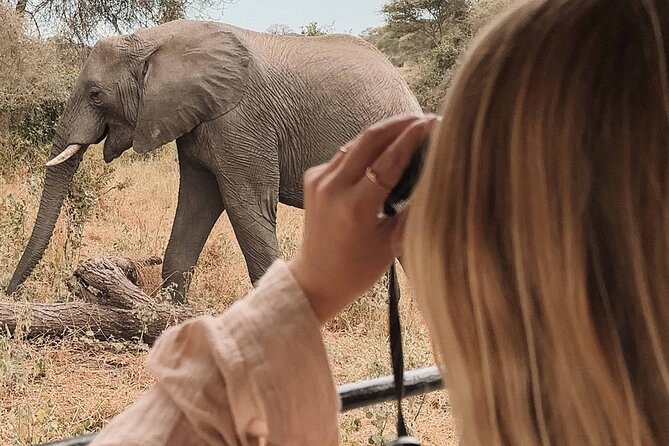
- Lake Manyara’s special vibe, including a focus on trees and the famous climbing lions
- Ngorongoro’s deep-crater animal density, with both grazing herds and real predator chances
- Tarangire’s elephants and baobabs, plus the way the area supports seasonal movement
- A guide who handles the details, including communication in English, Spanish, and French
- Food and essentials are baked in, including water and scheduled lunches and dinners
Other ways down into the Ngorongoro Crater
- 3 Days Serengeti & Ngorongoro Group Camping Safari★ 5.0 · 574 reviews
- 5 Days Camping Tarangire, Serengeti & Ngorongoro crater & Visiting Maasai★ 5.0 · 229 reviews
- 4 Days Join Group tour Tarangire Serengeti and Ngorongoro crater★ 5.0 · 219 reviews
- 4-Day Safari from Arusha: Tarangire, Serengeti and Ngorongoro★ 5.0 · 173 reviews
Manyara, Tarangire, and Ngorongoro in three days
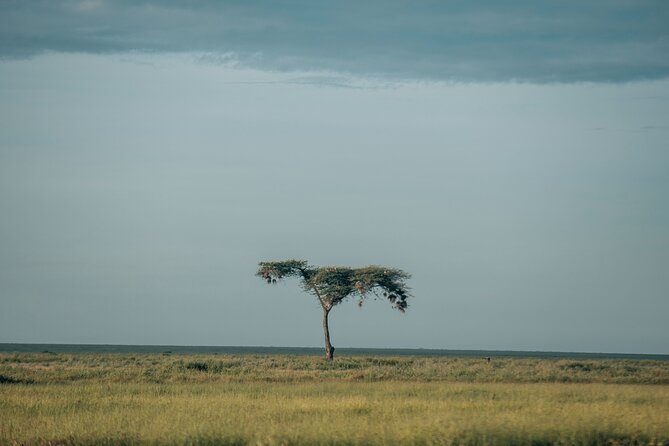
This safari is built around one big idea: northern Tanzania is all about wildlife driven by geography. Lake Manyara brings a lakeside ecosystem and lots of birdlife. Tarangire adds elephants and the dramatic baobab trees. Then Ngorongoro Crater puts you in a natural bowl where animals concentrate and you can spend time scanning rather than just traveling.
The timing also matters. You start with Lake Manyara in the morning, then move toward the crater and finish with Tarangire, which helps you balance travel pressure. Each day is structured around game driving, lunch, and a return to your base area so you are not constantly figuring out what comes next.
Because this is a private tour, the pacing is easier to manage for your group. Your guide can shift attention to what you’re seeing in front of you, instead of being stuck with a rigid “everyone look here” rhythm.
Lake Manyara and Mto wa Mbu: climbing lions and a picnic in the park
Your day starts with pickup from Shoppers Supermarket in Arusha around 8:00 am. After a short briefing, you head toward Lake Manyara, and you pass through Mto wa Mbu, known for its shops and souvenirs right outside the park area. Even if you don’t shop much, it gives you a sense of the local “arrival” feeling before the scenery turns wilder.
Once you reach Lake Manyara National Park, the vibe changes quickly. The park is well known for trees and the famous possibility of lions that climb. That doesn’t mean you can guarantee it, but it is a strong reason to stay sharp and watch from the vehicle, not just the obvious open grass.
You’ll enjoy a planned lunch at a picnic site inside the park, which is one of those small logistics wins. It saves time and keeps you closer to the action rather than leaving the park in search of food. After lunch, you keep driving for more game viewing hours.
The lake itself affects wildlife distribution, and that’s why you see animals and birds drawn to the available water and edges. This is a day where your best moments often come from watching behavior. Look for birds moving between trees and shoreline areas, then scan for mammals using the greener pockets near the water.
Possible drawback: because Lake Manyara’s highlights can be a bit more “pattern and behavior” than “everyone sees one big thing,” you’ll want patience during your scanning time. It’s still a great first day, but you get the most satisfaction if you’re mentally ready for slow, careful searching.
Ngorongoro Crater: a six-hundred-plus-meter bowl for herds and predators
Day two is all about Ngorongoro Crater, a place that changes how wildlife feels. The crater is over six hundred meters deep, and that depth matters. It creates a natural funnel for animals, which often means you can see multiple species in a smaller area than you’d get in flatter terrain.
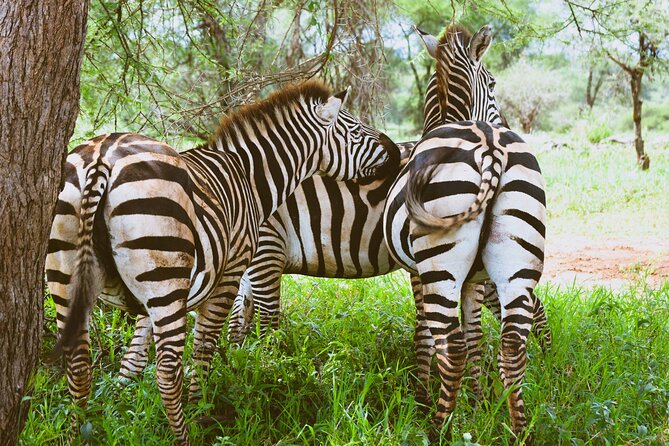
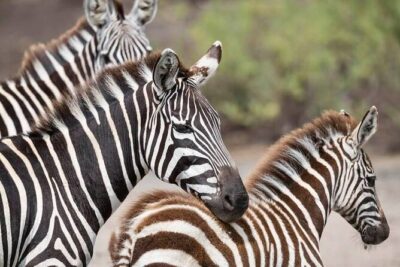
After an early breakfast, you drive in toward the crater and focus on game driving with a dense mix of grazing and browsing animals. You can expect the possibility of herds like wildebeest and zebra, plus buffalo and eland. There’s also a chance of seeing hippo, and the crater is part of the broader ecosystem where African elephants can appear.
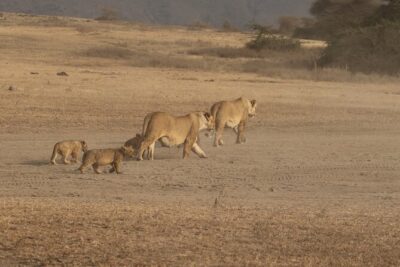
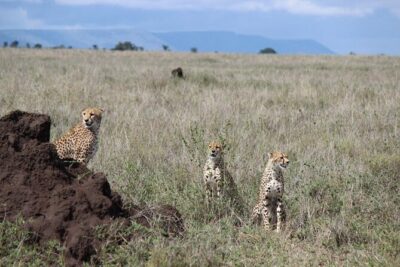
Then come the animals that turn your eyes into constant scanning machines. Predator presence is a big draw here, including lions, hyenas, jackals, cheetahs, and the more elusive leopard. Leopard sightings are never guaranteed, but Ngorongoro is one of those places where the odds can feel higher simply because so many prey animals share the same limited space.
A fascinating detail in the Ngorongoro region is Lake Magadi, a shallow alkaline lake in the southwestern corner. It doesn’t just add scenery, it also gives the crater another ingredient for animal movement and concentration. If you’re the type of person who likes understanding why animals are where they are, this is the day where the “why” shows up in front of you.
The crater day can also feel mentally intense because you’re usually searching for movement. That’s why it helps that your guide is there to read the terrain and clue you in to what matters in the moment.
Possible consideration: the crater experience depends on conditions and timing. You’ll be doing structured driving, so if you want lots of optional breaks or you hate early mornings, you’ll want to plan your energy accordingly.
Tarangire again, with different operators
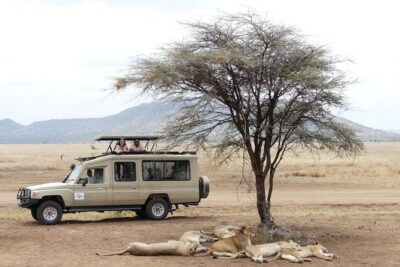
Tarangire National Park: elephants, baobabs, and seasonal movement
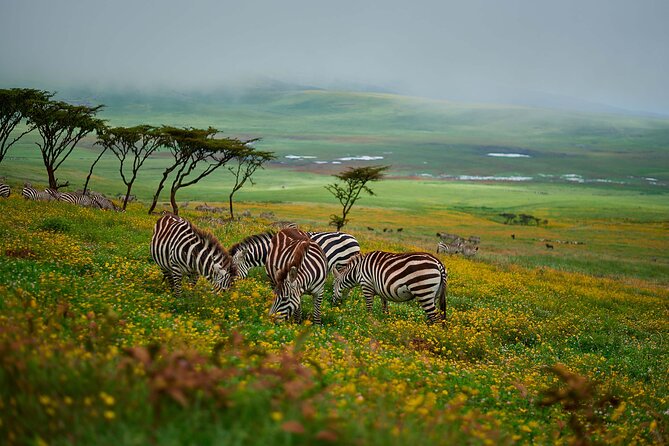
On day three, you head to Tarangire National Park after breakfast. Tarangire has a different “signature look” than Manyara and Ngorongoro. The headline features are big elephant numbers and the iconic baobab trees that feel like they’ve been planted by a nature artist.
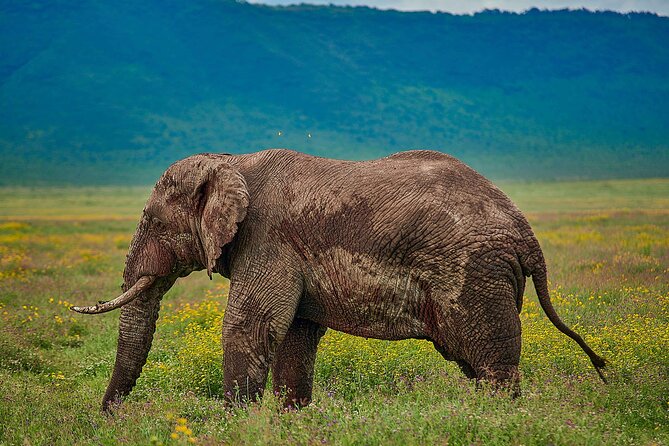
You can also think of Tarangire as a place with seasonal rhythms. The area supports migration cycles that can include up to 3000 elephants, 25,000 wildebeest, and 30,000 zebras. Those are large numbers, and they’re a reminder that Tarangire is not just about one day of sightings. It’s about a bigger wildlife movement pattern that the landscape supports.
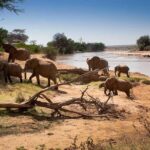
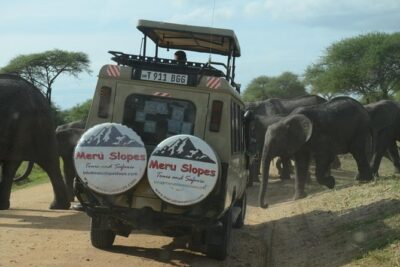
The elephants and baobabs pair well for photography and for wildlife “reading,” too. Baobabs create natural focal points, and elephants often use open areas for visibility and movement. When you combine that with the water and seasonal factors of northern Tanzania, you’re more likely to get repeated elephant sightings rather than just a single brief glimpse.
You’ll also do a quick check in Arusha Town before the safari departure, which makes sense if you need any last-minute items. It’s a nice practical touch, especially if your trip includes mornings that start right on time.
Possible drawback: Tarangire can be a “look and wait” park depending on where animals are concentrating that day. If you’re expecting constant action every minute, temper that expectation. The tradeoff is that when animals do show up, they often show up in meaningful groups, especially elephants.
Price and logistics, what you’re really paying for
At $1,280 per person for a 3-day safari, you’re paying for more than vehicle time. You’re paying for a guided route that links three top destinations with minimal hassle. The value gets clearer when you look at what’s included:
- Accommodation
- Meals, including three lunches and two dinners
- Drinking water (1.5 liters per person per day)
- All fees and taxes
- A professional driver-guide who speaks English, Spanish, and French
- Pickup offered from Shoppers Supermarket, and it ends back there
- Mobile ticket
That package matters because safari costs can quietly balloon when you start adding entrance fees, meal stops, guides, and transfers. Here, they are built into the plan, so you’re less likely to arrive and then start negotiating separate costs.
The other part of the value is human. Joagro Safaris Tanzania is associated with guides and drivers like Peter, and names like Anwar and Jonas come up in the way the trip is described as smooth and responsive. One of the most useful signals for you is that the operator can handle real-life disruptions. In one case, adjustments were made after an unexpected plane delay, turning what could have been chaos into a calmer experience.
Possible drawback on value: tips are not included. That’s common on safari, but it’s still your responsibility to factor it into your budget. Also, because you’re traveling as a private group, your per-person cost can be higher if you are solo compared with shared group deals.
The real rhythm of your day: early starts, big windows, and scanning
Across the three days, the pattern is pretty consistent: breakfast, then game driving blocks that usually run about five hours each day. That tells you how you’ll spend your time. You won’t be bouncing from site to site every hour. Instead, you’re getting repeated opportunities to watch wildlife and adjust your “what are we looking at” focus.
Lake Manyara tends to reward birds, trees, and behavior, and it’s the kind of place where you may watch something small and then suddenly notice a lion in an unexpected position. Ngorongoro tends to reward scanning because animals can be everywhere at once. Tarangire tends to reward patient watching because elephants, especially, might move with a calm, steady timing.
Your guide’s role is also bigger than just “drive and point.” When you see multiple species in a short time window, the guide’s ability to interpret what you’re seeing helps you spend less energy guessing and more energy enjoying the moment.
One practical plus is drinking water provided daily. On safari, dehydration is the silent annoyance that ruins mood fast. Having water planned lets you focus on the drive and the sights, not your next bottle hunt.
What to expect from the guide and group setup
This is a private tour/activity, so only your group participates. That means you’re not constantly negotiating around strangers, and it also makes it easier for the guide to match timing to your group’s energy level.
Communication is another included benefit. The guide is described as speaking English, Spanish, and French, which matters if you want more than basic “look there” explanations. You’ll likely get better context for what you’re seeing, especially on Ngorongoro where the terrain and animal behavior are the story.
Also, the tour is described as having a pickup option. Your start point is Shoppers Supermarket in Arusha, and you return to the same meeting point at the end. That’s helpful because it reduces “where do we go now?” stress.
How I’d plan your expectations for sightings
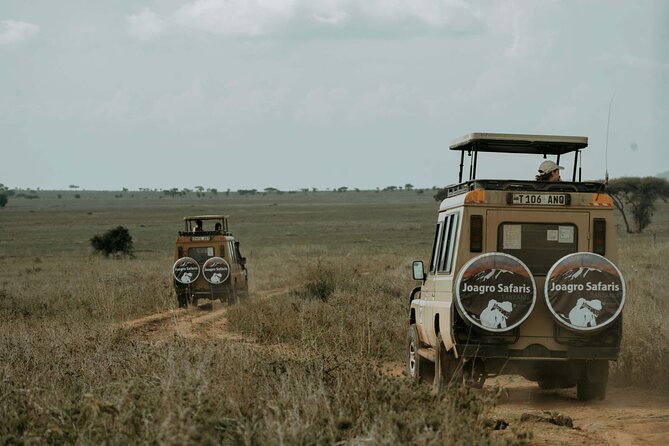
Let’s keep it real. Safari wildlife is never a vending machine. Even in top parks, animals can be somewhere else. But this route is built to raise your odds because it links three systems that feed wildlife in different ways.
In Manyara, the draw is the combination of trees and lake-driven animal movement, which also supports lots of birds. In Ngorongoro, the draw is animal concentration in a bowl and the chance at predators like lions and hyenas, plus the possibility of leopard. In Tarangire, the draw is elephants and baobabs, with the area supporting larger seasonal movements.
So instead of one “maybe” moment, you’re stacking multiple chances across three different ecosystems. That’s a big reason the safari tends to feel like it delivers value even when the weather or timing shifts slightly.
Who should book this 3-day circuit, and who should adjust
This safari is a great fit if you want:
- Three parks in three days without long, complicated travel juggling
- A route that balances iconic stops with practical, scheduled meals
- A guided experience where someone handles the details from Arusha pickup to park access
It’s also a good match if you like wildlife that you can observe from your vehicle, because the plan is built around game driving blocks.
You might think twice if you:
- Need lots of downtime and hate early mornings
- Want lots of flexible, unscheduled stops
- Are traveling on a tight budget where a private safari setup feels hard to justify
If you are flexible on pace and happy to spend time scanning, you’ll get more out of this than you expect.
Should you book Joagro Safaris for Manyara, Tarangire, and Ngorongoro?
If you’re aiming for a high-impact northern Tanzania trip in a short window, I think this is a solid book. The route makes sense, the included basics are meaningful (meals, water, fees, accommodation), and the operator is linked with guides and drivers like Peter, Anwar, and Jonas who show up in descriptions as responsive and calm when plans shift.
Just go into it with safari realism: wildlife sightings vary, and the crater plus driving time means mornings start early and attention stays focused. If that sounds like your kind of trip, this is a strong choice.
If your budget is tight or you need a slower rhythm, you might compare it with longer safaris or smaller, shared group options. But for a first northern Tanzania safari that covers the big names, this three-day circuit hits a sweet spot.
FAQ
Where does the tour start?
The tour starts at Shoppers Supermarket in Arusha, Tanzania. You’ll also return there at the end.
What time does the safari begin?
The start time is 8:00 am.
How long is the tour?
It’s listed as 3 days (approx.).
Is this a private tour?
Yes. It’s described as private, so only your group participates.
Which parks are included?
You’ll visit Lake Manyara National Park, Ngorongoro Crater (Ngorongoro Conservation Area), and Tarangire National Park.
What meals are included?
Lunch is included for three days, and dinner is included for two days.
Is drinking water provided?
Yes, 1.5 liters per person per day is included.
Are park fees and taxes included?
Yes, all fees and taxes are included.
What ticket type is used?
You get a mobile ticket.
Is free cancellation available?
Yes, you can cancel up to 24 hours in advance for a full refund.
Down at Lake Manyara
- Private 6-Day Tarangire Manyara Crater and Serengeti with Mid-Range Lodges
★ 5.0 · 238 reviews - 3 Days Tarangire, Ngorongoro & Lake Manyara Group Camping Safari
★ 5.0 · 102 reviews - 3 Days Private Safari – manyara, Ngorongoro & Tarangire
★ 5.0 · 94 reviews - 05 Days Tarangire, Serengeti, Ngorongoro and Lake Manyara
★ 5.0 · 54 reviews - 5 Days 4 Nights Tarangire, Serengeti , Ngorongoro & Manyara Wildlife Safari
★ 5.0 · 40 reviews
Tarangire and Its Baobabs
- 5-Day Highlights mid-Range Crater, Serengeti, Tarangire
★ 5.0 · 296 reviews - Private 6-Day Tarangire Manyara Crater and Serengeti with Mid-Range Lodges
★ 5.0 · 238 reviews - 5 Days Camping Tarangire, Serengeti & Ngorongoro crater & Visiting Maasai
★ 5.0 · 229 reviews - 4 Days Join Group tour Tarangire Serengeti and Ngorongoro crater
★ 5.0 · 219 reviews - 4-Day Safari from Arusha: Tarangire, Serengeti and Ngorongoro
★ 5.0 · 173 reviews
Still Thinking About the Crater?
- 3 Days Serengeti & Ngorongoro Group Camping Safari
★ 5.0 · 574 reviews - 5 Days Camping Tarangire, Serengeti & Ngorongoro crater & Visiting Maasai
★ 5.0 · 229 reviews - 4 Days Join Group tour Tarangire Serengeti and Ngorongoro crater
★ 5.0 · 219 reviews - 4-Day Safari from Arusha: Tarangire, Serengeti and Ngorongoro
★ 5.0 · 173 reviews - 2 Days Tarangire and Ngorongoro Group Camping Safari
★ 5.0 · 146 reviews
Just added from around Arusha
Ngorongoro Crater Safaris, compared.
 ★ 5.03 Days Serengeti & Ngorongoro Group Camping SafariFrom $815574 reviews
 ★ 5.0Safari Serengeti And NgorongoroFrom $2,845288 reviews
 ★ 5.05 Days Camping Tarangire, Serengeti & Ngorongoro crater & Visiting MaasaiFrom $1,254229 reviews
 ★ 5.04 Days Join Group tour Tarangire Serengeti and Ngorongoro craterFrom $1,090219 reviews
 ★ 5.04-Day Safari from Arusha: Tarangire, Serengeti and NgorongoroFrom $1,753173 reviews
 ★ 5.02 Days Tarangire and Ngorongoro Group Camping SafariFrom $550146 reviews
 ★ 5.04 Days Tarangire Serengeti Ngorongoro CraterFrom $900117 reviews
 ★ 5.03 Days Tarangire, Ngorongoro & Lake Manyara Group Camping SafariFrom $700102 reviews
Browse the lists this tour appears in