REVIEW · TANZANIA
5 Days_Haking_Mount_Kilimanjaro by_Using_Marangu Route
Huts make Kilimanjaro feel human, and that is the real hook of this 5 day trek. The Marangu route, often nicknamed the Coca Cola trail, is the easiest and shortest way up to the summit, with hut sleeping, solar lights, and communal camp meals that keep the mood lively.
I especially like the sleeping huts with sponge mattresses, pillows, and a predictable night routine at every stop. I also like the structure, because you build altitude gradually on day two and day three before the 2:00am summit push. One drawback to plan for is that the upper camps get more basic, and the latrines at the last camp are described as very basic, so you should mentally budget for mountain-style facilities.
In This Review
- Key things you’ll notice on this Marangu climb
- Marangu route in plain terms: hut sleeping, the Coca Cola trail, and what that means for you
- The money side: what you pay for, and why it may be good value
- Day-by-day: what happens from Arusha to Mandara to the summit night
- Day 1: Arusha timing, the gate, and walking into Mandara’s rainforest
- Day 2: open moorlands toward Horombo, Mawenzi views, and the first altitude warnings
- Day 3: Kibo Huts, moonscape, and preparing for the summit climb
- Day 4: 2:00am summit push, Gilman’s Point, and Uhuru Peak
- Day 5: Moshi return via Mandara, forest descent, and muddy gate-to-village reality
- Sleeping in the huts: what comfort looks like above the clouds
- Guides and team energy: where the trip really gets memorable
- Food and water: what you can count on at each camp
- Practical considerations for your gear and pacing
- Who this Marangu Kilimanjaro trek suits best
- Should you book this 5 day Marangu climb?
- FAQ
- How long is the Kilimanjaro trek on the Marangu route?
- Where do you sleep during the trek?
- What time do you start the summit hike to Uhuru Peak?
- Are park fees and rescue fees included in the price?
- What meals are included during the trek?
- What is not included in the tour price?
- Is this trek private or shared with other groups?
Key things you’ll notice on this Marangu climb
- Sleeping huts at every camp with communal bunks, sponge mattress, and pillows, plus solar lights for a more comfortable rest
- A classic rainforest to moorland progression, including a possible side trip to Maundi Crater on the way into Mandara
- Altitude awareness on purpose, especially after you leave the rainforest and start climbing through open moorlands toward Horombo
- A summit night start at 2:00am, heading for Gilman’s Point first before continuing to Uhuru Peak
- Communal dining at shared huts, which often creates a positive team vibe because groups from multiple countries eat together
Still weighing it up? These Arusha trips came out well when we reviewed them.
- Balloon Safari & Bush Breakfast in Serengeti – Miracle Experience★ 5.0 · 1,646 reviews
- Tanzania Classic – 7 Days★ 5.0 · 1,151 reviews
- 4 Days Group Camping Safari★ 5.0 · 1,101 reviews
- 5 Days Group Camping Safari★ 5.0 · 730 reviews
Marangu route in plain terms: hut sleeping, the Coca Cola trail, and what that means for you
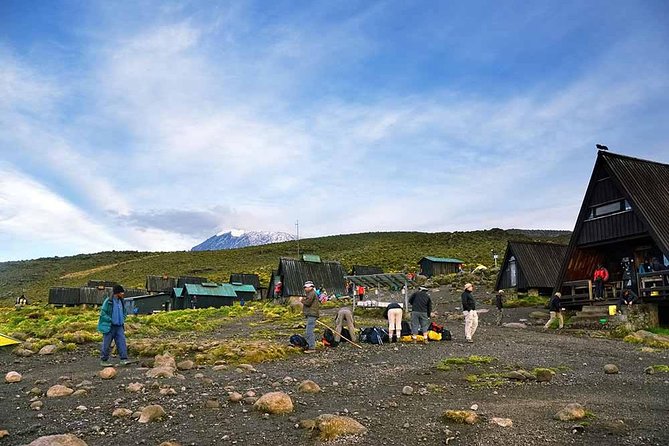
The Marangu route is famous for one reason: comfort on a mountain that does not do comfort. Instead of camping under the stars, you sleep in huts at each camp site. Those huts have communal sleeping areas with bunks, sponge mattresses, and pillows, plus solar lights. That combination matters because it changes your whole pace. When you are not fighting to set up camp gear and keep yourself warm on the ground, you can focus on hydration, food, and pacing.
This is also the shortest and easiest route to the summit, so it is a popular choice when you want a tight schedule that still gets you to Uhuru Peak. The tradeoff is not that it is easy, it is that the mountain still enforces altitude rules. The plan is designed to make the climb manageable, but altitude sickness can still happen, so listen to your guide and take rest seriously.
Another detail that helps: at the lower huts (Mandara and Horombo) you have bathrooms and running water. That is a big deal for hygiene and morale, especially on a 5 day timeline.
The money side: what you pay for, and why it may be good value
The price is $1,809.50 per person for about 5 days. On paper, that is not cheap. In practice, it can feel reasonable because a lot of the costly headaches are handled for you.
Here is what is included in your trip price:
- Park fees and rescue fees
- Guides
- Arrival and departure transfers
- 2 nights of hotel accommodations
- Meals every day (breakfast, lunch, and dinner counts are listed for 5 days)
- Clean, purified drinking water
- Dinner, lunch, and breakfast are included as part of the itinerary
What is not included is also clearly defined: tips and international flights.
For many climbers, the “value” is less about the total number and more about risk control. Park and rescue fees covered, plus guides included, means you are not scrambling to fill gaps mid-trip. And because pickup and transfers are part of the plan, you spend less energy on logistics and more on the climb.
Day-by-day: what happens from Arusha to Mandara to the summit night
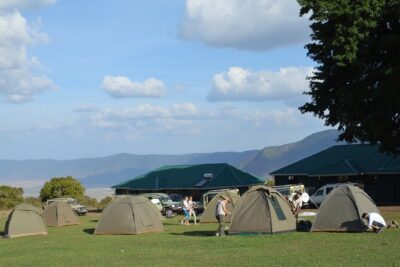
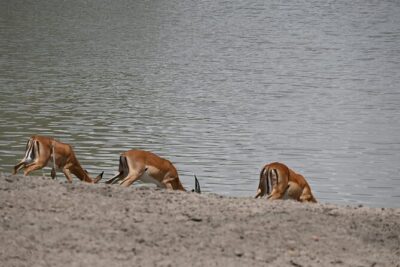
Day 1: Arusha timing, the gate, and walking into Mandara’s rainforest
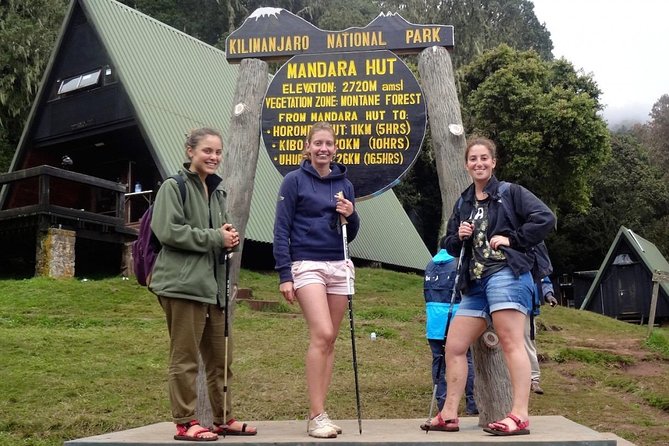
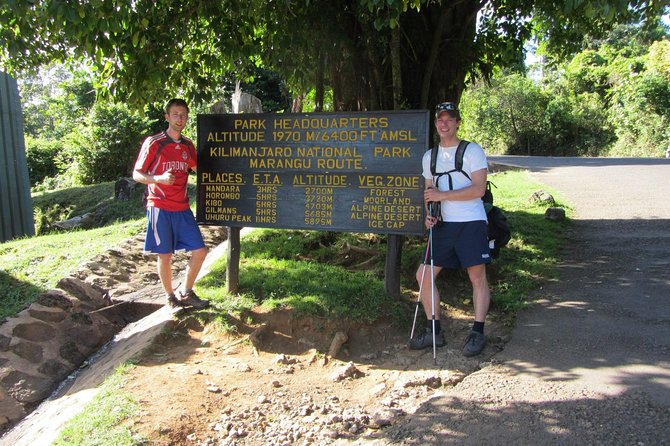
You start in Arusha and drive to the Kilimanjaro park gate, about 45 minutes. After you register, you begin walking through rainforest to Mandara campsite at 9,000 feet (2,740 m).
This day is mostly about immersion and getting your body moving. In the rainforest, you can look for towering eucalyptus trees, bird life, and colobus monkeys. If you want an extra burst of scenery, there is an optional side trip to Maundi Crater. It is a great “use the day well” add-on because it helps you see the surroundings of Northern Tanzania and Kenya while you are still in the forest zone.
Why this day matters: rainforest walking lets you warm up without the harsh feel of higher scree. It also sets the tone for your pace, which is crucial for day two.
Day 2: open moorlands toward Horombo, Mawenzi views, and the first altitude warnings
After breakfast and a departure from the rainforest glades, you head onto ascending moorlands toward Horombo campsite. The trek includes about a 1 hour walk before the open terrain takes over. This is one of the best visual transition days because you start seeing Mawenzi and the peak of Kibo, with wide sky and big mountain presence.
On the ground, look for giant lobelias and groundsels. They are part of why this zone feels different from the lush first day. It is also the day when altitude becomes more noticeable. The itinerary explicitly notes that you begin to feel the effects of altitude during this shift.
Good to know: Horombo is a place you can use to slow down. If you want extra time to rest, there is an option to spend an additional day at Horombo or hike a small peak of Mawenzi. That choice can be smart if you want more acclimatization time.
Day 3: Kibo Huts, moonscape, and preparing for the summit climb
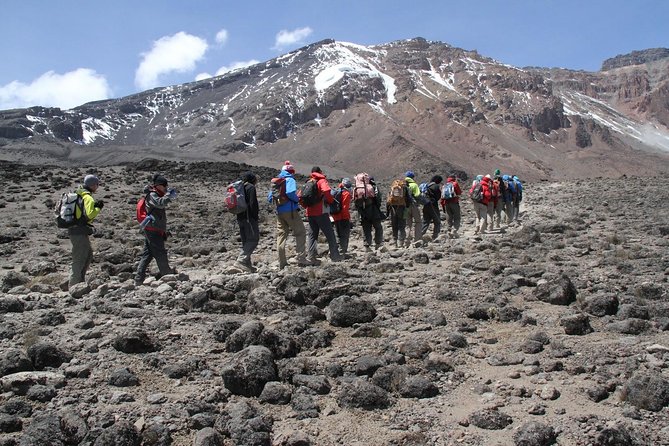
Today you move up toward Kibo Huts. The plan starts with hiking from the last water point and going onto the saddle between Kibo and Mawenzi. Vegetation changes as you climb: it begins as upper heathland and then fades away into “moonscape,” that stark, rocky feel that makes Kilimanjaro look otherworldly.
This day is about getting yourself ready for the summit night. You will have dinner, rest, and the mindset shift toward the next day’s early start. Expect less greenery and more silence in your head, because once you hit the moonscape zone, it is easier to feel the stakes.
Day 4: 2:00am summit push, Gilman’s Point, and Uhuru Peak
At 2:00am you commence the summit climb. The early timing is part of why guides push hard in the dark and steady your footsteps. From here you climb steep and heavy scree or snow up to Gilman’s Point at 18,640 feet (5,861 m). That climb can take 4 to 7 hours depending on conditions and pace.
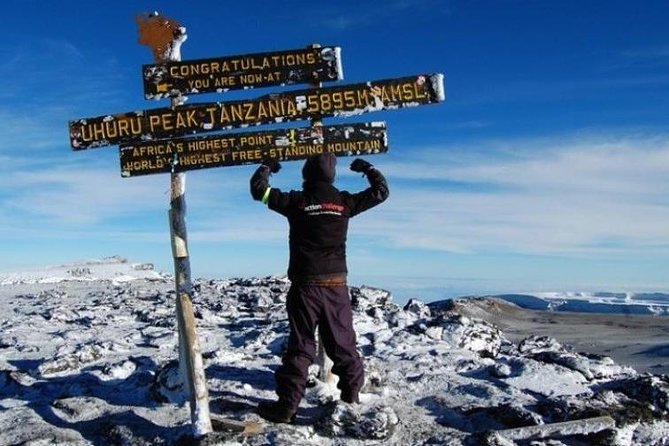
After Gilman’s Point, you continue upward to Uhuru Peak, 19,340 feet (5,895 m), considered the highest point in Africa. From that final stretch, you get incredible views at every turn. It is the kind of climb where you feel small, then you feel triumphant, then you need to keep moving because the mountain does not care about your photos.
You get downhill after the summit. You stop for lunch and rest at Kibo before continuing back down to Horombo for dinner and an overnight. That matters because the summit is only half the story. Getting back down safely is your win.
Day 5: Moshi return via Mandara, forest descent, and muddy gate-to-village reality
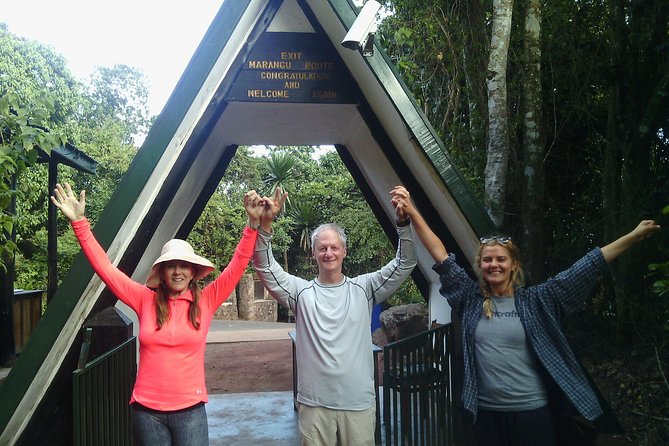
After breakfast, you descend through moorland down to Mandara Hut at 2,700 m (8,858 ft), then continue descending through lush forest to the national park gate at Marangu at 1,830 m (6,004 ft).
This is where conditions can surprise you. At lower elevations, it can be wet and muddy. Practical help is recommended: gaiters and trekking poles make a big difference when the ground gets slick. Clothing-wise, shorts and t-shirts will probably be enough, but keep rain gear and warmer clothing handy because weather can change quickly.
Once you clear the gate at Marangu, a vehicle meets you in Marangu village to drive you back to your hotel in Moshi or Arusha. Then it is time for celebration, and you should remember to tip your porters and guides, since tips are not included.
Sleeping in the huts: what comfort looks like above the clouds
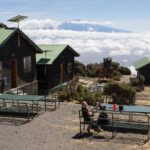
The Marangu route hut system is one of the main reasons people choose it. You are not sleeping on bare ground, and you are not juggling constant tent setup. Each camp has communal huts, and the bunks have sponge mattresses and pillows. Solar lights help you navigate at night and keep your routine simple.
The comfort level is not the same at every altitude. Bathrooms and running water are available at the two lower huts. At the last camp, mens’ and ladies’ latrines are available but very basic. So if you like to have full control over your routine, this is where you should adjust expectations.
Still, the hut approach is a clear advantage for many hikers because it lowers physical stress. After a long day, even simple shelter and a real sleeping pad can help you recover for the next push.
Guides and team energy: where the trip really gets memorable
The climb experience is guided, not just booked. This tour includes professional mountain guides, and the team dynamic can make a major difference on summit night.
One highlight from the named teams is the positive professionalism credited to chief Gabriel during the summit hike. Another is the kindness, patience, and humor attributed to Rafael and his crew, along with excellent food and porters who kept a smile through the effort. Also, Mary is mentioned as part of an airport start, with warm pickup and welcome.
You should plan for more than technical guidance. On a route like this, the people you climb with help you handle fear, frustration, and fatigue. When the team keeps the pace and morale steady, the mountain feels less chaotic.
Food and water: what you can count on at each camp
You are not left guessing about basic needs. The itinerary includes breakfast, lunch, and dinner, plus clean purified drinking water.
Also, there is a small but fun culture piece. At the huts, soft drinks, bottled water, and beer may be for sale. Bring small Tanzanian bills because prices increase with elevation. That is a good way to avoid getting stressed at the wrong moment when you are already short on energy.
Food quality and quantity matter on summit days. When you are climbing in cold air with heavy exertion, the right meals help you keep going and reduce the chance you blow up from low fuel.
Practical considerations for your gear and pacing
Based on the plan, you should be ready for changes in trail feel across five days:
- Rainforest day 1, likely warmer and greener
- Moorlands day 2 and part of day 4, more open and more exposed to altitude effects
- Moonscape day 3 and summit night, harsher and more demanding
- Forest descent day 5, potentially wet and muddy
For clothing, the guidance is simple:
- Shorts and t-shirts will probably work
- Keep rain gear and warmer clothing handy
For footing, the itinerary suggests gaiters and trekking poles. They are most useful on day 5 when the ground can turn muddy.
And pacing wise, take altitude seriously even on the easier route. Day 2 is when you start feeling it, and day 3 sets you up for the summit climb. If you treat those days like casual hikes, summit night can feel harder than it needs to be.
Who this Marangu Kilimanjaro trek suits best
This climb is a strong fit if you:
- Want the easiest and shortest route profile to the summit
- Prefer sleeping in huts with beds and solar lights
- Like the social energy of communal dining huts with many international groups
- Want clear structure over extra days of acclimatization
It may not be the best fit if you:
- Want total privacy at camp
- Expect modern bathroom standards at the uppermost hut
- Know you need more acclimatization time beyond what this 5 day plan provides
If you are choosing between routes, Marangu is often a practical compromise: it gets you summit-level achievement with less “camp logistics” stress.
Should you book this 5 day Marangu climb?
If you want a straightforward Kilimanjaro plan with huts, guides, park fees handled, and a clear timeline to Uhuru Peak, I think this is an easy yes. The hut sleeping system, running water on the lower nights, and the included meals and water make it feel more like a supported mountain experience than a gear-heavy expedition.
My main advice is to respect altitude and treat day 2 and day 3 as serious prep, not filler. If you do that, the hut comfort and communal camp routine can genuinely help you enjoy the climb instead of just surviving it.
FAQ
How long is the Kilimanjaro trek on the Marangu route?
It is about 5 days.
Where do you sleep during the trek?
You sleep in huts at each camp site.
What time do you start the summit hike to Uhuru Peak?
You start the summit climb at 2:00am.
Are park fees and rescue fees included in the price?
Yes. All park fees and rescue fees are included.
What meals are included during the trek?
Breakfast, lunch, and dinner are included for 5 days.
What is not included in the tour price?
Tips and international flights are not included.
Is this trek private or shared with other groups?
It is private, and only your group participates.