
REVIEW · SERENGETI NATIONAL PARK SAFARIS
4 Days /3 nights Tarangire, Serengeti and Ngorongoro crater
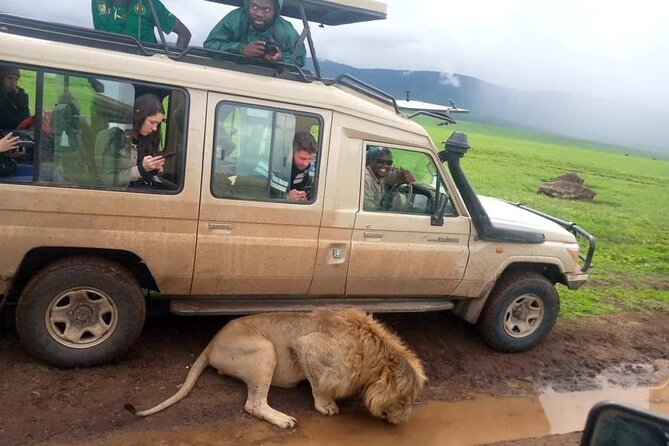
Elephants, plains, and a crater floor full of life. This 4-day, 3-night safari links Tarangire elephants with Serengeti’s big-sky views, then drops you into Ngorongoro’s wildlife-packed crater system. It’s a compact route that moves you through three iconic Tanzania settings without wasting days.
What I like most is how focused the experience is, with full game-drive time in each park and a small group max of 6 that keeps things personal. I also appreciate the kind of service that answers questions clearly ahead of time, including the way the team handled trip details and planning through WhatsApp with guides like Adam.
The main thing to consider is the travel rhythm. You can expect long drive days and early starts, plus nights at campsites, so this is best for people who enjoy the safari pace and can handle basics.
In This Review
- Key highlights
- How the 4-day route flows from Arusha
- Tarangire National Park: elephants, baobabs, and full-day game drive time
- Serengeti National Park and Seronera: why the river area matters
- Ngorongoro Crater on a schedule built for sightings
- Campsites and meals: what’s included and how it shapes your day
- Communication and service that keeps you calm before the drive
- Price and value: is $980 fair for three major parks?
- Who should book this safari, and who might think twice
- Should you book this 4-day Tarangire, Serengeti and Ngorongoro safari?
- FAQ
- How long is the safari and how many nights does it include?
- Where does the safari start, and when does it end in Arusha?
- What parks and areas are included?
- What meals are included during the tour?
- Is park admission included in the price?
- How big is the group?
- What is the cancellation policy?
Key highlights
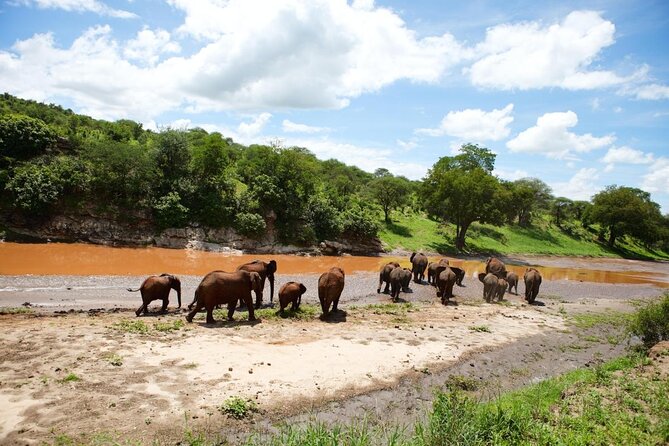
- Tarangire’s elephant density and baobab feeding grounds make it an excellent year-round stop
- Serengeti’s Seronera area gives you a strong chance of seeing lots of species in one circuit
- Ngorongoro crater and Lake Magadi add a two-part wildlife experience, not just one viewpoint
- Park entry coverage for most days helps your budget feel less “nickel-and-dimed”
- Campsite nights plus picnic lunches keep you outdoors most of the day
More of the Serengeti, drive by drive
- Balloon Safari & Bush Breakfast in Serengeti – Miracle Experience★ 5.0 · 1,646 reviews
- 3 Days Serengeti & Ngorongoro Group Camping Safari★ 5.0 · 574 reviews
- 5-Day Highlights mid-Range Crater, Serengeti, Tarangire★ 5.0 · 296 reviews
- 3-Day Classic Serengeti Safari★ 5.0 · 263 reviews
How the 4-day route flows from Arusha
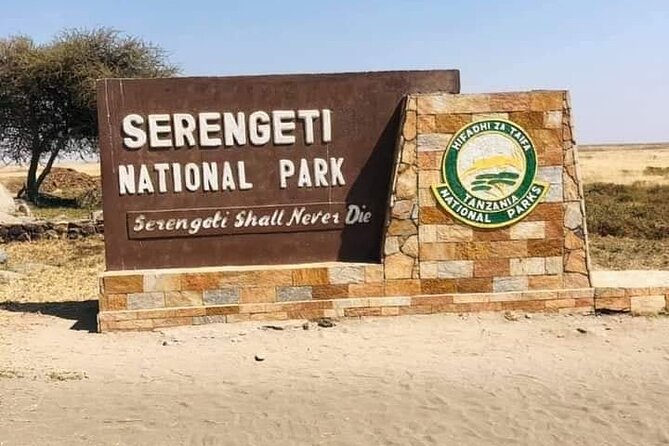
This safari starts in Arusha and keeps things simple: morning pickup is offered, and departures happen within the window of 8:00 AM to 10:30 AM, Monday through Sunday. You’ll spend three nights on the ground (campsites) while the driving connects Tarangire, Serengeti, and Ngorongoro in a logical sequence.
By Day 4, you’ll be back in Arusha around 5:00 PM. That end time matters because it’s a real travel day, not a “let’s wander around a bit” situation. If you are trying to line up a flight, plan extra buffer time.
The group size is capped at 6 travelers. That usually means you’re not stuck in a huge bus of strangers all day, and it can be easier to hear guidance and adjust your viewing angles when wildlife is close.
Tarangire National Park: elephants, baobabs, and full-day game drive time
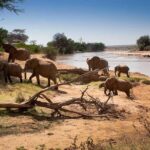
Tarangire is famous for one thing first: elephants. This park is the only destination in the region that can host thousands of elephants, and the baobab trees matter because they support the food chain the elephants rely on. Translation for your camera and your patience: you’re not just looking for the occasional elephant. You’re in an area built for seeing them.
On Day 1, you head to Tarangire after breakfast for a game drive with a picnic lunch inside the park. The morning and late afternoon blocks are built for scanning for animals around the baobabs and along game-drive routes where elephant movement tends to show up. You also get full-day time, which is a big deal. Short half-days can feel like rushing. Here you get enough hours to catch different animal rhythms.
You’ll be thinking about numbers while you’re out there, too. Tarangire ties into an annual migratory cycle, with the potential for up to about 3,000 elephants, plus large numbers of wildebeest and zebra. Even if you do not see every figure in one outing, the fact that the park is set up to support that scale is what makes it reliable.
Practical note: long drives plus sun can make your day feel longer than the clock. I’d bring sunscreen, a hat, and a light layer for dust and cooler evening air.
Serengeti National Park and Seronera: why the river area matters
Serengeti is the “endless plains” part of the safari, and this itinerary does not treat it like a quick scenic stop. After leaving Arusha, you pass through Karatu and the Ngorongoro Conservation Area, then descend into the Serengeti ecosystem.
You spend time in the central park area known as Seronera, where the Seronera River provides an important water source. That’s not just trivia. Water concentrates animals, and concentrated animals make game drives more productive. It also helps you avoid the frustration of driving for ages with only scattered sightings.
You’ll arrive for lunch, then enjoy an afternoon game drive. That timing often works well because wildlife can move actively as temperatures shift later in the day. And if you want classic Serengeti moments, the day’s light tends to set up great viewing for sunrise and sunset themes, even when your schedule is built around practical driving blocks.
Dinner and overnight happen at a campsite after the drive. So the day is structured: get into Serengeti in time to eat, then spend real time looking. That’s the difference between “we went to Serengeti” and “we actually experienced Serengeti.”
Other ways down into the Ngorongoro Crater
Ngorongoro Crater on a schedule built for sightings
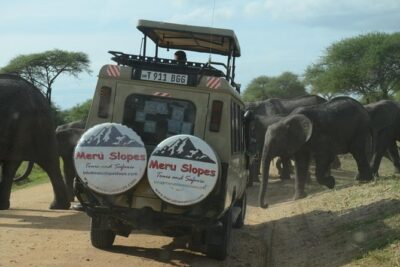
Ngorongoro is where the safari gets intense, because the crater floor packs an unusual amount of wildlife into a compact space. On this trip, you start with a morning game drive, then you head toward Ngorongoro with lunch boxes for the road.
There are two special pieces here.
First, the crater itself. Ngorongoro is described as one of the most densely crowded wildlife areas in the world, with an estimated 30,000 animals. It also supports some of Tanzania’s last remaining black rhino, which is a big reason this stop is on almost everyone’s wish list.
Second, the “en route” wildlife stop at Lake Magadi. You may spot buffalo, gazelle, zebra, and flamingo there. That matters because it adds variety on the travel day, instead of making the day feel like only driving to the crater.
Once you’re inside the crater, you’ll descend with a lunch box and enjoy game drive time. A picnic lunch happens on the crater floor. If you like watching animals from a few different angles in a tight area, Ngorongoro is a strong match, because herds and predators can show up near the paths people take while descending and repositioning.
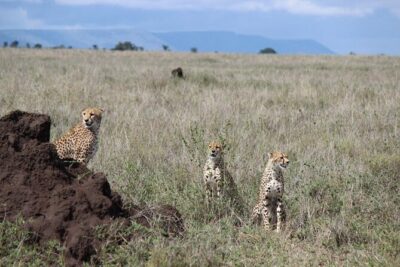
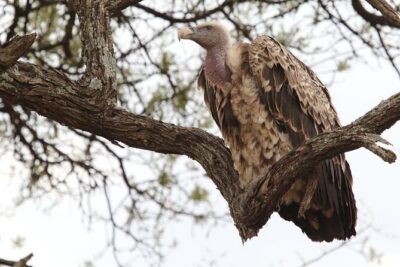
Ngorongoro also supports a wide range of species because it has a year-round water supply and fodder. That’s why you see animals listed such as wildebeest, zebra, buffalo, eland, warthog, hippo, and giant African elephants, plus predators like lions, hyenas, jackals, cheetahs, and the elusive leopard.
Reality check: predators can be less predictable than grazers. Still, the density means you have more chances in the time you’re there.
Campsites and meals: what’s included and how it shapes your day
This safari runs on a simple rhythm: breakfast, then you’re out early enough to get quality time in the park, with lunch handled in the field, and dinner at camp after the driving.
Meals included are:
- Breakfast (3)
- Dinner (3)
- Lunch (4)
The “lunch” part is more than just convenience. Picnic lunches help you stay in the park areas longer, instead of losing time driving to eat. It also keeps your day outdoors, which is what you booked this for.
Overnights are at campsites, not lodges. That affects comfort expectations. You should be ready for a more basic setup than safari hotel rooms, with comfort coming from the experience and the routine, not luxury.
If you’re traveling as a group of friends or with family, this setup can also be a good bonding style, because everyone shares the same view time in the parks and the same relaxed camp evenings after.
Communication and service that keeps you calm before the drive
A safari lives or dies on communication. This one is set up with pickup offered and a mobile ticket, and the team’s responsiveness comes through in the way they handle questions and trip planning.
In the feedback I’m seeing reflected in how the service operates, people were happy with how clearly details were communicated ahead of time. Adam comes up specifically as a guide who explained the trip well and answered questions. That kind of preparation matters because it helps you understand what you’re looking for when you get out into the parks.
The planning also seems to take your interests into account. That can translate into more thoughtful game drive decisions, like spending time where you want to focus, rather than just checking boxes.
And because the maximum group size is 6, there’s less crowding in the vehicle and more chance for your questions to be heard during the day.
Price and value: is $980 fair for three major parks?
At $980 per person for about 4 days and 3 nights, you’re paying for a route that covers Tarangire, Serengeti, and Ngorongoro in a tight timeframe. The value comes from two things: what you get included, and what that schedule avoids.
Included value that matters:
- Breakfast, dinners, and lunches are covered
- Park admission is marked free on Days 1, 2, and 4
- Ngorongoro admission is included on Day 3
So you are not only paying for driving time. You’re paying for a full safari structure, with many of the day’s costs handled up front.
Where cost can shift for different travelers is what is not listed as included: airfares and travel insurance are not part of the price. Also, the safari is land-based and geared to the actual game-drive schedule, so you should budget for your own personal expenses like tips, drinks, and any items you want to buy on the road.
For many people, $980 feels like a solid deal when you consider it is built around three parks that normally require separate planning. If you want a “first safari” that hits the big names with minimal fuss, this price can make sense.
Who should book this safari, and who might think twice
This safari is a good fit if you:
- Want a classic first-time route: Tarangire elephants, Serengeti big plains, Ngorongoro crater wildlife
- Like structured days with long game-drive blocks and picnic lunches
- Prefer smaller groups (max 6) over large tour buses
- Are comfortable with campsite nights
Think twice if you:
- Hate long drives and early morning starts (this route is built for maximizing daylight hours)
- Want a more luxurious hotel-style overnight experience (campsites are part of the plan)
- Need a very slow-paced itinerary with lots of free time in town between parks (this one is about the parks, not downtime)
Should you book this 4-day Tarangire, Serengeti and Ngorongoro safari?
If you want one trip that gives you elephant country, Seronera’s concentrated game, and the crater’s high density of wildlife in just 4 days, this is an efficient choice. The included meals and the way park admission is handled on most days help your budget feel clearer, and the small group cap makes the experience feel less chaotic.
My quick decision rule: book it if you can handle a safari schedule with long driving days and basic campsite nights. Choose another option if your priority is downtime, luxury accommodations, or a lighter itinerary.
FAQ
How long is the safari and how many nights does it include?
The trip is 4 days (approximately) with 3 nights.
Where does the safari start, and when does it end in Arusha?
It starts in Arusha. On the last day, you drive back to Arusha and arrive around 5:00 PM.
What parks and areas are included?
You visit Tarangire National Park, Serengeti National Park, and Ngorongoro Crater. You also drive via Karatu and the Ngorongoro Conservation Area, and you may stop at Lake Magadi.
What meals are included during the tour?
Breakfast is included 3 times, dinner is included 3 times, and lunch is included 4 times.
Is park admission included in the price?
Park admission is marked free for Day 1, Day 2, and Day 4. Ngorongoro admission is marked as included on Day 3.
How big is the group?
The maximum group size is 6 travelers.
What is the cancellation policy?
Free cancellation is available if you cancel up to 24 hours in advance of the experience’s start time for a full refund. If you cancel less than 24 hours before, the amount you paid will not be refunded.
Tarangire and Its Baobabs
- 5-Day Highlights mid-Range Crater, Serengeti, Tarangire
★ 5.0 · 296 reviews - Private 6-Day Tarangire Manyara Crater and Serengeti with Mid-Range Lodges
★ 5.0 · 238 reviews - 5 Days Camping Tarangire, Serengeti & Ngorongoro crater & Visiting Maasai
★ 5.0 · 229 reviews - 4 Days Join Group tour Tarangire Serengeti and Ngorongoro crater
★ 5.0 · 219 reviews - 4-Day Safari from Arusha: Tarangire, Serengeti and Ngorongoro
★ 5.0 · 173 reviews
Still Thinking About the Crater?
- 3 Days Serengeti & Ngorongoro Group Camping Safari
★ 5.0 · 574 reviews - 5 Days Camping Tarangire, Serengeti & Ngorongoro crater & Visiting Maasai
★ 5.0 · 229 reviews - 4 Days Join Group tour Tarangire Serengeti and Ngorongoro crater
★ 5.0 · 219 reviews - 4-Day Safari from Arusha: Tarangire, Serengeti and Ngorongoro
★ 5.0 · 173 reviews - 2 Days Tarangire and Ngorongoro Group Camping Safari
★ 5.0 · 146 reviews
The Serengeti, Three More Ways
- Balloon Safari & Bush Breakfast in Serengeti – Miracle Experience
★ 5.0 · 1,646 reviews - 3 Days Serengeti & Ngorongoro Group Camping Safari
★ 5.0 · 574 reviews - 5-Day Highlights mid-Range Crater, Serengeti, Tarangire
★ 5.0 · 296 reviews - 3-Day Classic Serengeti Safari
★ 5.0 · 263 reviews - Private 6-Day Tarangire Manyara Crater and Serengeti with Mid-Range Lodges
★ 5.0 · 238 reviews
Just added from around Arusha


Serengeti National Park Safaris, compared.
 ★ 5.0Serengeti Balloon Safari and authentic bush breakfastFrom $5502,480 reviews
 ★ 5.0Balloon Safari & Bush Breakfast in Serengeti – Miracle ExperienceFrom $5991,646 reviews
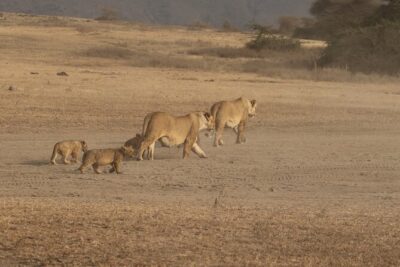 ★ 5.03 Days Serengeti & Ngorongoro Group Camping SafariFrom $815574 reviews
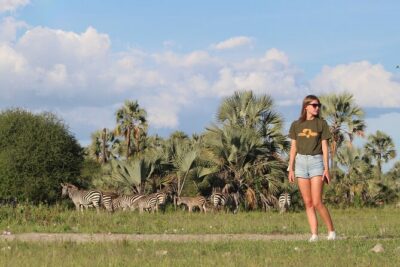 ★ 5.05-Day Highlights mid-Range Crater, Serengeti, TarangireFrom $2,327296 reviews
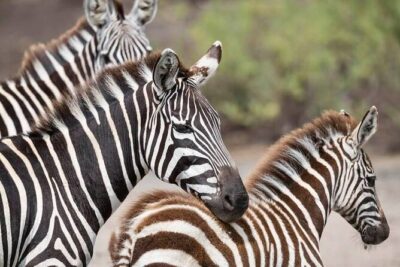 ★ 5.0Safari Serengeti And NgorongoroFrom $2,845288 reviews
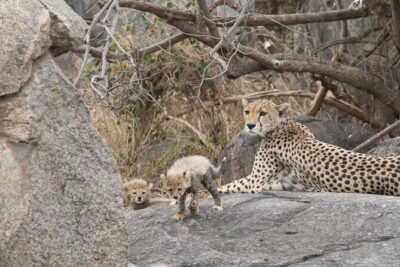 ★ 5.03-Day Classic Serengeti SafariFrom $1,455263 reviews
 ★ 5.0Private 6-Day Tarangire Manyara Crater and Serengeti with Mid-Range LodgesFrom $2,685238 reviews
 ★ 5.05 Days Camping Tarangire, Serengeti & Ngorongoro crater & Visiting MaasaiFrom $1,254229 reviews
Browse the lists this tour appears in