
REVIEW · SERENGETI NATIONAL PARK SAFARIS
4-Day Basic Safari with Serengeti, Ngorongoro, & Tarangire
Four days can still feel like a big cat movie. This Arusha-based safari strings together Tarangire, Serengeti, and the Ngorongoro Crater with a low-stress camping setup and set meals that keep the day moving. You get a 4×4 safari vehicle, an English-speaking guide and chef, and game drives timed for real viewing opportunities.
I like the practical rhythm of the days, especially the early starts in Serengeti that aim at sunrise and predator activity. I also like the food flexibility for camping standards, because the chef is part of the setup and you can ask for repeat favorites. One thing to consider, though, is that this is basic camping, including shared bathroom facilities, and tent quality can be hit or miss compared with lodge travel.
In This Review
- Key highlights worth planning for
- How this camping safari works, starting and ending in Arusha
- Day 1 in Tarangire National Park: baobabs, the Tarangire River, and big-elephant country
- Day 2 in Serengeti: gates, formalities, and afternoon timing for migration chances
- Day 3 in Serengeti at 06:30: sunrise, predator movement, and a full day of hunting
- Day 4 Ngorongoro Conservation Area: the 600-meter crater descent and dense wildlife in one bowl
- Sleeping in tents with meals handled for you: what that feels like in practice
- The safari vehicle and guides: how you get better viewing without more stress
- Price and value: what $1,745.56 buys you in real terms
- How to choose the right safari style for you
- Should you book this 4-Day Basic Safari with Serengeti and Ngorongoro?
- FAQ
- Where does this safari start and end?
- How long is the safari?
- Which parks and areas are included?
- What wildlife might you see, based on the tour info?
- What kind of transport is used?
- Are airport transfers included?
- What meals are included during the safari?
- Where do you sleep during the safari?
- What health or document requirements are mentioned?
- Can I get a full refund if I cancel?
Key highlights worth planning for
- Pop-up roof 4×4 Land Cruiser plus window seats, built for long game drives
- Park fees listed as free during the itinerary, so your budget stays steadier
- Tarangire River dry-season hotspot for animal gathering around water
- Serengeti early game drive at 06:30, timed for sunrise and hunting patterns
- Ngorongoro descent 600 meters for a dense mix of wildlife in one crater
- Camping food handled on-site by a safari cook, with a chance to request repeat meals
More of the Serengeti, drive by drive
- Balloon Safari & Bush Breakfast in Serengeti – Miracle Experience★ 5.0 · 1,646 reviews
- 3 Days Serengeti & Ngorongoro Group Camping Safari★ 5.0 · 574 reviews
- 5-Day Highlights mid-Range Crater, Serengeti, Tarangire★ 5.0 · 296 reviews
- 3-Day Classic Serengeti Safari★ 5.0 · 263 reviews
How this camping safari works, starting and ending in Arusha
This trip is based in Arusha, with pick up and drop off built in. Your itinerary follows the big three wildlife areas in Tanzania, then returns you back to the meeting point.
You’ll sleep in tents during the safari portion, and you also get hotel or lodge accommodation before and after the safari (listed as 2 nights total). That matters because it gives you at least some non-camping comfort around the drive days, instead of pure tent life from start to finish.
The overall tone here is budget, but not chaotic. Meals are scheduled (breakfast, lunch, dinner), and the guide and cook teams handle the core logistics so you do not spend your time figuring out where to eat or what to do next.
Day 1 in Tarangire National Park: baobabs, the Tarangire River, and big-elephant country
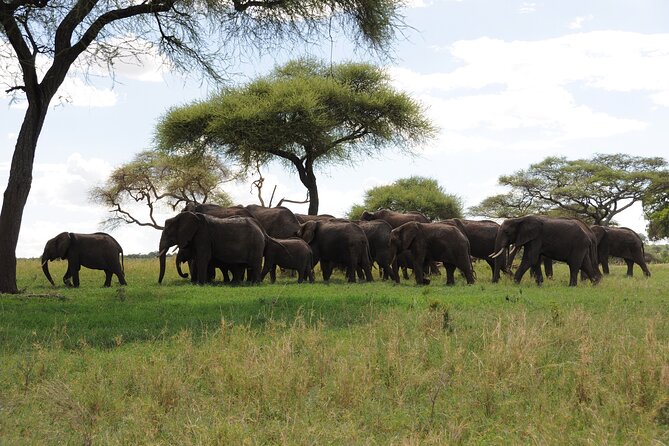
Tarangire is a great first stop because it feels different from Serengeti right away. Instead of wide grassland, you get low-lying hills in the Great East African Rift Valley plus classic park scenery like huge African baobab trees and scattered acacia woodland.
After breakfast, you leave your lodge and drive into Tarangire for your first game drive. The route passes through Arusha town and along what’s described as Masai steppe, and you also drop your safari chef at Makuyuni junction before entering the park.
Here’s why Tarangire is a smart opener: during the dry season, the Tarangire River and a southern swamp act like a refuge area for wildlife. That means your odds can rise when animals concentrate around water, especially if you’re visiting in drier months.
This day runs about 6 hours total. You’re likely to focus on scanning for the biggest, most noticeable animals first, and then letting the rest of the sightings fill in as you work the terrain and river-edge areas.
Day 2 in Serengeti: gates, formalities, and afternoon timing for migration chances
Day 2 shifts into Serengeti, often the headline park in Tanzania for a reason. The drive crosses local villages and goes past high-lying farmland of Karatu until you reach the Ngorongoro gate for registration and other formalities.
After those park steps, you go to Naabi Hills Gate for check-in. This is also when you’ll have your packed lunch before starting your afternoon game drives. Expect driving time to stretch, since your total day is listed around 9 hours.
The payoff is afternoon viewing in search of the Great Wildebeest Migration. If the migration is in a nearby zone, afternoon timing can still deliver strong sightings, and your guide’s job is to position you for where herds are moving at that moment.
You finish the day by arriving at camp during or before sunset. That sunset arrival rhythm is practical, because it keeps you from rushing when the light changes and gives you time to settle in before dinner.
Other ways down into the Ngorongoro Crater
Day 3 in Serengeti at 06:30: sunrise, predator movement, and a full day of hunting
Day 3 is where you feel the difference between a standard safari schedule and a safari schedule that respects animal behavior. You’re recommended to start very early, with an early game drive leaving at 06:30.
The morning flow is simple: you depart the campsite after coffee, and you take a breakfast box and lunch box. This means you’re not losing time back at camp waiting for meals or logistics, and you can stay in the wildlife zone longer.
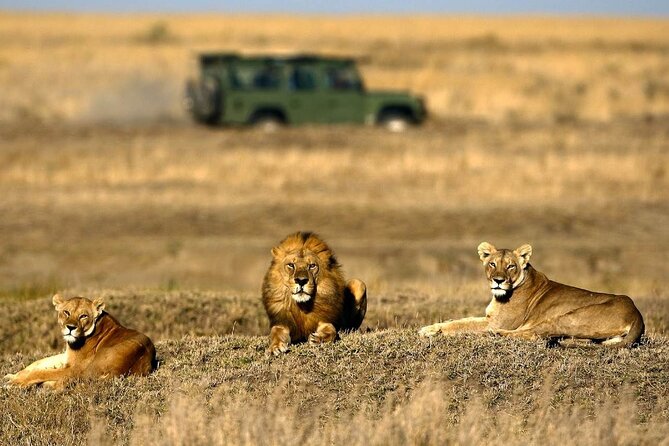
Early morning game drives are meant for sunrise views, and your guide may look for cat family activity. The idea is that predators often spend their mornings using roads and routes to avoid mist and to set up for later hunting.
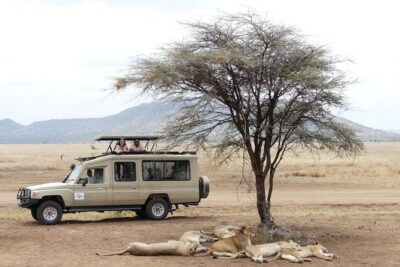
This is also when you might see predators moving back from nighttime activity. Lions can be resting, hyenas can be active, and you may catch moments where a lioness group looks like it’s planning an ambush. If the migration is packed in Serengeti, you’ll go straight to where the herds are and spend time with them.
Day 3 is listed around 12 hours, so yes, it’s a long day. But it’s a long day with purpose, and it’s one of the best ways to maximize sightings in only a short safari window.
Day 4 Ngorongoro Conservation Area: the 600-meter crater descent and dense wildlife in one bowl
Leaving Serengeti after breakfast, you travel toward Ngorongoro Conservation Area. You’ll have an en-route game drive that brings you up to Naabi Hills gate and past Malanja depression before you reach the crater area.
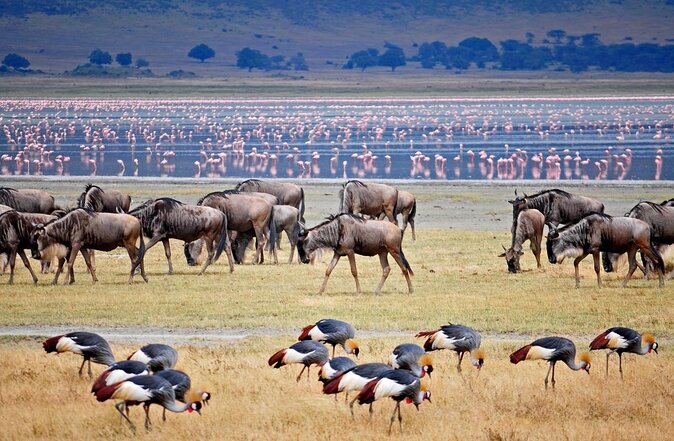
Then comes the signature moment: you descend about 600 meters into the crater floor for game viewing. That crater setup is why Ngorongoro is so popular for quick, concentrated wildlife encounters. You’re not searching across miles of open country, you’re working a bowl where animals move through a limited space.
The crater itself is described as having formed after an eruption left a caldera. It’s called the Eden of Africa for a reason, because it supports a larger variety of wildlife in a relatively compact area.
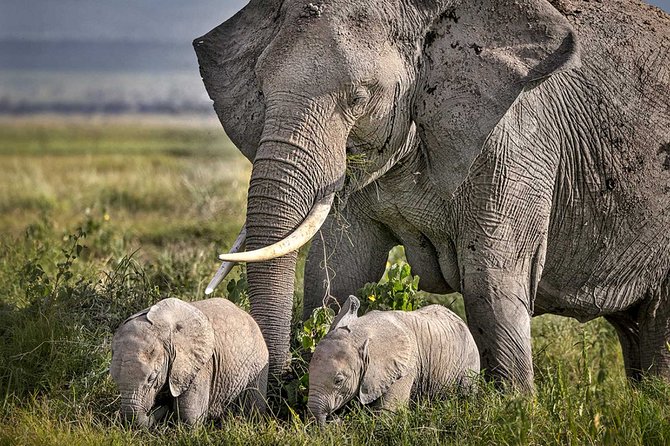
Your expected wildlife list includes herds of wildebeest and zebra, plus elephant, hippos, buffalo, topi, and eland. There’s also the mention of the rare black rhino, which is the kind of possibility you hope for, even when it cannot be guaranteed.
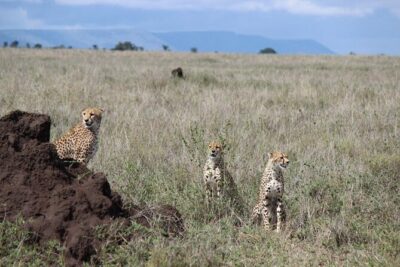
Predators are part of the picture too, with hyenas, lion, cheetahs, jackals, and a leopard that needs a sharp trained eye. In other words, you’re not only watching animals, you’re also watching for movement patterns and stillness that signal where something is hiding.
Day 4 is listed around 10 hours, so you get a full crater-focused day, not a rushed drive-by.
Sleeping in tents with meals handled for you: what that feels like in practice
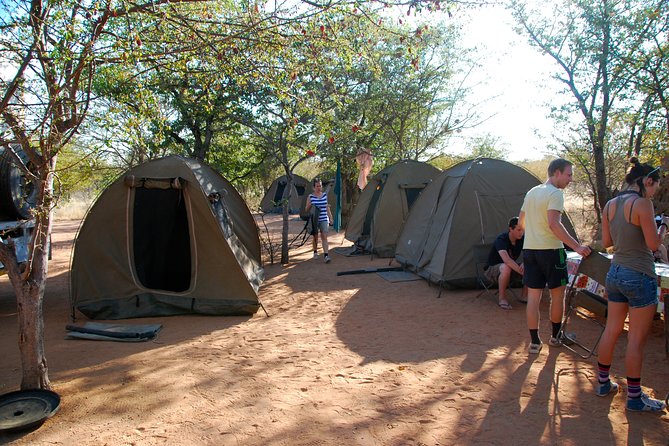
Your safari base setup is camping. You’ll have overnight stays in tents, and the included gear list covers tents, mattresses, and camping equipment. If you need one, there’s also mention of a sleeping bag being available.
Food is a real strength in this package for budget camping. Breakfast, lunch, and dinner are included, and bottled water is mentioned in the included items list. The fine print also lists bottled water under not included, so do yourself a favor and confirm how water is handled on your exact departure.
A practical detail that you should plan around is the bathroom situation. Bathroom facilities are described as shared with other travellers staying at campsites. That can be totally workable, especially if you go in with realistic expectations, but it’s worth knowing before you pack your comfort needs.
The setup also includes a safari cook, plus the guide and cook wages are included. That matters because it generally keeps your day on schedule, instead of relying on finding food or services elsewhere.
One nice detail: there’s an option to visit the kitchen and ask the chef if you have favorites you want repeated. That’s a small thing, but on a camping safari, small things become big things.
The safari vehicle and guides: how you get better viewing without more stress
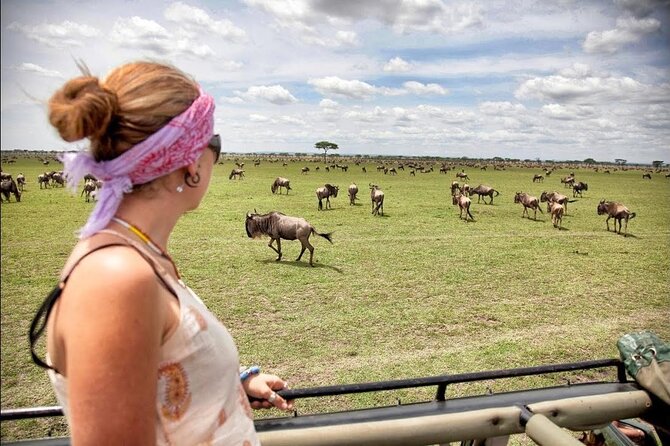
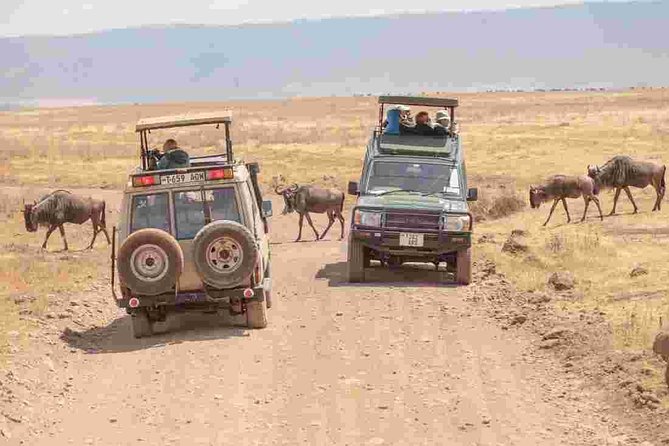
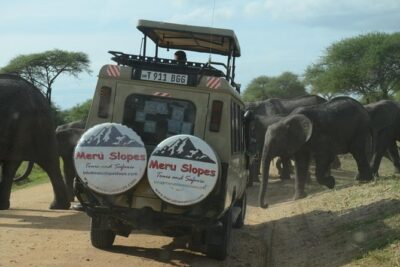
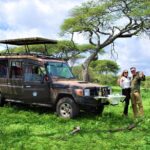
This trip uses a Toyota Landcruiser 4×4 safari vehicle with a pop up roof and 6 window seats, plus power adapters. That combination is built for visibility and comfort on long drives, especially when you’re out for hours at a time.
The guide is professional and English speaking, and the cook is part of the daily operation. In client feedback, guides such as Jonathan, Emmanuel, Frazier, Cathrin, and Shirima come up with praise for spotting ability and staying attentive to the group. One guide is described as able to spot lions from very far away, which is exactly the kind of skill you want on a budget timeline.
Punctuality and organization also show up in feedback. When your drives start on time and your guide positions you well, you lose less daylight and you waste fewer minutes driving in circles.
The only caution I would give is comfort varies by tent assignment. At least one past client noted a tent issue on the first night, and the operator apologized and explained it as a packing slip. That doesn’t mean it will happen to you, but it’s a reminder to speak up early if something feels off.
Price and value: what $1,745.56 buys you in real terms
At $1,745.56 per person, this is not a bargain-basement safari, but it is positioned as a pocket-friendly option. The key is what’s included.
You get all fees and taxes listed as included. You also get the Toyota Landcruiser 4×4 with pop up roof, the guide and cook (with their wages included), and your meals: breakfast, lunch, and dinner plus bottled water listed under included.
Accommodation is also partially covered: hotel or lodge accommodation before and after the safari is included as 2 nights. On top of that, the itinerary lists admission tickets as free. If those terms apply on your booking, that’s a big value piece because park fees can add up fast on multi-day trips.
Airport transfer or pick up and drop off is included too, which saves you from extra coordination headaches in Arusha.
What you should budget for separately is also clearly stated. Visas, flights, travel and health insurance, gratuities, and items of a personal nature are not included. Health requirements are a major one too: Yellow Fever vaccination is described as compulsory if traveling to Tanzania.
So, is this good value? For the right person, yes. You’re paying for the core moving parts, a guide team, and meal planning, while accepting the tradeoff of basic camping and shared campsite facilities. If you want private lodge comfort all the way through, this is probably not the best fit.
How to choose the right safari style for you
This safari is described as suitable for family, friends, and groups, and it notes private budget camping options that feel more flexible and fun than rigid mass tourism. It also lists a maximum of 15 travellers, with group discounts mentioned.
You’ll like this style if you:
- want the classic circuit of Tarangire, Serengeti, and Ngorongoro in a short time window
- prefer guided driving and meal handling so you can focus on wildlife
- can handle basic camping and shared facilities without expecting luxury
You might hesitate if you:
- need consistent tent comfort and private bathroom setups
- want a more polished lodge experience every night
This is a safari for people who want real wildlife time and practical support, not for people who want to be pampered between drives.
Should you book this 4-Day Basic Safari with Serengeti and Ngorongoro?
If your priority is seeing the big parks with a guide team, meals sorted, and a camping setup that keeps costs under control, I’d say this is a strong option to consider. The itinerary uses classic viewing logic: Tarangire first, Serengeti with an early 06:30 push, then Ngorongoro with the crater descent where wildlife density is the main advantage.
Before you book, do these two checks. First, confirm how water is handled for your dates, since bottled water appears in both included and not included lists. Second, ask about tent standards and what to do if you arrive and your tent assignment feels wrong, since at least one past client reported a tent comfort problem early in the trip.
If you go in with the right expectations, you’ll end up with exactly what most people hope for from Tanzania, a sequence of wildlife zones that keeps the day moving and turns the short time you have into meaningful animal encounters.
FAQ
Where does this safari start and end?
It starts in Arusha, Tanzania and ends back at the meeting point.
How long is the safari?
The duration is listed as 4 days (approx.). The description also refers to a 5 days Tanzania camping safari, while the itinerary provided runs across Day 1 to Day 4.
Which parks and areas are included?
The safari covers Tarangire National Park, Serengeti National Park, and the Ngorongoro Conservation Area with game viewing in the Ngorongoro Crater.
What wildlife might you see, based on the tour info?
The provided information specifically mentions wildebeest, zebra, elephant, hippos, buffalo, topi, eland, and the rare black rhino, plus predators like hyenas, lion, cheetahs, jackals, and leopard.
What kind of transport is used?
You’ll travel in a Toyota Landcruiser 4×4 with a pop up roof, 6 window seats, and power adapters.
Are airport transfers included?
Yes, airport transfer/pick up and drop off is included.
What meals are included during the safari?
Meals included are breakfast, lunch, and dinner, with bottled water listed as part of the included items.
Where do you sleep during the safari?
You’ll have overnight stays in tents during the safari. Hotel or lodge accommodation is also included before and after the safari (listed as 2 nights).
What health or document requirements are mentioned?
Yellow Fever vaccination is described as compulsory if traveling to Tanzania. Visas are not included.
Can I get a full refund if I cancel?
You can cancel up to 3 days in advance for a full refund. If you cancel less than 3 full days before the experience start time, the amount paid is not refunded.
Tarangire and Its Baobabs
- 5-Day Highlights mid-Range Crater, Serengeti, Tarangire
★ 5.0 · 296 reviews - Private 6-Day Tarangire Manyara Crater and Serengeti with Mid-Range Lodges
★ 5.0 · 238 reviews - 5 Days Camping Tarangire, Serengeti & Ngorongoro crater & Visiting Maasai
★ 5.0 · 229 reviews - 4 Days Join Group tour Tarangire Serengeti and Ngorongoro crater
★ 5.0 · 219 reviews - 4-Day Safari from Arusha: Tarangire, Serengeti and Ngorongoro
★ 5.0 · 173 reviews
Still Thinking About the Crater?
- 3 Days Serengeti & Ngorongoro Group Camping Safari
★ 5.0 · 574 reviews - 5 Days Camping Tarangire, Serengeti & Ngorongoro crater & Visiting Maasai
★ 5.0 · 229 reviews - 4 Days Join Group tour Tarangire Serengeti and Ngorongoro crater
★ 5.0 · 219 reviews - 4-Day Safari from Arusha: Tarangire, Serengeti and Ngorongoro
★ 5.0 · 173 reviews - 2 Days Tarangire and Ngorongoro Group Camping Safari
★ 5.0 · 146 reviews
The Serengeti, Three More Ways
- Balloon Safari & Bush Breakfast in Serengeti – Miracle Experience
★ 5.0 · 1,646 reviews - 3 Days Serengeti & Ngorongoro Group Camping Safari
★ 5.0 · 574 reviews - 5-Day Highlights mid-Range Crater, Serengeti, Tarangire
★ 5.0 · 296 reviews - 3-Day Classic Serengeti Safari
★ 5.0 · 263 reviews - Private 6-Day Tarangire Manyara Crater and Serengeti with Mid-Range Lodges
★ 5.0 · 238 reviews
Just added from around Arusha
Serengeti National Park Safaris, compared.
 ★ 5.0Serengeti Balloon Safari and authentic bush breakfastFrom $5502,480 reviews
 ★ 5.0Balloon Safari & Bush Breakfast in Serengeti – Miracle ExperienceFrom $5991,646 reviews
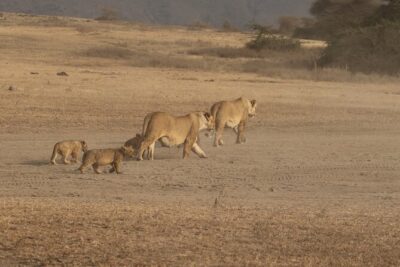 ★ 5.03 Days Serengeti & Ngorongoro Group Camping SafariFrom $815574 reviews
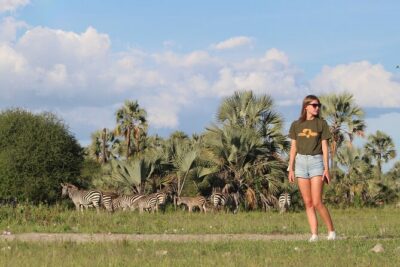 ★ 5.05-Day Highlights mid-Range Crater, Serengeti, TarangireFrom $2,327296 reviews
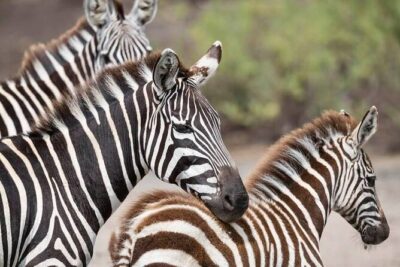 ★ 5.0Safari Serengeti And NgorongoroFrom $2,845288 reviews
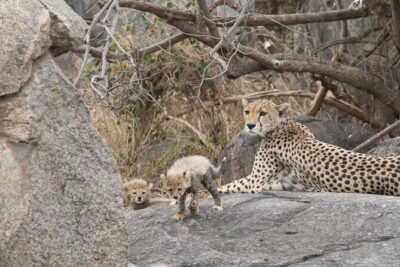 ★ 5.03-Day Classic Serengeti SafariFrom $1,455263 reviews
 ★ 5.0Private 6-Day Tarangire Manyara Crater and Serengeti with Mid-Range LodgesFrom $2,685238 reviews
 ★ 5.05 Days Camping Tarangire, Serengeti & Ngorongoro crater & Visiting MaasaiFrom $1,254229 reviews
Browse the lists this tour appears in