
REVIEW · RUAHA UDZUNGWA AND THE SOUTHERN HIGHLANDS
1-Day Isimila Stone Age Site
Stone Age tools in Tanzania feel strangely close. Isimila sits about 21 kilometers outside Iringa, where you can see evidence of people living tens of thousands of years ago in the same eroded sandstone setting where finds were discovered. I especially like the included museum stop with clear explanations, and the way the outing is structured so you also get time to relax with lunch and bottled water. One thing to factor in: it’s a full morning-to-late-morning day, and the early start can feel like a lot if you were hoping for a slow start.
You also get a straightforward, no-nonsense day: pickup, private transport, site time, museum time, and then you’re back. The only real drawback is that the tour runs about 8 hours, so it’s not the best fit if you want something short and flexible.
In This Review
- Key points before you go
- Isimila near Iringa: what makes this Stone Age visit different
- The 7:30 am start and how the schedule plays in real life
- Getting to Isimila: transport, distance, and the value of pickup
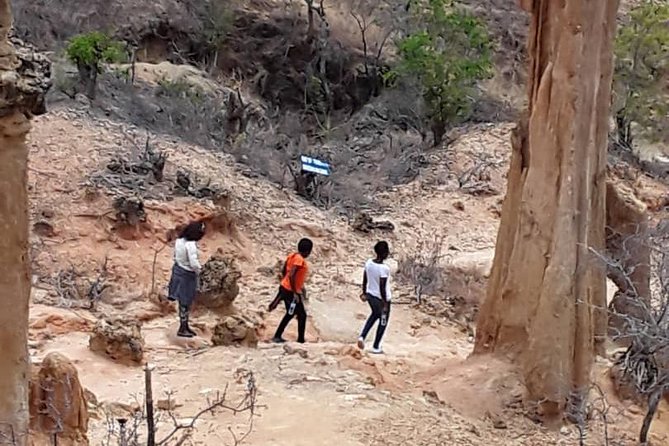
- Walking Isimila: tool evidence in an eroded sandstone setting
- The local museum: what to look for so it actually sticks
- Lunch, bottled water, and why that small inclusion matters
- Price and value: what $87.18 is really covering
- Who this tour suits best, and who might want something else
- A note on the operator and what to expect from service
- Should you book the 1-Day Isimila Stone Age Site tour?
- FAQ
- How long is the 1-Day Isimila Stone Age Site tour?
- What time does the tour start?
- What is included in the price?
- Do I need to arrange my own ticket?
- Is alcohol included?
- Is there free cancellation?
Key points before you go
- Stone tools dated 60,000 to 100,000 years old at one of the world’s most important prehistoric finds
- Real-site learning in the eroded sandstone area where the tools were unearthed
- Museum visit with small, well-captioned displays to make sense of the discoveries
- Lunch and bottled water included, so you are not hunting for food in the middle of your day
- Private transportation plus parking included, making the logistics easier from Iringa
Deeper south, Ruaha and Udzungwa
- 1-Day Ruaha National Park★ 5.0 · 10 reviews
- 5 Days Ruaha National Park Safari★ 5.0 · 5 reviews
- 4 days / 3 Nights safari to Ruaha National park★ 5.0 · 5 reviews
- 1-Day Isimila Stone Age Site★ 4.5 · 3 reviews
Isimila near Iringa: what makes this Stone Age visit different
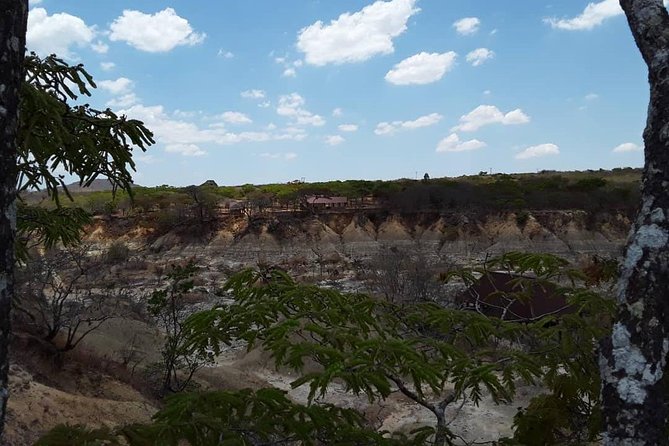
Isimila is one of those places where the past is not locked behind glass. The big draw is that the Stone Age finds were uncovered right there, in a dramatic area of eroded sandstone formations. When you stand in that same setting, it stops feeling like a textbook topic and starts feeling like a lived landscape, with people adapting to what the land offered.
The key discoveries you’ll hear about include hammerstones, axeheads, flints, and scrapers. The estimated age range, between 60,000 and 100,000 years, is what makes the site so globally significant. It also helps you understand that this was not one moment in time. This is evidence of long-term human behavior, tool use, and repeated activity in the area.
The 7:30 am start and how the schedule plays in real life
The experience begins around 7:30 am and runs about 8 hours total. That timing matters more than you might think, because you want enough hours to cover the site visit, museum stop, and a proper meal without feeling rushed.
I like that the day is built as a complete outing. You are not just dropped at a place and left to figure it out. You have a planned flow: get going early, reach Isimila, walk and learn at the site, then head to the museum, and finally slow down with lunch and water. If you prefer your trips structured, this is a good fit.
A small consideration: some people find the early start a bit of a wake-up call. If you hate mornings, plan for an earlier night.
Getting to Isimila: transport, distance, and the value of pickup
Isimila is just 21 kilometers from Iringa, on a route signposted off the Mbeya road to the left. That’s close enough for a one-day plan, but far enough that getting there on your own can turn into a half-planning project.
This tour includes private transportation and pickup is offered, plus parking fees. For me, that combination is where the value lives. You spend your energy on the site, not on figuring out timing, routes, or who is waiting where. It also tends to make the whole day more comfortable, especially if you want to move calmly from one part of the visit to the next.
You’ll also get a mobile ticket, which is handy when you are juggling a day of transfers.
Walking Isimila: tool evidence in an eroded sandstone setting
The main attraction is the Isimila Stone Age site itself. What makes it special is that you can connect the tools to a specific location, instead of treating them like generic “Stone Age artifacts.”
As you move around the site, you’ll focus on what archaeologists found. At Isimila, the tools include hammerstones, axeheads, flints, and scrapers, and they are estimated to be 60,000 to 100,000 years old. The point is not to memorize dates. The point is to understand what kind of work these tools suggest and why archaeologists care so much about the way evidence is layered and preserved.
You can think of it like this: the walk is your anchor. The formations give you the physical context, and the explanations help you translate that context into human activity. It’s a rare kind of learning where you get to look at the site while you understand why it matters.
Practical note: the experience is described as suitable for most travelers, so you are not dealing with extreme hurdles based on the provided info. Still, treat it like a day outdoors with uneven ground and plan accordingly.
The local museum: what to look for so it actually sticks
Right at the core of the experience is a museum visit with small, well-captioned displays. This is more than a quick add-on. It helps you connect what you saw outside with what the discoveries mean.
Here’s what I’d do if I were helping you make the most of it: read the captions slowly, then look back at the themes in the displays and ask yourself how they match the tool types you heard about. You’ll see examples tied to the work archaeologists did, including how finds were identified and interpreted.
This museum stop is a big reason the day feels complete. Without it, the site can turn into a scenic walk with scattered facts. With it, you leave with a clearer sense of the archaeological process and why Isimila matters.
Lunch, bottled water, and why that small inclusion matters
A lot of day trips promise you a lot, but then you end up stressed about food. This plan avoids that. Lunch and bottled water are included, and you also have a dedicated time for it within the roughly 8-hour day.
I like this for one simple reason: it protects your attention. If you have to decide where to eat mid-day, the trip fragments. With lunch taken care of, you can stay focused on the site, then recharge before the final stretch.
Also, the tour includes relaxation time baked into the schedule. It’s not only walking and reading. You get a proper break.
Price and value: what $87.18 is really covering
The price is listed at $87.18 per person for an about 8-hour outing. On paper, that can sound like a lot if you only consider “one site” and a museum. But when you break down what is included, the value becomes clearer.
Your money covers:
- Admission ticket included
- Lunch and bottled water
- Private transportation
- Parking fees
- Mobile ticket
For many people, private transport plus included admission and a meal is where day-trip pricing becomes fair. You’re not paying extra for basic logistics. And because Isimila is a short drive from Iringa, you are getting a full experience without losing half your day to travel admin.
Who this tour suits best, and who might want something else
This is a strong match if you want a structured, educational outing that stays grounded in real evidence. You’ll likely enjoy it if you like archaeology, enjoy learning in context, and prefer your guides to connect the dots between artifacts and the site where they were found.
It’s also a good fit if you are short on time in Iringa. Instead of trying to piece together transport, admission, and museum time on your own, this gives you one clean plan.
If you are the type who wants a very flexible schedule and zero fixed timing, you might find the early start and 8-hour length limiting. Also, if you are only looking for a quick photos-and-go stop, the museum and learning focus may feel like more than you want.
A note on the operator and what to expect from service
The experience provider is Wild Gaze Safaris Limited. In the available feedback about this company, Ernest, the director, is specifically mentioned as exceptional for organizing an amazing bespoke trip that combined history and adventure. While that comment is not tied to this exact one-day plan, it does suggest the operator cares about coordination and quality.
In practice, what you’ll feel as a traveler is how smoothly the day runs: pickup, transport, and the way the schedule flows from site learning to museum time to lunch.
Should you book the 1-Day Isimila Stone Age Site tour?
Yes, you should book it if you want a well-paced day focused on Isimila’s Stone Age discoveries, with museum interpretation and the practical comfort of lunch, water, and private transport. The price looks fair when you consider how much is included, especially the admission and meal.
Skip it if you only want a quick look, or if early starts are a deal-breaker for your trip style. Otherwise, this is one of the more meaningful one-day outings near Iringa, because it teaches you something real while you are standing in the same place where the discoveries were made.
FAQ
How long is the 1-Day Isimila Stone Age Site tour?
The tour is about 8 hours.
What time does the tour start?
The start time is listed as 7:30 am.
What is included in the price?
Lunch, bottled water, private transportation, parking fees, and admission ticket are included.
Do I need to arrange my own ticket?
No. A mobile ticket is provided.
Is alcohol included?
No. Alcoholic beverages are not included.
Is there free cancellation?
Yes. Free cancellation is available up to 24 hours in advance for a full refund.
Down in the Southern Highlands
- 1-Day Ruaha National Park
★ 5.0 · 10 reviews - 5 Days Ruaha National Park Safari
★ 5.0 · 5 reviews - 4 days / 3 Nights safari to Ruaha National park
★ 5.0 · 5 reviews - 2 Days Ruaha National park
★ 5.0 · 3 reviews
Just added from around Iringa Region



Ruaha Udzungwa and the Southern Highlands, compared.
 ★ 4.5Mikumi National Park & Udzungwa Water Falls 3 Days Group TourFrom $77019 reviews
 ★ 5.08 Days Safari to Mikumi, Ruaha & Udzungwa MountainsFrom $1,99514 reviews
 ★ 5.01-Day Ruaha National ParkFrom $43510 reviews
 ★ 5.05-Day Mikumi & Ruaha Tanzania Wildlife Lodge SafariFrom $1,70010 reviews
 ★ 5.06 Days Safari to Udzungwa Mountain NP, Ruaha NP and Mikumi NPFrom $1,65610 reviews
 ★ 5.04 Days Mikumi & Udzungwa National Parks SafariFrom $1,2009 reviews
 ★ 5.03 days safari to Mikumi and UdzungwaFrom $8048 reviews
 ★ 5.08 Days Safari to Mikumi NP, Ruaha NP and Nyerere NP + Isimila Stone Age SiteFrom $2,5007 reviews
Browse the lists this tour appears in