
REVIEW · MIKUMI NATIONAL PARK SAFARIS
8 Days Safari to Mikumi, Ruaha & Udzungwa Mountains
Three parks, one long safari day. This 8 day circuit pairs Mikumi National Park game drives with a hike in the Udzungwa Mountains, ending at Sanje Waterfalls. I love the elephant odds in Ruaha and I love the Sanje Waterfalls trek, with a guide and a packed lunch.
You travel by 4×4 Land Cruiser with a driver guide, which helps on those big distance days. In past departures, guides like Hamisi, Basili, Juma, Rahim, and Musa have been singled out for driving skill and strong spotting, and the group stays capped at 12.
The tradeoff is lots of time in the vehicle. Also, plan for a 6 to 7 hour trek to Sanje Waterfalls, which is described as gentle but still needs people who are physically fit.
In This Review
- Key Highlights to Know Before You Go
- Why Mikumi, Ruaha, and Udzungwa Works as an 8-Day Safari
- Price and Value: What $1,995 Buys You (and What It Does Not)
- Day 1-2 in Mikumi National Park: Towers, Birdlife, and Big Herds
- Day 3-5 in Ruaha National Park: Elephant Concentration and Patient Game Drives
- Day 6 to Isimila and Kitonga Inn: A Cultural Break Before Udzungwa Hiking
- Sanje Waterfalls Trek in Udzungwa: 6 to 7 Hours, Packed Lunch, Swimming Possible
- Guides, Group Size, and the 4×4 Day Rhythm
- Practical Logistics: Meals, Start Time, and What You Should Bring
- Who This Safari Suits Best (and Who Might Want a Different Plan)
- Should You Book This 8-Day Safari to Mikumi, Ruaha, and Udzungwa?
- FAQ
- Where does this safari start and where does it end?
- What time does the tour begin on the first day?
- How many people are in the group?
- What parks and activities are included?
- What is included in the price?
- What is not included?
- How fit do I need to be for the Sanje Waterfalls trek?
Key Highlights to Know Before You Go
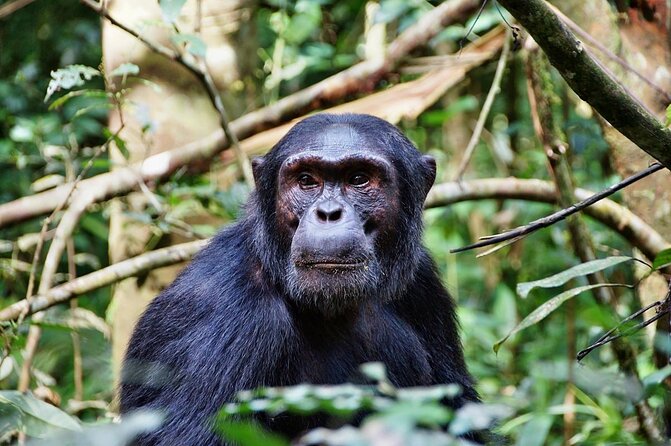
- Elephant focus at Ruaha National Park: a reputation for high elephant concentration.
- Game-viewing options in Mikumi: observation towers plus morning and afternoon drives.
- A real mountain day in Udzungwa: Sanje Waterfalls, altitude around 750 metres, packed lunch, and swimming possible.
- Cultural stop with Isimila Stone Age Site: a short visit en route to Udzungwa.
- Guides with proven driving and spotting skills: common praise for getting to the right viewing spots safely.
Mikumi from other starting points
- MIKUMI NATIONAL PARK – 3 Days★ 4.5 · 63 reviews
- 2 nights 3 days safari to mikumi national park★ 5.0 · 62 reviews
- 2 Days 1 Night Mikumi National Park from Dar es salaam★ 5.0 · 60 reviews
- Private Full-Day Trip to Mikumi National Park from Dar es Salaam★ 5.0 · 54 reviews
Why Mikumi, Ruaha, and Udzungwa Works as an 8-Day Safari
If you want Tanzania without feeling glued to one location, this circuit makes sense. You’ll move through Mikumi and Ruaha for wildlife drives, then swap the vehicle for a mountain trek in Udzungwa. It’s a southern circuit feel, with more open-country travel time and more contrast between plains and hills.
Mikumi is set up for classic game viewing, with the added bonus of multiple observation points. Ruaha leans hard into elephants and big animal energy, and you’ll spend multiple days there to give wildlife time to show up. Udzungwa brings a different pace, plus the standout moment of hiking to Sanje Waterfalls, where the day isn’t only about spotting animals.
Price and Value: What $1,995 Buys You (and What It Does Not)
At $1,995 per person, the value hinges on what’s already covered. Your price includes the 4×4 Land Cruiser and driver guide, plus park fees. Meals are also built in: 7 breakfasts, 8 lunches, and 7 dinners. That matters because those add-ons can turn a cheap-looking safari into a pricey one fast.
This tour also benefits from a small group size (up to 12) and pickup offered, both of which reduce friction when you’re tired after flights and want the day to start smoothly. There’s also mention of group discounts and a mobile ticket, which usually means fewer last-minute surprises.
What you still need to budget for: drinks, laundry, tips, and personal items, plus travel insurance (not included). If you’re someone who tends to run up costs on soft drinks or cocktails, plan for that early, because safari days can be long and thirst happens.
Day 1-2 in Mikumi National Park: Towers, Birdlife, and Big Herds
Mikumi starts with a drive after breakfast, then lunch in Morogoro town. In the afternoon you’ll do game drives and settle in for dinner and overnight at camp. The timing is good because you’re not wasting the first day with only travel. You get out on the road while daylight still gives you a fair shot at sighting wildlife.
Mikumi’s setting helps your odds. It sits between the Uluguru Mountain area to the northeast, the Udzungwa Mountains to the south west, and the Rift Valley escarpment. Practically, that means wide safari views and plenty of places for animals to move through.
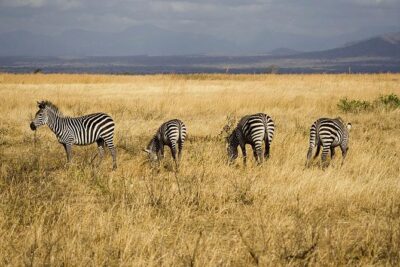
What you’re likely to see includes giraffe, buffalo, elephants, plus zebras and hippos in the right conditions. You may also encounter lions, leopards, and African wild dogs if you’re lucky. Expect a lot of the usual Tanzanian safari cast too, such as impala, warthog, hartebeest, wildebeest, eland, and antelope.
Day 2 gives you the best version of a Mikumi day, with morning and afternoon game drives. There’s even an option to arrange a picnic lunch so you can stretch the exploring time. If you like the idea of staying out longer and letting the driver put you where the action is, that option can feel worth it.
One small practical note: Mikumi has several observation towers. If you use them, you’ll often get a clearer scan of the park than from a single vehicle stop. It also breaks up long driving stretches without losing game-viewing time.
Deeper south, Ruaha and Udzungwa
Day 3-5 in Ruaha National Park: Elephant Concentration and Patient Game Drives
After breakfast, the road trip into Ruaha includes travel across the Udzungwa mountain chain area and a stop for lunch via Iringa town. You also pass the Ruaha Great River, then reach Ruaha in time for an evening game drive. That pattern, travel by day then wildlife by dusk, is common in safari circuits for a reason: animals can be moving when light softens.
Ruaha is described as the largest park in East Africa after its nearby game areas declared as part of Ruaha National Park, which gives you a sense of scale. Scale is not just a brag line here. It affects how you feel on safari, because larger areas can mean more time spent searching, and that makes good guiding and driving skills matter.
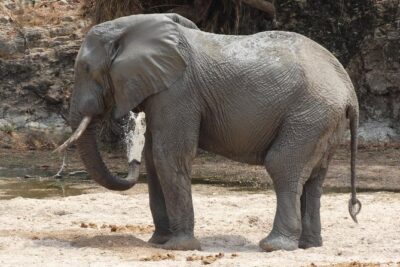
Ruaha’s headline is elephants. This park is famous for high concentration of elephants compared to other parks in East Africa. That’s huge if elephants are your top reason for coming. It also changes what you’ll notice on drives, because you may spend time watching herd behavior rather than only chasing rare predators.
Other mammals you might spot include Kudu (greater and lesser), Sable and Roan antelopes. Over the next two days (with morning and afternoon drives), you’ll get repeated chances to find the best viewing situations. That repetition helps, because wildlife does not work on a schedule. It just works on opportunity, and you’re giving yourself time to catch it.
The reality check: predators can be harder to predict than elephants. If your personal wish list is lions or wild dogs, you might get lucky, but Ruaha is the place to aim for elephants first and let everything else be the bonus.
Day 6 to Isimila and Kitonga Inn: A Cultural Break Before Udzungwa Hiking
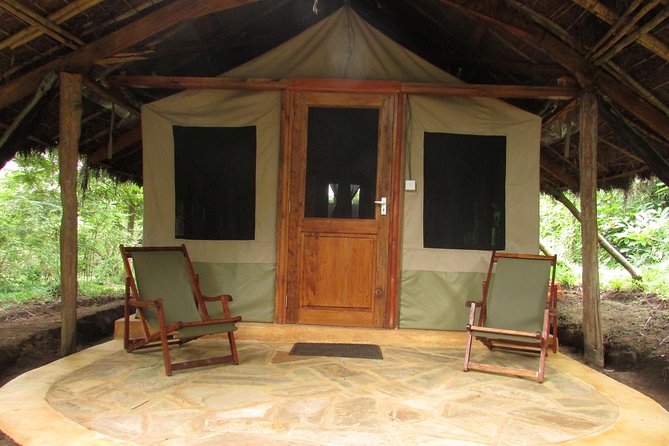
Moving from Ruaha toward Udzungwa, you’ll have a day that is part travel and part experience. After breakfast, you drive to Udzungwa Mountain National Park. There’s a short visit to the Isimila Stone Age Site, described as about 21 km from Iringa town. It’s brief, but it adds texture to your safari. You’re not only seeing wildlife, you’re also getting a glimpse of how older human life fits into the region.
Lunch follows at Kitonga Inn Hotel, located at the foot of Kitonga Mountain. That stop matters because it breaks the day into something you can actually feel, rather than a nonstop squeeze between parks.
In the late portion of the day you continue onward to the camp for dinner and overnight. That sets up the next day’s trek, since you’ll want rest after a road day.
Sanje Waterfalls Trek in Udzungwa: 6 to 7 Hours, Packed Lunch, Swimming Possible
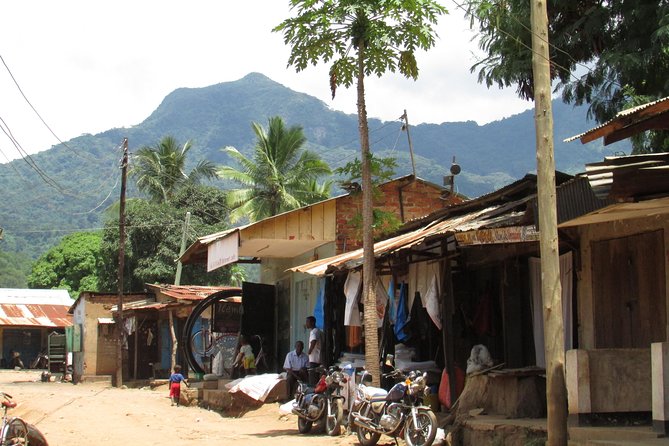
This is the day the safari turns active. After breakfast, you pick up a packed lunch with a mountain guide. Then you start a gentle trek toward Sanje Waterfalls, at an altitude of about 750 metres above sea level.
The route is described as gentle, but the key is time: the long way takes about 6 to 7 hours, including relaxation time. That’s not a quick stroll, and you’ll want to treat it like a serious hike day, even if it’s labeled gentle. It also says the trek needs people who are physically fit, so if you’re recovering from an injury or you know you struggle with sustained walking, this part deserves careful thought.
You’ll get views while you’re eating lunch, including the Kilombero sugar cane plantation in the scenery. Then, later, you descend in the late evening for dinner and overnight.
One exciting detail: swimming is possible. The trip description does not spell out rules or timing, so I’d treat it as a conditional bonus. If you plan to swim, bring swim-ready items and keep safety in mind with the guide.
Guides, Group Size, and the 4×4 Day Rhythm
A lot of safari quality comes down to the driver guide. In the feedback you can see a consistent theme: strong driving, smart positioning, and an ability to turn long distances into productive wildlife hours. People have credited guides like Hamisi for excellent driving skills, Basili for great guiding and attention to detail, and Otto for game drives that delivered good viewing spots. Others highlighted Martin for pointing out plants, animals, and bird species, and Rahim for being friendly and professional.
What you can take from that, for your decision-making, is simple: choose this kind of tour when you value guidance, not just a vehicle and a list of parks. When you’re dealing with repeated drives across changing habitats, it’s more than comfort, it is how you get your best chance at wildlife.
The group limit of 12 also changes the vibe. With a smaller number of people, the driver guide can keep an eye on the group and spend more time adjusting the day when conditions shift. For a trek day, it can also mean a calmer start and a less chaotic lunch and regroup pattern.
Practical Logistics: Meals, Start Time, and What You Should Bring
The safari starts from Dar es Salaam with a start time of 7:30 am. Your ending is back at the meeting point, with lunch in Dar es Salaam on the final day and afternoon drop-off at the hotel, airport, or residence.
Meals are handled for you on most of the trip. You’re set up with breakfast daily for 7 days, lunch for 8 days, and dinners for 7 days. That’s a big deal because it removes a lot of daily planning. It also means you can pack based around safari-day timing rather than hunting for food mid-route.
Not included are drinks and laundry. Tips and personal items are also not included. If you like having control over beverage choices, plan ahead. If you tend to overspend on convenience items, keep an allowance for snacks and any drink purchases outside meal inclusions.
For what to bring, keep it straightforward: comfortable walking shoes for the trek, sun protection, and a way to keep essentials dry during travel. Since swimming is possible on the Sanje Waterfalls day, bring a plan for that, but don’t assume it will be open season every time.
Also, this experience requires good weather. If weather forces a change, you’re supposed to get offered a different date or a full refund. That’s worth keeping in mind if your schedule is tight.
Who This Safari Suits Best (and Who Might Want a Different Plan)
This tour fits you if you want a mix of wildlife and active time. Mikumi and Ruaha give you repeated game drives, and Udzungwa gives you that mountain experience with Sanje Waterfalls. It’s a good match for people who like animals but also want a day that gets you walking, not only viewing.
You’ll be especially happy if elephants are a top priority. Ruaha is the elephant-focused part of the circuit, and you spend more than a single drive there.
The biggest mismatch is if you want minimal time in a vehicle or if you’re not comfortable with a 6 to 7 hour trek. Even though it’s described as gentle, it still takes stamina. So if your physical limits run low, you might find another safari style more comfortable.
Should You Book This 8-Day Safari to Mikumi, Ruaha, and Udzungwa?
Book it if you want a small-group, guided southern safari that mixes big wildlife drives with a memorable mountain day. The combination is the main selling point: strong safari odds in Mikumi, an elephant-heavy focus in Ruaha, and a real hike experience at Sanje Waterfalls.
Skip it, or at least consider alternatives, if long travel days make you cranky or if the trek time is a stretch. Also remember that drinks and personal expenses are on you, and the tour is non-refundable if you cancel. So line up your dates with the weather reality in mind.
If your idea of a good trip includes both animals and getting out of the car, this one is a solid bet for your next Tanzanian chapter.
FAQ
Where does this safari start and where does it end?
It starts in Dar es Salaam, Tanzania. The experience ends back at the meeting point, with afternoon drop-off at the hotel, airport, or residence.
What time does the tour begin on the first day?
The start time is 7:30 am.
How many people are in the group?
The tour has a maximum of 12 travelers.
What parks and activities are included?
You’ll visit Mikumi National Park, Ruaha National Park, and Udzungwa Mountains National Park. Highlights include game drives in Mikumi and Ruaha, a visit to the Isimila Stone Age Site, and a trek to Sanje Waterfalls.
What is included in the price?
Included are a 4×4 Safari Land Cruiser, driver guide, park fees, 7 breakfasts, 8 lunches, and 7 dinners.
What is not included?
Not included are drinks, laundry, tips, travel insurance, and other personal items.
How fit do I need to be for the Sanje Waterfalls trek?
The trek is described as gentle, but it needs people who are physically fit. The long way takes about 6 to 7 hours including relaxation time, and swimming is possible.
Down in the Southern Highlands
- Mikumi National Park & Udzungwa Water Falls 3 Days Group Tour
★ 4.5 · 19 reviews - 6 Days Safari to Udzungwa Mountain NP, Ruaha NP and Mikumi NP
★ 5.0 · 10 reviews - 5-Day Mikumi & Ruaha Tanzania Wildlife Lodge Safari
★ 5.0 · 10 reviews - 4 Days Mikumi & Udzungwa National Parks Safari
★ 5.0 · 9 reviews - 3 days safari to Mikumi and Udzungwa
★ 5.0 · 8 reviews
Mikumi, a Few More Ways In
- MIKUMI NATIONAL PARK – 3 Days
★ 4.5 · 63 reviews - 2 nights 3 days safari to mikumi national park
★ 5.0 · 62 reviews - 2 Days 1 Night Mikumi National Park from Dar es salaam
★ 5.0 · 60 reviews - Private Full-Day Trip to Mikumi National Park from Dar es Salaam
★ 5.0 · 54 reviews - Private 3 Days 2 Nights Mikumi Adventures
★ 5.0 · 47 reviews
Just added from around Dar es Salaam


Mikumi National Park Safaris, compared.
 ★ 4.7From Zanzibar: Mikumi Safari Day Trip with Flights and MealFrom $4511,470 reviews
 ★ 5.0Mikumi Safari Tour: Day Trip Return Flight From ZanzibarFrom $60097 reviews
 ★ 5.0Mikumi National Park Day TripFrom $52076 reviews
 ★ 4.5MIKUMI NATIONAL PARK – 3 DaysFrom $72563 reviews
 ★ 5.02 nights 3 days safari to mikumi national parkFrom $65062 reviews
 ★ 5.02 Days 1 Night Mikumi National Park from Dar es salaamFrom $67060 reviews
 ★ 5.02 Day Safari To Mikumi National Park + transfers from Dar Es SalamFrom $90256 reviews
 ★ 4.02 Day safari to Mikumi departure from ZanzibarFrom $69054 reviews
Browse the lists this tour appears in