
REVIEW · BIG FIVE AND GAME DRIVE SAFARIS
3 days leopard safaris
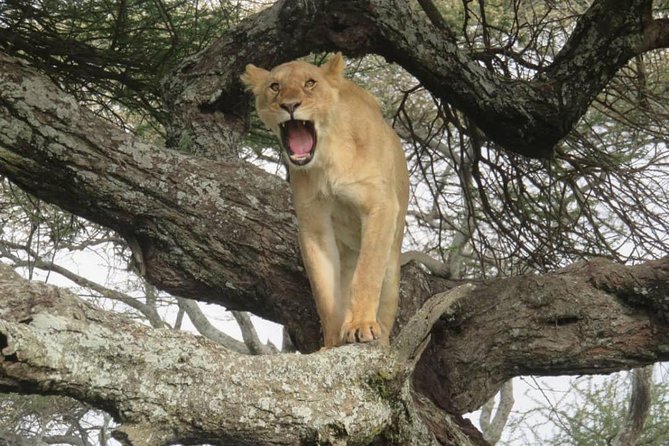
Serengeti leopards start with an early alarm. This 3-day safari route in Tanzania strings together Serengeti game drives and the jaw-dropping caldera of Ngorongoro Crater, with enough time in the field to make those spotted big cats feel like a real possibility rather than a wish. The setup is designed for steady viewing, not a rushed highlight reel.
Two things I really like: the guides bring real field smarts, and they keep the day moving at the right pace. One group specifically praised guide Hamisi as a mine of information, while another mentioned guide Hussein helping spot landmarks like the Great Rift Valley along the drive. Second, I love the itinerary rhythm, from a sunset game drive on Day 1 to a full Day 2 spent adjusting where you drive based on animal movement.
One consideration before you book: a leopard safari can never be guaranteed. Animals move, and the route depends on where herds and predators are that day, so if your heart is set on one specific sighting, go with flexible expectations and good optics (binoculars help).
In This Review
- Key safari highlights that matter
- Day 1 Arusha to Serengeti: the long drive that pays off
- Day 1 to Day 2 nights: camp logistics you can plan around
- Day 2 Central Serengeti: following the rains and the herds
- Day 3 Ngorongoro Crater: the viewpoint and the open-top hour
- Guides and the private-tour feel: what you actually get
- Price and value: what $1,276.93 includes, and what that implies
- What you should pack and prepare for this kind of timing
- Who this safari fits best
- Should you book this 3-day leopard safari with Wild Root?
- FAQ
- What time does the safari start, and where do we meet?
- How long is the 3-day itinerary and what does it include?
- What meals are included?
- Is this tour private, and is pickup offered?
- What is not included in the price?
- What happens if weather is poor or I cancel?
Key safari highlights that matter
- Arusha to Serengeti early start (8:00 am departure) so you waste less daylight in transit
- Day 1 sunset game drive in Serengeti, with dinner at Serengeti seronera public camp site
- Day 2 herd-following strategy based on rain cycles, with a guide who knows where to find animals
- Ngorongoro Crater first-view viewpoint before the crater experience, home to many mammals
- Open-top vehicle viewing for close watching and better photo angles during crater time
- Guide-led extras including a noted picnic stop handled by Makenzi for at least some groups
Still weighing it up? These Serengeti trips came out well when we reviewed them.
- Serengeti Balloon Safari and authentic bush breakfast★ 5.0 · 2,480 reviews
- Extraordinary Hot air Bolloon ride in Serengeti | BURIGI CHATO SAFARIS CO L.T.D★ 5.0 · 6 reviews
- 4 Days Private Midrange Lodge Safari to Serengeti & Ngorongoro★ 5.0 · 4 reviews
Day 1 Arusha to Serengeti: the long drive that pays off
This itinerary kicks off at 8:00 am in Arusha, and then you head toward Serengeti through the Ngorongoro Conservation Area. That early start is not just tradition, it is practical. With safaris, your best viewing tends to cluster around early and late hours, and this day is built to get you into the right zone before you’re fully sleepy.
On the way, you will do an en-route game drive through the conservation area. One review highlighted the Great Rift Valley being pointed out during the drive, and that kind of in-the-moment context is part of why this route feels more than just “transport plus animals.” You get geography, ecology, and a better sense of where you are even before the serious spotting starts.
By early afternoon, you arrive in Serengeti and go out again on game drive until sunset. Serengeti is the big-name choice for a reason, and this route leans into what makes it famous. You can expect chances to see buffalo and wildebeest herds, elephants and giraffes, plus the smaller “everywhere” species like impala and Grant’s gazelle. Lions and leopards are mentioned as animals you can often see, and in my view that wording matters, because it signals your timing and guide effort are meant to maximize probability rather than promise the impossible.
Dinner is at Serengeti seronera public camp site. That matters too. Being in the park zone reduces the “dead time” you lose when you stay too far away.
What to watch for on Day 1: sunset behavior. Predators often feel more active, and herbivores can bunch up near feeding areas as the light changes. Pack for cold mornings and warmer afternoons. Serengeti days can swing, and you will be out watching a lot.
Day 1 to Day 2 nights: camp logistics you can plan around
This safari uses camp site accommodation at Serengeti seronera for Day 1 and Day 2 nights. That is a very different vibe than a city hotel, and it shifts your expectations in a good way. Instead of thinking about comfort check-ins, you are thinking about game drive windows, meal times, and recharging your camera batteries.
Meals are included in a straightforward way: breakfast on all three mornings, plus lunch and dinner during the trip (the totals are 3 breakfasts, 2 lunches, and 2 dinners). Bottled water is also included. That is the kind of “small” inclusion that makes a real difference during long days, because you do not have to hunt for supplies between drives.
Alcohol is not included. I’m not bringing that up to be a downer, just to help you budget. If you like a beer or a glass of wine at the end of a long viewing day, you’ll want to plan that outside the safari package.
Good safari mindset for camp nights: aim to sleep, not scroll. Your alarm will probably feel like it arrived early on purpose. When you rest well, you notice more during drives.
Day 2 Central Serengeti: following the rains and the herds
Day 2 is built as a full game drive day in central Serengeti National Park, and that is usually where a safari starts to feel “real.” It is not one quick loop. It is time to stay with animals as they move, with the guide adjusting where you go based on herd location.
The itinerary explains the big seasonal pattern: during the short rainy season in November and December, herds can move from hills in the north down toward the plains in the south. During the longer rainy season from April to June, the movement reverses. The key point for you is that this is not treated as a rigid calendar. The guide is expected to know where animals are and where viewing tends to be best.
This is also why leopard safaris are tricky in the best way. Leopards are not typically tracked like a herd. They pop in and out of view based on prey behavior, cover, and the general rhythm of the area. With a full day, your guide can reposition when the opportunity appears.
There is also an optional stop: the Serengeti Visitor Centre, where you can learn about park history and research led by the Frankfurter Zoological Society. Even if you already read about Serengeti, I like visitor centers because they help you connect what you see on the road with why it matters. It turns spotting into understanding, and it can also make you a calmer, smarter spotter on future drives.
You will spend the second night back at Serengeti seronera public camp site, keeping everything simple.
What to watch for on Day 2: herd movement clues. When wildebeest and buffalo shift, predators often follow in their own timing. If you see birds reacting, dust patterns changing, or animals tightening into groups, those can be your signposts that something is about to happen.
Day 3 Ngorongoro Crater: the viewpoint and the open-top hour
After breakfast, you depart for Ngorongoro Crater, often called the eighth natural wonder and described as Africa’s Eden. Whether or not you use that exact nickname, the experience itself is about a first glimpse from a panoramic viewpoint. That moment matters because it sets expectations. You are looking at a huge natural caldera, and when you then get closer, you understand why people rate this stop so highly.
Ngorongoro is also a biodiversity machine. The route notes over 120 species of mammal, and it specifically calls out the chance to see the endangered black rhinoceros eating on the grass plains. It also highlights hippos in the cool waters, which tells you this is not just a one-species crater. You can look down and see how water and grass shape the whole food web.
Your vehicle viewing is described as open-top, which is a practical advantage. You get more freedom for scanning and photography, and you are closer to the action without glass and reflections getting in your way. It is also easier to read animal behavior when your viewing angles are wider.
Ngorongoro is inside the Ngorongoro Conservation Area, so you are still in the conservation mindset, not a themed attraction. The best use of your time here is patience. Animals can appear suddenly once you reach a viewing zone, then disappear just as quickly.
What to watch for on Day 3: rhino timing and patience. Black rhino can be hard to spot until it is right in front of you, so do not lock onto one distance. Scan left to right in sections, and keep your eyes moving between grass lines and likely paths.
Guides and the private-tour feel: what you actually get
This is a private tour, meaning your group is the only group participating. That changes the tone of the safari more than people expect. You are not sharing your guide’s attention with strangers who need to stop for coffee or slow down for every photo. Your guide can organize your day to match your viewing interests and energy level.
Private also usually means you can ask questions more easily during drives. The reviews back this up. Hamisi is praised for being full of information, and Hussein is noted for pointing out the Great Rift Valley along the way. When your guide is actively interpreting what you are seeing, you get more from the same animals. You stop watching only for big moments and start noticing the smaller signals too.
The experience provider is Wild Root Safaris and Adventures, and review comments say organization was smooth. Another review specifically mentions Makenzi as a kind, familial guide, and that same review calls out a perfect picnic. Even though the detailed itinerary does not list every break, this is still useful information for you because it suggests the guide team sometimes adds thoughtful comfort moments, not only long stares into the savanna.
Price and value: what $1,276.93 includes, and what that implies
The price is $1,276.93 per person for about 3 days, and you get a lot of the big safari costs bundled in. Included features list private transportation, parking fees, and bottled water, plus meals: breakfast (3), lunch (2), and dinner (2). Dinner and lunch matter because safari days are long. When meals are taken care of, you spend more time on viewing and less time coordinating.
The biggest value driver is the amount of driving time in the right parks. Serengeti and Ngorongoro are not quick hops. The itinerary uses early departures and multiple game drive sessions to maximize daylight. That is exactly what you want to pay for, because once you are on safari, time is the resource that disappears first.
Alcohol is not included, so treat that as your main “extras” budget item. Also, while the itinerary suggests leopard possibilities, your cost is really for the structure, the vehicle time, and the guiding effort, not for any guaranteed animal outcome.
If you are deciding between a cheaper safari and this one, ask yourself: are you paying for fewer drive hours, fewer parks, or less experienced interpretation? With this route, the emphasis is on both Serengeti time and the Ngorongoro crater experience, which is a strong combination if you want big-animal diversity plus the iconic crater viewing.
What you should pack and prepare for this kind of timing
This safari clearly expects you to handle early and late viewing windows, plus at least one full day of game driving. The parks are outside a normal urban routine, so you benefit from being ready for long hours outdoors.
Pack for sun and possible cool moments. The route includes early starts from Arusha and drives until sunset, and an open-top vehicle is involved on Day 3. You’ll want something that covers you from sun glare and helps with comfort for extended sitting.
Wear shoes you can stand and move in, because game viewing often means shifting positions fast when animals appear. Bring binoculars if you own them, since leopards and rhinos can require scanning and careful distance reading. If you do not own binoculars, you might find that even simple smartphone zoom plus steady scanning can get you decent results, but binoculars are the upgrade for real viewing.
Also, this experience requires good weather. If weather is poor, it can affect whether the plan runs. So go in understanding that nature calls the shots, not your schedule.
Who this safari fits best
This 3-day route fits best if you want:
- A leopard safari angle but still a high chance of seeing a full menu of Serengeti wildlife
- Two major parks in a short trip, Serengeti plus Ngorongoro Crater
- A structure that gives you enough field time to adapt to animal movement, especially on Day 2
- A private setup so your guide can work at your pace
It also suits couples and friends who want personal guiding, not a bus-and-bundle style. If you’re traveling with kids, it says most travelers can participate, but keep in mind you will be doing long days in vehicles.
Should you book this 3-day leopard safari with Wild Root?
I would book this safari if you care about two things: serious game-drive time and a crater day that feels like more than just a drive-through. The itinerary hits Serengeti hard across Day 1 and Day 2, then adds Ngorongoro’s iconic caldera viewing on Day 3. That combo is a good match for people who want both variety and the kind of memorable scenery that makes photos look believable.
I’d think twice if you are hoping for a guaranteed leopard sighting or if you get grumpy about early mornings. Wildlife can’t be scheduled, and this route is designed for flexibility, not a promise.
Bottom line: if you want a well-run, private-feeling safari with meals handled, water included, and guides who seem genuinely invested, this is a strong option. Just keep your expectations aligned with how safari life works, and you’ll enjoy the hunt as much as the sightings.
FAQ
What time does the safari start, and where do we meet?
The experience starts in Arusha, Tanzania with a start time of 8:00 am.
How long is the 3-day itinerary and what does it include?
It lasts about 3 days and takes you to Serengeti National Park and Ngorongoro Crater (within the Ngorongoro Conservation Area).
What meals are included?
The package includes breakfast (3 times), lunch (2 times), and dinner (2 times), plus bottled water.
Is this tour private, and is pickup offered?
Yes, it is a private tour/activity, meaning only your group participates. Pickup is offered and the start point is Arusha.
What is not included in the price?
Alcoholic beverages are not included.
What happens if weather is poor or I cancel?
The experience requires good weather. If it is canceled due to poor weather, you will be offered a different date or a full refund. The cancellation policy is free cancellation up to 24 hours before the start time for a full refund. If you cancel within 24 hours, the amount paid is not refunded.
Just added from around Serengeti
Big Five and Game Drive Safaris, compared.
 ★ 5.0Tanzania Simba Safari – 5 DaysFrom $2,897217 reviews
 ★ 5.0Living Among LionsFrom $3,872191 reviews
 ★ 5.0Big Five Safari In TanzaniaFrom $3,75099 reviews
 ★ 5.0Big Five Luxury Safari in TanzaniaFrom $2,90068 reviews
 ★ 4.3From Zanzibar: Nyerere National Park Game Drive with LunchFrom $55059 reviews
 ★ 5.0From Arusha: 6 Day Classic Game Drive Serengeti & NgorongoroFrom $2,86449 reviews
 ★ 5.04-Day Simba Safari – Mid Range TourFrom $2,17947 reviews
 ★ 5.05 Days 4 Nights Tarangire, Serengeti , Ngorongoro & Manyara Wildlife SafariFrom $2,60040 reviews
Browse the lists this tour appears in