
REVIEW · STONE TOWN HERITAGE WALKS
Zanzibar: Stone Town Tour with Slave Market Ticket
Stone Town hits you fast, then leaves a mark. This guided walk is interesting because you see the Swahili-Arab mix of Zanzibar alongside the island’s heavy trade history, from carved doorways to the former slave market now marked by an Anglican church. I like that the tour is built around specific landmarks, not vague wandering.
One of my favorite parts is the way the route links everyday places with big stories. You start in the old trade zone, then move through Darajani Market where you can browse spices and snap photos before heading into the tight lanes where Zanzibar’s architecture really shows off.
The main drawback to consider is that a lot depends on the guide and timing. Some schedules can run short, and a few past participants reported communication issues, so if you care about getting every stop, wear comfy shoes and give yourself buffer time.
In This Review
- Key Things That Make This Tour Worth Your Time
- Stone Town in 3 Hours, What You Actually Get
- The Old Slave Market Start, and Why It Sets the Tone
- Darajani Market to Zanzibar Coffee House, How the Tour Keeps You Moving
- Swahili Meets Everywhere, the Stops Where Architecture Actually Matters
- Forodhani Gardens Food Time, Plus a Shopping Reality Check
- House of Wonders and Old Fort, Big Names, Worth the Attention
- Freddie Mercury Museum Add-On and Notre Dame for a Final Photo Wave
- Price and Value for $29, What’s Included and What Isn’t
- Timing, Languages, and Practical Tips for Narrow-Street Walking
- Should You Book This Stone Town Tour with the Slave Market Ticket?
- FAQ
- How long is the Stone Town tour?
- Where does the tour take place?
- How much does the tour cost?
- What is included in the price?
- Is the Freddie Mercury Museum included?
- Is pickup included?
- What languages are available for the live guide?
- Will I be walking?
- What do you visit besides the slave market?
- What is the cancellation policy?
Key Things That Make This Tour Worth Your Time
- Former East Africa Slave Market ticket included when you start, so you can focus on the story instead of tickets.
- Old Stone Town landmarks in one 3-hour route, from House of Wonders to notable cathedrals.
- Darajani Market + City Market style shopping stops, where you can taste, look, and buy small stuff without feeling lost.
- Forodhani Gardens food time, including local favorites like sugarcane juice and Zanzibar pizza.
- Coffee break at Zanzibar Coffee House, a nice reset during the walking.
- A guide can make the difference, with one standout guide named Mbwana (also seen spelled Nbwana) praised for clear history and help with purchases.
Other Stone Town walks we followed
- Zanzibar: Stone Town, Spice Tour, Prison Island with Lunch★ 4.4 · 1,219 reviews
- Zanzibar: Prison Island, Stone Town, & Spice Farm Tour★ 4.5 · 579 reviews
- Zanzibar: Stone Town, Spice tour & Prison Island with Lunch★ 4.6 · 453 reviews
- Stone Town Private Walking Tour★ 5.0 · 371 reviews
Stone Town in 3 Hours, What You Actually Get
Stone Town is the kind of place where doing it yourself can be fun, but also confusing. Streets twist. Signs hide. You end up walking in circles with great photos and few answers. This tour is designed to cover a lot ground quickly, while still giving you meaning for what you are seeing.
The big win is the tight format. At about 3 hours of walking, you get a sequence of key sites that represent different layers of Zanzibar, including Swahili culture plus Arabian, Indian, European, and Portuguese influence. Stone Town is a UNESCO World Heritage site (since 2000), and you feel that in the buildings, balconies, and the famous narrow street layout.
You also get structure around the darker side of Zanzibar. The tour begins at the former slave market, then keeps moving through the city so the history is not a one-stop stop. The downside is obvious: you are walking the narrow streets and doing shopping. If you need long seated breaks or slow pacing, this might feel rushed.
Still, if you are short on time, new to Stone Town, or want a guided explanation for what you would otherwise miss, this route makes sense.
The Old Slave Market Start, and Why It Sets the Tone
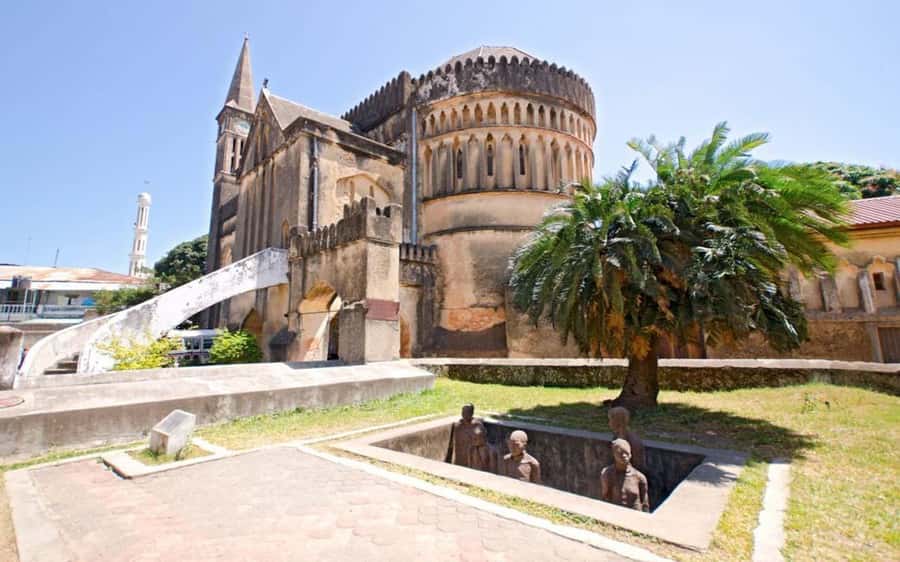
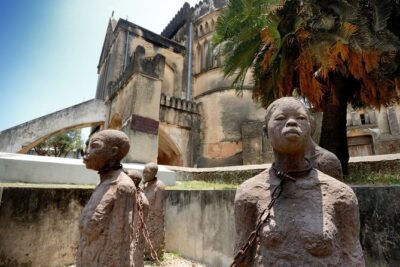
Your first stop is the Old Slave Market, which today is associated with an Anglican church. This is not just a photo stop. Your guide explains the story of the East African slave trade routes and the people connected to the mission era, including Dr. David Livingstone and other missionaries.
This matters because Stone Town can look pretty from a distance. The doors, balconies, and coral-stone walls are gorgeous. But the city also holds a moral record, and starting here keeps the rest of the walk honest. You connect the architecture to human history, not just aesthetics.
One practical point: the former slave market entry is included with the tour ticket. Even so, one report noted needing to pay again (they mentioned a small extra slave market entry cost). That is not something you should assume will happen, but it is a smart reason to keep your voucher details handy and double-check the ticket name on arrival.
If you want a tour where you can understand what you are seeing, this is the right opening chapter. It also makes the later stops feel more grounded, from palace grandeur to religious buildings.
Darajani Market to Zanzibar Coffee House, How the Tour Keeps You Moving
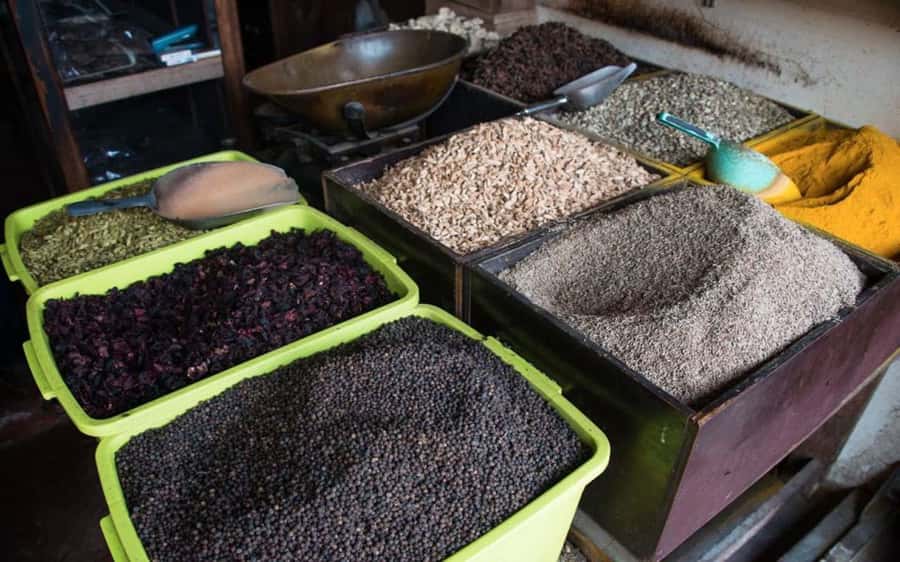
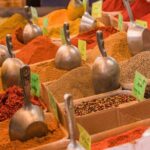
After the opening history lesson, the tour shifts into daily life. You head to Darajani Market, a busy area where you can see fresh fruits, vegetables, meats, fish, and spices. This is one of those places where a guide helps you read what you are looking at, even if you do not plan to buy much.
You also get time to shop and sample local delicacies, plus take photos. The goal is not to push you into buying. It is to help you experience the market energy without getting overwhelmed by narrow aisles and fast-moving crowds.
Then you walk toward the Zanzibar Coffee House for a breather. Coffee sounds like a small stop compared to palaces and cathedrals, but it works. It gives your feet a reset and keeps the afternoon from turning into a blur of stone walls and souvenir stalls. It is also a good moment to slow down, ask questions, and get your bearings.
From here, you move deeper into Stone Town’s signature lane structure. The narrow streets are the same ones you will later browse for souvenirs, but now you have context for what you are passing.



Swahili Meets Everywhere, the Stops Where Architecture Actually Matters
Stone Town’s best moments are visual and specific. This tour gives you time around the places that explain why.
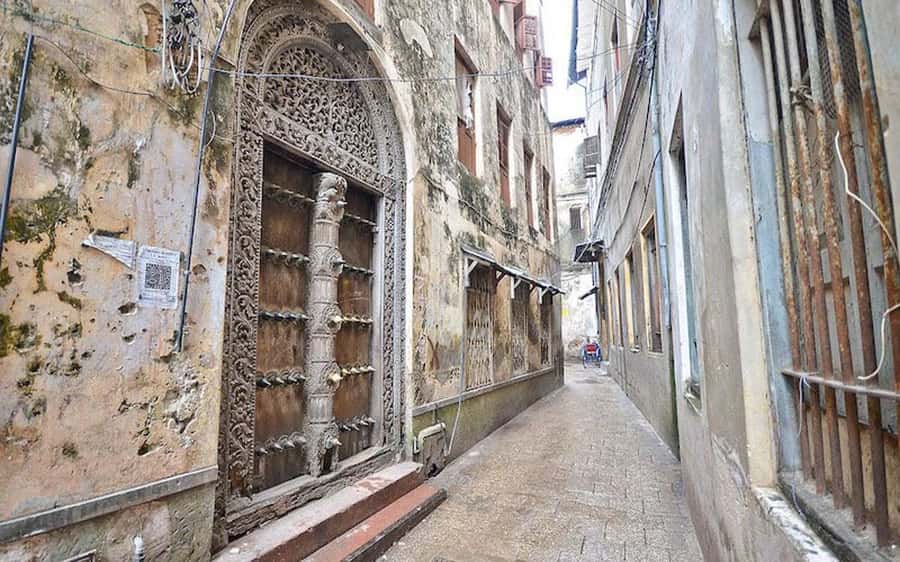
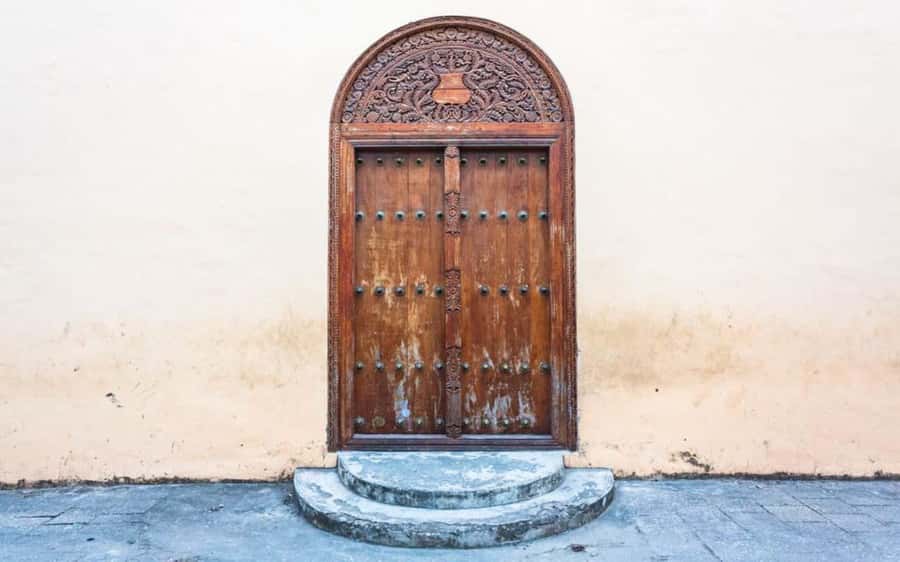
You will see Zanzibar doors and other architectural details like carved doorways and grand balconies, plus the general feel of the city’s fusion influences. That blend is why Stone Town feels both Middle Eastern and Indian Ocean at the same time, even if you do not have a museum ticket.
A few of the key landmarks you will encounter include:
- Sultan’s Palace, where you see the sultanate story in a physical way
- The Old Fort area, a significant landmark tied to battles and earlier uses
- Stops linked to Portuguese influence, including the Old Portuguese Fort
- The Tip Tip House, a notable local reference point you can recognize as you walk
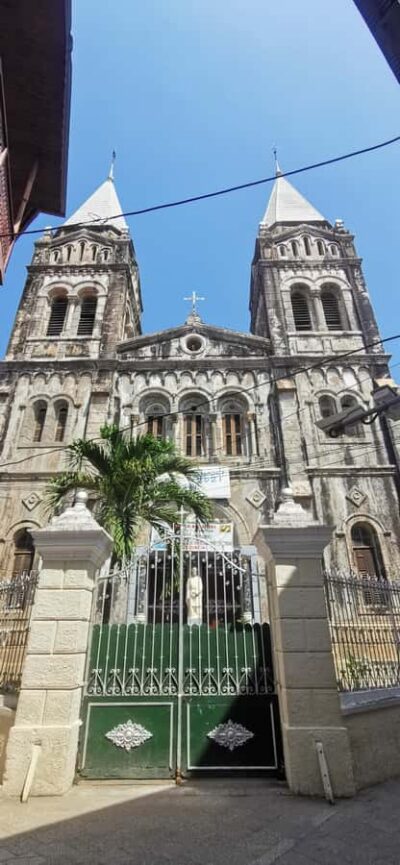
You may also pass by religious architecture that shows how many cultures layered into Stone Town. The Anglican Cathedral and the French Catholic Cathedral (Notre Dame of Zanzibar) are both part of the walk. Notre Dame of Zanzibar is in the heart of Stone Town, so it is a perfect moment to slow down and compare styles against the surrounding coral-stone buildings.
The most helpful part is that your guide ties these sites back to the story of Zanzibar, not just a list of names. If you are the type who likes answers, this is where it pays off.
Forodhani Gardens Food Time, Plus a Shopping Reality Check
Next comes Forodhani Gardens, known as a popular evening spot. Even if you are visiting earlier, the setting is still a strong signal of how locals and visitors mix around food and sea air.
You get time to try local treats mentioned for the tour experience, including seafood, sugarcane juice, barbecues, and the famous Zanzibar pizza. This is the stop that makes the tour feel like a day, not a history lecture. You can also use it to ask your guide what to prioritize after the tour.
Then you keep walking through the narrow streets where shopping becomes part of the experience. You will find souvenir shops and boutiques along the way, so you can buy without feeling like you are taking a detour. The best strategy is simple: decide what you truly want, then buy when you are on the tour route. Waiting until the end often means you rush.
Here is the reality check: shopping in Stone Town can be tempting, and prices can vary. Keep a close eye on what you are buying, and treat it as part of the fun, not a stress test.
If you want the most helpful shopping experience, look out for a guide like Mbwana, who has been praised for responding well to questions and even helping with purchases.
House of Wonders and Old Fort, Big Names, Worth the Attention
The walk continues toward the House of Wonders (Beit el-Ajaib). This building is described as the tallest in East Africa, and the tour gives you the background around its ceremonial history and the mysterious stories people link to it.
You get the feeling of why this place is a magnet. It is a landmark that makes sense even from far away, because it looks like it belongs to a different era than the surrounding rooftops. The tour context helps you see it as part of the sultanate power story and the island’s contact with the wider Indian Ocean world.
From there, you move into the Old Fort area. The tour description frames it as a site that once served as a battleground and a primitive railway station, among other uses. That kind of layered use is exactly what makes Stone Town feel alive. You are not just looking at one chapter of history.
It is also where timing matters. You are still on a walking tour, and Stone Town streets do not forgive slow pace. One past participant reported the tour took about an hour, not the billed time, which can mean you miss the later emphasis stops. If you have a dinner plan, aim to build your schedule with some breathing room.
Done well, this section is the bridge between story and scene. After the slave market, it gives you power, politics, and the physical footprint of Zanzibar’s changing roles.
Freddie Mercury Museum Add-On and Notre Dame for a Final Photo Wave
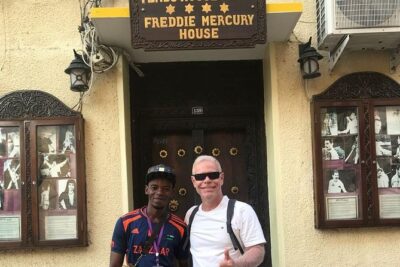
The tour includes Freddie Mercury’s museum area, but the admission is not included. You should expect an extra cost of about $8 per person. If you are a big fan, this can be a motivating add-on because it anchors Zanzibar’s pop culture footprint to a real place you can point to.
If you are not a fan, you can still appreciate the spot as a Stone Town marker. Either way, plan around a possible extra ticket payment.
Then you wrap toward the French Catholic Cathedral (Notre Dame of Zanzibar). The tour description emphasizes it as a beautifully sculpted cathedral in the heart of Stone Town. This is a great final contrast stop after the heavy history and royal architecture. It is still historic. It is still foreign-influenced. But it feels visually different from palace walls and carved doors.
After Notre Dame, you finish with a leisurely walk through the narrow streets, with time for souvenir browsing, before returning to your pick-up point or hotel.
Price and Value for $29, What’s Included and What Isn’t
At $29 per person for a 3-hour guided walk, the value depends on what you care about.
You get the guided tour services, bottled water, and the entry ticket to the former East Africa slave market. That last piece is a big deal. Slave trade history is the core of this tour’s identity, and paying separately for that entry is often exactly what slows down self-guided plans.
Not included:
- Freddie Mercury Museum admission (about $8 per person)
- Personal expenses
- Hotel transfer, though pickup from a Stone Town hotel is included
So where does the value land? If you would otherwise pay for an entry ticket and want an organized walk connecting many landmarks, $29 looks fair. If you hate walking and would rather do museums alone, you might prefer a different format.
One more value angle: the tour quality is closely linked to the guide. There were reports of a guide not showing up and others noting English that was hard to follow. That does not mean it is the norm, but it is a good reason to arrive at the start point early, keep an eye on your guide, and treat the experience as partly dependent on live communication.
Timing, Languages, and Practical Tips for Narrow-Street Walking
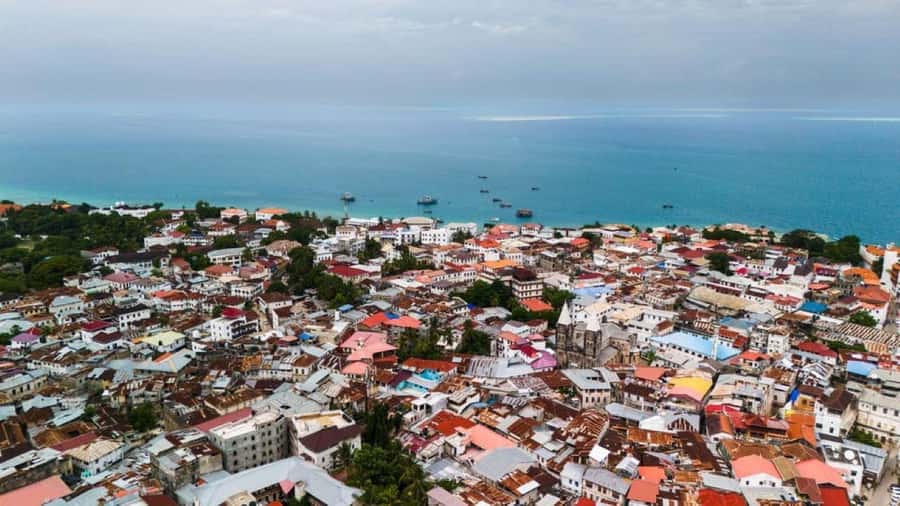
This is a walking tour. That sounds obvious, but Stone Town changes how your feet feel. You are moving through narrow streets, past stalls, and between multiple landmarks within a short timeframe.
Practical tips that help:
- Wear comfortable walking shoes with good traction.
- Bring a light layer, since weather can shift while you are out for a few hours.
- If you want to shop, bring a small bag you can carry hands-free.
- If you care about the slave market ticket experience, keep your voucher or proof handy so entry feels smooth.
Language options are English, French, German, and Italian. If you book in English, remember that some guides may explain more clearly than others. One report mentioned English was hard to understand, so if your language comfort is sensitive, consider choosing the language you speak most comfortably.
Pickup is included from Stone Town hotels, which helps you avoid extra taxis for the start. Just confirm your pick-up details the day before so you do not lose time waiting.
Should You Book This Stone Town Tour with the Slave Market Ticket?
I’d book it if you want a focused Stone Town introduction with a guide who connects the city’s layers, you like architecture and cultural history, and you appreciate having the former slave market entry included from the start.
I would think twice if you have a tight schedule, you get stressed by walking and shopping stop density, or you strongly need clear communication throughout. In those cases, it may be worth choosing a different tour style, or building in extra buffer time so surprises do not ruin your day.
If you do book, aim for the best experience by showing up early, wearing good shoes, and asking questions during the coffee and market stops. That is where a great guide can turn Stone Town from a list of places into a story you actually remember.
FAQ
How long is the Stone Town tour?
The tour lasts 3 hours.
Where does the tour take place?
It is in Stone Town, Zanzibar, Zanzibar South Region, Tanzania.
How much does the tour cost?
The price is $29 per person.
What is included in the price?
The price includes entry/admission to the former East Africa slave market, guided tour services, and bottled water.
Is the Freddie Mercury Museum included?
No. Entry/admission to Freddie Mercury’s Museum is not included and is approximately $8 per person.
Is pickup included?
Yes. Pickup is included from Stone Town hotels.
What languages are available for the live guide?
The live tour guide is available in English, French, German, and Italian.
Will I be walking?
Yes. It is a 3-hour walking tour through Stone Town narrow streets and for shopping.
What do you visit besides the slave market?
You visit landmarks such as Darajani Market, Zanzibar Coffee House, Sultan’s Palace, Forodhani Gardens, House of Wonders (Beit el-Ajaib), the Old Fort area, and Notre Dame of Zanzibar (French Catholic Cathedral), plus other landmarks like Tip Tip House, Old Portuguese Fort, and the Anglican Cathedral.
What is the cancellation policy?
Free cancellation is available. You can cancel up to 24 hours in advance for a full refund.
Stone Town, Street by Street
- Zanzibar: Stone Town, Spice Tour, Prison Island with Lunch
★ 4.4 · 1,219 reviews - Zanzibar: Prison Island, Stone Town, & Spice Farm Tour
★ 4.5 · 579 reviews - Zanzibar: Stone Town, Spice tour & Prison Island with Lunch
★ 4.6 · 453 reviews - Stone Town Private Walking Tour
★ 5.0 · 371 reviews - Zanzibar: 3 Hours Private Stone Town walking Tour with Guide
★ 4.6 · 301 reviews
Just added from around Zanzibar City





Stone Town Heritage Walks, compared.
 ★ 4.4Zanzibar: Stone Town, Spice Tour, Prison Island with LunchFrom $681,219 reviews
 ★ 4.5Zanzibar: Prison Island, Stone Town, & Spice Farm TourFrom $70579 reviews
 ★ 4.3Zanzibar; Prison Island, Nakupenda, StoneTown Tour with BBQFrom $71457 reviews
★ 4.6Zanzibar: Stone Town, Spice tour & Prison Island with LunchFrom $55453 reviews
★ 4.3Zanzibar; Prison Island, Nakupenda, StoneTown Tour with BBQFrom $71457 reviews
★ 4.6Zanzibar: Stone Town, Spice tour & Prison Island with LunchFrom $55453 reviews
 ★ 5.0Stone Town Private Walking TourFrom $26371 reviews
 ★ 4.6Zanzibar: 3 Hours Private Stone Town walking Tour with GuideFrom $24301 reviews
 ★ 4.5Full-Day Private Stone Town +Spice Farm and Prison Island TourFrom $100216 reviews
 ★ 4.5Zanzibar: Stone Town Historical Cultural Walking Guided TourFrom $21179 reviews
Browse the lists this tour appears in