
REVIEW · ZANZIBAR SPICE FARMS AND PLANTATIONS
Spice Farm Tour -Half Day
Spice farms on Zanzibar hit your senses fast. This half-day walking tour combines a visit to the Kidichi Persian Baths with a shamba-style walk where you smell and taste spices, herbs, and tropical fruit. It is part countryside, part history stop, and part hands-on flavor lesson in how Zanzibar grows what you eat.
I especially love how direct the experience feels, you get real time to smell and taste things like clove, lemongrass, nutmeg, cinnamon, turmeric, vanilla, and black pepper. I also like the setup with hotel pickup and drop-off, plus a small group cap of up to 20, so it stays manageable and not rushed.
One consideration: this is a walking farm tour and it expects moderate physical fitness, so wear comfortable shoes and plan for time on foot in the sun and outdoors. It also runs best in good weather, since the tour can be rescheduled or refunded if conditions are poor.
In This Review
- Key Points Before You Go
- Why This Half-Day Spice Farm Walk Fits Zanzibar
- Kidichi Persian Baths: A Surprise History Stop in the Middle of the Green
- The Shamba Lesson: How Guides Turn Spices Into Something You Can Name
- Tropical Fruit Sampling Makes the Farm Feel Real
- Timing, Transport, and Group Size: What the Half-Day Feels Like
- Price and Value: Does $50 Make Sense Here?
- Shopping for Spices After You Learn What You Are Buying
- Who This Tour Suits (and Who Might Prefer Something Else)
- Should You Book the Spice Farm Tour – Half Day?
- FAQ
- How long is the Spice Farm Tour – Half Day?
- What is the price per person?
- Is hotel pickup and drop-off included?
- What is included in the tour price?
- Will I smell and taste spices and fruits during the tour?
- Is a cooking class included?
- What should I know about restrooms and food?
Key Points Before You Go
- Kidichi Persian Baths stop at one of Zanzibar’s high points, built in 1850 with ornate Persian stucco work and deep stone bathhouses
- Smell and taste shamba crops including clove, cinnamon, turmeric, vanilla, cardamom, chili, and black pepper
- Fresh tropical fruit sampling like jackfruit, pineapple, banana, papaya, coconut juice, and more
- Half-day pacing with about 3 hours total and an included water bottle
- Good value for a guided experience with pickup, admission included for the bath stop, and a professional guide
More spice farm afternoons on the island
- Zanzibar: Stone Town, Spice Tour, Prison Island with Lunch★ 4.4 · 1,219 reviews
- Zanzibar: Prison Island, Stone Town, & Spice Farm Tour★ 4.5 · 579 reviews
- Zanzibar: Stone Town, Spice tour & Prison Island with Lunch★ 4.6 · 453 reviews
- Full-Day Private Stone Town +Spice Farm and Prison Island Tour★ 4.5 · 216 reviews
Why This Half-Day Spice Farm Walk Fits Zanzibar
Zanzibar has a reputation for spices, but most visits stay at the souvenir level. This tour is different because it turns spices into something you can actually identify with your senses. You walk through a real working farm and get a guide to explain what grows there and how it is used.
That matters because spices are not abstract. Clove is not just a scent in a bottle, it is a crop with a growing rhythm and a place in local food and culture. And herbs like lemongrass or cardamom feel much more meaningful once you have smelled them where they grow.
You also get time to see everyday greenery and farm life by foot. The route includes a countryside drive with stops, so you do not feel like you are only walking in a straight line with no context.
Kidichi Persian Baths: A Surprise History Stop in the Middle of the Green
The tour begins with Kidichi Persian Baths, one of those locations that makes Zanzibar feel layered. These baths were built on a high point of the island by Seyyid Said bin Sultan in 1850 for his Persian wife, Princess Sheherezade, who was the granddaughter of the Shah of Persia, Fatah Ali. That family detail gives the site a clearer human story, not just a pretty photo spot.
What you see is specific and memorable: domed bathhouses, deep stone baths, and massive seats, with ornamental Persian stucco work. The design is remarkably preserved, which helps you understand it as a real, functioning concept rather than ruins.
And there is a neat contrast built into the visit. The baths are quite different from the plainer baths nearby at Kizimbani, which were built within Said’s clove tree and coconut plantation. In other words, Zanzibar’s spice economy is not separate from its architecture and lifestyle. It is all part of the same world.
This stop also gives you a breather from the farm walk and gives your brain context before you start tasting. If you like history that connects to daily life, this timing works.
The Shamba Lesson: How Guides Turn Spices Into Something You Can Name
After the baths, you move into the spice farm experience, where your guide shows you how herbs and crops grow and how they are cultivated. You are not just looking, you are smelling and tasting. That sensory practice is the secret sauce.
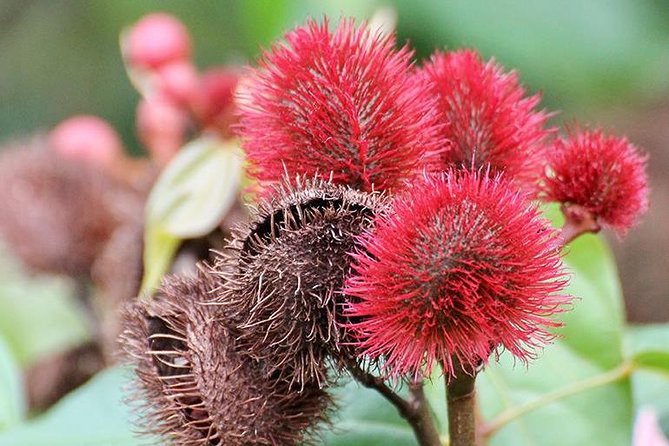
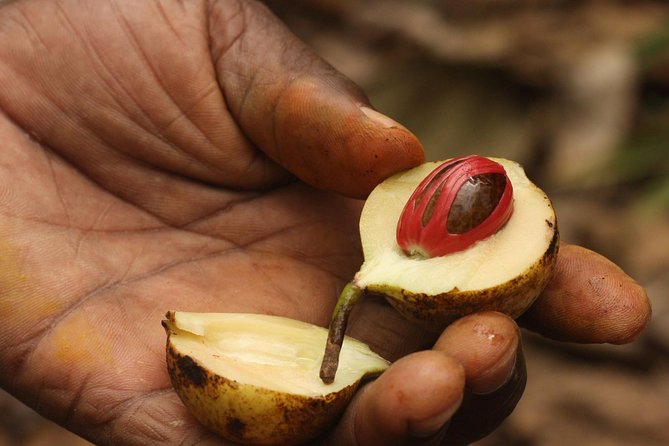
Expect to cover classic Zanzibar spices and aromatics such as clove, lemongrass, nutmeg, cinnamon, turmeric, vanilla, coconut, papaya, chili, black pepper, cardamom, cassava, and oranges. The exact order can vary, but the idea stays the same: you get a walk-through of plants you already hear about, then you learn what makes each one distinct.
Even better, the guide explains how crops can be used. That could mean culinary uses, traditional uses, or how locals relate to the plants beyond flavor. This is where many spice tours fall short, they show you a row of plants and stop. Here, the guide’s explanations are part of why you leave with real appreciation.
I also appreciate that the tour does not pretend spices are all the same. Tasting lets you notice differences in sharpness, warmth, fragrance, and bitterness. Once you start comparing, you realize why Zanzibar spices have such a loyal following.



Tropical Fruit Sampling Makes the Farm Feel Real
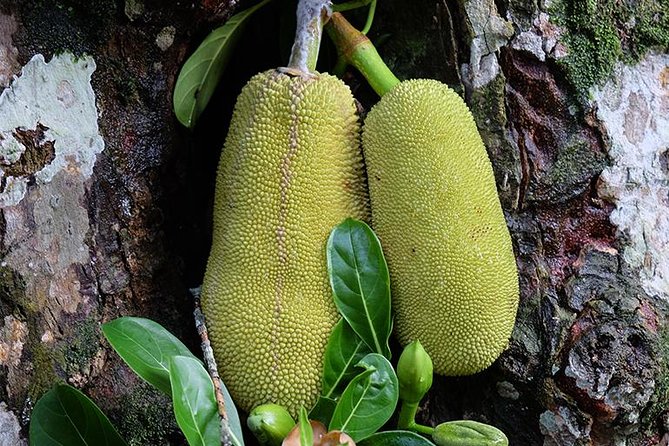
Spice farms are one thing. Fruit is where the experience gets warmer and more playful. Your tastings include tropical seasonal fruits such as jackfruit, pineapple, banana, green coconut juice, and items like dourian, love apple, and litche. (You may also see other fruit during the walk, depending on what is in season that day.)
This part helps you connect the spice story to the broader farm ecosystem. In a farm setting, spices grow alongside fruit trees and understory plants. Your brain starts making connections, and the tour feels less like a checklist and more like a living place.
Fruit tasting also helps you pace the walk. The tour is about three hours total, so you want moments where your senses reset. Fruit does that naturally. You get sweetness right after something spicy or aromatic.
One practical note: you may want to go in with an open mind about strong flavors. Some fruits and herbs are intense, and that is the point. If you are picky about trying new things, you can still watch and smell, but you will get the most value if you taste what the guide offers.
Timing, Transport, and Group Size: What the Half-Day Feels Like
The tour runs for about 3 hours. That is long enough to cover a bath stop and a meaningful walking shamba segment, but short enough that it does not eat your whole afternoon.
You also get hotel pickup and drop-off, and the transport is described as a private comfortable vehicle with air conditioning. That matters because Zanzibar heat and sun can turn a walking tour into a grind if you have to meet by yourself, wait around, or shuttle in an uncomfortable vehicle. With pickup and drop-off, you can focus on the experience.
Group size is capped at a maximum of 20 travelers. A smaller group usually means less chaos when the guide is explaining plant uses and when people are tasting. It also helps you feel less like you are stuck behind a crowd.
Included on the tour: an experienced professional tour guide and a bottle of water. Not included: lunch, and there is no coffee and/or tea listed. So plan to eat before or after, and bring your own snacks only if you think you will need them, since you should not assume meals are part of this half-day.
Also, good to know: there is no mention of a restroom as part of the experience on board. If you need one, make sure you handle it before you start.
Price and Value: Does $50 Make Sense Here?
At $50 per person for a half-day, you are paying for three main things: guided interpretation, active tastings, and transportation convenience. The tour is not just a self-guided walk with a printed map.
The value improves because the bath stop includes admission ticket coverage. You are also getting hotel pickup and drop-off and a water bottle, which trims costs and hassle you might otherwise pay for separately.
You might wonder how this compares to buying spices at a market. Market shopping is great, but it is not the same as learning how the plants grow and what different spices actually taste like. If you care about cooking, gifts, or just better flavor instincts, guided tastings are the part you cannot easily replicate on your own.
One more detail that supports the price: the tour is described with mobile tickets and group discounts, which suggests there is some flexibility if you are traveling in a small set.
Shopping for Spices After You Learn What You Are Buying
One highlight is that this tour is a perfect time to shop for spices. That recommendation makes sense because you will leave knowing which plants match which flavors and aromas.
Here is the practical advantage: once you have tasted things like turmeric or cinnamon right on the farm, you can shop with a clearer sense of quality. You also know what to ask the vendor about, because you have context for the spice’s identity and use.
If you want to shop efficiently, think in two layers:
- First, buy a few spices you tasted and liked.
- Second, buy what matches your cooking habits, not just what looks impressive in a jar.
And since the tour is only about 3 hours, you will likely want to plan your shopping right after the tour when your memory is fresh.
Who This Tour Suits (and Who Might Prefer Something Else)
This tour is a strong fit if you want a sensory, guided introduction to Zanzibar agriculture. You will enjoy it most if you like walking outdoors, trying samples, and learning how plants connect to daily life and cooking.
It also suits people who want a cultural history moment without committing to a full-day itinerary. The Kidichi Persian Baths stop is a real change of pace, and it makes the overall tour feel more complete.
Who might pause before booking:
- If you do not handle walking well or you prefer mostly seated sightseeing, the moderate physical fitness requirement is worth taking seriously.
- If you expect lunch or a long indoor experience, this may feel short on those fronts, since lunch is not included and the activity is mainly outdoors.
Should You Book the Spice Farm Tour – Half Day?
If you are in Zanzibar for a short time and you want the spice story to feel real, I think this is an easy yes. The combination is smart: Kidichi Persian Baths for history, then shamba walking for the sensory part, with tasting that actually helps you remember what spices are.
It is also good value for the structure you get, pickup and drop-off, a professional guide, admission included for the bath stop, and a small group cap. For $50, you are buying guidance and access to tastings, not just plants behind a fence.
Book it if you are curious, comfortable walking for a few hours, and open to tasting tropical fruits and strong spices. Skip it or look for an alternative if you want minimal walking, guaranteed meals, or a mostly indoor experience.
FAQ
How long is the Spice Farm Tour – Half Day?
It runs for about 3 hours.
What is the price per person?
The price is $50.00 per person.
Is hotel pickup and drop-off included?
Yes. Hotel pickup and drop-off are included.
What is included in the tour price?
You get an experienced professional tour guide, hotel pickup and drop-off, and a bottle of water. Admission for the Kidichi Persian Baths stop is also included.
Will I smell and taste spices and fruits during the tour?
Yes. You will smell and taste a range of spices, herbs, and tropical fruits such as clove, lemongrass, nutmeg, cinnamon, turmeric, vanilla, coconuts, papaya, chili, black pepper, jackfruit, cardamom, cassava, oranges, and other seasonal fruits.
Is a cooking class included?
A cooking class option in the spice farm is available on request, not listed as automatically included.
What should I know about restrooms and food?
Restroom on board is not included, and lunch is not included. Coffee and/or tea are also not included.
More Spice Farm Afternoons
- Zanzibar: Stone Town, Spice Tour, Prison Island with Lunch
★ 4.4 · 1,219 reviews - Zanzibar: Prison Island, Stone Town, & Spice Farm Tour
★ 4.5 · 579 reviews - Zanzibar: Stone Town, Spice tour & Prison Island with Lunch
★ 4.6 · 453 reviews - Full-Day Private Stone Town +Spice Farm and Prison Island Tour
★ 4.5 · 216 reviews - Zanzibar: Spice Tour & Stone Town Walking Tour
★ 4.8 · 115 reviews
Just added from around Zanzibar City



Zanzibar Spice Farms and Plantations, compared.
 ★ 4.4Zanzibar: Stone Town, Spice Tour, Prison Island with LunchFrom $681,219 reviews
 ★ 4.5Zanzibar: Prison Island, Stone Town, & Spice Farm TourFrom $70579 reviews
★ 4.6Zanzibar: Stone Town, Spice tour & Prison Island with LunchFrom $55453 reviews
★ 4.5Zanzibar: Prison Island, Stone Town, & Spice Farm TourFrom $70579 reviews
★ 4.6Zanzibar: Stone Town, Spice tour & Prison Island with LunchFrom $55453 reviews
 ★ 4.5Full-Day Private Stone Town +Spice Farm and Prison Island TourFrom $100216 reviews
 ★ 4.5Spice Tour + Stone Town Tour + Prison IslandFrom $140130 reviews
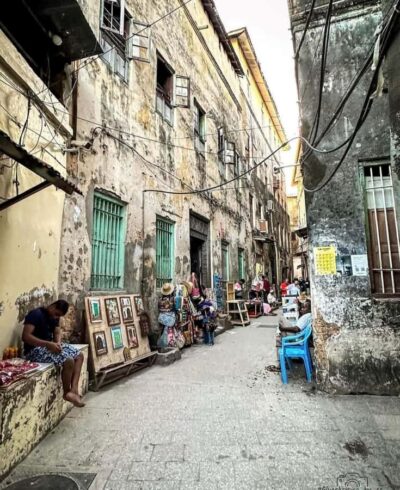 ★ 4.8Zanzibar: Spice Tour & Stone Town Walking TourFrom $95115 reviews
 ★ 4.5Zanzibar: Stone Town & Spice Farm Tour with LunchFrom $7397 reviews
 ★ 4.7Zanzibar: The Swahili Spice Experience – Spice Tour + Culinary JourneyFrom $2196 reviews
Browse the lists this tour appears in