
REVIEW · STONE TOWN HERITAGE WALKS
Stone Town Exciting Walking Tour & Convenient Transfer – Zanzibar
Stone Town can feel like a living puzzle. This 3 to 4 hour guided walk strings together key sights in UNESCO-listed Stone Town, from the Old Market to the House of Wonders, while weaving in the big themes of Zanzibar’s spice era and the slave trade. I love how much you cover on foot, and I like the way stops are chosen so you notice details instead of just passing them by.
My other favorite part is the built-in mix of places with different vibes, like the National Museum at the House of Wonders, then the quieter, heavier stop at the former slave market area. The only real drawback to plan around is the outdoor time, plus the fact that guide quality can make or break the history you get, so come with questions and comfortable sun protection.
In This Review
- Key things I’d watch for before you go
- Why this Stone Town walk is a smart use of time
- Old Market, Old Fort, and the city’s “everyday theater”
- House of Wonders and Tippu Tip’s House: when the story changes tone
- Africa House, Old Dispensary, and the buildings between the headlines
- The former slave market and Anglican Cathedral: plan for emotions
- Markets, carvings, and the “street reading” that makes Stone Town click
- Price and logistics: where $20 is a great deal, and where it can change
- How to get better history out of your guide
- Who this tour suits best, and who should think twice
- Should you book this Stone Town walking tour?
- FAQ
- How long is the Stone Town walking tour?
- What is included in the tour price?
- Is the Former Slave Market ticket included?
- Do I get hotel pickup and drop-off?
- How big is the group?
- Is this tour suitable for most people?
- What is the cancellation policy?
Key things I’d watch for before you go
- Old Market since 1903 with sections for fish, meat, vegetables, plus a spice area for the senses
- House of Wonders (National Museum) where the architecture and stories are both worth your attention
- Tippu Tip’s House for a direct look at one of Zanzibar’s most talked-about historical figures
- Former Slave Market and Anglican Cathedral area for a sobering chapter you should expect
- Old Fort, Palace Museum, and Old Dispensary that give variety beyond the most famous photo stops
- Small group size (max 20) so you can actually hear your guide over the street noise
Other Stone Town walks we followed
- Zanzibar: Stone Town, Spice Tour, Prison Island with Lunch★ 4.4 · 1,219 reviews
- Zanzibar: Prison Island, Stone Town, & Spice Farm Tour★ 4.5 · 579 reviews
- Zanzibar: Stone Town, Spice tour & Prison Island with Lunch★ 4.6 · 453 reviews
- Stone Town Private Walking Tour★ 5.0 · 371 reviews
Why this Stone Town walk is a smart use of time

Stone Town is a maze. If you try to do it all alone, you can spend hours turning left and right without getting the context that makes the place click. This tour keeps you moving through the core parts of the old city for about 3 to 4 hours, so you get momentum and meaning in one go.
You’re not just ticking off monuments. The route is built around places that help you read Zanzibar’s past in the streets: markets that show daily life, forts and museums that frame power and trade, and memorial sites that force you to face the island’s darker history. It’s a good way to get your bearings fast, then decide what to explore longer afterward.
Old Market, Old Fort, and the city’s “everyday theater”
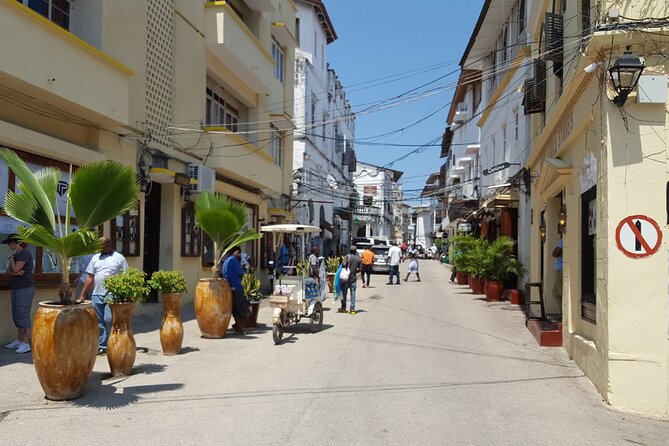
The walk starts in Stone Town’s Old Market, with an emphasis on how it functions, not just how it looks. You’ll see the market sections that have served locals since 1903, including fish, meat, and vegetables, plus a spice area where your nose does part of the guiding. This is one of the best parts of the tour if you like real-life Zanzibar, not only museum walls.
Then you connect that daily energy to the security and trade story at Old Fort. Forts can feel stiff when you only learn dates. Here, the fort stop matters because Zanzibar’s long story is tied to ports, merchants, and who controlled movement. Even if you only absorb a few key points, the fort gives the street scenes a bigger frame.
Two practical notes for this section:
- Wear shoes you trust. Stone Town sidewalks can be uneven and the walking is nonstop.
- Bring water and plan for sun. One complaint I’ve heard from similar tours is people feeling cooked after long outdoor stretches, so shade breaks and hydration matter.
House of Wonders and Tippu Tip’s House: when the story changes tone
At the House of Wonders (National Museum), you get the museum side of Stone Town. This is where you can expect more structured information and a clearer timeline than you’ll get from street-level wandering. Even if you’re not a museum person, the National Museum stop is valuable because it helps you understand why the architecture and the trade connections mattered so much.
Next is Tippu Tip’s House, a major name in Zanzibar’s historical conversations. The payoff here is that a home can teach you history in a different way than a museum. You’re looking at how people lived or built status, and then tying that back to who had influence during the spice-trade era and broader regional politics.
If you want the most out of these indoor or semi-indoor stops, ask your guide a simple question at each one, like:
- What detail should I notice first here?
- How does this place connect to Zanzibar’s trading life?
That kind of prompt can turn a basic explanation into a much richer one, especially if your guide focuses more on logistics than story.
Other transfers and drivers we checked




Africa House, Old Dispensary, and the buildings between the headlines
One of the clever things about this tour is it doesn’t only aim for the most famous photos. You’ll also pass the Old English Club, which is known today as Africa House. It’s the kind of stop that rewards you if you enjoy reading the layers of use, how buildings change roles over time, and how the city’s identity keeps shifting.
You’ll also visit Old Dispensary. That stop is a reminder that Zanzibar’s story includes care, infrastructure, and the everyday institutions that shaped island life alongside trade and politics. It’s a nice counterbalance if you feel museum fatigue building, because it gives you a different angle on what colonial-era presence meant on the ground.
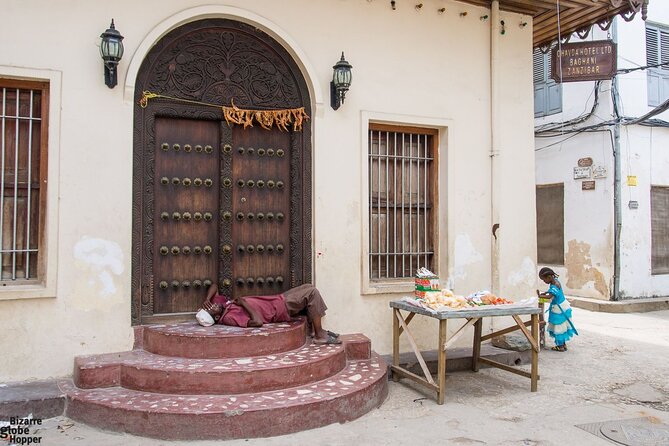
Between these stops, you’ll spend real time in the narrow lanes. You’re meant to notice things like ancient carved doors and wooden balconies, not just walk past them. That’s the stuff that makes Stone Town feel personal instead of generic.
The former slave market and Anglican Cathedral: plan for emotions
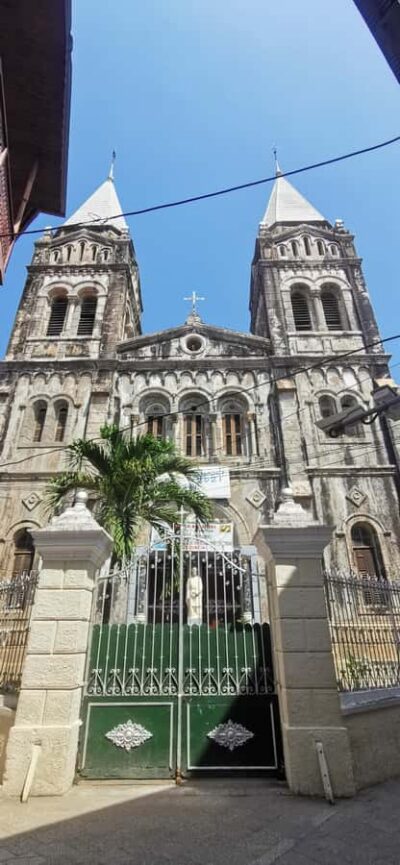
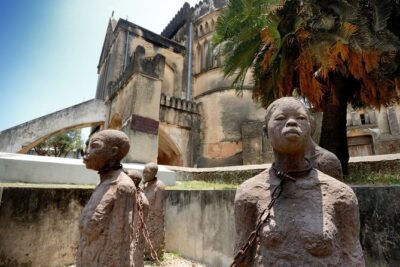
The tour includes the Former Slave Market / Anglican Cathedral area. This is not a light or purely educational stop. It’s a poignant reminder of the island’s involvement in the slave trade and the harsh reality faced by enslaved people, and it can hit hard if you’re not expecting it.
Important practical detail: the Slave Market ticket is not included. The cost listed is $5 per person, so budget for that in addition to the $20 tour price.
If you’re going to be sensitive to heavy topics, handle it your way:
- Slow down when you get inside.
- Take a moment before you move on, instead of rushing to the next stop.
- If you want context, ask your guide directly what they recommend you focus on here.
This is one of those stops where your respect and attention matter more than speed.
Markets, carvings, and the “street reading” that makes Stone Town click
Stone Town is famous for details, especially doorways and balconies, and this tour is designed to help you notice them. You’ll wander past carved doors, wooden balcony fronts, and the kind of small market activity that makes the old town feel lived-in.
Here’s why I think that matters for you: most people only notice Stone Town from a distance. On this walk, the pace and planned stops encourage you to look closer. When you return to the streets later on your own, you’ll recognize styles and clues that you would have missed.
One more good reason: the tour gives you a story thread while you’re in the maze. Instead of getting lost in visual overload, you’re moving through a sequence that links trade, architecture, and the island’s turning points.
Price and logistics: where $20 is a great deal, and where it can change
The base price is $20 per person, and for Stone Town it can be solid value, mainly because several visits and guided components are bundled in. You get a professional guide and coverage of major stops like Old Market, Old Fort, House of Wonders (National Museum), Tippu Tip’s House, Africa House, Old Dispensary, Palace Museum, and the Former Slave Market area.
Where your budget can shift:
- The Former Slave Market ticket costs $5 per person and is not included.
- If you need pickup or drop-off from outside Stone Town, the transfer is extra charged.
On transport, you’ll likely have hotel pickup and drop-off in an air-conditioned vehicle if that option is selected. That matters in Zanzibar because the walking days are warm, and you don’t want to start the tour already dehydrated.
Group size is capped at 20 travelers. That’s not tiny, but it’s small enough that you should still be able to follow along without feeling completely lost in a crowd.
How to get better history out of your guide
One issue can come up with any walking tour: guide variation. In at least one case I’ve heard about, a guide didn’t know much and needed questions prompted. Since the tour is history-and-streets focused, you want your guide to do more than point.
So I suggest you set yourself up from the start:
- Ask for the one big theme for the morning, like spice trade or the slave trade.
- When you arrive at a key site, ask what detail you should notice first.
- If you don’t hear much explanation, speak up. A good guide will respond.
Also, if Forodhani Park is on your personal must-do list, don’t assume it will appear. It’s not part of the core stops described for this walk, so confirm timing before you pay for a separate plan. Better to align expectations early than scramble later.
Who this tour suits best, and who should think twice
This tour is a strong match if you want a structured way to see Stone Town in a few hours, especially if you like markets, museums, and street details. It also works well if you’re new to Zanzibar and want a guided story that helps you interpret what you see after.
It might be less ideal if you:
- Want a slow, leisurely stroll with tons of free time.
- Are extremely heat-sensitive and struggle with outdoor walking in the sun.
- Expect a very deep, academic-style history lecture without needing to ask follow-up questions.
Most travelers can participate, and service animals are allowed, which is helpful for many visitors.
Should you book this Stone Town walking tour?
I’d book it if you want an efficient, guided route that hits the major anchors of Stone Town, including Old Market, Old Fort, House of Wonders, and the more serious stop at the Former Slave Market area. At $20, it can be good value because you’re getting a guided flow plus multiple visited sites, not just a generic street stroll.
I’d think twice or adjust expectations if:
- You’re counting on extra stops not listed as core, like Forodhani Park.
- You’re worried about the heat, because you will be walking outside for a good chunk of the time.
- You’re relying on the guide alone for the history. Come prepared with questions so you leave with real understanding, not just photos.
If you do book, go armed with comfortable shoes, sun protection, and a bit of curiosity. Stone Town rewards attention, and this tour is one of the more practical ways to train your eyes while you’re there.
FAQ
How long is the Stone Town walking tour?
It runs about 3 to 4 hours.
What is included in the tour price?
The tour includes hotel pickup and drop-off by air-conditioned vehicle if you select that option, visits to Stone Town sites like Old Market and Old Fort, House of Wonders (National Museum), Tippu Tip’s House, Africa House, Old Dispensary, Former Slave Market, and Palace Museum, along with a professional guide.
Is the Former Slave Market ticket included?
No. The Former Slave Market ticket is listed as an additional $5 per person.
Do I get hotel pickup and drop-off?
Yes, hotel pickup and drop-off by an air-conditioned vehicle is included if you select the pickup option. Transfers from outside Stone Town are extra charged.
How big is the group?
The tour has a maximum of 20 travelers.
Is this tour suitable for most people?
Most travelers can participate, and service animals are allowed.
What is the cancellation policy?
You can cancel for a full refund up to 24 hours before the start time. Cancellation less than 24 hours before the start time is not refunded.
Getting There and Back
- Zanzibar Taxi Service
★ 5.0 · 102 reviews - Zanzibar Prime Taxi Services
★ 5.0 · 72 reviews - Airport /Hotel Transfers in Zanzibar
★ 5.0 · 71 reviews - Zanzibar Airport Transfers Pickup and Drop off
★ 5.0 · 50 reviews - Zanzibar Tours & Taxi Services
★ 5.0 · 41 reviews
Stone Town, Street by Street
- Zanzibar: Stone Town, Spice Tour, Prison Island with Lunch
★ 4.4 · 1,219 reviews - Zanzibar: Prison Island, Stone Town, & Spice Farm Tour
★ 4.5 · 579 reviews - Zanzibar: Stone Town, Spice tour & Prison Island with Lunch
★ 4.6 · 453 reviews - Stone Town Private Walking Tour
★ 5.0 · 371 reviews - Zanzibar: 3 Hours Private Stone Town walking Tour with Guide
★ 4.6 · 301 reviews
Just added from around Zanzibar City






Stone Town Heritage Walks, compared.
 ★ 4.4Zanzibar: Stone Town, Spice Tour, Prison Island with LunchFrom $681,219 reviews
 ★ 4.5Zanzibar: Prison Island, Stone Town, & Spice Farm TourFrom $70579 reviews
 ★ 4.3Zanzibar; Prison Island, Nakupenda, StoneTown Tour with BBQFrom $71457 reviews
★ 4.6Zanzibar: Stone Town, Spice tour & Prison Island with LunchFrom $55453 reviews
★ 4.3Zanzibar; Prison Island, Nakupenda, StoneTown Tour with BBQFrom $71457 reviews
★ 4.6Zanzibar: Stone Town, Spice tour & Prison Island with LunchFrom $55453 reviews
 ★ 5.0Stone Town Private Walking TourFrom $26371 reviews
 ★ 4.6Zanzibar: 3 Hours Private Stone Town walking Tour with GuideFrom $24301 reviews
 ★ 4.5Full-Day Private Stone Town +Spice Farm and Prison Island TourFrom $100216 reviews
 ★ 4.5Zanzibar: Stone Town Historical Cultural Walking Guided TourFrom $21179 reviews
Browse the lists this tour appears in