

REVIEW · MAASAI VILLAGE AND CULTURAL EXPERIENCES
Maasai World
Watching Maasai life happen right on Zanzibar time. Maasai World gives you hands-on cultural learning with a village visit, plus you can try a traditional bow and arrow. What makes it especially appealing is that pre-booking helps you lock in your spot, so you are not stuck hoping the day works out.
I also like the way the experience is built around real people and real conversation. You get to ask questions about local customs, and guides like David are mentioned for sharing clear explanations about Maasai history and how things have changed over time.
One consideration: some of what you hear about customs may feel challenging if you come from a Western background, so keep your curiosity hat on and go in ready for honest answers.
In This Review
- Key highlights you should care about
- Maasai World in Zanzibar: what you actually do in 2 hours
- Tools, clothes, and questions: learning without a script
- Dance and village tour: how to get the most out of the close-up time
- Bow and arrow practice: fun, useful, and worth a little prep
- Meeting point and timing: make the day easy
- Value for $20: why this can be a smart cultural purchase
- Who Maasai World is best for (and who should plan carefully)
- Small practical tips that improve your experience
- Should you book Maasai World in Zanzibar?
- FAQ
- How long is the Maasai World experience in Zanzibar?
- What activities are included at Maasai World?
- Do I get a mobile ticket or do I need something printed?
- When is Maasai World open?
- Is this activity private?
- Can I cancel for a full refund?
Key highlights you should care about
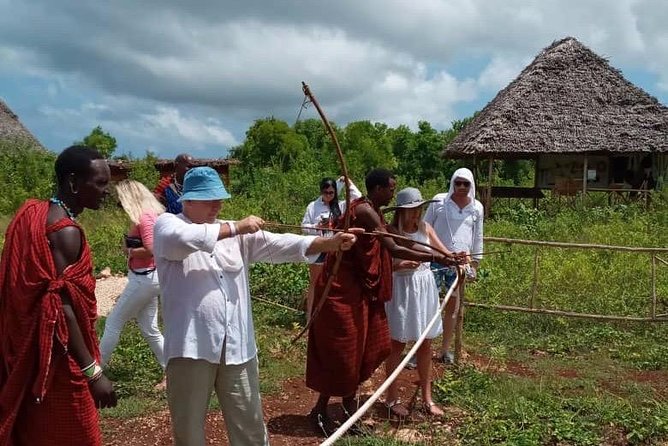
- Bow and arrow activity: you do it, not just watch it.
- Village tour with real daily-life context: tools, clothes, and what daily living looks like.
- Dance with the Maasai: movement and participation, not passive viewing.
- Q&A with local people: you can ask about customs and get direct answers.
- Private format for your group: only your group participates, which usually makes questions easier.
- Mobile ticket and long opening window: easier planning with 10:00 AM to 7:00 PM daily hours.
Other visits hosted by Maasai communities
- Zanzibar Tumbatu Island Cultural Experience★ 5.0 · 4 reviews
- 3 Hour Community Walking Tour★ 5.0 · 4 reviews
Maasai World in Zanzibar: what you actually do in 2 hours
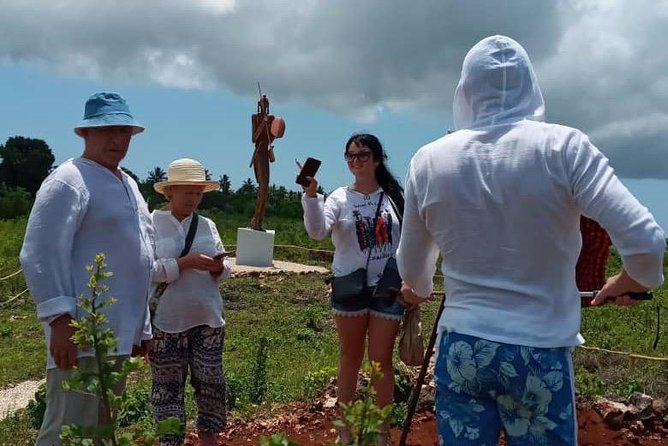
Maasai World is a compact cultural stop, about 2 hours in total, designed to fit into a normal Zanzibar day. You are not going to get a slow museum-style experience. Instead, you are getting a mix of storytelling, showing traditional items, and doing activities yourself.
The practical win is that it is built for participation. You will see tools and clothing used in Maasai life, you can join a dance moment, and you will also get the chance to try the bow and arrow. That combination matters because it makes the learning stick. You remember the details better when you connect them to something you touched, tried, or watched up close.
Also, this is a private tour/activity format, meaning only your group participates. For many people, that feels more respectful and more comfortable for asking questions. If you travel with family, friends, or a small group, you may find the whole thing runs smoother than in a crowded public attraction.
Tools, clothes, and questions: learning without a script
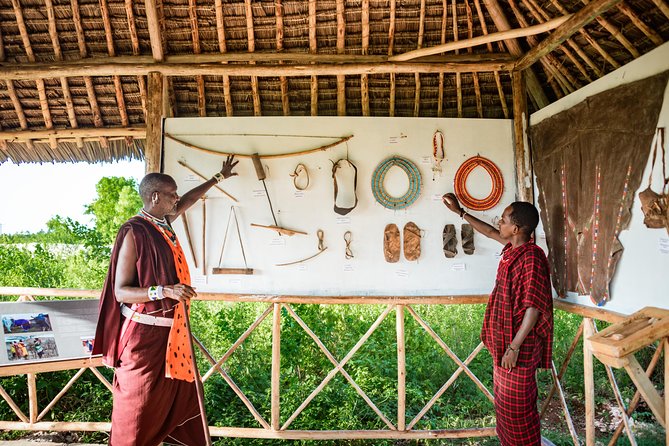
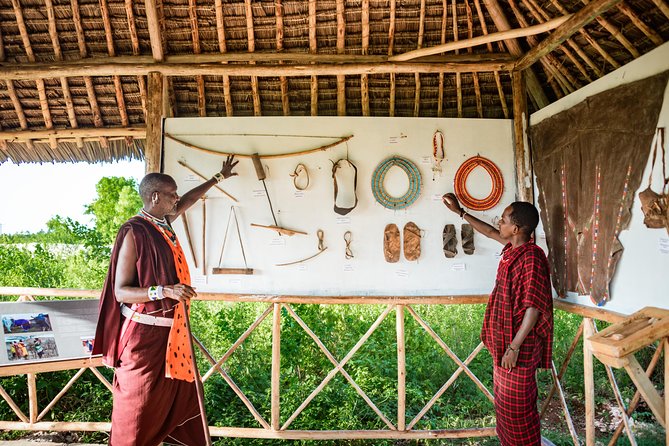
A big part of Maasai World is learning about Maasai culture through the things people actually use. You will spend time with traditional tools and clothing, and the idea is to help you understand what these items mean in daily life, not just how they look.
Here is what I think is especially valuable for you: you are given the chance to ask questions about customs from the people who live that culture. That reduces the guessing game. Instead of relying on secondhand explanations, you can clarify what something means, why it matters, and how it fits into the present.
A guide named David shows up repeatedly in the feedback for being able to explain history and changes over time. One of the most useful notes in the write-ups is that he answers questions in a way that is not watered down. If you are the type who wants context and honest details, that style of guiding can be a real plus.
One more thing to keep in mind: some topics may not be easy to digest if you are used to more filtered, tourist-friendly versions of culture. The upside is that it is direct. The challenge is that you may need to adjust expectations and stay respectful.
Dance and village tour: how to get the most out of the close-up time
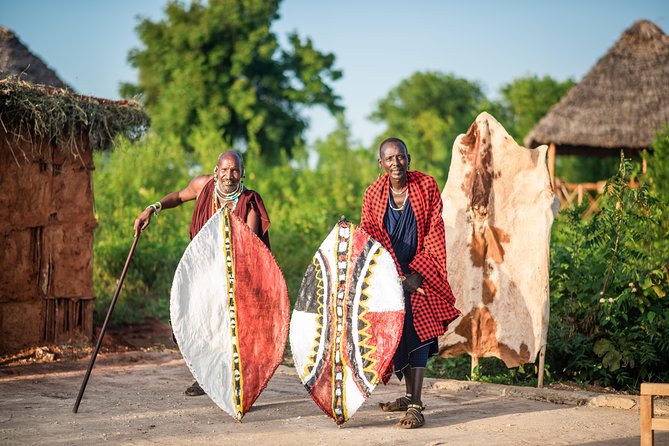
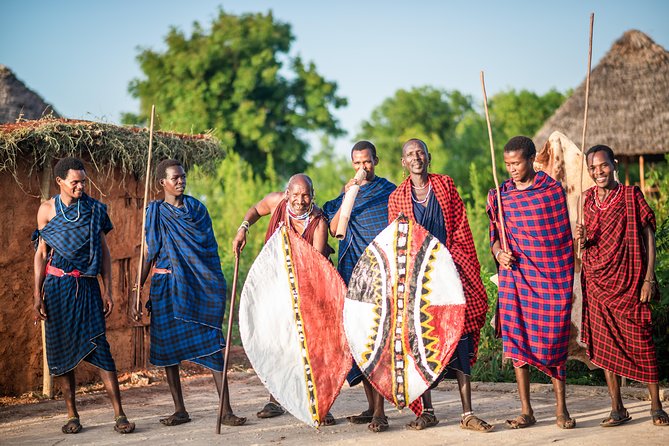
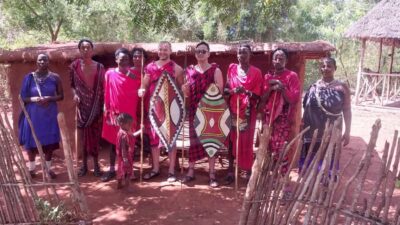
The experience includes both dance with the Maasai and a tour in an authentic Maasai village. Those two pieces work together: the dance adds energy and human connection, while the village tour gives you the physical context for the stories.
When the dance happens, treat it like an invitation to participate, not a performance you only watch. Even if you are not a natural dancer, the value comes from joining the moment and paying attention to what people are doing and saying around it. It helps you shift from spectator mode to participant mode.
During the village tour, focus on the practical details you can actually observe: how traditional clothing is worn, what different tools look like, and what people point out about how living works. If you have questions, this is often a great time to ask them, because you can connect answers to what you are seeing in front of you.
Also, the feedback highlights that you get to meet women and men up close and personal. That matters because culture is not a single voice or a single story. Seeing multiple perspectives helps you build a fuller picture, instead of collecting only one takeaway.




Bow and arrow practice: fun, useful, and worth a little prep
Trying the bow and arrow is the most memorable part for many people, and it is also the most “active” part of the program. Since the experience explicitly includes an arrow and bow activity, expect to spend time learning how it works well enough to participate.
A good mindset here: keep it playful. You are not signing up for a professional archery lesson. The goal is cultural interaction plus hands-on participation. You will likely get basic instruction and then you will try.
Two practical notes so you enjoy it more:
- Wear clothing and shoes you are comfortable moving in.
- If you have any physical limits, it is smart to ask ahead. The general note says most travelers can participate, but your comfort matters most for activities that involve handling equipment.
If you want a deeper cultural connection, ask what the activity represents. Questions like what it teaches, how it connects to traditional life, and how people view it today can turn a fun activity into real understanding.
Meeting point and timing: make the day easy
You start at Maasai World, 58H2+2CP, Mpandeni, Tanzania. The activity ends back at the meeting point, which makes planning simpler. You do not have to figure out a complicated end location or transportation puzzle.
Opening hours run Monday through Sunday, 10:00 AM to 7:00 PM. Because the total duration is about 2 hours, you can usually fit this between beach time, a Stone Town walk, and dinner plans without feeling rushed.
One small planning advantage: the experience is offered with a mobile ticket, and you get confirmation at booking time. That helps you travel with less paperwork and more flexibility. Also, pre-booking is specifically positioned to help you guarantee admission, which is helpful if your Zanzibar schedule is tight.
Value for $20: why this can be a smart cultural purchase
Let’s talk money, because $20 can mean very different things depending on the country and the type of activity.
At $20 per person for about 2 hours, you are paying for more than a photo stop. You are paying for access to Maasai cultural tools and clothing explanations, a village tour, a dance moment, a chance to try bow and arrow, and a chance to ask questions directly to Maasai people. That combination is what typically makes a cultural experience feel worth it: participation plus conversation.
It also helps that it is private. A private format can lower stress, especially if you want to ask questions without feeling like you are competing for attention. And since service animals are allowed and it is near public transportation, it sounds set up with practical visitor needs in mind.
Another value point: this is commonly booked about 33 days in advance. That is not a requirement, but it is a sign it is a popular activity for people planning ahead. If you are traveling during a busier season or you want a specific time window, booking earlier can save headaches.
Who Maasai World is best for (and who should plan carefully)
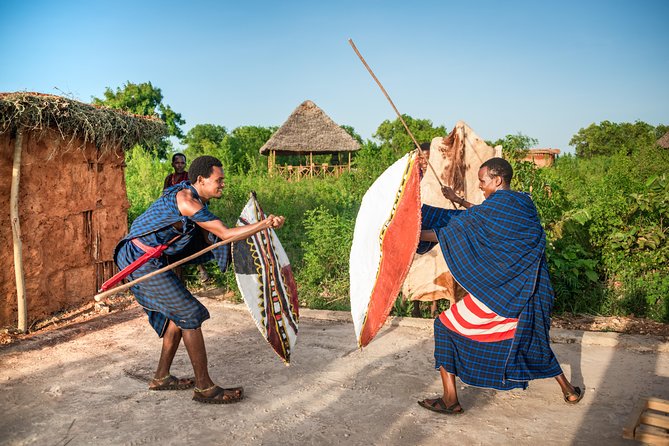
This is a strong pick if you want a cultural experience that is active, not passive. If you enjoy learning through doing, you will probably like the blend of village tour, dance, and the bow and arrow activity. If you are someone who asks lots of questions, the Q&A element is a key part of why the experience gets such high feedback.
You may also appreciate it if you prefer a more personal format. The fact that it is private for your group tends to make the whole experience feel less like a production line.
Who might plan carefully? If you are very sensitive to direct discussion of customs, remember one guide style mentioned in the feedback does not hide tough details. You can still go. Just go with respectful curiosity and give yourself permission to process what you learn.
And if you have limited mobility or you are unsure about trying the bow and arrow, the note says most travelers can participate, but your best move is to ask questions before you arrive.
Small practical tips that improve your experience
These are simple, but they matter on cultural visits like this.
- Arrive early enough to settle in. With a long opening window, you can choose a time that feels calm for you.
- Plan to treat questions as part of the activity. If you go in with curiosity, the Q&A becomes the highlight.
- Bring water. You will be moving and participating for about two hours, so hydration helps.
- Be respectful with photos and attention. Even when an experience is interactive, you still control your tone and your engagement.
If you want to get the most from the bow and arrow portion, focus on learning from the instruction you receive rather than trying to be perfect. The point is trying, not scoring.
Should you book Maasai World in Zanzibar?
If you want an easy way to learn Maasai culture without relying on books alone, Maasai World is a strong choice. For $20 and about 2 hours, you get a village tour, cultural tools and clothing explanations, dance, hands-on bow and arrow practice, and space for questions. That mix is the reason the experience earns such a high rating.
Book it if you:
- Want an interactive cultural stop rather than a passive attraction
- Like asking questions and learning context
- Prefer a private format for your group
Skip it or plan more carefully if you:
- Know you will struggle with candid discussion of customs
- Do not feel comfortable participating in an activity like bow and arrow practice
If you are looking for a meaningful, participation-based cultural experience in Zanzibar, this is one of the most straightforward ways to do it.
FAQ
How long is the Maasai World experience in Zanzibar?
The experience lasts about 2 hours.
What activities are included at Maasai World?
You can learn about Maasai culture, tour an authentic Maasai village, dance with the Maasai, and try a traditional bow and arrow. You’ll also have a chance to ask questions about local customs.
Do I get a mobile ticket or do I need something printed?
You receive a mobile ticket.
When is Maasai World open?
It is open daily, Monday through Sunday, from 10:00 AM to 7:00 PM.
Is this activity private?
Yes. It is listed as a private tour or activity, so only your group participates.
Can I cancel for a full refund?
Yes. You can cancel up to 24 hours in advance for a full refund. If you cancel less than 24 hours before the start time, the amount paid is not refunded.
Time With Maasai Hosts
- Zanzibar Tumbatu Island Cultural Experience
★ 5.0 · 4 reviews - 3 Hour Community Walking Tour
★ 5.0 · 4 reviews
Just added from around Zanzibar






Maasai Village and Cultural Experiences, compared.
 ★ 5.05 Days Camping Tarangire, Serengeti & Ngorongoro crater & Visiting MaasaiFrom $1,254229 reviews
 ★ 4.5Maasai village visit, Materuni waterfalls & coffee experienceFrom $15495 reviews
★ 5.05 Days Camping Tarangire, Serengeti & Ngorongoro crater & Visiting MaasaiFrom $1,28058 reviews
★ 4.5Maasai village visit, Materuni waterfalls & coffee experienceFrom $15495 reviews
★ 5.05 Days Camping Tarangire, Serengeti & Ngorongoro crater & Visiting MaasaiFrom $1,28058 reviews
 ★ 5.0Hidden Arusha Waterfall, Coffee & Village Tour (All-Inclusive)From $4042 reviews
 ★ 4.7Massai village & Baraka turtules aquariumFrom $5742 reviews
 ★ 5.0Maasai village visit and Chemka hot-springs with hot lunch.From $12233 reviews
 ★ 4.3Zanzibar: Maasai village Tour with Sunset Dhow CruiseFrom $5232 reviews
 ★ 4.9Kilimanjaro: Maasai Village Visit, Waterfalls, & Coffee TourFrom $18527 reviews
Browse the lists this tour appears in