
REVIEW · DAR ES SALAAM CITY AND COASTAL ESCAPES
Full Day Private Tour in Dar es Salaam City
Dar es Salaam, told up close. This full-day private route takes you from Kivukoni Fish Market at dawn to Coco Beach for a coastal reset, with a local guide steering the day. I love the truly personal pace of a private format, so you are not stuck waiting for a big group. I also like the planning value, because the day mixes free stops with a couple of paid highlights that are handled for you, so fewer hassles.
One thing to consider: it can be a long day, about 6 to 9 hours, and the market and city-center stops can feel busy. If you prefer quiet sightseeing with long seated breaks, you may need to slow your pace or treat some stops as optional.
In This Review
- Key things that make this private Dar tour worth your day
- Entering Dar es Salaam with a private guide who drives the flow
- Kivukoni Fish Market at dawn: the real heartbeat of the coast
- Azania Front Lutheran Church: German-era architecture with ocean light
- National Museum of Tanzania: history and identity in one organized stop
- Askari Monument: a bronze reminder tied to World War I
- Kariakoo Market: shopping with a plan, not a random walk
- Makumbusho Village Museum: huts, tribes, and hands-on context
- Tingatinga Arts Cooperative: see the making before you buy
- Coco Beach: the local weekend rhythm with snacks and music
- A final stroll through suburban Dar es Salaam: daily life in short form
- Price and time: where the $90 per person fits best
- Who this Dar es Salaam tour suits, and who should think twice
- Should you book this private Dar es Salaam tour?
- FAQ
- How much does this full day private tour cost?
- How long is the tour?
- Is pickup included, and do I get a mobile ticket?
- Is this a private tour?
- Are museum admissions included?
- Can I cancel and get a full refund?
- Are service animals allowed on this tour?
Key things that make this private Dar tour worth your day
- A local-led day, not a checklist, with stories that connect the coast, German-era landmarks, and modern neighborhoods
- Fish market sunrise energy, including what fishermen trade and why seafood matters in Dar es Salaam
- Two museum anchors, the National Museum of Tanzania and Makumbusho Village Museum, with admissions included
- Kariakoo Market with navigation help, where your guide helps you deal with the city’s loud, crowded center
- Tingatinga Arts Cooperative time, where you can watch the making and shop for crafts with meaning
- Coastal wind-down at Coco Beach, a popular local hangout for food, music, and ocean views
More around Dar es Salaam and its islands
- Dar es Salaam: City Tour★ 4.7 · 159 reviews
- Dar es Salaam City Center: Walking Tour★ 4.8 · 102 reviews
- Dar es Salaam City Tour – Everyday★ 5.0 · 64 reviews
- 2 Days 1 Night Mikumi National Park from Dar es salaam★ 5.0 · 60 reviews
Entering Dar es Salaam with a private guide who drives the flow
This tour is built for a one-group experience, which changes everything. Instead of squeezing history into quick photo stops, your guide can slow down at places that click for you and spend extra time on what you care about most, whether that is coastal culture, museums, or shopping in Kariakoo.
GoSaed includes pickup, and you get a mobile ticket. That combination matters in a city where getting from point A to point B can be half the battle. If you want a day that feels organized but still local, this structure is the point.
In the best versions of this experience, the guide and driver go beyond directions. One review highlighted a friendly, devoted guide and driver named Said, and that sort of warmth is what turns a city tour into a day you actually remember.
Kivukoni Fish Market at dawn: the real heartbeat of the coast
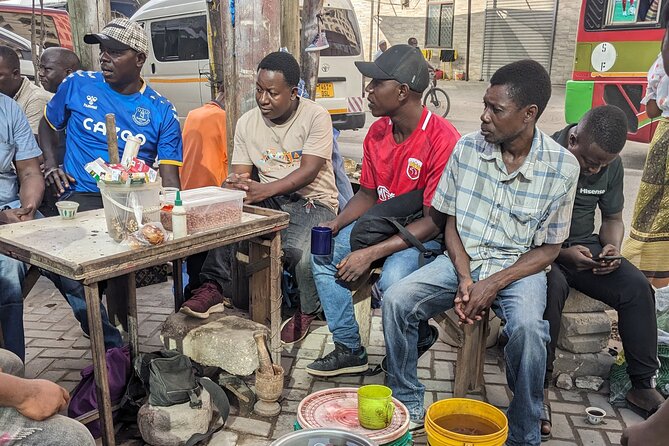
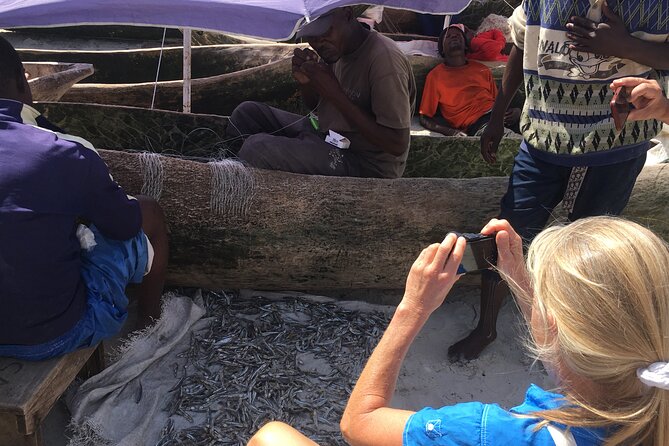
Kivukoni Fish Market is the kind of place that wakes up the whole city. You get there when activity is just starting and you can feel how trading seafood is the daily rhythm for many people.
What I’d focus on here is not just the fish, but the flow. Your guide helps you understand the inner workings, including fishing traditions, how seafood culture works in Dar, and why this space is socially important, not just commercial. You’ll likely notice how quickly things move, how conversations blend with calls from fishermen, and how the market’s energy is part of the city’s identity.
Practical tip: wear closed-toe shoes and expect salt air and sea smells. If you are sensitive to smells or crowded areas, tell your guide early so you can choose a calmer viewing spot.
Azania Front Lutheran Church: German-era architecture with ocean light
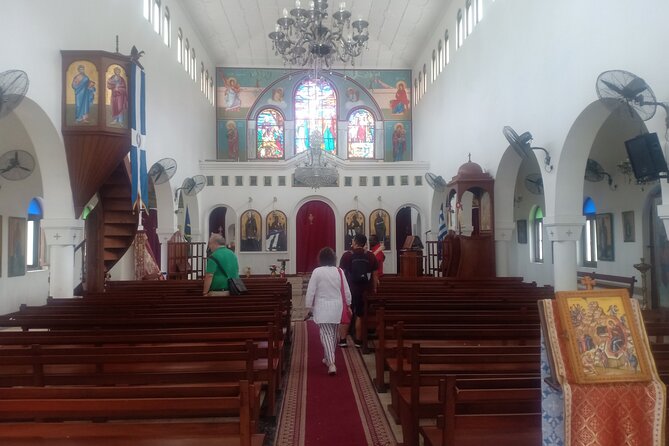
After the market, Azania Front Lutheran Church is a breather. It is an old landmark tied to German missionaries, built in 1891, and it overlooks the Indian Ocean.
Inside, the space feels simple and quiet compared to the market. That contrast is useful. It breaks up the day and gives your brain a chance to absorb context. Your guide can walk you through the church’s origin, its influence, and how it continues to play a role in the community.
If you enjoy places where architecture tells a story, this stop is quick but memorable. It is also free, so it is low-cost and high-return in the day’s schedule.

National Museum of Tanzania: history and identity in one organized stop
The National Museum of Tanzania is the tour’s main indoor anchor, with about 1 hour 30 minutes on the schedule and admission included.
This is where the day starts to make deeper sense. Expect exhibits that cover Tanzania’s history, culture, and natural wonders, including ancient hominid fossils and artifacts connected to colonial and independence eras. Your guide’s job here is key: you are not just walking through rooms, you are getting help connecting what you see to the bigger story of where Tanzania has been and where it is going.
Why I like this stop on a city tour: it prevents the day from feeling like separate sightseeing moments. Instead, your coastal experiences and city-center landmarks start to feel connected.
Practical tip: museums reward curiosity. If you ask one or two questions, you get a lot more out of the hour 30 than if you only scan signs.
Askari Monument: a bronze reminder tied to World War I
The Askari Monument is short and powerful. Located at the city’s heart, it honors African soldiers, specifically the askari who fought in World War I.
The monument was erected during the British colonial period, and it points to the complex layers of Tanzanian history: service, sacrifice, and remembrance. Your guide should help you read it beyond the statue itself, linking it to the wider story of East Africa in the early 1900s and the road toward independence.
This is a good stop if you prefer history you can see and stand beside. It is also free, so it fits the day well.
Kariakoo Market: shopping with a plan, not a random walk
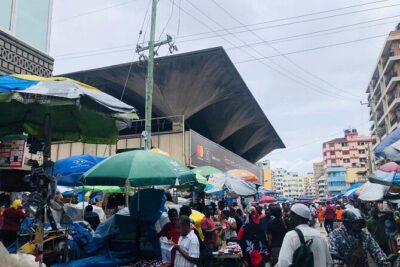
Kariakoo Market is Dar es Salaam’s busy commercial center. Think of it as a place where the city’s everyday energy shows up in full force: vendors, shoppers, porters, and street food all mixing together.
Your guide’s value here is practical. Kariakoo can feel like organized chaos from the outside, but it is navigable with local help. Your stop aims to help you understand what you are seeing, from produce and fabrics to electronics and the food scene. Even if you do not plan to buy much, the chance to watch how people shop and negotiate is part of why the market matters.
Timing is about 1 hour. That is long enough to get oriented, but short enough that you are not stuck all day in crowds after already walking earlier stops.
Practical tip: markets are a good place to practice smart shopping habits. Go in with a small focus list, like one craft you want or one local snack you want to try. That keeps you from getting overwhelmed.
Makumbusho Village Museum: huts, tribes, and hands-on context
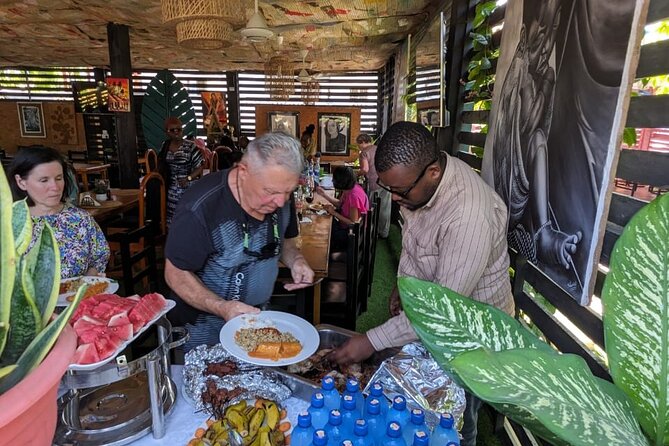
Makumbusho Village Museum (often referred to as the Village Museum stop) shifts the day into cultural perspective. You get about 1 hour 30 minutes, and admission is included.
This is an open-air museum made up of traditional homes and artifacts, representing over 200 tribes. The idea is straightforward and useful: rather than learning culture only through lectures, you see how different groups expressed community life through home design, materials, and layout.
Your guide can explain the cultural significance of each structure, which is where this stop separates itself from a generic photo walk. You should leave with a clearer sense of how Tanzania’s many communities connect through shared ideas and very different details.
Wear comfortable shoes here. Open-air museums mean you will be walking between structures, and some paths may be uneven.
Tingatinga Arts Cooperative: see the making before you buy
Tingatinga Arts Cooperative Society is where art and commerce meet in a very direct way. Your visit is about 1 hour, admission free, and it is built around craftsmanship you can actually talk about.
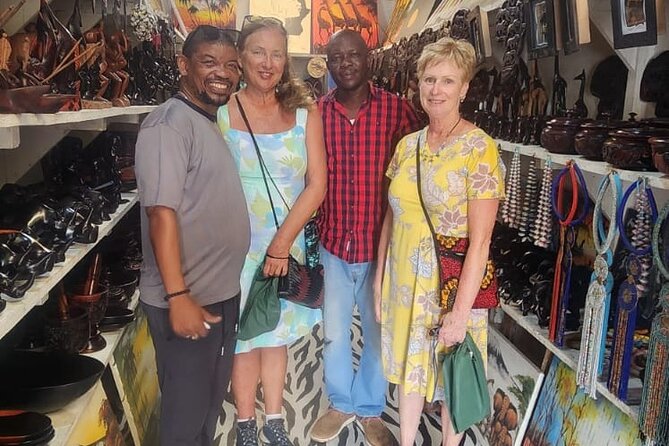
Expect wood carvings, bold fabric items, and handmade jewelry. Your guide can help you understand techniques and the local creative logic behind the work. This is also one of the few stops where you can shop with intention, because you can connect what you buy to the people and methods you meet during the visit.
From a value standpoint, I like this stop because you can turn it into a souvenir with meaning. Rather than buying something random, you are buying from an identified creative community.
Practical tip: if you want a specific item, give yourself time to compare. Handmade work varies, and your guide can help you figure out quality differences without guessing.
Coco Beach: the local weekend rhythm with snacks and music
Coco Beach is the day’s coastal payoff. You get about 1 hour here, and admission is free.
The key detail is that it is a favorite weekend retreat for locals, not just an outsider beach stop. That shows in the atmosphere. You are likely to notice music, markets, and a social crowd energy that feels like part of the city, not a separate attraction.
The description also points to what people actually eat and drink there, including freshly fried cassava and coconut juice straight from the shell. Even if you do not plan to eat much, it is a good place to relax, cool down, and let the day switch from sightseeing mode to living mode.
Practical tip: after walking markets and museum rooms, this is a good time to hydrate. Bring water, or plan to buy drinks there.
A final stroll through suburban Dar es Salaam: daily life in short form
The last stop is a neighborhood stroll through everyday Dar es Salaam. You get about 40 minutes, and it is free.
This part matters because it takes you beyond the usual tourist loop. Instead of only landmarks, you see street vendors, neighborhood greetings, and the kind of everyday interactions that define how the city actually feels.
The “value” here is less about a single sight and more about perspective. By the end of the day, you should feel like you can understand Dar es Salaam as more than market plus beach plus monument.
If you get tired, tell your guide. A short stroll is flexible, and a good guide will adjust the pace without rushing you.
Price and time: where the $90 per person fits best
The price is $90 per person for a private full-day tour, lasting roughly 6 to 9 hours. To judge value, look at what you get for that cost: pickup, a private experience, a local guide for the full route, and admission included for the National Museum of Tanzania and Makumbusho Village Museum.
Most of the other stops are free, including Kivukoni Fish Market, Azania Front Lutheran Church, Askari Monument, Kariakoo Market, Tingatinga Arts Cooperative Society, Coco Beach, and the neighborhood stroll. That means your money mostly buys time, guidance, and smooth movement between very different parts of the city.
Also, this tour is often booked about 17 days in advance on average. That usually means it sells out in peak times or simply stays popular, so if you have fixed travel dates, it is smart to reserve earlier.
If you are traveling with two people who want privacy, the private format can feel like a bargain compared with paying for separate guides, taxis, and museum tickets. If you are solo and on a tight budget, you may still find it worth it if you care about having a guide explain the stories, not just drive you.
Who this Dar es Salaam tour suits, and who should think twice
This tour fits best if you want a guided day that mixes coast, markets, and cultural context. It is also a good match for people who like variety in one trip, because you get seafood culture, German-era architecture, museum learning, a war memorial, market shopping, traditional homes, crafts, and beach time.
Service animals are allowed, and most travelers can participate, so it is generally approachable. Still, it can involve walking and standing, especially in markets and open-air areas, so plan for that if mobility is a concern.
If you strongly dislike crowds, or you want a slower, more restful day with fewer city-center stops, you might prefer a shorter tour that focuses only on the coast or only on museums.
Should you book this private Dar es Salaam tour?
Book it if you want Dar es Salaam explained while you move through real places, from Kivukoni Fish Market’s early energy to Coco Beach’s local weekend vibe. The private format is the real advantage, because your guide can shape the pace and focus, and that kind of attention shows up in how the day feels.
Skip or reconsider if long days and market crowds are not your thing. Also, if you only want a few “big hits” and nothing else, you might be happier with a half-day plan that leaves more time for unguided wandering.
If you do book, I’d start with one goal for the day, like learning something about Tanzania’s past through the museum stops, or finding a specific craft at Tingatinga. Then let your guide, including Said if available through the provider, help you turn that goal into a smooth, memorable route.
FAQ
How much does this full day private tour cost?
It costs $90.00 per person.
How long is the tour?
The duration is approximately 6 to 9 hours.
Is pickup included, and do I get a mobile ticket?
Yes. Pickup is offered, and you receive a mobile ticket.
Is this a private tour?
Yes. It is a private tour, and only your group participates.
Are museum admissions included?
Admission is included for the National Museum of Tanzania and the Village Museum (Makumbusho Village). Other listed stops are marked free.
Can I cancel and get a full refund?
Free cancellation is available. You can cancel up to 24 hours in advance for a full refund. If you cancel less than 24 hours before the start time, the amount paid will not be refunded.
Are service animals allowed on this tour?
Yes, service animals are allowed.
Dar es Salaam and Its Coast
- Dar es Salaam: City Tour
★ 4.7 · 159 reviews - Dar es Salaam City Center: Walking Tour
★ 4.8 · 102 reviews - Dar es Salaam City Tour – Everyday
★ 5.0 · 64 reviews - 2 Days 1 Night Mikumi National Park from Dar es salaam
★ 5.0 · 60 reviews - The Best/Top Rated Cultural City Tour in Dar es Salaam
★ 5.0 · 57 reviews
Just added from around Dar es Salaam





Dar es Salaam City and Coastal Escapes, compared.
 ★ 4.7Dar es Salaam: City TourFrom $77159 reviews
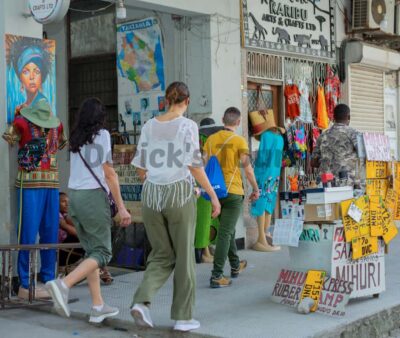 ★ 4.8Dar es Salaam City Center: Walking TourFrom $30102 reviews
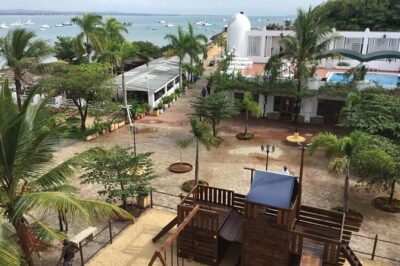 ★ 5.0Dar es Salaam City Tour – EverydayFrom $9764 reviews
 ★ 5.02 Days 1 Night Mikumi National Park from Dar es salaamFrom $67060 reviews
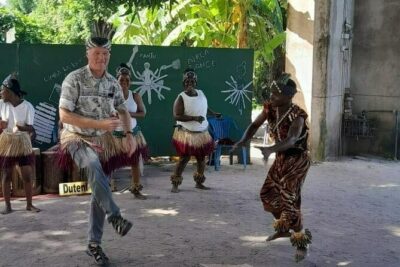 ★ 5.0The Best/Top Rated Cultural City Tour in Dar es SalaamFrom $9057 reviews
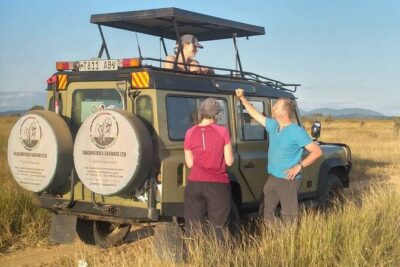 ★ 5.0Private Full-Day Trip to Mikumi National Park from Dar es SalaamFrom $55054 reviews
 ★ 5.0Dar Es Salaam City Tour (Full Day With Private Guide And Car)From $14539 reviews
 ★ 4.5Full-Day Private Tour of Dar es SalaamFrom $16037 reviews
Browse the lists this tour appears in