
REVIEW · DAR ES SALAAM CITY AND COASTAL ESCAPES
Dar es salaam Private City Tour with Professional Guide
Dar es Salaam grabs you at street level. This private day tour is a smart mix of landmark sightseeing and real local life, with stops like Askari Monument and the coast markets in Kivukoni, guided by Enroute Africa.
Two things I really like are the way the professional guide (Emmanuel is specifically praised by past guests) keeps the story straight and human, and the value of the included lunch and drinks in an air-conditioned vehicle for a long day.
The only drawback I see for some people is timing and senses: it runs about 9 to 10 hours, and the market stops, especially Kariakoo and the fish market, can feel crowded and intense.
In This Review
- Key Highlights You Should Know
- A Private Dar es Salaam Day That Mixes Landmarks With Local Reality
- Askari Monument on Samora Avenue, 1927 and the Askari Story
- St. Joseph’s Cathedral, German-Mission Gothic With Real Quiet Time
- Azania Lutheran Church by Kivukoni Front, Red Brick and Harbor Views
- Kariakoo Market, Spices and Everything Else in One Maze
- National Museum of Tanzania and the Zinjanthropus Skull
- Village Museum in Kijitonyama, Traditional Homes Built the Old Way
- Mwenge Woodcarvers Market, Handmade Souvenirs With Real Negotiation
- Makumbusho War Cemetery, Commonwealth Remembrance in White Headstones
- Ferry Fish Market Near Kivukoni, Fresh Catch Energy Without the Fuss
- Price, What You Get, and Whether $180 Makes Sense
- Should You Book This Dar es Salaam Private City Tour?
Key Highlights You Should Know
- Colonial-era landmarks you can actually place, from the Askari Monument to German-mission churches
- National Museum that includes the famous Zinjanthropus skull
- Market navigation help at Kariakoo, where bargaining and crowd flow are part of the experience
- Mwenge Woodcarvers Market for real, handmade shopping, with active artisans and expected negotiation
- Makumbusho War Cemetery for a quiet, meaningful pause with Commonwealth graves
- A day that ties coast, city, and traditional life together in one route
More around Dar es Salaam and its islands
- Dar es Salaam: City Tour★ 4.7 · 159 reviews
- Dar es Salaam City Center: Walking Tour★ 4.8 · 102 reviews
- Dar es Salaam City Tour – Everyday★ 5.0 · 64 reviews
- 2 Days 1 Night Mikumi National Park from Dar es salaam★ 5.0 · 60 reviews
A Private Dar es Salaam Day That Mixes Landmarks With Local Reality
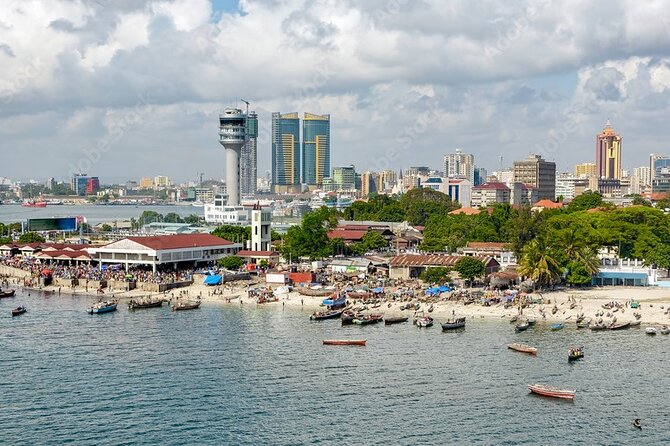
This tour is built for people who want more than a checklist. You get a guide who can connect the dots between Dar es Salaam’s colonial architecture, its independence story, and the places where daily life still happens. You’re not just looking at buildings. You’re also seeing markets, crafts, and community heritage.
It also helps that the tour is private, meaning you move at a pace that fits your group. The day starts at 8:30 am, runs roughly 9 to 10 hours, and includes hotel-style basics like bottled water, plus lunch and soda or pop (and alcoholic beverages are included too).
If you care about value, this one is easier to judge than many tours. You’re paying $180 per person for a full-day guide and private transport plus admission coverage at several stops, so the cost makes sense when you want guidance and comfort, not just driving around.
Askari Monument on Samora Avenue, 1927 and the Askari Story
You kick things off with the kind of monument that teaches you how to read a city. The Askari Monument sits in a roundabout on Samora Avenue, and it’s impossible to miss once you’re close: a bronze soldier holding a rifle, with the bayonet pointing downward to signal peace.
What makes this stop more than a photo-op is the detail. The monument was unveiled in 1927, and it has an inscription in both English and Swahili honoring the askaris who fought alongside the British during World War I. It was designed by British sculptor James Alexander Stevenson.
Why it matters for your day: this is one of those anchors that explains a lot of what you’ll see later. Dar es Salaam is shaped by colonial-era layers, and that layer is not only in buildings. It’s in the people and the stories remembered in public space.
Practical tip: this is a simple stop time-wise (you’ll have time to look closely), so wear shoes that work well for curbs and sidewalks around a traffic circle.
St. Joseph’s Cathedral, German-Mission Gothic With Real Quiet Time
St. Joseph’s Cathedral is the kind of stop that makes you slow down. Built by German missionaries between 1897 and 1902, it’s the Roman Catholic Archdiocese of Dar es Salaam’s seat, and the architecture is classic Gothic in feel: tall spires, arched openings, and detailed stonework.
Step inside and you get a break from the city noise. The interior is described as serene, with religious artwork and stained glass that rewards a few extra minutes. Even if you’re not religious, this is still worth your time for how the light and shapes change the mood.
This stop also has admission included, and the scheduled time is about 30 minutes. That’s usually enough for a quick exterior look, plus a calm interior visit where you can actually see details.

Azania Lutheran Church by Kivukoni Front, Red Brick and Harbor Views
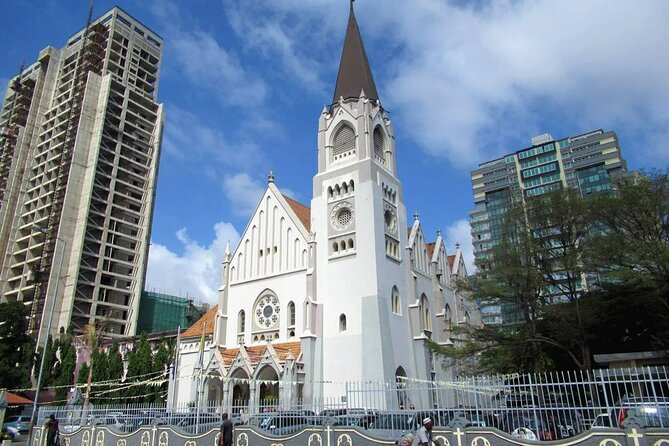
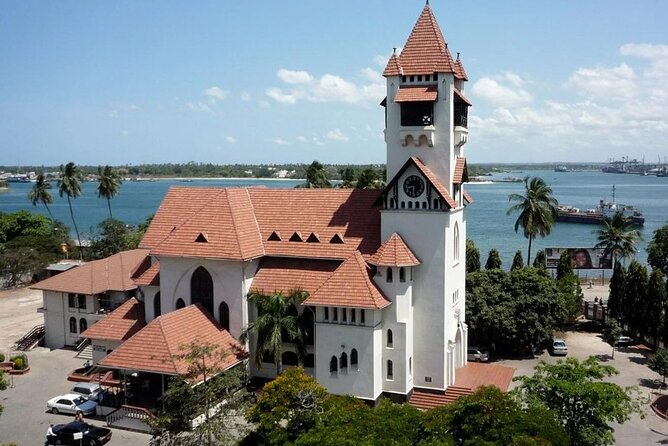
Next comes a landmark that also carries colonial-era roots, but with a different visual language. Azania Lutheran Church (often called Azania Lutheran Church) was built in 1898 by German missionaries. It’s a striking red-brick church with Gothic architecture and a tall spire, positioned overlooking the harbor near Kivukoni Front.
The name Azania is part of the story. It’s linked to an ancient Greek term for the East African coast, so you get a quick lesson in how older ideas about the region influenced naming and identity.
Why this matters for your day: the harbor setting makes it feel like a chapter in the city’s coastal life, not just another church stop. If you like photos, you’ll understand why people linger here.
This one also includes admission, with about 30 minutes allocated.
Kariakoo Market, Spices and Everything Else in One Maze
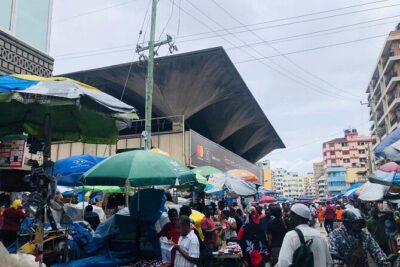
If Dar es Salaam has a sensory front door, it’s Kariakoo Market. This market is big and competitive in the way markets often are: rows and alleyways of stalls with everything from fresh produce and spices to seafood, clothing, electronics, and household goods.
Kariakoo’s name has a World War I connection too, tied to a Carrier Corps called Kariakoo that was stationed in the area. That link helps make the market more than a chaotic place to pass through. It’s part of the city’s working history.
What you’ll likely feel on the ground:
- the noise level is high
- smells mix fast (food, spices, and grilled items)
- it’s easy to get turned around without help
So for this stop, a professional guide earns their keep. With someone handling timing and keeping your group moving, you can spend your energy choosing what you actually want, not just surviving the crowd.
Important consideration: Kariakoo can be overwhelming if you dislike tight spaces and constant negotiation. The tour gives you time to look, but you should still come prepared for a very hands-on market experience.
National Museum of Tanzania and the Zinjanthropus Skull
The National Museum of Tanzania is where the day shifts from daily commerce to national storytelling. Established in 1934, it brings together archaeological finds, ethnographic displays, and historic material, plus sections focused on art and culture.
A headline attraction here is the Zinjanthropus skull, described as a 1.75-million-year-old hominid fossil. Even if fossils aren’t your main interest, it’s the kind of artifact that changes how you think about time and place.
You’ll also see traditional tribal artifacts and exhibits covering colonial and independence history. The museum’s gardens are mentioned as a calm touch, which matters because the rest of the day can be loud and full-on.
Scheduled time is about 40 minutes, with admission included. That time is right for a focused visit, so if you want the fossil and key history stops, you’ll want your guide to help you prioritize what you see first.
Village Museum in Kijitonyama, Traditional Homes Built the Old Way
The Village Museum is an open-air stop that gives you structure for understanding Tanzanian life beyond the city center. It’s in Kijitonyama, about 10 kilometers from the city center, and it focuses on traditional architecture and cultural heritage.
Here’s what makes it worth your attention: you see replicas of traditional homes from over 20 Tanzanian ethnic groups, including the Chagga, Maasai, Sukuma, and Zaramo. These structures are built using traditional materials and techniques, so it’s not just a display. It gives you a sense of how form follows lifestyle.
The museum can also include cultural performances like traditional dances, music, and crafts demonstrations. Even if performances aren’t happening at the exact moment you arrive, the museum still offers a visual education that’s hard to get from a quick drive-by.
You get about 40 minutes, and admission is included.
Practical consideration: because it’s open-air, plan for sun and heat. The tour includes bottled water, which is genuinely useful on this kind of stop.
Mwenge Woodcarvers Market, Handmade Souvenirs With Real Negotiation
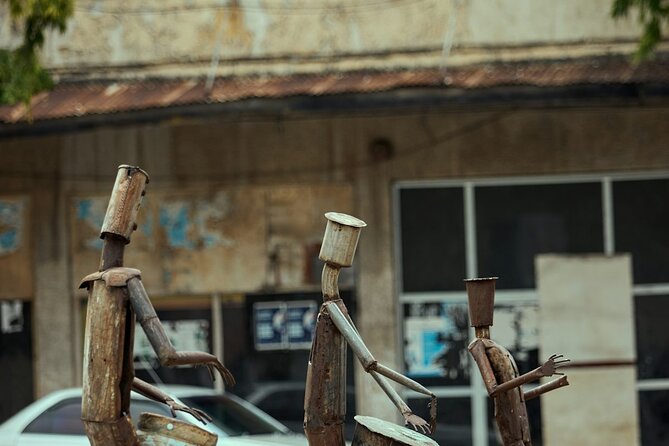
For souvenir shopping that feels connected to real craft, Mwenge Woodcarvers Market is a strong match. This open-air market is known for handcrafted wooden items like intricate carvings, sculptures, masks, and household decor.
What I like about markets like this is that you’re not just buying objects. You’re buying from artisans, and you’re usually able to ask questions while bargaining.
This is also one of the few places on the itinerary where bargaining is expected in a friendly, normal way. The tour time here is about 40 minutes, and admission is free.
If you want good value, don’t rush. Take time to compare:
- size and detail level
- whether the piece looks consistent from all angles
- how the artisan explains the carving style
And keep expectations realistic. Handmade work takes time, so the goal is fair pricing, not winning a price war.
Makumbusho War Cemetery, Commonwealth Remembrance in White Headstones
After the noise of markets, the Dar es Salaam War Cemetery (World War II Cemetery in Makumbusho) is a moving change of pace. It’s maintained by the Commonwealth War Graves Commission, and it’s the final resting place for over 1,500 Commonwealth servicemen, including British, South African, and East African troops, plus a few non-Commonwealth soldiers.
The grounds are described as well-kept, with rows of white headstones. The atmosphere is peaceful and reflective, and that matters. You’ll likely feel your body slow down here.
This stop also has free admission and about 30 minutes.
Practical tip: come ready to be respectful with your attention. This is the kind of place where spending an extra few minutes quietly looking at names feels appropriate.
Ferry Fish Market Near Kivukoni, Fresh Catch Energy Without the Fuss
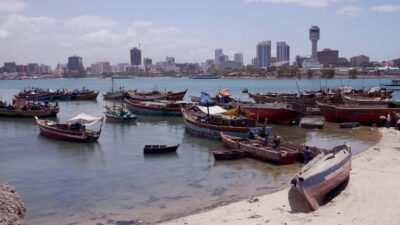
The day’s coastal connection comes back at the Ferry Fish Market near Kivukoni Front, close to the city’s main ferry terminal. This is where you can feel Dar es Salaam’s connection to the Indian Ocean in a practical way.
What makes it special is how direct it is. Fishermen bring in their haul, vendors prepare and sell seafood, and the whole place works on rhythm and negotiation. Seafood options can include prawns, octopus, red snapper, and tuna, and the smell of grilled fish plus the sound of haggling is part of what makes the market real.
Admission is free, and it’s scheduled for about 30 minutes.
Consideration: if you are sensitive to strong smells or crowded waterfront areas, this stop can feel like a lot. You can still enjoy it by focusing on a few things, like how the vendors display and prepare fish, then stepping back for photos from a calmer angle.
Price, What You Get, and Whether $180 Makes Sense
At $180 per person for a private, full-day tour, the value comes down to what’s included and how much you want guided time.
Here’s what you’re getting that usually costs extra on your own:
- an air-conditioned vehicle and private transportation
- a professional guide
- bottled water
- lunch plus soda or pop
- alcoholic beverages included
- all fees and taxes
- admissions for multiple key stops (and free admission for a few others)
You can also feel the value in the design of the day. The route combines architecture (Askari Monument, St. Joseph’s Cathedral, Azania Lutheran Church), museum learning (National Museum), culture (Village Museum), craft shopping (Mwenge), and a local food scene (Kivukoni Ferry Fish Market). That kind of mix is hard to assemble smoothly without help, especially when markets are crowded and timing matters.
Based on the praise in the provided operator notes, the other major value is people. Emmanuel gets called out for being full of knowledge and warm, and that kind of guide presence changes how much you remember after the day ends.
Who this tour suits best:
- You want a guided day with context, not just sightseeing photos
- You like a balanced mix of culture, history, and everyday life
- You prefer comfort for a long day, including lunch and bottled water
Who might rethink it:
- You hate long days
- You strongly dislike crowded markets or intense smells
- You want a slower pace with more free time
Should You Book This Dar es Salaam Private City Tour?
I’d book it if your goal is a well-timed, guide-led introduction to Dar es Salaam that touches major history, real daily markets, and meaningful sites like the War Cemetery. The inclusions help a lot: air-conditioned transport, lunch, drinks, bottled water, and a professional guide make the day feel handled, not chaotic.
Book it confidently if you want to learn as you go. With a guide like Emmanuel, the day is set up so you’re not just looking, you’re understanding. And if you want souvenirs, Mwenge is a practical place to shop for wood carvings with artisans, not just generic tourist items.
Skip or modify your expectations if markets and crowded spaces drain you. Kariakoo and the Ferry Fish Market are part of the point, and they are not quiet stops. In that case, you might still enjoy the day by focusing your attention, keeping your shopping purposeful, and leaning on your guide to keep your group moving.
If you want one day to cover the city’s main stories, this private Dar es Salaam route is a strong choice.
Dar es Salaam and Its Coast
- Dar es Salaam: City Tour
★ 4.7 · 159 reviews - Dar es Salaam City Center: Walking Tour
★ 4.8 · 102 reviews - Dar es Salaam City Tour – Everyday
★ 5.0 · 64 reviews - 2 Days 1 Night Mikumi National Park from Dar es salaam
★ 5.0 · 60 reviews - The Best/Top Rated Cultural City Tour in Dar es Salaam
★ 5.0 · 57 reviews
Just added from around Dar es Salaam





Dar es Salaam City and Coastal Escapes, compared.
 ★ 4.7Dar es Salaam: City TourFrom $77159 reviews
 ★ 4.8Dar es Salaam City Center: Walking TourFrom $30102 reviews
 ★ 5.0Dar es Salaam City Tour – EverydayFrom $9764 reviews
 ★ 5.02 Days 1 Night Mikumi National Park from Dar es salaamFrom $67060 reviews
 ★ 5.0The Best/Top Rated Cultural City Tour in Dar es SalaamFrom $9057 reviews
 ★ 5.0Private Full-Day Trip to Mikumi National Park from Dar es SalaamFrom $55054 reviews
 ★ 5.0Dar Es Salaam City Tour (Full Day With Private Guide And Car)From $14539 reviews
 ★ 4.5Full-Day Private Tour of Dar es SalaamFrom $16037 reviews
Browse the lists this tour appears in