
REVIEW · DAR ES SALAAM CITY AND COASTAL ESCAPES
Bagamoyo Full-Day Tour: Historic Slave Trade Route & Kaole Ruins
History here hits close to home, in a good way. This full-day Bagamoyo tour from Dar es Salaam takes you along the coast and through sites tied to the slave trade route, while also showing the older Islam and Christianity layers that shaped this town. I especially like the guided pacing across major landmarks and the way the day includes both stone-and-arches history and everyday Bagamoyo life at the harbor and fish market.
The tour also earns points for practical comfort: private, air-conditioned transport, bottled water all day, and lunch with dietary needs handled. A possible drawback is that it is a long day, roughly 8 to 10 hours, and the subject matter is heavy, so you should be ready for an emotional dose of history.
In This Review
- Key Highlights You Will Actually Feel
- Bagamoyo From Dar es Salaam, The Real Value of an 8 To 10 Hour Day
- Old Fort Bagamoyo, How One Place Changes Hands and Meanings
- Old Boma and the Locked Iron Safe, Colonial Administration in Plain Sight
- Kaole Ruins, Two Mosques, Tombs, and a Museum That Explains Trade
- Holy Ghost Mission Complex, When Land Gifts, Churches, and Pilgrimage Coexist
- Holy Ghost Baobab, Old Market, and the Slave Trade Route on the Ground
- Fish Market and Dhow Harbour, Ending With Today’s Coast Views
- Price and Logistics, What You Are Paying For in Real Terms
- Who Should Book This Bagamoyo Full-Day Tour, and Who Might Skip It
- Should You Book This Tour?
- FAQ
- What is the duration of the Bagamoyo full-day tour?
- Where does the tour start and when?
- Is pickup included?
- What does the tour price include?
- Are admission tickets included for attractions?
- Is the tour private?
- Can I get a full refund if I cancel?
Key Highlights You Will Actually Feel
- Old Fort transformations, from Arab trading era to German garrison, British prison, and later police use
- Kaole Ruins, with two historic mosques, tombs tied to local rulers, and a small on-site museum
- Holy Ghost Mission sites, including the Livingstone Tower area and the Holy Grotto built by people connected to emancipation
- Mission Museum exhibits, with artifacts and scenes linked to the slave trade and the mission response
- Clear end-of-day payoff at the fish market and dhow harbor, where the Indian Ocean is part of the story
More around Dar es Salaam and its islands
- Dar es Salaam: City Tour★ 4.7 · 159 reviews
- Dar es Salaam City Center: Walking Tour★ 4.8 · 102 reviews
- Dar es Salaam City Tour – Everyday★ 5.0 · 64 reviews
- 2 Days 1 Night Mikumi National Park from Dar es salaam★ 5.0 · 60 reviews
Bagamoyo From Dar es Salaam, The Real Value of an 8 To 10 Hour Day
This tour is built for one purpose: getting you out of Dar es Salaam and into Bagamoyo long enough to understand what the town meant, not just see a few highlights. The timing is about 8 to 10 hours total, with the in-between hours spent traveling between sites. That matters because Bagamoyo is spread out, and trying to cobble it together on your own can turn into guesswork fast.
You also get a real comfort upgrade. You travel in a private vehicle with air conditioning, and you have bottled water with unlimited supply. Lunch is included, and the tour notes dietary restrictions will be taken into account, which is a big deal on a day trip like this when you do not want to hunt for food while you are rushed.
The other practical win: your group stays together. The tour is described as private activity, meaning only your group participates. For couples or small families, that usually feels less chaotic and more personal.
Old Fort Bagamoyo, How One Place Changes Hands and Meanings
You start with the Old Fort, and it is the kind of site that makes the rest of the day click. The fort was built in the 1860s by Arab trader Abdallah Suleiman Marhabi. Over time, it became a center for the slave trade, later a German garrison in 1896, and then a British prison by 1919. After independence in 1974, it was used as a police station.
Walking through a place with that many “jobs” teaches you something important: power shifts, but suffering can keep repeating. You do not need to memorize dates to get the point. You just need to notice how the physical space held different systems.
Admission for this stop is listed as free, so you are not paying extra just to stand in the same corridors where history kept moving. Still, go slowly. This is not the kind of stop where you want to rush for photos. If you want a better mental connection, spend time reading the context and letting the guide connect each era to the next.
A heads-up for planning your day: even though some entry fees are free or included, the emotional weight is real, so give yourself a steady pace.
Old Boma and the Locked Iron Safe, Colonial Administration in Plain Sight
Next is the Old Boma, inside the Old Town conservation area. This building was constructed in 1895 by the Germans and served as the administrative headquarters for German East Africa until 1919. After Germany’s rule ended under the Versailles Treaty outcome, the British took over and used it as the District Commissioner’s office until it was decommissioned in 1997 due to structural issues.
One small detail makes it memorable: there is an old iron safe left by the Germans, and it remains locked. That is not just a cool object. It is a clue that the place functioned like a control center, where records and decisions would have had real consequences for people.
Admission for this stop is included, so you are paying for the experience without worrying about extra fees. The bigger value is the way the Old Boma links to the rest of Bagamoyo. When you later see the mission buildings and the market areas, you start to understand how religious and administrative power could exist in the same town while people’s lived realities were shaped by trade and coercion.
If you prefer history that explains how systems worked, this is the kind of stop you will appreciate.

Kaole Ruins, Two Mosques, Tombs, and a Museum That Explains Trade
About 3 miles (4.8 km) east of the Indian Ocean, Kaole Ruins is one of those places where you can see multiple centuries in one walking route. The site was established as a trading town as early as the 8th century. The name Kaole is linked to the Zaramo people, and it is said to mean Go and See.
What you will focus on here are the two historic mosques and the surrounding tombs. One mosque dates to the 13th century, built by the Sultan of Kilwa, and it is potentially the oldest mosque in Tanzania and East Africa. The second mosque dates to the 15th century and sits around roughly 30 tombs, including tombs connected to local rulers called diwanis.
There is also a small museum on-site with artifacts, including evidence of ancient trade with China. That single detail helps you connect Bagamoyo to larger ocean trade routes, so the story is not limited to one forced migration or one empire. The port town role goes much wider in time.
Admission for Kaole Ruins is included, and that makes it a good value stop. The ruins do require attention, though. If you tend to skim, you might miss what makes this place special. Ask your guide to point out the mosque dates and the meaning behind the tombs, because the stones work best when someone helps you read the layers.
Holy Ghost Mission Complex, When Land Gifts, Churches, and Pilgrimage Coexist
The heart of the day shifts from trading history to the story of faith and community in Bagamoyo. The Holy Ghost Mission complex includes several historic stops that are close enough to feel like one continuous site experience.
Father Antoine Horner of the Holy Ghost Fathers came to Bagamoyo in 1868 to establish a mission. The land for the mission was gifted by Muslims under the leadership of Sultan Majid in 1868. Soon after, the first church, Holy Ghost Church, was built in 1872. The information given notes it was the first church in the area and on the mainland of East Africa.
A standout moment in the mission story is linked to David Livingstone. In 1874, Livingstone was interred for the night at the mission, and the Livingstone Tower, part of the original church, is named in his honor. Even if you only know Livingstone as a name, this helps you connect global exploration narratives to the specific place where he paused.
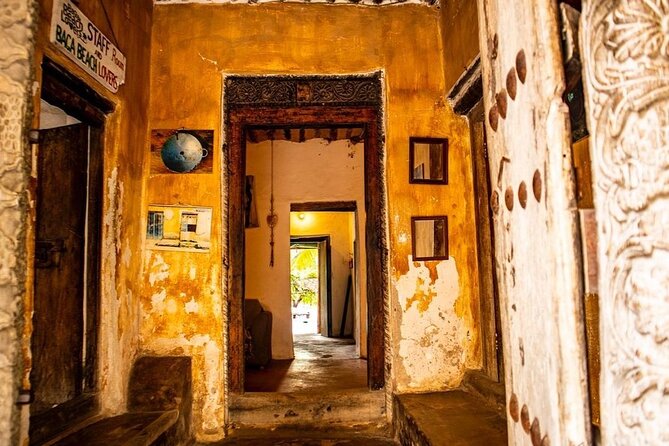
From there, you also see the Old Fathers’ House, built in 1873 in a pre-colonial mission style. It is a three-story building completed in phases: ground floor in 1873, first floor in 1877, and second floor in 1903, with a broad balcony.
Then there is the Catholic Mission Museum, established in 1876 as the Sisters’ House. It is one of the most important stops in the day because it focuses on evidence, artifacts, and the emotional impact of slavery and the mission’s role. You are told it includes images of enslaved individuals, chains and whips, and rare religious artifacts. It also features Indian and Arab architectural pieces and local wooden artwork. You can visit rooms once used by missionaries and learn how the region’s role in trade, religion, and resistance shaped lives.
Later, the New Holy Ghost Church is larger than the original and was built between 1910 and 1914 using coral stone blocks. Near it, the Holy Grotto is described as built by emancipated slaves who lived in the mission. Construction started in 1876 and the grotto was opened and consecrated in 1879 by Pope Leo XIII. Every year, several thousand Catholics from across Tanzania visit for pilgrimages.
I like this cluster because it avoids turning Bagamoyo into a single-issue story. You see how Islam and Christianity existed together here, how land gifts helped build institutions, and how pilgrimage still draws people today.
Holy Ghost Baobab, Old Market, and the Slave Trade Route on the Ground
Between the mission buildings and the port story, you pass through smaller details that make history feel physical. The historical baobab tree in the churchyard has a legend tied to an iron chain. The story says a French nurse, Madam Chevalier, tied her donkey to the tree, forgot to remove the chain, and the chain remained as the tree grew to a huge size. In 2012, additional chain rings were added to help preserve the tree’s legacy.
That might sound like folklore, but it works as a reminder that objects and stories can carry memory across generations.
Then you reach Old Market, a site tied to the slave market. This is where slaves were brought and kept under trees before transportation to Zanzibar. There is also an account of an underground tunnel that supposedly led to the beach, used during high tide, though the exact location has never been found. Nearby, the customs house played a role: a bounty was paid for every slave exported from the port.
This stop is where the day becomes more than architecture and names. It becomes a map of how movement happened. If your guide is good, they will help you connect the market area to the coastal transport story without turning it into just facts and dates.
Fish Market and Dhow Harbour, Ending With Today’s Coast Views
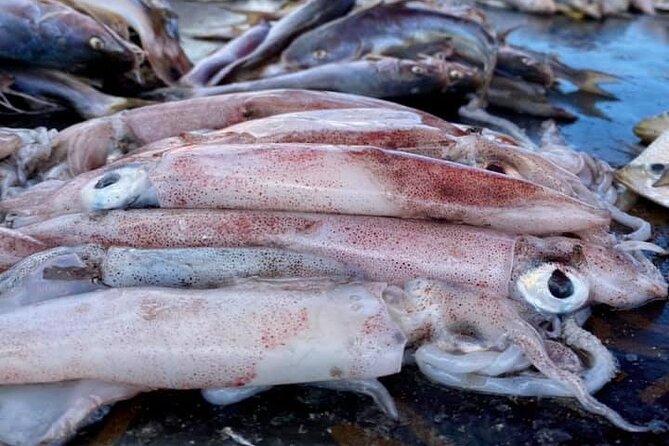
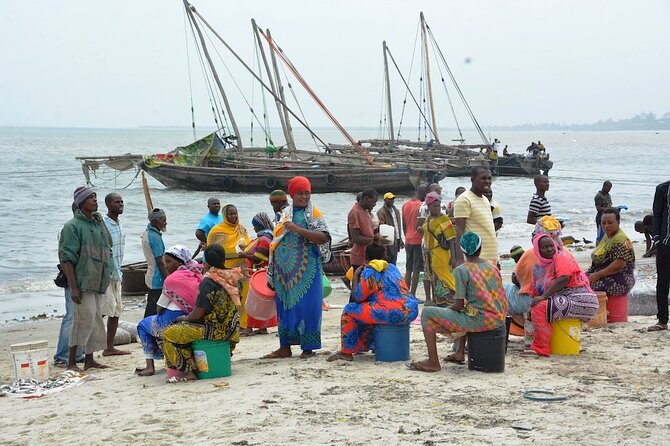
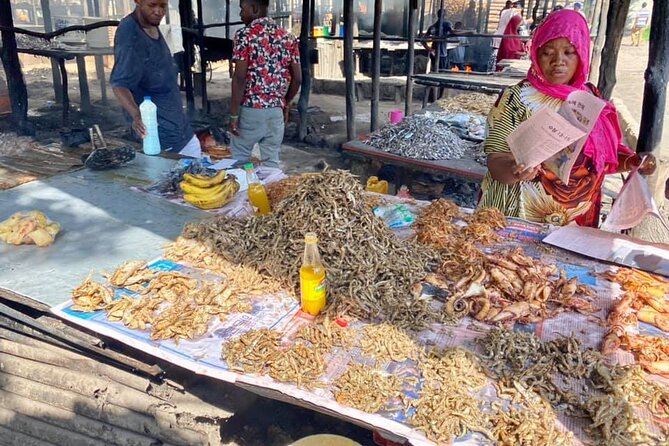
After the heavy parts of the morning and afternoon, the day eases into everyday Bagamoyo life. Stop at the fish market near Bagamoyo beach, where fishermen sell their daily catch. It includes fish, crab, lobster, prawns, and octopus. The market is busiest in the morning. You can buy seafood whole or in portions, and you can even get it cleaned and prepared on-site.
This is a good place to reset your senses. You are still in the historical town, but you are seeing how livelihoods continue. The old auction hall here has historical significance from German colonial times, which adds a small layer of continuity back into the story.
Then you head to the dhow harbour. This is described as a historic trading port once used for ivory and slave trades during the 19th century. Today it serves fishing boats and tourist excursions. If weather allows, this is where you can catch Indian Ocean views and appreciate the coastal setting that made Bagamoyo a hub in the first place. Sunrises and sunsets over the water are specifically noted as a highlight.
You might find the time at the harbor to be a welcome contrast: after museums and ruins, it feels more open, more breathable. Just remember, the harbor is not only scenery. It is part of the same route story you just learned.
Price and Logistics, What You Are Paying For in Real Terms
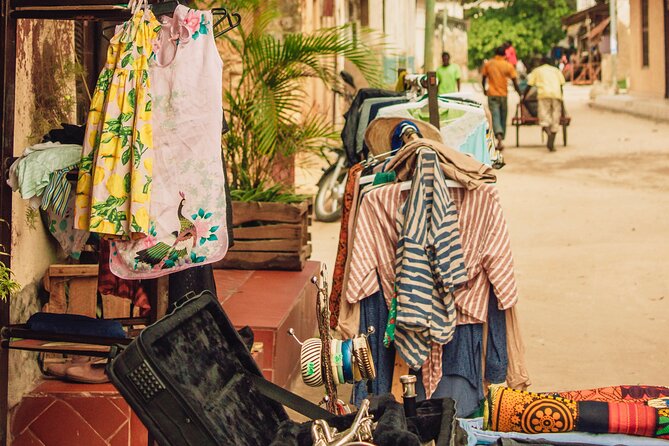
At $255 per person, this is not a budget half-day add-on. The value comes from how many major sites get rolled into one organized flow, plus the comfort and included costs.
Here is what that price covers based on the tour details:
- Private transportation in an air-conditioned vehicle
- Lunch, with dietary restrictions taken into account
- Bottled water, unlimited supply
- Snacks (for people who choose to partake)
- Alcoholic beverages available for those 18 and above
- All fees and taxes
Not included:
- Breakfast
- Dinner
- Tips and gratuities
So the math is simpler than it looks. You do not just pay for a driver. You pay to reduce planning friction, cover admission where it applies, and keep the day moving across multiple sites in one shot. If you tried to replicate this yourself, you would likely spend time arranging vehicles, negotiating costs, and dealing with entry charges and timing uncertainty.
Group discounts are also listed, which can help if you are traveling with others. And because it is private, you can usually expect less waiting and fewer mixed-group tangles.
Two practical cautions about value:
- Since dinner is not included, plan to eat before you head back, or keep expectations low for where you land later.
- The day is long, so you want your lunch to matter. It is included, and in at least one account it was served with a view over the beach, which sounds like the right kind of payoff after the harder history stops.
Who Should Book This Bagamoyo Full-Day Tour, and Who Might Skip It
This tour fits best if you want a single, well-structured day that mixes heritage sites, mission history, and an honest look at Bagamoyo’s role in the slave trade route. It is ideal for first-time visitors to Dar es Salaam who want more than a short coastal walk.
It also works well if you like guides who bring context. One guide name that comes up strongly is Mr Erick, praised for being smart, funny, and ethical, with great English. If you get a guide with that style, the stops will feel more connected and less like a checklist.
But consider your own energy and sensitivity. This is a history-focused day built around slavery-related places like the Old Fort, the market area, and the mission museum exhibits showing chains and whips. If you prefer lighter cultural stops, you might want a different kind of day. If you can handle it, you will likely feel you learned a lot in a meaningful way.
Also, because you are out for 8 to 10 hours, pack for sun and walking even if the vehicle does a lot of the work.
Should You Book This Tour?
Yes, if you want Bagamoyo in one day without losing hours to logistics. The combination of Old Fort, Old Boma, Kaole Ruins, the Holy Ghost Mission complex, and the market and harbor makes it a strong value at $255 because the hard planning work is handled for you.
I would book it sooner rather than later if you care about having an organized guide for places where dates, names, and functions matter. And if you are traveling with people who want clear structure, the private format helps the day feel smoother.
Skip it only if the subject matter feels too heavy for your comfort, or if you are hoping for a purely scenic or beach-focused trip. This is coastal Tanzania, yes, but it is also history you will not forget.
FAQ
What is the duration of the Bagamoyo full-day tour?
It runs about 8 to 10 hours.
Where does the tour start and when?
It starts in Dar es Salaam, Tanzania at 8:30 am.
Is pickup included?
Yes, pickup is offered.
What does the tour price include?
The price includes private transportation in an air-conditioned vehicle, lunch (with dietary restrictions considered), bottled water with unlimited supply, snacks, alcoholic beverages for people 18 and above, and all fees and taxes.
Are admission tickets included for attractions?
Admission is included for some sites (like Old Boma and Kaole Ruins and the museum stops listed as included). Other stops are marked as admission ticket free.
Is the tour private?
Yes, it is private, so only your group participates.
Can I get a full refund if I cancel?
You can cancel for a full refund if you cancel at least 24 hours before the experience start time. If you cancel less than 24 hours before, the amount is not refunded.
Dar es Salaam and Its Coast
- Dar es Salaam: City Tour
★ 4.7 · 159 reviews - Dar es Salaam City Center: Walking Tour
★ 4.8 · 102 reviews - Dar es Salaam City Tour – Everyday
★ 5.0 · 64 reviews - 2 Days 1 Night Mikumi National Park from Dar es salaam
★ 5.0 · 60 reviews - The Best/Top Rated Cultural City Tour in Dar es Salaam
★ 5.0 · 57 reviews
Just added from around Dar es Salaam





Dar es Salaam City and Coastal Escapes, compared.
 ★ 4.7Dar es Salaam: City TourFrom $77159 reviews
 ★ 4.8Dar es Salaam City Center: Walking TourFrom $30102 reviews
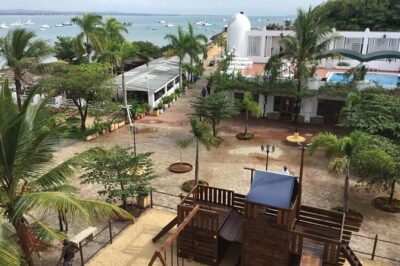 ★ 5.0Dar es Salaam City Tour – EverydayFrom $9764 reviews
 ★ 5.02 Days 1 Night Mikumi National Park from Dar es salaamFrom $67060 reviews
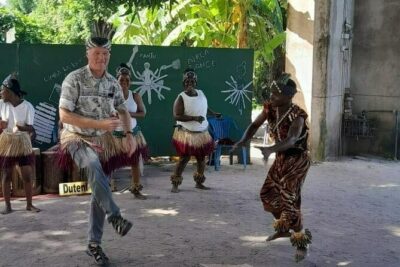 ★ 5.0The Best/Top Rated Cultural City Tour in Dar es SalaamFrom $9057 reviews
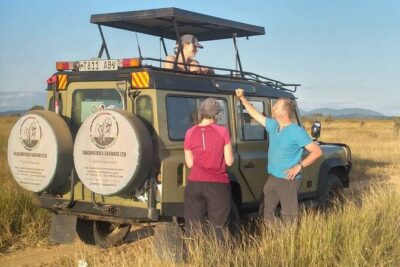 ★ 5.0Private Full-Day Trip to Mikumi National Park from Dar es SalaamFrom $55054 reviews
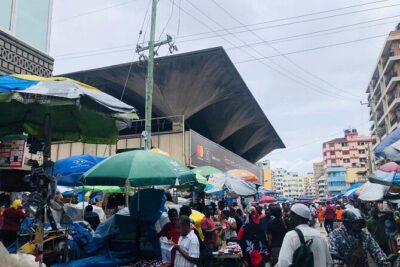 ★ 5.0Dar Es Salaam City Tour (Full Day With Private Guide And Car)From $14539 reviews
 ★ 4.5Full-Day Private Tour of Dar es SalaamFrom $16037 reviews
Browse the lists this tour appears in