
REVIEW · STONE TOWN HERITAGE WALKS
Zanzibar Stone town historical walking tour with Mohamed
Stone Town changes when you walk it slowly. This private Stone Town historical walking tour with Mohamed turns a maze of lanes into a clear story you can follow at human speed, from Zanzibar’s power players to its everyday markets. I especially like the focus on landmarks you can actually see, plus the time to browse and shop without feeling rushed. One thing to consider: you’re on foot for about 3 hours, so comfortable shoes matter.
I also appreciate that the plan mixes big-name Zanzibar (Freddie Mercury) with less-famous places that explain how the city worked. You’ll hit key sights like the House of Wonders and the old slave market area, then finish with time around Darajani Bazaar where the sights and smells are part of the experience. The only drawback I’d flag is that this tour is mostly about viewing and orientation, so if you want long museum time, you may wish you had more hours.
The best part is the guide, Mohamed, who comes across as punctual and easy to work with. With hotel pickup and drop-off from various locations and a private group, you can ask questions and shape the pace to your interests. If you’re visiting during a rainy stretch, you’ll also want to keep weather in mind, since the tour requires good conditions.
In This Review
- Key highlights worth planning for
- Stone Town on foot: why this route works
- Meet Mohamed at Old Fort and plan your 3 hours
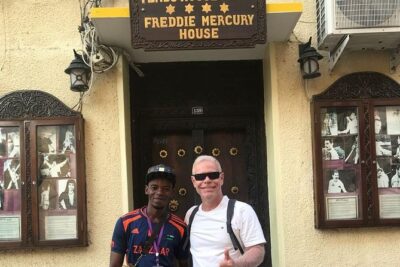
- Freddie Mercury Museum: Farouk Bulsara’s Zanzibar beginning
- House of Wonders (Beit-el-Ajaib) and early electricity under Sultan Baraghash
- Old Fort Ngome Kongwe: Arab defenses and festival energy today
- People’s Palace Museum, Old Slave Market, and the Anglican Cathedral area
- Darajani Bazaar shopping, spice smells, and Old Dispensary history
- Price and what you get for $30
- Who this private Stone Town tour suits best
- Should you book this Stone Town walking tour with Mohamed?
- FAQ
- How long is the Zanzibar Stone Town historical walking tour?
- How much does the tour cost?
- Is this a private tour or shared group?
- Where does the tour start and where does it end?
- Are hotel pickup and drop-off included?
- What is included in the price?
- Are admissions and attraction fees included?
- Is lunch included?
- Are there multiple departure times?
- What is the cancellation policy and what happens in poor weather?
Key highlights worth planning for
- Mohamed as your private guide, so you get real conversation instead of a “follow the crowd” vibe
- Free-entry stops along the route, including Freddie Mercury Museum and major historic sites
- House of Wonders (Beit-el-Ajaib) tied to early electricity and Sultan Baraghash
- Ngome Kongwe (Old Fort) linked to Arab-Portuguese defenses and later festivals
- Darajani Bazaar time for shopping and grabbing lunch on your own
- Old Dispensary as a surviving historical building tied to Tharia Topan
Other Stone Town walks we followed
- Stonetown: Food Markets and Street Food Walking Tour★ 4.7 · 151 reviews
- Zanzibar Stone Town Walking Tour★ 5.0 · 145 reviews
- Stone Town Historical Walking Tour★ 5.0 · 143 reviews
- Spice Tour + Stone Town Tour + Prison Island★ 4.5 · 130 reviews
Stone Town on foot: why this route works
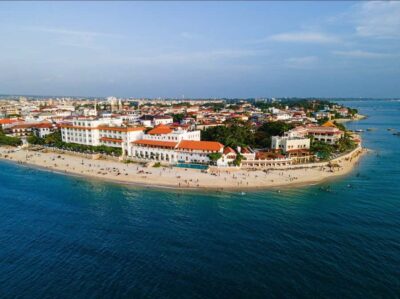
Stone Town is famous for being photogenic, but it’s even better when you can connect the dots between buildings. On this walk, you’re not just ticking off sights. You’re learning how Zanzibar’s mix of influences shaped the city, and you see those influences show up in architecture, place names, and what the buildings are used for today.
I like that the tour is built around places that feel like chapters in a story. Freddie Mercury’s childhood home area gives you a pop-culture entry point that makes Stone Town easier to remember. From there, you shift into political and social history, then you end in a market setting where daily life still drives the rhythm.
You’ll also notice a practical advantage: the route keeps you moving through central areas you can understand in layers. Instead of bouncing between distant neighborhoods, you stay near the Old Fort starting point and build outward. That matters because Stone Town’s lanes can feel confusing even when you’re trying hard to navigate, so having a guide who helps you get your bearings fast is a real value.
Meet Mohamed at Old Fort and plan your 3 hours

The tour meets at Old Fort, Mizingani Road in Zanzibar and ends back there. That loop format is helpful because you’re returning to your reference point near the start, which makes the rest of your day easier to manage.
You can choose morning or afternoon departure times, and it runs for about 3 hours. That’s long enough to cover several major stops, but short enough that you still feel like you have control afterward, whether you want to shop more, find dinner, or rest.
Hotel pickup and drop-off are available from various locations, which saves time and stress. You’ll also get a small bottle of water included, helpful in the heat. Since lunch is not included, I treat this part of the day like a flexible window: you have time to pick up something while you’re near the markets.
One small planning note: because it’s a walking tour, you should dress for walking and expect to spend time standing to look at buildings up close. If you want a slower pace, tell Mohamed early so he can adjust how long you linger at each stop.
Freddie Mercury Museum: Farouk Bulsara’s Zanzibar beginning
The tour starts with the Freddie Mercury Museum, at the site connected to where Freddie was born. Even if you know him only through Queen’s music, this stop helps you place his story in a real location and a real family background.
You’ll hear that Freddie’s real name was Farouk Bulsara, and that his father came from Iran while his mother came from India. That detail matters because Stone Town’s identity is built on movement and mixed origins, and this is one of the easiest places to feel that theme without reading a textbook.
Admission is listed as free for this stop, so you can focus on the guided context rather than thinking about ticket decisions. I like that the museum moment works as a warm-up: you get familiar with the setting before moving into heavier history.
If you’re visiting with someone who has limited patience for museums, this is still a strong opening because it connects a specific person to the city. It’s not just “look at an old building.” It’s “look at a place and understand why it matters.”



House of Wonders (Beit-el-Ajaib) and early electricity under Sultan Baraghash

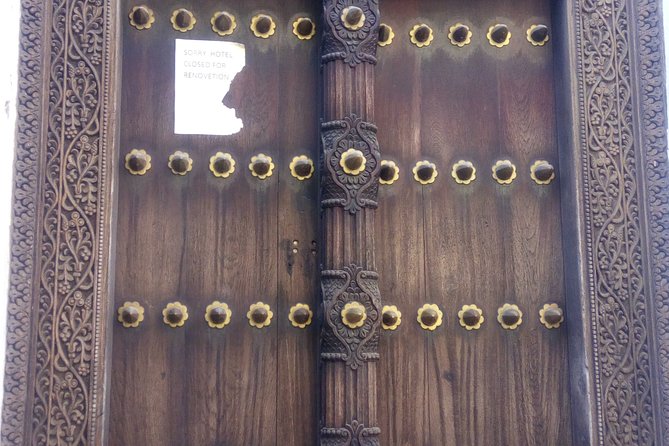
Next up is the House of Wonders, Beit-el-Ajaib. This building was once part of a Sultan’s palace complex, linked to the third sultan, Sultan Baraghash. The guide explanation gives you a sense of how power and technology were used to project authority.
The key story here is the nickname: it’s called the House of Wonders because it was the first house with electricity. That single fact shifts how you think about “old” Stone Town. You’re not only seeing age and tradition. You’re also seeing ambition, modernization, and how the sultans positioned Zanzibar in a wider world.
This stop is also marked as free entry, which is great because it keeps the tour’s rhythm intact. You can spend the time listening, looking at the architecture, and asking questions without worrying about the next admission step.
Practical takeaway: if you love architecture or enjoy hearing how everyday features link to bigger historical changes, this is one of the most rewarding stops. It’s also a good one to visit if you like your history tied to concrete details, not vague dates.
Old Fort Ngome Kongwe: Arab defenses and festival energy today
At Old Fort, Ngome Kongwe, you’re looking at a structure tied to defense and change over time. The fort was built by Arab communities to defend themselves from the Portuguese, which connects Stone Town’s story to wider conflicts in the region.
But today the fort is not just a museum-like relic. It’s used for festivals, including the Sauti za Busara Festival, a reggae festival, and the Zanzibar International Film Festival. That matters because it shows how Stone Town repurposes old spaces, keeping them socially alive instead of freezing them in time.
Even if you don’t catch a festival while you’re there, you can still appreciate the logic of the place. Big gatherings need visibility, access, and central location, and the old fort’s continued role proves it still fits the city’s needs.
This is one of those stops where the guided context does most of the work. From the outside, forts can look like forts. With Mohamed’s explanations, you understand what kind of threat they were built to address, and why those same walls can now hold music and film.
People’s Palace Museum, Old Slave Market, and the Anglican Cathedral area
This is where Stone Town’s story gets heavier, and the tour handles it in a way that’s easier to process because you’re moving from place to place, not stuck in one long session.
First, you’ll visit the People’s Palace Museum, which was also a Sultan palace. Now it’s the people’s museum, opened by the government to show history, culture, and traditions of Zanzibar, and to function as a center of education and research. I like how that frames the museum as active, not just interpretive. It’s meant to teach, not just display.
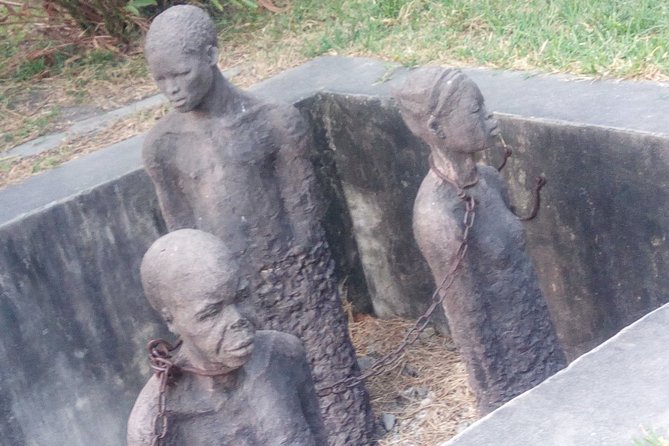
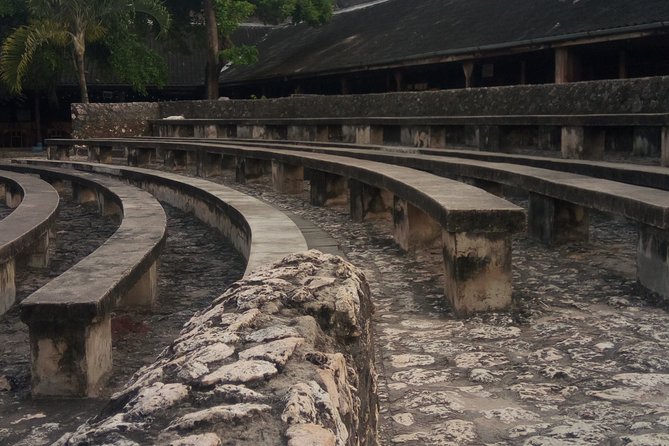
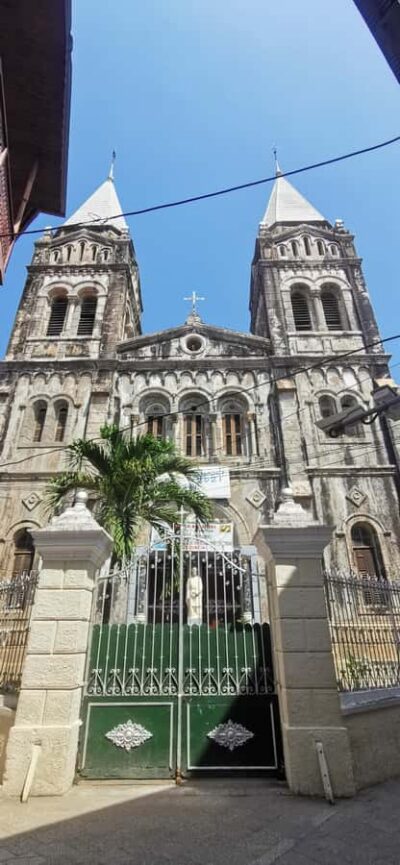
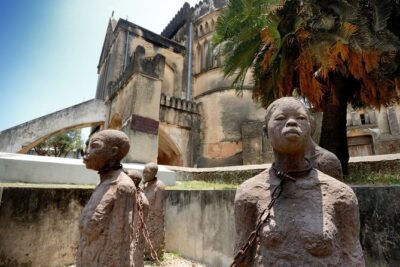
Then you move to the Old Slave Market / Anglican Cathedral area. This is described as a former slave market where people were brought in from different parts of Africa and sold. The area is now treated as a historical site, which means you’re visiting a place that carries real human suffering, not a romanticized memory.
The balance here is important. You’re not only getting the facts, you’re also being guided through how the space is remembered and used as a reference point for understanding the past. If you’re sensitive to difficult history, plan for a slower pace here and don’t feel you need to rush through. This part benefits from questions, and a private guide makes that possible.
Because these stops are marked as free entry, you can give them your attention without thinking about extra costs. And because you’re in a walking format, you can take short pauses between viewpoints to reset your brain before moving on.
Darajani Bazaar shopping, spice smells, and Old Dispensary history
After the solemn weight of the slave market area, the tour shifts gears in a smart way: it heads toward Darajani Bazaar. This is described as an old and early market in Zanzibar, operating from morning up to evening, with vendors selling fish, meat, fruits, spices, and vegetables.
This stop is valuable for two reasons. First, it shows you the living side of Stone Town, where the market is not a stage set but a working economy. Second, it gives you a chance to connect earlier history with daily life. You start seeing how the city’s trading identity still shapes what people do today.
Then you visit the Old Dispensary, a former hospital and a historical building associated with Tharia Topan. This is a great reminder that Stone Town is not only palaces and churches. It also has institutions built for public needs, and those buildings help you read the city’s priorities across time.
If you like to collect a few practical souvenirs, this is where you can shop. The tour description also allows time to shop for souvenirs or buy lunch on your own, so you’re not stuck returning to the bazaar without a plan.
If you want the most out of Darajani Bazaar, I suggest treating it like a guided browsing session. Ask Mohamed what spices or goods are common, watch the rhythm of vendors, and pick items based on smell and quality rather than impulse.
Price and what you get for $30
At $30 per person for a private 3-hour walking tour, the value mostly comes from two things: the guide time and the fact that the key stops are marked free entry. In a place like Stone Town, where getting your bearings is half the battle, having Mohamed with you through the route can save you time and confusion.
What’s included is modest but useful: a small water. What’s not included is also clear: lunch, and you’ll likely want breakfast or coffee on your own depending on your departure time. Also, the listing notes that scuba equipment is not part of this tour, which is obvious but comforting if you ever worry you booked the wrong activity.
For me, the best pricing signal is flexibility. You can shop, you can buy lunch, and you can shape your interests during the walk. That matters more than it sounds, because Stone Town can surprise you. If you end up wanting more time at a site or want to detour slightly for a better view, a private guide is the easiest way to do it.
Before you go, bring basic walking essentials, like comfortable shoes and sun protection. And since you’ll be near markets, it helps to have a plan for spending if you want spices or souvenirs.
Who this private Stone Town tour suits best
This is ideal if you want a guided walk that balances star attractions with meaningful historical context. The Freddie Mercury connection helps you get oriented quickly, while the House of Wonders and Old Fort give you a sense of Zanzibar’s layered cultural influences.
It also suits you if you prefer asking questions in real time. Because it’s private, Mohamed can slow down or focus on what you care about instead of sticking to a single group pace.
You’ll likely enjoy it most if you:
- want a short, high-impact orientation to Stone Town’s architecture and history
- like market time but don’t want to wander without context
- value a guide who is punctual and easy to work with
- are visiting for a limited number of days and need a well-structured half-day plan
If your idea of a perfect day is long museum time, you may find three hours tight. But as an overview and a story-driven introduction, this is a solid fit.
Should you book this Stone Town walking tour with Mohamed?
If you’re aiming for a smart first look at Stone Town, this is the kind of tour that helps everything else make sense. I like that the route includes free-entry stops and combines famous and less famous places without turning it into a frantic checklist.
Book it if you want:
- a private guide and an adaptable pace
- a walk that connects buildings to the bigger Zanzibar story
- time for browsing at Darajani Bazaar and personal shopping decisions
Skip it if you hate walking or want a museum-focused itinerary with lots of independent free time at each site. But for most people visiting Stone Town, especially first-timers, this is a practical, thoughtful way to see more while feeling grounded.
FAQ
How long is the Zanzibar Stone Town historical walking tour?
The tour lasts about 3 hours.
How much does the tour cost?
It costs $30.00 per person.
Is this a private tour or shared group?
It is a private tour, meaning only your group participates.
Where does the tour start and where does it end?
The tour starts at Old Fort (Mizingani Rd, Zanzibar, Tanzania) and ends back at the meeting point.
Are hotel pickup and drop-off included?
Yes, hotel pickup and drop-off are offered from various locations.
What is included in the price?
A small amount of water is included.
Are admissions and attraction fees included?
The tour information lists admission tickets for the listed stops as free.
Is lunch included?
No, lunch is not included, but there is time to purchase it.
Are there multiple departure times?
Yes, you can choose from multiple morning or afternoon departure times.
What is the cancellation policy and what happens in poor weather?
You can cancel for free up to 24 hours in advance for a full refund. The experience requires good weather, and if it is canceled due to poor weather, you will be offered a different date or a full refund.
Stone Town, Street by Street
- Zanzibar; Prison Island, Nakupenda, StoneTown Tour with BBQ
★ 4.3 · 457 reviews - Stonetown: Food Markets and Street Food Walking Tour
★ 4.7 · 151 reviews - Zanzibar Stone Town Walking Tour
★ 5.0 · 145 reviews - Stone Town Historical Walking Tour
★ 5.0 · 143 reviews - Spice Tour + Stone Town Tour + Prison Island
★ 4.5 · 130 reviews
Just added from around Zanzibar






Stone Town Heritage Walks, compared.
 ★ 4.4Zanzibar: Stone Town, Spice Tour, Prison Island with LunchFrom $681,219 reviews
 ★ 4.5Zanzibar: Prison Island, Stone Town, & Spice Farm TourFrom $70579 reviews
 ★ 4.3Zanzibar; Prison Island, Nakupenda, StoneTown Tour with BBQFrom $71457 reviews
★ 4.6Zanzibar: Stone Town, Spice tour & Prison Island with LunchFrom $55453 reviews
★ 4.3Zanzibar; Prison Island, Nakupenda, StoneTown Tour with BBQFrom $71457 reviews
★ 4.6Zanzibar: Stone Town, Spice tour & Prison Island with LunchFrom $55453 reviews
 ★ 5.0Stone Town Private Walking TourFrom $26371 reviews
 ★ 4.6Zanzibar: 3 Hours Private Stone Town walking Tour with GuideFrom $24301 reviews
 ★ 4.5Full-Day Private Stone Town +Spice Farm and Prison Island TourFrom $100216 reviews
 ★ 4.5Zanzibar: Stone Town Historical Cultural Walking Guided TourFrom $21179 reviews
Browse the lists this tour appears in