

REVIEW · STONE TOWN HERITAGE WALKS
Stone Town Walking Tour with Hassan
Stone Town tells stories at every corner. This 3-hour walking tour with Hassan focuses on the places that shaped Zanzibar, from Oman-era power to Portuguese forts, Muslim architecture, colonial churches, and the daily life you can still feel in the streets. You also get a mix of landmark buildings and practical “where to look” stops, so it feels like a guided walkthrough, not a long lecture.
I like two things a lot. First, Hassan’s explanations stay clear and fast, history without getting boring, and he ties each building to the bigger Zanzibar story. Second, the route is well paced for a half-day feel, with quick stops at the big hits and enough time to actually absorb details like entrances, courtyards, and street corners.
One drawback to consider: several of the major stops are not included in the base price, so you should budget for extra admission tickets depending on what you want to go inside (like Freddie Mercury Museum and a few religious sites). The walk is also real walking, so wear comfortable shoes.
In This Review
- Key things you will get from Hassan’s Stone Town route
- Why this Stone Town walking tour works, even if you have limited time
- Start at Forodhani: gardens, nighttime food, and instant orientation
- House of Wonders: Oman power, scale, and street sightlines
- Old Fort (Ngome Kongwe): Portuguese, Arabic influence, and festival grounds
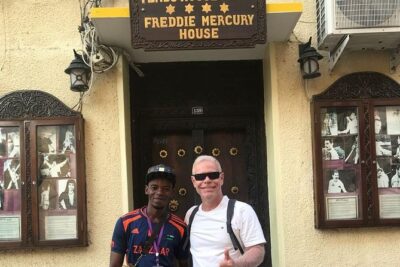
- Freddie Mercury Museum: pop culture that still belongs to Zanzibar
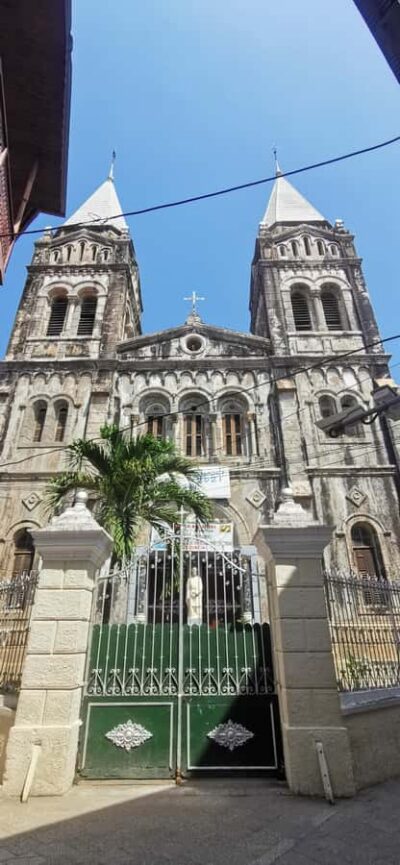
- St. Joseph’s Roman Catholic Cathedral: architecture tied to missionary history
- Jaws Corner: coffee chat and the city’s social pulse
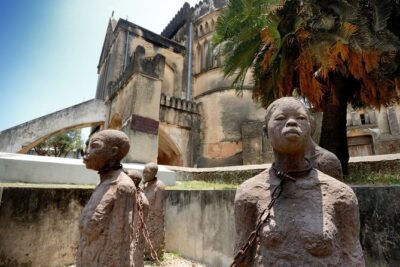
- Old Slave Market and Anglican Cathedral: learning without looking away
- Darajani Bazaar: a market stop that actually teaches you how to look
- Old Dispensary: a charitable hospital story with a twist
- Malindi Mosque: 19th century roots and a 1994 renovation
- Old Customs House: Zam Zam, the Busaidy family, and the move to the port
- People’s Palace Museum: war damage, revolution, and a new identity
- Price and what you truly get for $25
- Practical tips: shoes, timing, and tickets for the sites that cost extra
- Should you book Hassan’s Stone Town walking tour?
- FAQ
- How long is the Stone Town Walking Tour with Hassan?
- Where does the tour start and end?
- What does the tour cost?
- Is the tour private?
- What is included in the price?
- Which admissions are not included?
- Which stops have admission tickets included?
- Is the meeting point near public transportation?
- Is hotel pickup available?
- What is the cancellation policy?
Key things you will get from Hassan’s Stone Town route

- A guide who keeps it practical, so you learn what you are looking at, not just dates
- House of Wonders and the Oman-era layout, including where it sits between Old Fort and the palace area
- Forodhani Gardens at market time, with a focus on the nighttime food scene
- Portuguese and Arabic Fort influences, including how the Old Fort is tied to festivals
- Markets that feel local, especially Darajani Bazaar with spices, fish, and produce
- A balanced mix of painful and hopeful sites, including the Old Slave Market and major civic buildings
Other Stone Town walks we followed
- Stonetown: Food Markets and Street Food Walking Tour★ 4.7 · 151 reviews
- Zanzibar Stone Town Walking Tour★ 5.0 · 145 reviews
- Stone Town Historical Walking Tour★ 5.0 · 143 reviews
- Spice Tour + Stone Town Tour + Prison Island★ 4.5 · 130 reviews
Why this Stone Town walking tour works, even if you have limited time

Stone Town can feel like a maze, even when you are staying close to the center. This tour helps you get your bearings quickly, because it walks a logical spine through the city core, starting at Forodhani and ending back there. You are not just checking boxes. You are learning how power, trade, and religion shaped the streets you see today.
Hassan’s style is a big part of why it works. He is the kind of guide who can talk about politics and everyday Zanzibar life without losing people. The best tours do two jobs, they point out what is in front of you and they explain why it matters. This one does both, and it stays flexible if you want a slower look at a doorway, an archway, or a street view.
The pacing is also smart for a 3-hour experience. You will spend short chunks at major landmarks and longer stops at a few “you should slow down” places like Darajani Bazaar and the Slave Market area. That balance is great if you want value without feeling dragged from one museum door to another.
Start at Forodhani: gardens, nighttime food, and instant orientation
Your tour starts at Forodhani and it is a smart place to begin. This is where you can watch the city’s everyday rhythm start to wake up, and it sets the tone for the walk: Zanzibar is not only monuments, it is people eating, talking, and shopping.
Forodhani Gardens is also linked to a specific historical moment. The gardens were laid out in 1936 to commemorate the silver jubilee of Sultan Khalifa. So even before you step into buildings, you get a sense of how public spaces were designed to mark Zanzibar’s political life.
During your visit, you focus on the night food market area, where tourists and local people come to enjoy an easy dinner. Admission is listed as included here, which helps make the early stop feel like a real experience, not just a photo break.
Practical tip: if you have a sensitive stomach or you are picky about food, keep your expectations simple. Look, smell, and sip if you want, but you do not have to go all-in right away. The point of this stop is to read the city through how people actually spend their evenings.
House of Wonders: Oman power, scale, and street sightlines
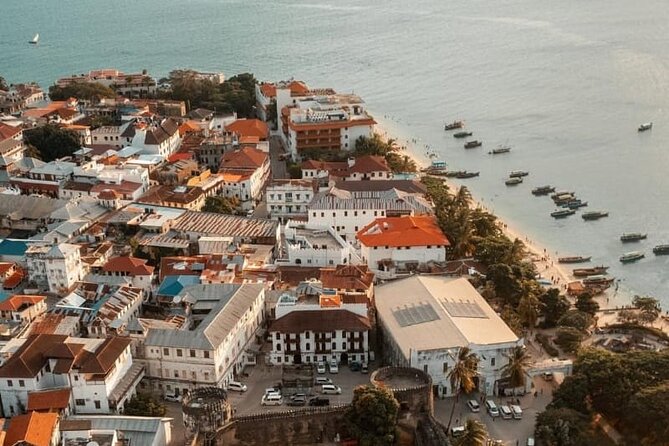
The tour heads to the House of Wonders, one of Stone Town’s most dramatic landmark buildings. This structure was built in Stone Town by Sultan Baraghash bin said and it was the largest and tallest building in the city during the 19th century. That matters, because scale is a form of communication. It signals authority in a place where power was built through trade and control of the coast.
You also learn how the building fits into the street composition. It sits in a prominent spot facing Forodhani Gardens, located between the Old Fort and the Palace Museum area. That positioning is a clue for your next stops. It is not random. Stone Town’s layout often reflects where rulers wanted people to look, pass, or gather.
Time at this stop is short, around 10 minutes, and admission is not included. So I recommend using this moment to focus on what you can see from the outside and nearby angles. If you decide you want to go inside, plan to add the ticket on your own.



Old Fort (Ngome Kongwe): Portuguese, Arabic influence, and festival grounds
Next comes the Old Fort (Ngome Kongwe), a site tied to Portuguese influence that dates back to the 16th century. The fort is connected to Portuguese building history, but it is also described as the Arabic fort in Stone Town. Zanzibar’s story is layered, and this is a great example of how different eras left their fingerprints on the same geography.
The Old Fort is used for various Zanzibar festivals, which helps explain why it still feels active rather than frozen in time. You are not only seeing a relic, you are seeing a stage.
Admission is listed as included here, and the stop is about 10 minutes. That inclusion makes this one of the easier stops financially, because you get access without adding extra ticket costs. Use the time to scan for viewpoints and the fort’s role in the surrounding area, especially if you are planning to explore further on your own later.
Freddie Mercury Museum: pop culture that still belongs to Zanzibar

The Freddie Mercury Museum stop is brief, around 7 minutes, and admission is not included. Still, it is worth placing on your radar even if you are not a hardcore Queen fan, because Zanzibar is not only about trade and architecture. It is also about people who left, became famous, and brought the island into global pop culture.
The basics you get here are solid and specific: Freddie Mercury was born in Zanzibar Town on 5 September 1946. He later became a British singer and songwriter, best known as the lead vocalist and pianist of Queen, and he died on 24 November 1991.
If you want the full experience, plan to pay for admission separately. If you prefer to keep costs down, you can use the guided context to understand the connection without committing to the ticket right then.
St. Joseph’s Roman Catholic Cathedral: architecture tied to missionary history
Stone Town holds more than Muslim heritage, and the walk includes St. Joseph’s Roman Catholic Cathedral. Construction began in 1863 by French missionaries, who came from Reunion around 1857 to 1860. A detail that makes this stop meaningful is that building work was paused because the site had graves. The effort resumed about 30 years later, and the first mass was held at Christmas 1898.
Admission is not included for this stop, and time is about 7 minutes. That short format means you are mainly getting the historical context plus a quick look at the site.
If churches are not usually your thing, this one still pays off because the story explains why the building looks the way it does and why the timeline matters. You see how local realities shaped European religious projects.
Jaws Corner: coffee chat and the city’s social pulse
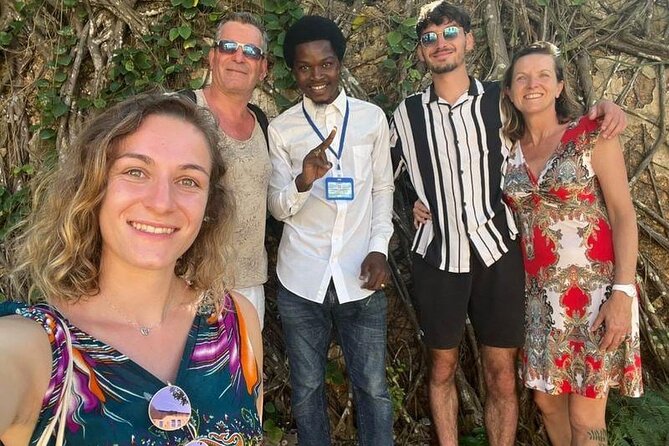
Then you get the kind of stop that turns a sightseeing walk into a street walk. Jaws Corner is described as the heart of town, a meeting place for local people and tourists, and a place where you can get coffee and chat.
Time here is short, about 3 minutes, and admission is free. But this is a valuable pause, because it gives your brain a break from monuments and also anchors you in how Stone Town feels at ground level.
If you are the type who likes taking a quick rest break during walking tours, this is a good moment to do it. Grab water if you need it, or just stand and watch how people move through the space.
Old Slave Market and Anglican Cathedral: learning without looking away
The walk goes to the Old Slave Market area, also connected with the Anglican Cathedral. This is one of the most serious stops on the route, and it deserves respect.
You are told it originally functioned as a market of slaves involving people from different countries. The market was closed around 1873 by Sultan Baraghash. After that, the site’s purpose shifted, and an Anglican church was built by Edward Steere, described as the third Bishop of Zanzibar, reigning from 1874 to 1882.
Steere is also connected to a vivid detail: when he died of a heart attack, he was buried behind the altar in the nearby building.
Time here is about 20 minutes, and admission is not included. Because this is a heavy topic, I suggest going slowly and letting your guide’s framing do its job. The value of this stop is not just learning the facts. It is understanding how Zanzibar’s trade systems touched human lives and how the city remembers those realities in stone.
Darajani Bazaar: a market stop that actually teaches you how to look
After the solemnity, Stone Town shifts back to daily life with Darajani Bazaar. This is one of the biggest central market structures, and it is a strong contrast to the quieter historic buildings.
The bazaar was designed in an eclectic style by British architect J. H. Sinclair and inaugurated in August 1904. It is also described as facing the creek. Inside, you will see small stalls focused on everyday categories: fish, spices, meat, fruits, and vegetables.
Admission is listed as included, and your time is about 15 minutes. That makes this stop a great value point, because you get market access without adding extra ticket costs.
This is where you learn to read Stone Town like a traveler, not like a museum visitor. Look at what goods are grouped together. Notice the flow of people. Smell spices if you want. Even if you do not buy anything, the bazaar helps you understand how Zanzibar’s trade still shapes the city’s pace.
Old Dispensary: a charitable hospital story with a twist
Next is the Old Dispensary, with a timeline that feels unusual in the best way, because it shows how ambitious plans can run into reality.
The construction was commissioned in 1887 by Tharia Topan, with the intent for the building to be used as a charitable hospital for the poor. Tharia Topan died in 1891 before the building was finished. His widow resumed the works but had to suspend them in 1893 because her budget was exhausted. After that, the building was sold following a family quarrel, and it was finally completed in 1894.
Time is about 15 minutes, and admission is not included. Because you are not spending hours inside, focus on the story you are hearing and how the building’s purpose changed over time.
Even if you are not usually into architecture, this stop works because the details are human. It is about budgets, family conflict, and community hopes, all tied to one structure.
Malindi Mosque: 19th century roots and a 1994 renovation
The walk then includes Malindi Mosque, specifically described as Ijumaa mosque, meaning the Friday mosque. It was built in the 19th century. The tour notes that Zanzibar’s mosques are often relatively plain compared with others that feature tall minarets and large domes.
A key detail here is the renovation. In 1994, the mosque was completely renovated in a modern arabesques style. The guide suggests other large mosques may follow a similar pattern.
Time is about 9 minutes, and admission is not included. For me, this is a great stop because it shows that Stone Town is not frozen. Renovation and style changes are part of the story too, not an afterthought.
If you want to be respectful, keep your voice low and follow local cues about where to stand or how to look.
Old Customs House: Zam Zam, the Busaidy family, and the move to the port
Another highlight is the Old Customs House, built around 1865. This one is interesting because it is tied to a specific household story.
The building was constructed as the home for Zam Zam, described as a daughter of Seyyid Said, the first Sultan of Zanzibar. Her husband was Sayyid Humud bin Ahmed of the Busaidy family. After her husband died a few years later, Zam Zam moved out and left the house to relatives of her later husband.
Then comes a more institutional shift. In 1928, customs authority moved from the Forodhani area to the new port area, and the family house became the new Customs House. It served in that role until 1987.
Time here is about 18 minutes, and admission is included. So this stop gives you a full guided look without hidden ticket friction, which I appreciate.
If you enjoy when a building comes with a family name, this is a good one. You start seeing Stone Town as a series of connected personal stories, not isolated monuments.
People’s Palace Museum: war damage, revolution, and a new identity
The tour ends with the People’s Palace Museum. This is a place where history feels physical.
The palace was built in the 1830s by Seyyid Said bin Sultan for members of the Sultan’s family. It was the second palace he built, following Mtoni Palace. It was bombarded during the Anglo-Zanzibar war in 1896, and the building was reduced to about half its original size. After that, it continued as the Al Busaidy palace until the Revolution of Zanzibar in 1964, when Sultan Jemshid was overthrown. The building was renamed the People’s Palace. It continued to be used as government offices, then opened as a palace museum in 1994.
Time here is about 20 minutes, and admission is not included. This makes it a heavier commitment for your budget if you decide to go inside. But it is also the kind of place where the context really matters. Even with a short guided look, the storyline helps you understand the building’s shape and scars.
Practical note: if you are trying to keep admissions low, you can still get a lot from the external guided narrative here. But if museum time is your priority, plan to pay the entrance ticket when you arrive.
Price and what you truly get for $25
The price is $25 per person, and that is honestly reasonable for a guided 3-hour walk in central Stone Town. You also get a professional certified English-speaking guide and a bottle of water. The tour uses a mobile ticket, which keeps things simple.
The value question is admissions. Some key stops have admission included, including Forodhani Gardens, the Old Fort, Darajani Bazaar, and the Old Customs House. Several others list admission as not included, including House of Wonders, Freddie Mercury Museum, St. Joseph’s Cathedral, the Old Slave Market/Anglican Cathedral, Old Dispensary, Malindi Mosque, and People’s Palace Museum.
So think of the base price as covering the guided walk plus access to a few built-in paid sites. If you plan to enter most museums and churches, your total cost will rise. If you mainly want the guided context and a couple of paid entries, $25 can feel like a bargain.
Practical tips: shoes, timing, and tickets for the sites that cost extra
This is a walking tour with many short stops, so come prepared. Wear shoes you can walk on for the whole route, because you are shifting between corners and entrances throughout the city core.
Bring a simple plan for tickets:
- Expect some stops to require separate admission, so decide in advance which museums matter most to you.
- Use the included admission stops as your built-in budget wins, especially Forodhani Gardens and Old Fort.
Also, the tour is described as requiring good weather. If it is rainy or stormy, you may get offered a different date or a refund. This matters because Stone Town is best enjoyed when you can move comfortably between stops without slipping.
If you are staying in Stone Town, there is pickup noted with an instruction to message in advance. If you are outside Stone Town, transport details are not included, so plan how you will reach the meeting point at Forodhani.
Should you book Hassan’s Stone Town walking tour?
I recommend it if you want a compact Stone Town route that makes sense, teaches you what you are seeing, and gives you time for the city’s everyday life, not only museums. Hassan’s approach is a strong match for people who want clear history, but also want the walk to feel human and not overly long.
I would skip or adjust expectations if you hate walking or if you want only free sights. Because several major indoor stops have admission not included, your final cost may depend on what you choose to enter.
If you have limited time in Zanzibar and you want Stone Town to click, this tour is a smart way to get there fast, with enough structure to feel confident and enough flexibility to let you linger where you care most.
FAQ
How long is the Stone Town Walking Tour with Hassan?
It runs for about 3 hours.
Where does the tour start and end?
It starts at Forodhani, Zanzibar, Tanzania, and ends back at the same meeting point.
What does the tour cost?
The price is $25.00 per person.
Is the tour private?
Yes, it is a private tour or activity, and only your group participates.
What is included in the price?
A professional certified English-speaking guide and a bottle of water are included. Some admissions are also listed as included for specific stops.
Which admissions are not included?
Admission tickets are listed as not included for several stops, including House of Wonders, Freddie Mercury Museum, St. Joseph’s Roman Catholic Cathedral, Old Slave Market/Anglican Cathedral, Old Dispensary, Malindi Mosque, and People’s Palace Museum.
Which stops have admission tickets included?
Admission is listed as included at Forodhani Gardens, the Old Fort (Ngome Kongwe), Darajani Bazaar, and the Old Customs House.
Is the meeting point near public transportation?
Yes, it is near public transportation.
Is hotel pickup available?
Pickup is mentioned, and if your hotel is in Stone Town you should send an advanced message. Any transport from your hotel to the meeting point is not listed as included.
What is the cancellation policy?
Free cancellation is available if you cancel up to 24 hours in advance for a full refund. Weather issues can also lead to a different date or a full refund.
Stone Town, Street by Street
- Zanzibar; Prison Island, Nakupenda, StoneTown Tour with BBQ
★ 4.3 · 457 reviews - Stonetown: Food Markets and Street Food Walking Tour
★ 4.7 · 151 reviews - Zanzibar Stone Town Walking Tour
★ 5.0 · 145 reviews - Stone Town Historical Walking Tour
★ 5.0 · 143 reviews - Spice Tour + Stone Town Tour + Prison Island
★ 4.5 · 130 reviews
Just added from around Zanzibar





Stone Town Heritage Walks, compared.
 ★ 4.4Zanzibar: Stone Town, Spice Tour, Prison Island with LunchFrom $681,219 reviews
 ★ 4.5Zanzibar: Prison Island, Stone Town, & Spice Farm TourFrom $70579 reviews
 ★ 4.3Zanzibar; Prison Island, Nakupenda, StoneTown Tour with BBQFrom $71457 reviews
★ 4.6Zanzibar: Stone Town, Spice tour & Prison Island with LunchFrom $55453 reviews
★ 4.3Zanzibar; Prison Island, Nakupenda, StoneTown Tour with BBQFrom $71457 reviews
★ 4.6Zanzibar: Stone Town, Spice tour & Prison Island with LunchFrom $55453 reviews
 ★ 5.0Stone Town Private Walking TourFrom $26371 reviews
 ★ 4.6Zanzibar: 3 Hours Private Stone Town walking Tour with GuideFrom $24301 reviews
 ★ 4.5Full-Day Private Stone Town +Spice Farm and Prison Island TourFrom $100216 reviews
 ★ 4.5Zanzibar: Stone Town Historical Cultural Walking Guided TourFrom $21179 reviews
Browse the lists this tour appears in