
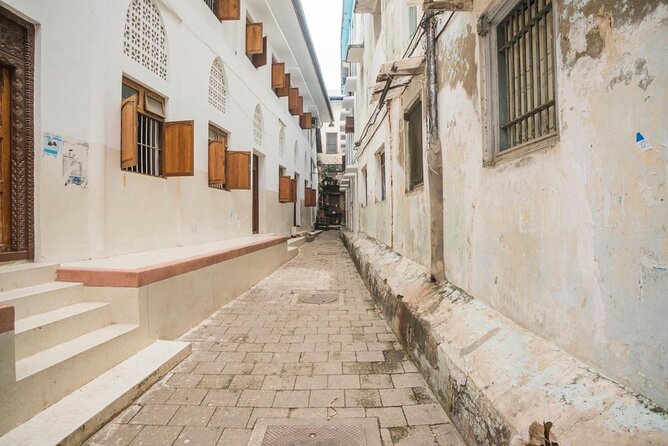
REVIEW · STONE TOWN HERITAGE WALKS
Stone Town walking tour, shopping, history and culture
Stone Town tells stories in every doorway. This private guide walk helps you connect the dots across UNESCO Stone Town, from the House of Wonders to the Old Fort, while still leaving space to browse for souvenirs.
I especially like that the tour keeps things practical, with bottled water included and a route that favors the narrow lanes where Zanzibar life actually happens. One thing to plan for: transport from your hotel is not included, so you’ll need to get to the start point on your own.
In This Review
- Key things that make this Stone Town tour worth your time
- Why Stone Town feels different with a local guide
- Meeting at People’s Palace Museum, then you’re walking
- House of Wonders and the World of Beit-el-Ajaib
- Old Fort (Ngome Kongwe): where defense shaped the city
- Freddie Mercury House: pop culture meets a real neighborhood
- Walking the lanes toward Jaws Corner and Forodhani Garden
- Old Zanzibar Slave Market: a serious stop, handled carefully
- Darajani Market time: shopping with context
- Time for street food sights, without the pressure
- Bottled water and a 3-hour pace that works
- Private tour value: you’re paying for focus
- The operator side: responsive and well-run
- What to wear and bring for a Stone Town walk
- Who should book this Stone Town experience
- Who might want a different plan
- Should you book Stone Town walking tour with shopping, history, and culture?
- FAQ
- Where does the Stone Town walking tour start?
- What time does the tour begin?
- How long is the tour?
- Is this a private tour?
- What’s included in the price?
- What is not included?
- Can I cancel and get a full refund?
Key things that make this Stone Town tour worth your time
- A private guide for a slower, smarter walk through the lanes instead of just ticking boxes
- Major UNESCO sights plus market time, so you get both landmarks and everyday culture
- Entrance fee handled for the former slave market stop
- Water included, which matters in Stone Town’s heat and sun
- Time for shopping at Darajani and other spots you pass along the way
- Fast, friendly help from the operator, with responsive communication noted for WhatsApp
Other Stone Town walks we followed
- Stonetown: Food Markets and Street Food Walking Tour★ 4.7 · 151 reviews
- Zanzibar Stone Town Walking Tour★ 5.0 · 145 reviews
- Stone Town Historical Walking Tour★ 5.0 · 143 reviews
- Spice Tour + Stone Town Tour + Prison Island★ 4.5 · 130 reviews
Why Stone Town feels different with a local guide
Stone Town is not a place where big roads and bus tours tell the whole story. The magic is in the tight streets, the everyday storefronts, the mix of Swahili, Arab, and Indian influences, and the way people move through the city.
With a guide, you don’t just see landmarks. You learn what they meant to real people, and why certain corners matter. You also get help spotting what’s worth stopping for, and what’s better to skip when you’re on a 3-hour schedule.
Meeting at People’s Palace Museum, then you’re walking
The tour starts at People’s Palace Museum at 9:00 am. The meeting point matters because Stone Town is compact, and starting here helps the walk feel efficient right away.
You’ll end back at the same meeting point. That’s a small detail, but it matters when you’re planning the rest of your day, because you’re not scrambling for a return plan.
Also, since this is a private activity, it’s just your group. I like tours that don’t turn into a tug-of-war over pace, photos, and questions.
House of Wonders and the World of Beit-el-Ajaib
One of the first major stops is the House of Wonders (Beit-el-Ajaib). Even if you already know it exists, having a guide helps you understand what kind of ambition that building represented in its time and how Stone Town’s power worked.
This is a good early stop because it sets the mood. You start seeing the city as connected, not random buildings in a row.
Practical note: Stone Town streets can be uneven and crowded around key areas. Wear shoes you trust, and be ready for quick detours around traffic.



Old Fort (Ngome Kongwe): where defense shaped the city
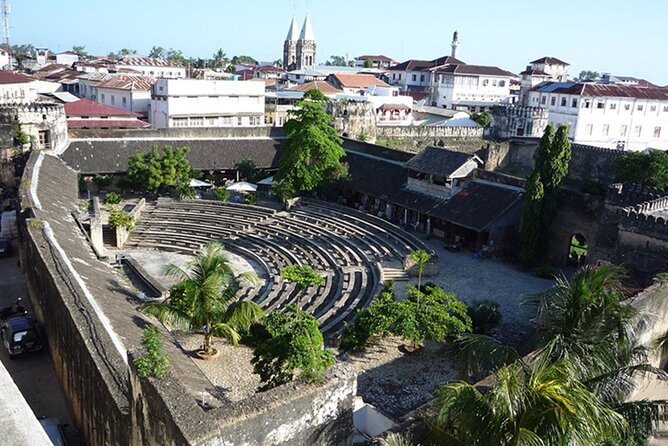
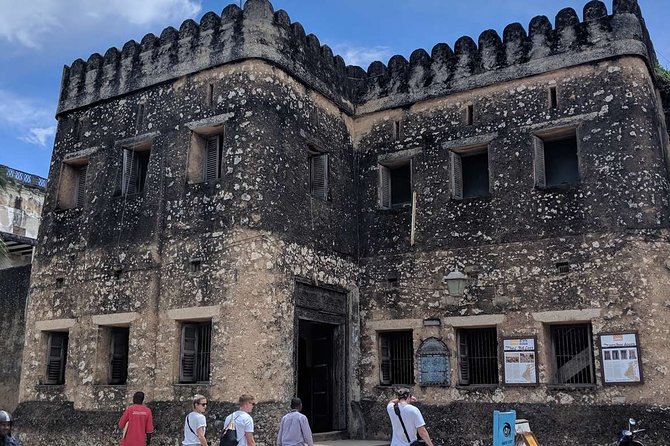
Next, you’ll visit the Old Fort (Ngome Kongwe). Forts can sound like a history-only stop, but here it’s also about location. The fort helps you make sense of the city’s coastline access, past trade patterns, and why certain views and approaches were controlled.
A guide also helps you read the structure and the surrounding area without turning it into a lecture. You’ll get enough context to understand what you’re looking at, then move on while you still have energy.
Freddie Mercury House: pop culture meets a real neighborhood
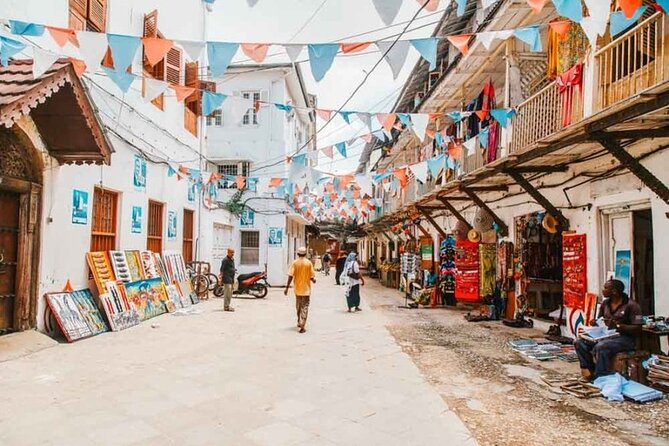
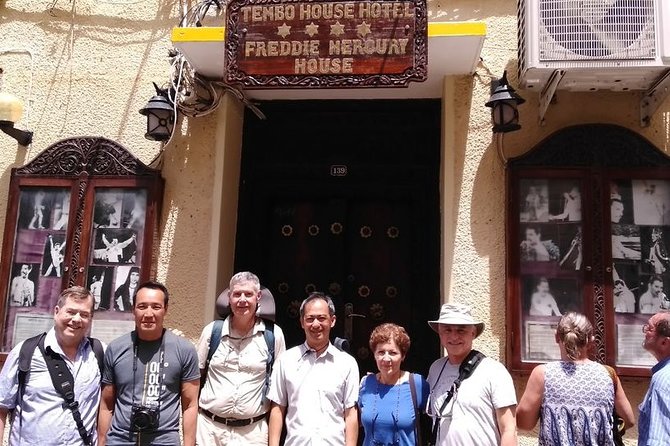
Then comes a stop that many people plan for from home: the Freddie Mercury House. This is where Stone Town’s story gets a modern link, and the atmosphere shifts from pure historic framing to something more personal.
What I like here is that you’re not only there for a name. The guide can connect it to the neighborhood life around it, so it feels like part of the city rather than a standalone photo stop.
If you’re a fan, you’ll likely appreciate the way this stop breaks up the heavier themes later in the walk. If you’re not, it still works because it gives a human entry point into the city.
Walking the lanes toward Jaws Corner and Forodhani Garden
As you keep moving, you’ll pass through well-known landmarks like Jaws Corner and Forodhani Garden. These are the kinds of places where Stone Town looks alive, even when you’re not shopping yet.
Forodhani Garden, in particular, is a great point to pause in your head and think about how the city feeds itself, socially and economically. Even if you don’t plan to buy anything, just watching how people gather helps you understand Zanzibar culture beyond the museum walls.
And since this tour also has time for the “narrow streets” experience, you’ll get those close-up street moments where everyday life is the main attraction. It’s the sort of walking that makes photos actually useful, not just postcard images.
Old Zanzibar Slave Market: a serious stop, handled carefully

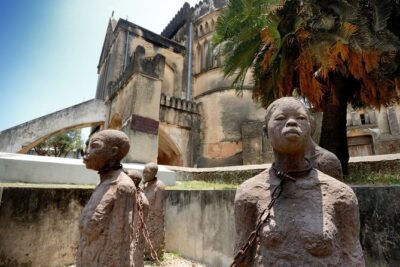
The former slave market is included with an entrance fee covered. This is the kind of site that demands respect, and a good guide is important here because the goal is understanding, not shock.
You’ll also learn about Zanzibar people and the ways of living, and you’ll hear stories that help connect the city’s geography and history. The tour doesn’t treat this as a quick stop you can gloss over.
Consideration to keep in mind: this part of the walk is emotionally heavy. If you’re sensitive to difficult history, decide ahead of time how you want to handle it. You can pace yourself, step back for a moment if you need it, and focus on learning rather than trying to force a fast finish.
Darajani Market time: shopping with context
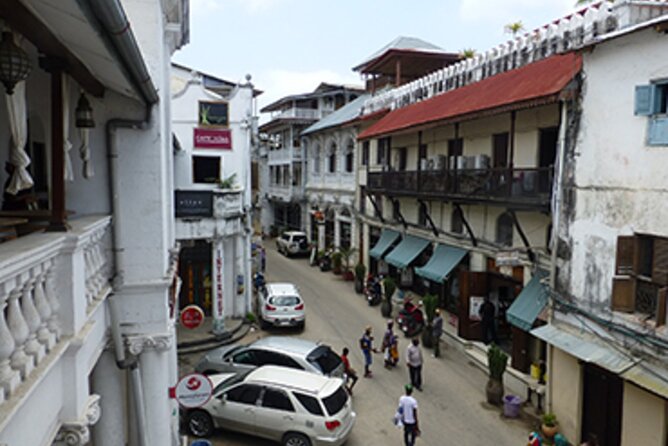
You’ll have time at Darajani Market (sometimes written as Daranji Market). This is one of the biggest reasons people love doing a guided walk here, because markets can overwhelm you quickly.
With your guide, you’re more likely to understand what you’re seeing and what’s worth buying. You can also ask basic questions, like what spices are used for and what items are common for souvenirs. That small bit of context can turn shopping into something you enjoy instead of something you survive.
Tips that help in markets:
- Use your water first, then shop while you still feel steady.
- If you want souvenirs, set a rough budget early. It keeps things calm.
- If a stall seems confusing, ask your guide what to look for.
And yes, markets here are also about social life. Even if you buy nothing, it’s a real slice of Zanzibar rhythm.
Time for street food sights, without the pressure
The tour takes you along narrow streets where you can see local street food. That’s a great way to get the visual and cultural side of Stone Town, without forcing everyone to stop and eat at the same place.
If you want to taste anything, you can usually do that, but it’s smart to keep it flexible. I’d treat street food as optional unless your guide suggests a safe, practical spot.
Bottled water and a 3-hour pace that works
A tour like this is around 3 hours (approx.), and that timing is realistic. Stone Town walking can be slower than you expect because you stop for sights, questions, and small detours.
The included bottle of water is a genuinely helpful touch. You’ll feel it if you’re walking in sun, especially in the middle of the day. I also like having water included because it removes one more decision.
Private tour value: you’re paying for focus
The price is $25.85 per person, and for Stone Town, that’s a fair value when you compare it to the cost of separate tickets plus the convenience of a guide.
What you get for that money:
- A private guide
- All admission fees included for the former slave market stop
- Bottled water
- A route that mixes UNESCO sights, market time, and walking lanes
This matters because the guide saves you from the guesswork. You spend your time learning and looking, instead of trying to plan a coherent route on your phone while navigating crowds.
The operator side: responsive and well-run
The company behind this experience, Zanzibar Home Taxi and Tours, has a reputation for being organized and good with customer communication. Names that have shown up in past interactions include Makame and Abdul, and they’re described as timely and attentive.
One theme that pops up is flexibility, especially when you ask questions ahead of time. Also, communication through WhatsApp gets called out as fast and helpful, which can ease travel stress when you’re figuring out how to start your day in Stone Town.
Just keep your expectations grounded: it’s a walking tour. If your group needs lots of long stops, it can affect pacing. That’s where a private guide helps you adjust.
What to wear and bring for a Stone Town walk
Stone Town walking is usually comfortable if you plan for a few basics.
Bring:
- A small day bag
- Water, if you run out early, though the tour provides a bottle
- Sunscreen and something for sun cover
- Cash for shopping, since markets are cash-heavy most of the time
Wear:
- Closed-toe walking shoes with grip
- Light layers, because you’re mixing sun and shade
If you’re visiting religious or historic areas during your walk, dress modestly. Not because the tour asks you to, but because you’ll look respectful and avoid awkward moments.
Who should book this Stone Town experience
This tour is a good fit if you want:
- A guided way to see Stone Town highlights without a rushed group
- A mix of big landmarks and everyday culture at the markets
- Entrance coverage for the former slave market
- A manageable 3-hour plan that doesn’t steal your whole day
It’s also ideal for first-timers who feel overwhelmed by Stone Town maps. And if you love shopping but want it guided, Darajani Market time is a big plus.
Who might want a different plan
If you want a long, deep museum day with lots of seated time, 3 hours may feel short. Also, because transportation from your hotel is not included, you’ll want to be comfortable getting yourself to People’s Palace Museum at 9:00 am.
Finally, the former slave market stop is emotionally serious. If that subject is difficult for you, choose your pace carefully or consider whether you want a different tour that fits your comfort level.
Should you book Stone Town walking tour with shopping, history, and culture?
I’d book this if you want a smart, efficient way to experience Stone Town’s main threads: landmark history, real street life, and market culture, all in one morning window.
It’s especially worth it because admission fees for the former slave market are included, you get water, and you’re not doing the hard part (route planning) alone. The private format also makes it easier to ask questions and move at a pace that fits your group.
If you’re thinking about it, the decision usually comes down to one thing: are you comfortable walking and handling a serious history site in a short time? If yes, this is a strong value way to see Stone Town like a person, not a checklist.
FAQ
Where does the Stone Town walking tour start?
The tour starts at People’s Palace Museum on Mizingani Rd, Zanzibar, Tanzania.
What time does the tour begin?
The start time is 9:00 am.
How long is the tour?
The duration is about 3 hours.
Is this a private tour?
Yes. It is a private tour, so only your group participates.
What’s included in the price?
The tour includes a guide, a bottle of water, and the entrance fee at the former slave market.
What is not included?
Transportation from your hotel is not included, and lunch is not included.
Can I cancel and get a full refund?
Yes. You can cancel for a full refund if you cancel at least 24 hours before the experience starts. If you cancel less than 24 hours before, the amount paid is not refunded.
Stone Town, Street by Street
- Zanzibar; Prison Island, Nakupenda, StoneTown Tour with BBQ
★ 4.3 · 457 reviews - Stonetown: Food Markets and Street Food Walking Tour
★ 4.7 · 151 reviews - Zanzibar Stone Town Walking Tour
★ 5.0 · 145 reviews - Stone Town Historical Walking Tour
★ 5.0 · 143 reviews - Spice Tour + Stone Town Tour + Prison Island
★ 4.5 · 130 reviews
Just added from around Zanzibar






Stone Town Heritage Walks, compared.
 ★ 4.4Zanzibar: Stone Town, Spice Tour, Prison Island with LunchFrom $681,219 reviews
 ★ 4.5Zanzibar: Prison Island, Stone Town, & Spice Farm TourFrom $70579 reviews
 ★ 4.3Zanzibar; Prison Island, Nakupenda, StoneTown Tour with BBQFrom $71457 reviews
★ 4.6Zanzibar: Stone Town, Spice tour & Prison Island with LunchFrom $55453 reviews
★ 4.3Zanzibar; Prison Island, Nakupenda, StoneTown Tour with BBQFrom $71457 reviews
★ 4.6Zanzibar: Stone Town, Spice tour & Prison Island with LunchFrom $55453 reviews
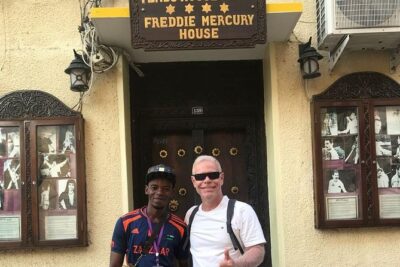 ★ 5.0Stone Town Private Walking TourFrom $26371 reviews
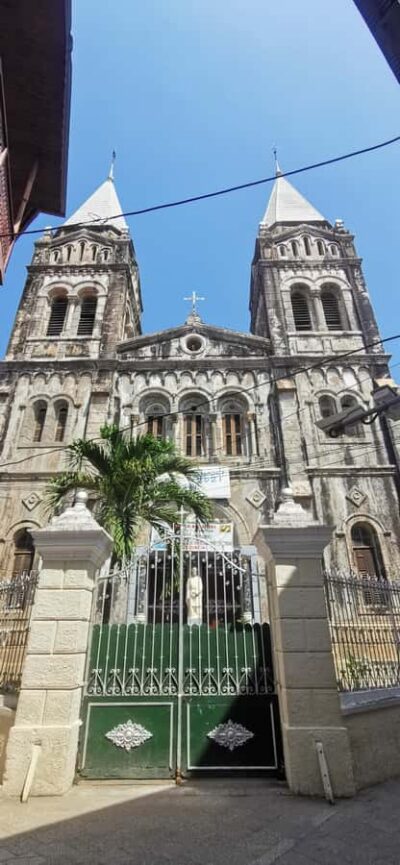 ★ 4.6Zanzibar: 3 Hours Private Stone Town walking Tour with GuideFrom $24301 reviews
 ★ 4.5Full-Day Private Stone Town +Spice Farm and Prison Island TourFrom $100216 reviews
 ★ 4.5Zanzibar: Stone Town Historical Cultural Walking Guided TourFrom $21179 reviews
Browse the lists this tour appears in