

REVIEW · STONE TOWN HERITAGE WALKS
Stone Town tour
Stone Town tells stories at street level. This 3-hour tour is built for getting your bearings fast, with a certified guide handling the navigation while you focus on the sights. I especially like pairing the big landmark stop at House of Wonders with time in the markets, so you see how Zanzibar’s culture shows up in both museums and daily life. One thing to flag: House of Wonders is listed as under reconstruction, and the entrance may not be available.
You’ll also appreciate that this isn’t a scattershot checklist. The route is tight, the stops are meaningful, and the tour includes key context points like the Old Slave Market area and the Anglican Cathedral stop. If you want a guided overview without stressing over where to go next, this kind of structure helps a lot.
My main consideration is for expectation-setting. Some parts are short on purpose, especially the fort and House of Wonders, so if you like spending a long time reading every panel by yourself, you might find the pace a bit quick.
In This Review
- Quick Takeaways Before You Go
- Why This Stone Town Tour Works in About 3 Hours
- Stop 1: Old Fort (Ngome Kongwe) and the Start of the Story
- Stop 2: House of Wonders (Beit-el-Ajaib) and Reconstruction Reality
- Stop 3: Old Slave Market and Anglican Cathedral, What You See
- Stop 4: Darajani Bazaar Markets, Spice to Fish and Meat
- Guide Style, English Clarity, and How to Get the Best Experience
- Price and Value: Why $20 Can Be a Good Deal Here
- Where You Start and End, and How It Affects Your Day
- Accessibility and Practical Comfort in Stone Town
- Best Time to Go: Matching Site Hours and Your Energy
- Who Should Book This Stone Town Tour (and Who Might Skip It)
- Should You Book This Stone Town Walk?
- FAQ
- What is the duration of the Stone Town tour?
- How much does the tour cost?
- Is pickup included?
- What is included in the price?
- What tickets are free and what requires admission?
- Where do I meet and where does the tour end?
- Is the House of Wonders entrance available?
- Is this tour private?
- What about accessibility?
- Is free cancellation available?
Quick Takeaways Before You Go

- Three-hour structure that actually fits Stone Town walking so you are not stuck wandering without a plan
- All fees and taxes included, with admission handled on-site where needed
- Old Slave Market and Anglican Cathedral stop for powerful, specific context
- Darajani Bazaar market time across spice, fish and meat, and vegetables
- House of Wonders may be inaccessible inside, due to reconstruction
- Private tour format so you only share the experience with your group
Other Stone Town walks we followed
- Stonetown: Food Markets and Street Food Walking Tour★ 4.7 · 151 reviews
- Zanzibar Stone Town Walking Tour★ 5.0 · 145 reviews
- Stone Town Historical Walking Tour★ 5.0 · 143 reviews
- Spice Tour + Stone Town Tour + Prison Island★ 4.5 · 130 reviews
Why This Stone Town Tour Works in About 3 Hours

Stone Town can feel like a maze when you first arrive. What I like about this tour is that you do not have to solve the map. You meet on Mizingani Road and end near Darajani Street, and the guide keeps the flow moving between the history points and the market areas.
The duration matters. At roughly 3 hours, you get the highlights without burning your whole day. You also get to see both sides of Stone Town: the buildings and museums that explain Zanzibar’s past, and the markets that show how people live and trade today.
This is priced at $20 per person, which becomes good value once you consider what is included. All fees and taxes are included, and the route covers multiple major stops, including at least one ticketed museum-style stop. Add in the option for pickup, and you remove two common friction points for self-guided days: figuring out transportation and paying for site admissions one by one.
Stop 1: Old Fort (Ngome Kongwe) and the Start of the Story
The tour kicks off at Old Fort (Ngome Kongwe), a quick stop at about 10 minutes. Even though the time is short, it sets the tone. The site is described as the place where Arabs kept enslaved people before sending them to prison. That kind of context early on changes how you read the rest of the day.
What I like about this first stop is that it acts like a framework. You are not only seeing a building. You are also getting an anchor point for the themes you will encounter later at the Old Slave Market area and beyond.
Practical note: since it is a short stop and the tour is walking-focused, wear shoes you can move in comfortably. Stone Town streets can be uneven, and you will likely keep your feet busy after this.
Stop 2: House of Wonders (Beit-el-Ajaib) and Reconstruction Reality
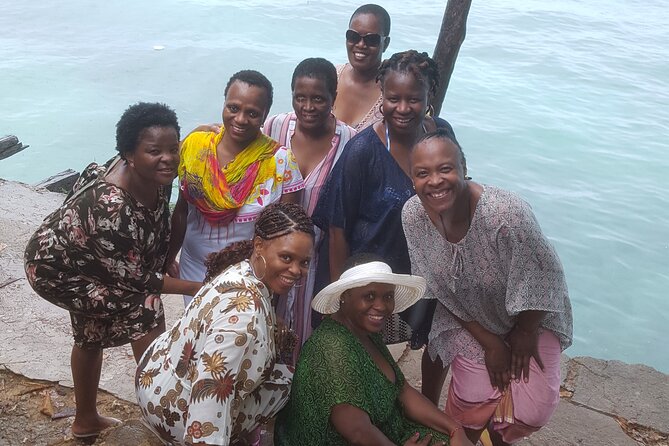
Next comes the House of Wonders (Beit-el-Ajaib). This is a landmark building, described as the largest and tallest structure of Stone Town and now home to the Museum of History and Culture of Zanzibar and the Swahili Coast.
Here is the key expectation to manage. The listing notes that the entrance to the building is not available because of reconstruction. So even though the stop is planned for around 15 minutes, what you get may be more about exterior viewing and guide commentary than full museum entry.
I still think it is worth including, because the building itself is part of the story. Even when the interior is out of reach, a good guide can help you understand why this location matters and how it connects to Zanzibar’s identity as a Swahili Coast crossroads.



Stop 3: Old Slave Market and Anglican Cathedral, What You See

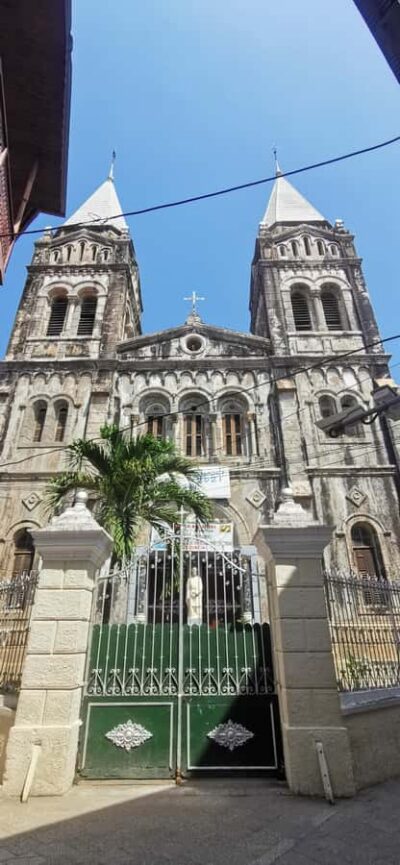
This is the emotional center of the tour. The stop combines the Old Slave Market area with the nearby Anglican Cathedral, and it runs about 1 hour.
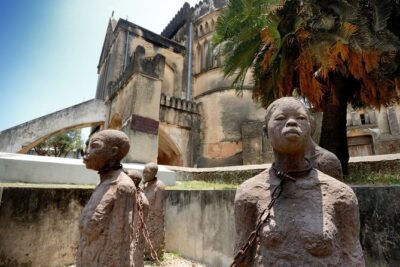
You are set up to see an exhibition describing the history of slavery in Africa. The tour also points you toward slavers’ chambers and a monument commemorating slavery in Zanzibar. That combination is important, because it avoids turning the topic into vague generalities. You are shown specific spaces and specific memorials.
At the end of the visit, the tour includes a stop at Bishop’s grave inside the Anglican Cathedral. That adds a final layer of meaning to the visit, giving you a named, place-based close rather than rushing off right after the heaviest exhibits.
Timing-wise, one hour is long enough to feel like you did not just “glance and go,” but it is still controlled enough that you can keep your energy for Darajani Bazaar afterward.
Stop 4: Darajani Bazaar Markets, Spice to Fish and Meat

After the heavier history stop, the day turns more sensory at Darajani Bazaar. This part runs about 40 minutes and is where Stone Town starts to feel like a living market instead of a museum route.
Darajani Bazaar is described as the biggest bazaar in Stone Town. It is said to have been established by Said Sultan Baraghesh. The key value here is that you do not get just one lane. The bazaar is presented as a cluster of markets, including:
- Spice Market
- Fish and Meat Market
- Vegetables Market
If you like travel that includes everyday texture, you will probably enjoy this stop. The markets are also a natural place to ask questions, because you can connect names and products to Zanzibar’s location and trading history.
A practical tip: you are not told that food is included, and food and drinks are not included. So if you want to snack, budget separately and bring small cash. Also, pace yourself. Market areas are easy to overspend time in if you let it run long, and your tour time is designed so you still have an ending point at Darajani Street.
Guide Style, English Clarity, and How to Get the Best Experience

A walking tour like this lives or dies on the guide. The setup here is generally positive, with people appreciating friendly, informative guiding and the fact that arrangements can be handled quickly online and via WhatsApp with the guide.
Still, here is my practical advice. If English clarity is a concern for you, do not wait until you arrive to figure it out. Ask for a simple plan at the start: how long each stop is, and whether the guide can speak slowly and clearly. If you are traveling solo, it is also reasonable to set boundaries early. Keep your answers to personal questions short, or redirect the conversation to the sights themselves.
If communication is not working, it can make you feel uncomfortable during the last stretch of a tour. I would rather you prevent that by clarifying your comfort level right away. Your time in Stone Town is too valuable to spend it tense.
Price and Value: Why $20 Can Be a Good Deal Here

At $20 per person, this tour is not trying to be a premium, all-day experience. It is a compact package that aims to be efficient.
Here is how the value adds up:
- All fees and taxes are included
- Some stops are listed as free admission
- The Old Slave Market / Anglican Cathedral area includes admission
- You get a certified guide and a structured route
- You can have pickup offered, which can save time and money depending on where you start
What is not included is important too. Food and drinks are not part of the price, and transport to the starting point is not included. That last part matters because many people assume pickup solves everything. In this case, pickup is offered, so you should confirm what locations it covers for you. If pickup is not possible for your exact spot, then your real cost might include a short local taxi or ride.
Overall, if you want a guided overview that hits the main Stone Town themes in about three hours, $20 is reasonable. If you are the type who hates group movement and prefers independent exploring, you might find the structure too tight. But for first-time visitors, structure is often the best kind of value.
Where You Start and End, and How It Affects Your Day
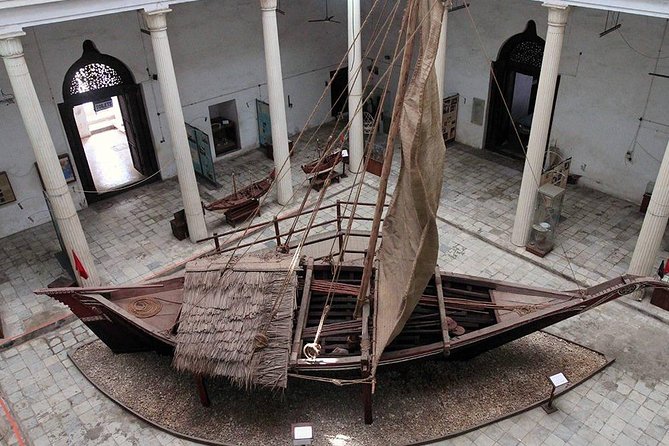
The meeting point is on Mizingani Road, and the tour ends at Darajani Street near the market area. This matters because your day does not have to loop back to where it started. You can finish close to the bazaar and keep exploring after the tour ends.
Also, the tour duration plus the stop durations means you should plan your schedule accordingly. If you are pairing this with another attraction, aim for something later in the day rather than stacking two demanding things back-to-back. Stone Town walking and heat can add up faster than you expect.
The tour uses a mobile ticket, and confirmation is received at booking. That makes it simple to show up, as long as you have your phone handy.
Accessibility and Practical Comfort in Stone Town
Stone Town is not known for smooth sidewalks, so it is useful that this tour is listed as wheelchair and stroller accessible. That means the route and planning were thought through for people with mobility needs.
Service animals are allowed too, and the meeting point is listed as near public transportation, which can be helpful if you are trying to keep your logistics simple.
If you are bringing a stroller or using a wheelchair, I still recommend moving slowly and bringing water. Even “accessible” places can have bumps, tight turns, and crowded areas in the markets.
Best Time to Go: Matching Site Hours and Your Energy
The listed opening hours are 9:00 AM to 4:00 PM, for the time period shown in the tour details. Since the itinerary includes the House of Wonders area and market time, it is smart to plan your walk in that window.
A good strategy is to go earlier rather than later, because you have a longer runway before shops and bustle shift. You also tend to feel less rushed when you start with the history stops.
Since the tour lasts about 3 hours, you can generally aim for mid-morning to early afternoon. That way you are not sprinting to catch up if there is any waiting or slower-than-expected viewing inside the ticketed areas.
Who Should Book This Stone Town Tour (and Who Might Skip It)
This tour is a strong fit if you want:
- a private tour format so the pace is your group’s pace
- a certified guide to handle the navigation
- a mix of history and markets instead of only one or the other
- a time-efficient visit that still includes a ticketed exhibition stop
It is also suitable if you are traveling with a stroller or need wheelchair accessibility, and if you like tours that end near a place you can keep exploring.
You might consider skipping or adjusting your expectations if you prefer long museum hours on your own. The House of Wonders stop is listed as limited by reconstruction, and the short durations mean you are relying on the guide to explain what you are seeing.
Should You Book This Stone Town Walk?
I think this is a good book for your first or second day in Zanzibar if you want a guided path through Stone Town’s most important areas. The biggest reason is the mix: you get the Old Fort context, the House of Wonders landmark stop (even with reconstruction constraints), the Old Slave Market and Anglican Cathedral visit, and then the real-life feel of Darajani Bazaar.
Book it if you value efficiency and you like having someone explain what you are looking at. If English clarity matters a lot to you, message ahead and ask for how the guide communicates. And if you are the kind of person who wants total freedom, you may prefer a self-guided route after you have gotten your bearings here.
FAQ
What is the duration of the Stone Town tour?
The tour is approximately 3 hours.
How much does the tour cost?
It costs $20.00 per person.
Is pickup included?
Pickup is offered, but transport fee to the starting point is not included.
What is included in the price?
All fees and taxes are included.
What tickets are free and what requires admission?
The Old Fort (Ngome Kongwe) and House of Wonders stops are listed as free admission. The Old Slave Market/Anglican Cathedral stop has admission ticket included. Darajani Bazaar is listed as free admission.
Where do I meet and where does the tour end?
You start on Mizingani Road and end at Darajani Street, near Darajani Market.
Is the House of Wonders entrance available?
The House of Wonders is currently under reconstruction, and the entrance to the building is not available.
Is this tour private?
Yes. It is a private tour/activity, and only your group participates.
What about accessibility?
The tour is listed as wheelchair and stroller accessible, and service animals are allowed.
Is free cancellation available?
Yes, you can cancel for a full refund up to 24 hours in advance of the experience’s start time.
Stone Town, Street by Street
- Zanzibar; Prison Island, Nakupenda, StoneTown Tour with BBQ
★ 4.3 · 457 reviews - Stonetown: Food Markets and Street Food Walking Tour
★ 4.7 · 151 reviews - Zanzibar Stone Town Walking Tour
★ 5.0 · 145 reviews - Stone Town Historical Walking Tour
★ 5.0 · 143 reviews - Spice Tour + Stone Town Tour + Prison Island
★ 4.5 · 130 reviews
Just added from around Zanzibar






Stone Town Heritage Walks, compared.
 ★ 4.4Zanzibar: Stone Town, Spice Tour, Prison Island with LunchFrom $681,219 reviews
 ★ 4.5Zanzibar: Prison Island, Stone Town, & Spice Farm TourFrom $70579 reviews
 ★ 4.3Zanzibar; Prison Island, Nakupenda, StoneTown Tour with BBQFrom $71457 reviews
★ 4.6Zanzibar: Stone Town, Spice tour & Prison Island with LunchFrom $55453 reviews
★ 4.3Zanzibar; Prison Island, Nakupenda, StoneTown Tour with BBQFrom $71457 reviews
★ 4.6Zanzibar: Stone Town, Spice tour & Prison Island with LunchFrom $55453 reviews
 ★ 5.0Stone Town Private Walking TourFrom $26371 reviews
 ★ 4.6Zanzibar: 3 Hours Private Stone Town walking Tour with GuideFrom $24301 reviews
 ★ 4.5Full-Day Private Stone Town +Spice Farm and Prison Island TourFrom $100216 reviews
 ★ 4.5Zanzibar: Stone Town Historical Cultural Walking Guided TourFrom $21179 reviews
Browse the lists this tour appears in