

REVIEW · STONE TOWN HERITAGE WALKS
Stone Town Guided Historical Walking City Tour
Stone Town tells stories on every corner. This guided walk pairs iconic sights with street-level context, from the seafront Forodhani Gardens to the names you already know like the House of Wonders.
I like how the tour is led by a licensed local guide, fluent in multiple languages, so the facts connect to everyday life instead of sounding like a textbook.
One thing to consider: some major stops (like the House of Wonders and Freddie Mercury Museum) have optional entry fees, so your total cost can creep up if you want to go inside.
I also like that you cover a lot in about 3 hours, without turning it into a sprint. You’ll see the main architectural landmarks, walk the old lanes, then end at a market where you can shop and snack on your own terms.
The main drawback? The experience quality depends heavily on your guide’s delivery and pace, and parts of Stone Town may be under renovation or limited on the day, which can reduce how much you can enter.
In This Review
- Key highlights you should care about
- Why Stone Town works best on a guided walk
- Where you start: People’s Palace Museum and your 3-hour rhythm
- Forodhani Gardens: sea views now, night market later
- Bayt al Ajāyib, the House of Wonders, and how to read the building
- Old Fort (Ngome Kongwe): from Portuguese expulsion to rail terminal
- Freddie Mercury Museum: quick exterior, optional entry
- Walking Stone Town streets: Zanzibar doors and slow photo moments
- Old Slave Market and the Anglican Cathedral stop: a serious moment
- Darajani Bazaar: where food, spices, and shopping live side by side
- Price and value: what $32.90 includes, and what might cost extra
- What to expect from the guide (and why it can make or break it)
- Who this tour suits best
- Should you book Stone Town guided historical walking tour?
- FAQ
- How long is the Stone Town guided historical walking city tour?
- Where does the tour start, and does it end back there?
- Are tickets included for all stops?
- Is this tour private?
- What do I receive for the booking?
- Does weather affect whether the tour runs?
Key highlights you should care about

- Forodhani Gardens timing: day strolls feel different than the evening Forodhani Night Market vibe.
- House of Wonders context: commissioned by Barghash bin Said, tied to the Sultan era.
- Old Fort layers: built after the Portuguese were expelled in 1699, later used as a prison and even a railway terminal.
- Freddie Mercury Museum choice: you get the childhood home exterior, with optional entry if you want more.
- A sober stop at the old slave market on Mkunazini Street, handled by your guide with historical framing.
- Darajani Bazaar for real-world shopping: seafood, fruit, grains, spices, plus clothing and electronics.
Other Stone Town walks we followed
- Stonetown: Food Markets and Street Food Walking Tour★ 4.7 · 151 reviews
- Zanzibar Stone Town Walking Tour★ 5.0 · 145 reviews
- Stone Town Historical Walking Tour★ 5.0 · 143 reviews
- Spice Tour + Stone Town Tour + Prison Island★ 4.5 · 130 reviews
Why Stone Town works best on a guided walk

Stone Town is compact, but it is not simple. The streets curve, the buildings look similar at first glance, and the meaning behind details like carved doors is easy to miss if you are just wandering. A guided walk helps you get your bearings fast and makes the sights feel connected.
I also like that this tour is designed for “half-day energy.” You’re not trying to see everything on Zanzibar. Instead, you get a focused slice of Stone Town, with landmarks, a market stop or two, and a guided explanation as you move.
Where you start: People’s Palace Museum and your 3-hour rhythm
You meet at People’s Palace Museum on Mizingani Road, then the tour ends back at the meeting point. That loop matters. It keeps you from spending energy figuring out how to get yourself back through traffic and narrow lanes later.
The total time is about 3 hours. In practice, that means short stops at each landmark, plus enough walking to feel like you actually went somewhere, not just stood in a courtyard with a pamphlet. And since it’s a private tour, your group sets the tone, rather than getting steamrolled by a larger schedule.
A small practical tip: Stone Town is a place where weather changes quickly near the coast. This experience needs good weather, so if rain rolls in, you may have to switch dates rather than push ahead.
Forodhani Gardens: sea views now, night market later
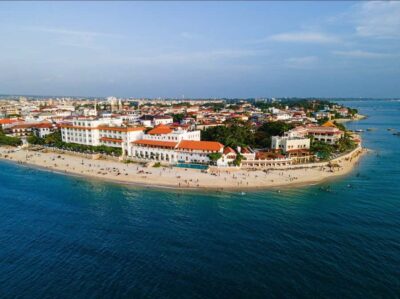
Your first major stop is Forodhani Gardens, also known as the Forodhani Night Market. It sits right along the primary seawalk and faces two big backdrops: the House of Wonders and the Old Fort.
What I like here is the pacing. Gardens are a breather after travel, and the location gives you instant context for the rest of your walk. You can watch the old-town silhouette from the water side before you dive into the tighter streets.
Also, timing changes the whole feel:
- If you’re visiting earlier in the day, you can stroll more leisurely.
- If you’re visiting in the evening, the market wakes up with a mix of locals and tourists.
This is a great stop to take photos that actually include the sea and the main landmarks behind you, not just close-ups of doors.



Bayt al Ajāyib, the House of Wonders, and how to read the building

Next comes the House of Wonders, called Bayt al-ʿAjāʾib. Your guide will take you to the big, recognizable presence along Mizingani Road, facing Forodhani Gardens from the seafront.
Here’s what makes this stop more than a quick photo:
- It’s described as the largest and tallest structure in Stone Town.
- It sits between the Old Fort and the Forodhani Mosque and Palace Museum (formerly the Sultan’s Palace).
- It was commissioned by Barghash bin Said, Zanzibar’s second Sultan, and is one of six palaces built during his reign.
If you walk past royal-era architecture without context, you mostly see stone and arches. With a guide, you start seeing power, planning, and the city’s ties to the wider Indian Ocean world.
One cost note: the House of Wonders admission is not included, so if you want to go inside, you will likely pay extra on your own.
Old Fort (Ngome Kongwe): from Portuguese expulsion to rail terminal

The Old Fort, or Ngome Kongwe, is another stop where the “why” matters as much as the “what.” It is one of the oldest buildings in the area and a longstanding tourist target for a reason: it holds multiple chapters in one compact structure.
Your guide frames its past like this:
- It was built by Omani Arabs after the Portuguese were expelled in 1699.
- During the 19th century it served as a garrison and a prison.
- Later, from 1905 to 1928, it became a terminal for Zanzibar railways, connecting Stone Town to Bububu.
This is the kind of story that makes you look harder at the walls. You start asking, what would a garrison sound like? What would it have meant for a fort to become a rail hub?
Admission for this stop is included, so you can budget your time here without worrying about surprise ticket costs.
Freddie Mercury Museum: quick exterior, optional entry

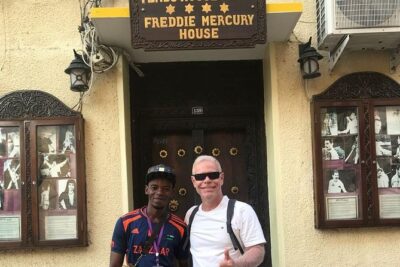
Next is the Freddie Mercury Museum stop, tied to the childhood home of Freddie Mercury, born in Zanzibar in 1946 as Farrokh Bulsara. Your guide focuses on the local roots first, not just the global celebrity.
You can expect:
- You’ll see the childhood home exterior.
- There is an optional additional fee if you want to enter the house.
I like that this stop gives you control. If you’re a big Queen fan and want the details, you can pay for more access. If you prefer the walking and street-level story, you can keep it to the exterior and move on.
This is also one of those moments where you can ask questions. A good guide can connect Mercury’s life to Stone Town’s mix of cultures and family history, without turning it into a lecture.
Walking Stone Town streets: Zanzibar doors and slow photo moments
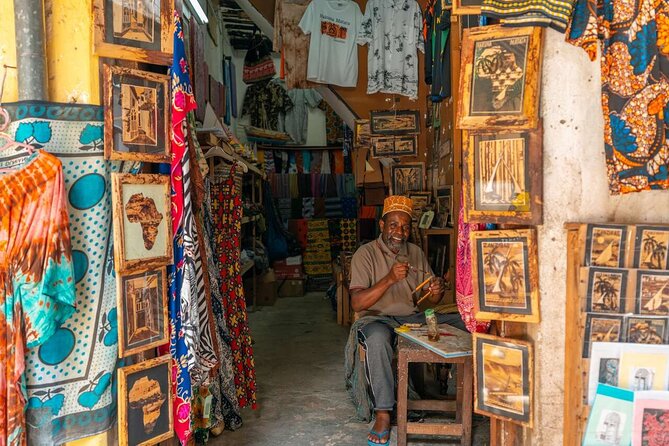
After the landmark stops, you shift into the heart of it: walking Stone Town’s narrow streets with shops and architecture close enough to study. This segment is about 45 minutes and is described as including time to buy souvenirs and learn about the meaning behind Zanzibar doors.
Door carving and design are one of those details that people miss when they’re only hunting for the big buildings. With a guide, you get symbolism and context, so you know what you are looking at instead of just snapping a picture and moving on.
I also recommend using this time strategically for photos:
- Stand where you can frame doorways and street angles in one shot.
- Don’t rush every photo. Stone Town rewards patience because the streets keep changing perspective.
If you’re shopping, remember that this is also a working commercial area. Bargaining is common in many markets, but your best tool is good manners and a calm pace.
Old Slave Market and the Anglican Cathedral stop: a serious moment
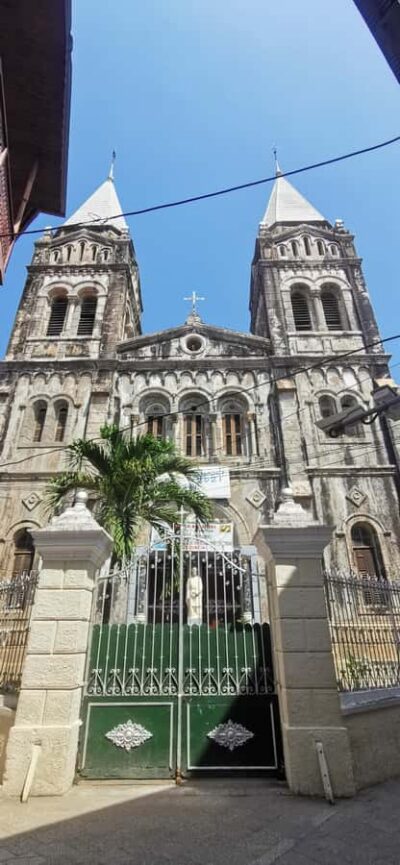
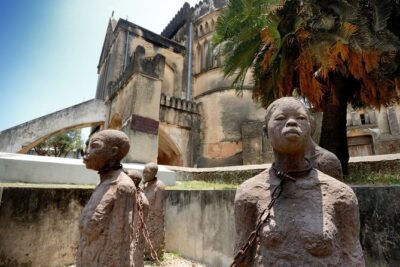
One of the most impactful segments is the visit to the Old Slave Market, located along Mkunazini Street, with the Anglican Cathedral as part of the area stop.
This is where your guide will explain the slave trade as a dark chapter, focusing on how slaves were bought and sold and what that meant for people caught in the system. The tone here is not casual, and your guide’s role is to provide historical framing while you confront what the site represents.
Admission is included for this stop, which helps you keep the experience focused rather than turning it into a ticket checklist.
A practical tip: give yourself mental space here. If you treat this stop like a quick photo moment, you’ll walk away feeling disconnected from the point. If you slow down and actually listen, it becomes one of the most meaningful parts of your whole Zanzibar trip.
Darajani Bazaar: where food, spices, and shopping live side by side
You end at Darajani Bazaar (also known as Estella Market or Marikiti Kuu). This is described as Stone Town’s heartbeat for a reason: it mixes everyday shopping with strong sensory impressions.
What you’ll likely notice fast:
- Fresh seafood and meats
- Fruits, grains, and spices
- Shops beyond food, including consumer electronics and clothing
The market also has a dated historical anchor: it was constructed in 1904 by Bomanjee Maneckjee for Sultan Ali bin Hamud. Your guide can help you connect the present-day market to its origin, instead of treating it as only a place to buy things.
This stop is free in terms of admission, so you only spend what you choose. If you want to try something to eat, this is where you can do it on your own terms.
Price and value: what $32.90 includes, and what might cost extra
At $32.90 per person, this tour is positioned as a good value for a structured, guided walk that hits multiple key locations in a short time.
Here’s the value math that matters:
- Some sites include admission: Forodhani Gardens, Old Fort, and the Old Slave Market stop.
- Other major stops have admission not included: House of Wonders and the Freddie Mercury Museum entry option.
- Stone Town street walking and Darajani Bazaar are described as free in terms of admission.
So you are paying mainly for the guide, the time, and the included entries. If you plan to go inside both the House of Wonders and the Freddie Mercury house, your total spend will be higher. If you mainly want the exterior and the walking context, you may keep it closer to the base price.
One more value note from real-world experience: the tour’s satisfaction often tracks how well the guide communicates and how comfortable your group is with walking. If your guide speaks softly or in a strong accent for your ear, you may wish you’d planned more time for Q and A. That’s not about the sights. It’s about how much you take in while moving.
What to expect from the guide (and why it can make or break it)
A big strength of this experience is the guide. Many positive comments highlight guides who:
- answer questions clearly
- adjust pacing to your needs
- stay patient and professional
- add humor and keep the day flowing
Names that show up in past feedback include Saidi, Osman, Othman, Abu, and Nuru. You cannot count on a specific person, but it’s a hint that the operation tends to send people who know their way around Stone Town’s stories.
Still, here’s the practical consideration: tours like this depend on communication and timing. Some experiences have included delays at the start. If you’re trying to catch another booking later the same day, keep a buffer. Confirm details the day before so you are not waiting around wondering what happened.
Also, parts of Stone Town may be under renovation. That can affect whether certain places are accessible, and your guide may adapt the route.
Who this tour suits best
This is a strong choice if you want:
- a guided overview of the most important Stone Town landmarks in a short window
- market time without planning it yourself
- a stop at the old slave market that comes with explanation, not silence
It may be less ideal if you:
- hate walking and crowded streets
- want long museum-style time inside every building
- need quiet, detailed narration and you are picky about language volume and clarity
Because it’s private, you can often ask for a slower pace at the stops that matter most to you, like the slave market area or the Freddie Mercury exterior.
Should you book Stone Town guided historical walking tour?
I’d book it if your goal is understanding Stone Town, not just collecting photos. The included admission at several key stops helps you get traction fast, and the mix of architecture, markets, and story-driven context is exactly what makes Stone Town worth repeating.
I’d pause and plan carefully if you have tight timing or you want guaranteed indoor access everywhere. With renovation and optional entry fees, your day can shift a bit based on what’s open and what your group chooses.
If you do book, come with two small strategies:
1) Decide in advance whether you want to pay for House of Wonders and the Freddie Mercury house interior, so you do not get stalled by indecision later.
2) Ask your guide one or two focused questions early, then follow their answers. You’ll remember more because you’re listening with intent.
FAQ
How long is the Stone Town guided historical walking city tour?
It runs for about 3 hours.
Where does the tour start, and does it end back there?
The meeting point is People’s Palace Museum on Mizingani Road. The tour ends back at the same meeting point.
Are tickets included for all stops?
Not for all. Admission is included for Forodhani Gardens, the Old Fort, and the Old Slave Market stop. Admission is not included for the House of Wonders and Freddie Mercury Museum. Stone Town street walking and Darajani Bazaar are listed as free.
Is this tour private?
Yes. It is a private tour/activity, so only your group participates.
What do I receive for the booking?
You get a mobile ticket, and confirmation is received at the time of booking.
Does weather affect whether the tour runs?
Yes. The experience requires good weather. If it’s canceled due to poor weather, you’ll be offered a different date or a full refund.
Stone Town, Street by Street
- Zanzibar; Prison Island, Nakupenda, StoneTown Tour with BBQ
★ 4.3 · 457 reviews - Stonetown: Food Markets and Street Food Walking Tour
★ 4.7 · 151 reviews - Zanzibar Stone Town Walking Tour
★ 5.0 · 145 reviews - Stone Town Historical Walking Tour
★ 5.0 · 143 reviews - Spice Tour + Stone Town Tour + Prison Island
★ 4.5 · 130 reviews
Just added from around Zanzibar






Stone Town Heritage Walks, compared.
 ★ 4.4Zanzibar: Stone Town, Spice Tour, Prison Island with LunchFrom $681,219 reviews
 ★ 4.5Zanzibar: Prison Island, Stone Town, & Spice Farm TourFrom $70579 reviews
 ★ 4.3Zanzibar; Prison Island, Nakupenda, StoneTown Tour with BBQFrom $71457 reviews
★ 4.6Zanzibar: Stone Town, Spice tour & Prison Island with LunchFrom $55453 reviews
★ 4.3Zanzibar; Prison Island, Nakupenda, StoneTown Tour with BBQFrom $71457 reviews
★ 4.6Zanzibar: Stone Town, Spice tour & Prison Island with LunchFrom $55453 reviews
 ★ 5.0Stone Town Private Walking TourFrom $26371 reviews
 ★ 4.6Zanzibar: 3 Hours Private Stone Town walking Tour with GuideFrom $24301 reviews
 ★ 4.5Full-Day Private Stone Town +Spice Farm and Prison Island TourFrom $100216 reviews
 ★ 4.5Zanzibar: Stone Town Historical Cultural Walking Guided TourFrom $21179 reviews
Browse the lists this tour appears in