
REVIEW · STONE TOWN HERITAGE WALKS
Private Walking Tour Of Stone Town
Stone Town can feel like a puzzle at first glance. This private 2.5-hour walk helps you connect the dots, moving from UNESCO heritage buildings to Zanzibar’s big turning points. I love the route for making sense fast, and you get guided stories that go past the photo stops, including how the city grew from a trading port and what the slave trade era changed.
The tour is also a smart way to sample the city without committing a whole day. You’ll cover major landmarks in a tight loop, and there is even a rooftop view stop at Maru Maru Hotel for an easy way to orient yourself. One possible drawback: a couple of sights along the way have admission not included, so if you want everything, you may need extra cash for entry and snacks.
In This Review
- Key highlights worth your time
- Getting Oriented in Stone Town’s Limestone Maze
- Where You Begin: Forodhani and the City’s Edges
- People’s Palace Museum: Zanzibar’s Power in One Building
- House of Wonders: The 1883 Electricity Moment
- Old Fort (Ngome Kongwe): Portuguese, Oman Arabs, and Strategy
- Christ Church Cathedral and the French Mission Footprint
- Freddie Mercury Museum: Optional, Short, and Often Worth Planning For
- Darajani Bazaar and Food-Forward Stops You Choose
- For a Bigger Picture: The Maru Maru Rooftop View
- Price and What You Get for $29
- Timing, Pace, and What to Wear
- Who This Private Walk Is Best For
- Should You Book This Stone Town Walk?
- FAQ
- Where does the tour start?
- How long is the walking tour?
- Is this tour private?
- What is included in the price?
- Which places have admission tickets included?
- Are there any attractions where admission is not included?
- Is food or drinks included?
- Is this tour suitable for most travelers?
- Can I use a mobile ticket?
- What is the cancellation policy?
Key highlights worth your time
- UNESCO World Heritage overview on foot, with context on the city’s architecture and cultural mix
- House of Wonders and Sultan-era sites, tied to specific dates like the 1883 electricity milestone
- Old Fort (Ngome Kongwe), with a clear explanation of Portuguese and Oman Arab influence
- Forodhani Gardens plus historic market energy nearby, without turning the walk into a long food stop
- Maru Maru rooftop viewpoint, a practical shortcut to get the big picture of Stone Town
- A guide who’s easy to ask questions, with fluent English and a flexible pace for private groups
Other Stone Town walks we followed
- Stonetown: Food Markets and Street Food Walking Tour★ 4.7 · 151 reviews
- Zanzibar Stone Town Walking Tour★ 5.0 · 145 reviews
- Stone Town Historical Walking Tour★ 5.0 · 143 reviews
- Spice Tour + Stone Town Tour + Prison Island★ 4.5 · 130 reviews
Getting Oriented in Stone Town’s Limestone Maze
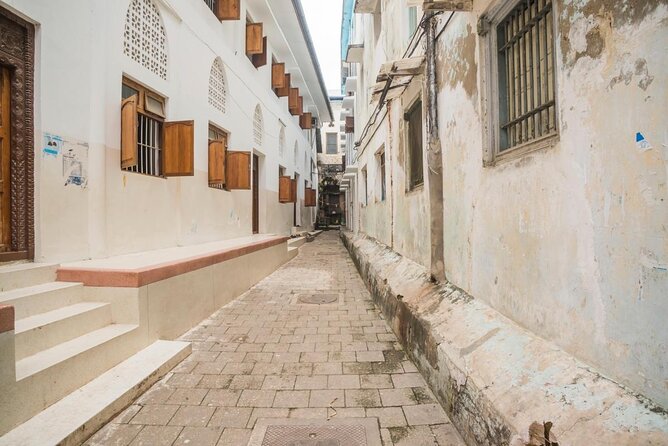
Stone Town is made for wandering, but it can also overwhelm you if you just follow your phone map. The city center is full of narrow lanes, limestone buildings, and small squares that look unrelated until someone connects them for you. This walk is built for that exact moment when you need a sense of direction and meaning, not just a list of buildings.
A big part of the value is the way the guide frames Stone Town as a place with layers. You start with the city’s “how it’s built” story: more than 2,000 limestone buildings packed into about 50 hectares, with around 25,000 people in the suburbs. The architecture reflects African, Arab, Indian, Persian, and European influences, which is why Stone Town earned UNESCO World Heritage status in 2000. Once you hear that, you start noticing details you would otherwise miss.
This is private, so the pace can fit you. If you want to ask more questions, you generally can. If you prefer fewer stops and more time to look at doors, balconies, and corridors, you can usually shape the route.
Where You Begin: Forodhani and the City’s Edges
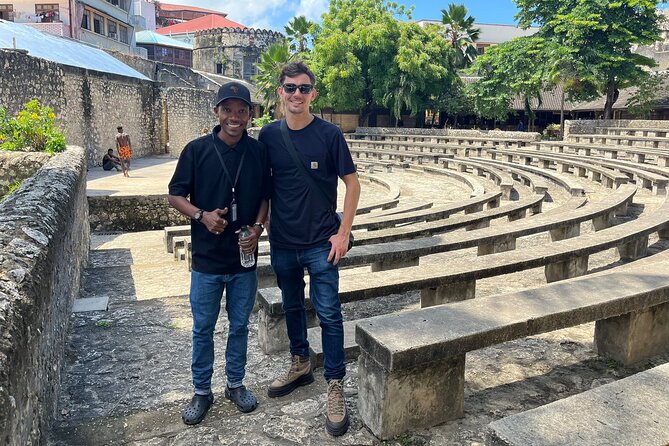
You start at Forodhani, which is a good launch point because it sits right in the flow of Stone Town. From here, you immediately feel how the city works at street level. Lanes tighten and open. Sounds change. You pass everyday life that makes the heritage sites feel real, not staged.
Forodhani Gardens also comes with a useful twist. It’s not just a place to hang out or wait for food. The garden stop includes historical context, so you’re learning while you’re still near the start, when the city is freshest in your head.
From a practical standpoint, starting in this area helps if you’re jet-lagged or short on time. You’re not wasting the first 30 minutes trying to figure out where you are. You get that early orientation, then the rest of Stone Town becomes easier to read.
People’s Palace Museum: Zanzibar’s Power in One Building
Next comes People’s Palace Museum, the former palace of the first sultan of Zanzibar. This is one of those stops where you can see how rulers shaped not only politics, but also space and style. The museum building is tied to the early sultan era, and the guide uses that connection to explain why the palace was built as a second royal home.
What I like about palace stops is that they anchor the stories. If you hear about trade routes, alliances, and shifts in rule without a setting, it stays abstract. Inside a palace, those ideas turn into something you can picture. Doors and rooms stop being scenery and become evidence of daily life and power.
There’s also a nice rhythm here. The tour doesn’t linger forever, so you get enough time to absorb what you’re seeing, then you move on while your energy is still up. For a 2.5-hour walk, that balance matters.



House of Wonders: The 1883 Electricity Moment
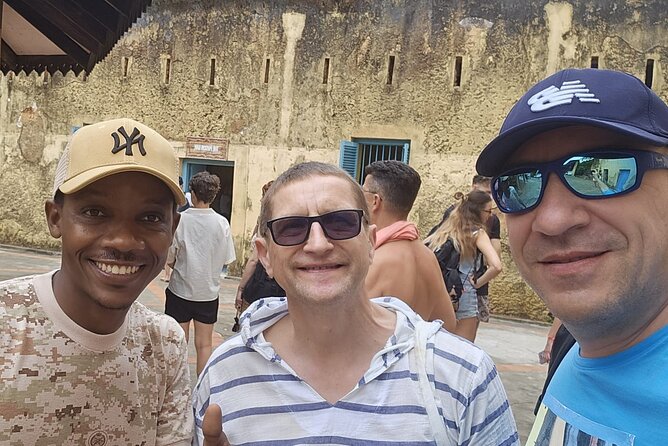
Then you reach the House of Wonders, built by the third sultan of Zanzibar, Sayyid Barghash, in 1883. The big hook is the claim that it was the first building in Zanzibar with electricity. Even if you only remember one date from the day, this is the one that makes the story stick.
This stop is useful because it connects “old city” to “modern change.” Electricity sounds modern, but in the context of Stone Town it becomes a clue about status, experimentation, and international influence. You start seeing the city as a crossroads where new ideas arrived alongside older traditions.
The guide’s job here is key. Without explanations, the building can feel like just another historic facade. With context, it becomes a window into Zanzibar’s ambitions during the sultan era, not only its past as a trading and cultural hub.
Old Fort (Ngome Kongwe): Portuguese, Oman Arabs, and Strategy
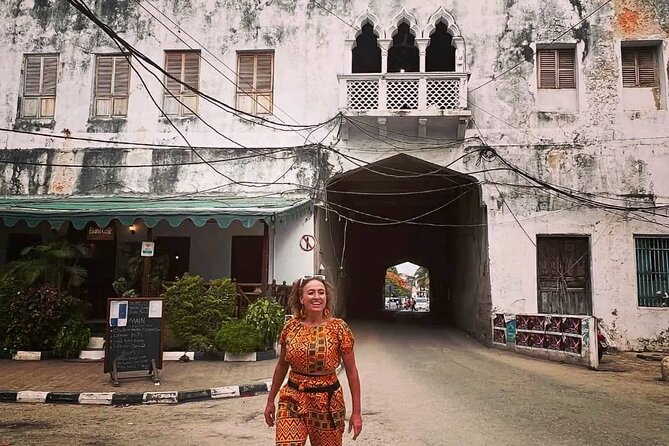
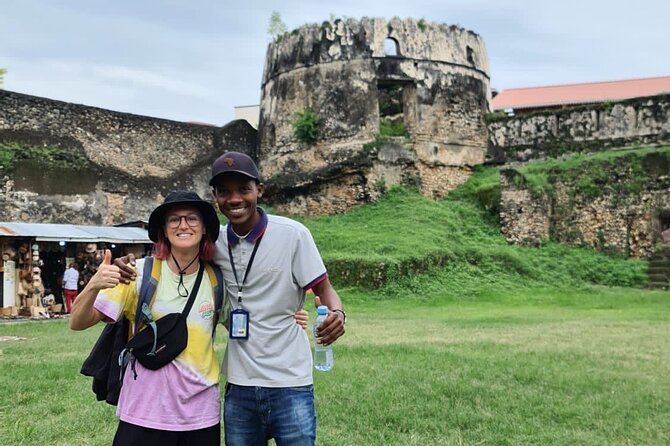
The Old Fort (Ngome Kongwe) is the oldest building in Stone Town. It began under the Portuguese and later saw changes under the Oman Arabs. That timeline is more than trivia. It helps you understand why the fort exists in the first place, and why the city mattered so much to outsiders.
Fort stops can turn into “stand here and look” if you’re not careful. The guide gives the fort its meaning, including what it represented and how control of places like this connected to broader regional power. You end up with a clearer map in your head, almost like the fort is a chapter heading.
One practical tip: forts and old sites often mean uneven ground and lots of steps or tight corners. Wear shoes with grip. You’ll likely do better than in sandals, especially if the day is warm.
Christ Church Cathedral and the French Mission Footprint

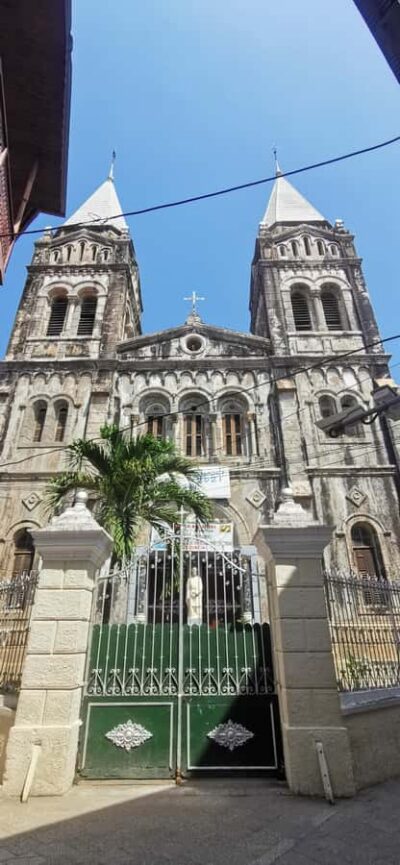
Next is Christ Church Cathedral, built by French missionaries. This is a good contrast point. After sultan-era spaces and Portuguese and Oman influence, you get another cultural layer: missionary work and European religious presence in Stone Town.
This stop is short, but it works. It reminds you that Stone Town’s identity is not one story. It’s a stack of stories, some harmonious, some tense, all leaving buildings behind. Even if you don’t linger long, you’ll leave understanding why different communities built in Stone Town, not just traded in it.
Freddie Mercury Museum: Optional, Short, and Often Worth Planning For
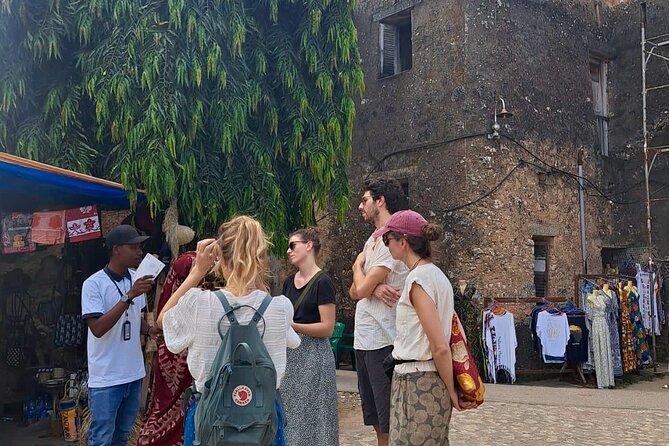
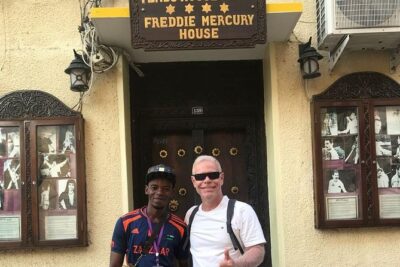
You may pass by the Freddie Mercury Museum, where his house from childhood is now presented as a museum. The entry ticket here is not included in the tour package. So think of this as a quick window, unless you’re willing to pay extra to go in properly.
If you’re a music fan, this can be a satisfying add-on. If you’re not, it’s still a neat reminder that Stone Town keeps creating global links, even in modern pop culture. Either way, you avoid the common mistake of spending extra time on something unrelated to your main goals.
Darajani Bazaar and Food-Forward Stops You Choose

You’ll also reach Darajani Bazaar, the main market area built in 1904. It’s described as having divided sections: fish, vegetables, cow and goat meat, and spices and fruits. The market ticket is not included, so you’ll decide how much you want to spend time there based on your interests and energy.
Markets are great for understanding daily life. But they can also be sensory overload. If you like people watching and slow browsing, add time. If you get overwhelmed easily, treat it as a targeted stop. You’ll still learn from walking through the marketplace atmosphere, even without full entry.
And because food and drinks are not included, you can plan for water and snacks based on your own preferences. The tour itself includes a bottle of water, which is a nice baseline for staying comfortable.
For a Bigger Picture: The Maru Maru Rooftop View
One standout detail is the rooftop of Maru Maru Hotel for a Stone Town view. This is more than a photo break. It’s how you make sense of what you walked through. Looking down makes the maze of streets feel logical. You can see how the city clings to its built form and how narrow lanes connect back into bigger nodes.
I especially like rooftop viewpoint stops in dense cities because they fix the mental map. After a few hours on foot, your brain often needs a wide angle. This is that reset.
Practical note: if you have weather sensitivity, keep it in mind. The tour runs on foot, so you’ll be exposed to whatever the day brings.
Price and What You Get for $29
At $29 per person, this tour sits in a budget-friendly zone for a private, guide-led heritage walk. The value is strongest if you want both structure and storytelling. You’re not just paying for movement. You’re paying for interpretation, timing, and access to sites where admission is included for many stops.
Here’s what’s included:
- A professional tour guide
- Bottle of water
- Admission tickets at several major stops, including the House of Wonders, People’s Palace Museum, and the Old Fort, plus other listed included sites
Not included:
- Food and drinks
- Admission for Freddie Mercury Museum
- Admission for Darajani Bazaar
So the real question isn’t only price. It’s how many optional sights you plan to add. If you skip the two not-included entries, you’ll likely keep the cost tight. If you love museums and want to go inside everything, you’ll budget extra for tickets and whatever you snack on.
One money-smart move: if you want souvenirs, you may find help negotiating fairer prices. The guide style described in feedback includes practical help with shopping and choosing good-value items.
Timing, Pace, and What to Wear
The duration is about 2 hours 30 minutes, which is a great length for seeing the core without feeling rushed into exhaustion. The guide works through the key heritage blocks, then returns you back to the meeting area.
Wear comfortable walking shoes. Stone Town’s streets are charming, but they’re not designed for fast sneaker races. You’ll likely do better with breathable clothing, sun protection, and a small bag you can keep secure. The tour includes water, but you should still plan for your own comfort if you’re sensitive to heat.
Also consider that this is a private tour for your group. That usually means less standing around waiting for other people and more flexibility if you need a quick pause to catch your breath.
Who This Private Walk Is Best For
This tour fits a wide range of travelers because it’s structured, not random. If you’re visiting Stone Town for the first time and want the big landmarks explained clearly, it’s an efficient way to get your bearings and your bearings can turn into better exploring later.
It’s also a strong choice for families. You’ll be walking a lot, but the guide is described as attentive and good at making the experience comfortable, including for kids. If you’re the type who wants your children to learn without boredom, this style often works well.
If you’re traveling solo, a private guide is great because you can ask the questions you actually care about. If you’re traveling with friends, the private format lets you keep the route aligned with your group’s interests, like leaning more historical or adding a specific museum.
Finally, if you care about photography and want the view from above, the Maru Maru rooftop stop is a nice added payoff. It turns a walking tour into a memory with perspective.
Should You Book This Stone Town Walk?
If your goal is to understand Stone Town quickly, then yes, I’d book it. The mix of sultan-era landmarks, the Old Fort timeline, and the viewpoint stop gives you both history and geography. And at $29 per person, the included admissions and guide-led storytelling make it a sensible value for a private experience.
Skip the booking only if:
- You want a long, slow wander with lots of unscheduled time
- You’re not interested in historical context at all
- You plan to do optional museum entries and food stops on your own, and you’d rather build a self-guided route
If you do book, do one smart thing: prepare to ask questions. The guide approach described around this tour includes being easy to talk to, patient with questions, and happy to adjust if you have limited time.
FAQ
Where does the tour start?
The meeting point is Forodhani, Zanzibar, Tanzania.
How long is the walking tour?
The tour duration is about 2 hours 30 minutes.
Is this tour private?
Yes. It is a private tour or activity, and only your group will participate.
What is included in the price?
Included features are a professional tour guide and a bottle of water. Some admission tickets are also included for listed stops.
Which places have admission tickets included?
Admission tickets are listed as included for stops such as the House of Wonders, People’s Palace Museum, the Old Fort, and Christ Church Cathedral, plus the initial Stone Town stop and Forodhani Gardens.
Are there any attractions where admission is not included?
Yes. Freddie Mercury Museum and Darajani Bazaar are listed as having admission not included.
Is food or drinks included?
No. Food and drinks are not included.
Is this tour suitable for most travelers?
The information provided says most travelers can participate.
Can I use a mobile ticket?
Yes. The tour uses a mobile ticket.
What is the cancellation policy?
Free cancellation is available up to 24 hours in advance for a full refund. If you cancel less than 24 hours before the start time, you will not get a refund.
Stone Town, Street by Street
- Zanzibar; Prison Island, Nakupenda, StoneTown Tour with BBQ
★ 4.3 · 457 reviews - Stonetown: Food Markets and Street Food Walking Tour
★ 4.7 · 151 reviews - Zanzibar Stone Town Walking Tour
★ 5.0 · 145 reviews - Stone Town Historical Walking Tour
★ 5.0 · 143 reviews - Spice Tour + Stone Town Tour + Prison Island
★ 4.5 · 130 reviews
Just added from around Zanzibar






Stone Town Heritage Walks, compared.
 ★ 4.4Zanzibar: Stone Town, Spice Tour, Prison Island with LunchFrom $681,219 reviews
 ★ 4.5Zanzibar: Prison Island, Stone Town, & Spice Farm TourFrom $70579 reviews
 ★ 4.3Zanzibar; Prison Island, Nakupenda, StoneTown Tour with BBQFrom $71457 reviews
★ 4.6Zanzibar: Stone Town, Spice tour & Prison Island with LunchFrom $55453 reviews
★ 4.3Zanzibar; Prison Island, Nakupenda, StoneTown Tour with BBQFrom $71457 reviews
★ 4.6Zanzibar: Stone Town, Spice tour & Prison Island with LunchFrom $55453 reviews
 ★ 5.0Stone Town Private Walking TourFrom $26371 reviews
 ★ 4.6Zanzibar: 3 Hours Private Stone Town walking Tour with GuideFrom $24301 reviews
 ★ 4.5Full-Day Private Stone Town +Spice Farm and Prison Island TourFrom $100216 reviews
 ★ 4.5Zanzibar: Stone Town Historical Cultural Walking Guided TourFrom $21179 reviews
Browse the lists this tour appears in