
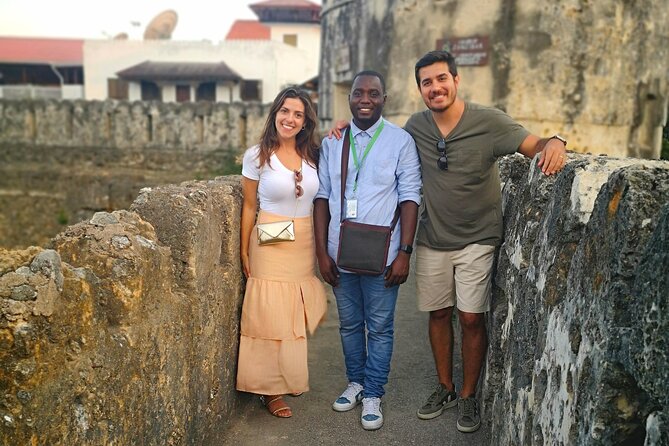
REVIEW · STONE TOWN HERITAGE WALKS
3-Hour Private Stone Town Walking Tour
Stone Town can feel like a maze at first, but this walk gives it structure fast. You get a private 3-hour route that connects the seafront forts, the UNESCO streets, and everyday places like Darajani Bazaar. It is also designed so you spend your time looking at details, not hunting them down.
I especially like how the guide approach blends the big architecture story with street-level culture. You get help spotting the mix of Arabic, Indian, and British influences in the buildings, plus the kind of carved-door and narrow-street details that are easy to miss when you go alone. I also like that the tour includes stops where you can actually see daily Zanzibar life, like the evening food scene near Forodhani Gardens.
One consideration: because it is a walking route through narrow streets, it helps to wear comfortable shoes and plan for warm weather. And if you want the best energy at the Forodhani food street, timing matters, since it is especially busy after sunset.
In This Review
- Key things that make this Stone Town walk work
- Old Fort to House of Wonders seafront start: where the story locks in
- Forodhani Gardens: the walk’s best taste of Zanzibar after sunset
- Old Customs House: carved doors and details you will actually notice
- UNESCO Stone Town streets: narrow lanes, Zanzibar doors, and Jow’s Corner
- Darajani Bazaar: the Spice Market nickname makes sense fast
- Old Slave Market area and the Anglican Cathedral: history with weight
- Freddie Mercury Museum: Zanzibar roots in a tight, memorable stop
- Price and value: what $35 buys in a 3-hour private format
- Who should book this Stone Town walking tour?
- Should you book it, or go solo?
- FAQ
- How long is the Stone Town private walking tour?
- Where does the tour start and end?
- How much does it cost?
- Is this tour private?
- What are the main stops on the route?
- Do I need to pay admission at the stops?
- Will I receive a mobile ticket?
- Is free cancellation available?
- Are service animals allowed and is it easy to reach by transit?
Key things that make this Stone Town walk work
- Private pacing for only your group, so questions do not get rushed.
- Architecture spotting, with help interpreting the Arabic, Indian, and European influences.
- Forodhani Gardens timing, close to the House of Wonders and Old Fort seafront axis.
- Market time at Darajani, for fresh produce, fish, and spice shopping sights.
- Old Slave Market context and a visit linked to the Anglican Cathedral area.
- Freddie Mercury Museum stop for a quick route from Zanzibar roots to world fame.
Other Stone Town walks we followed
- Stonetown: Food Markets and Street Food Walking Tour★ 4.7 · 151 reviews
- Zanzibar Stone Town Walking Tour★ 5.0 · 145 reviews
- Stone Town Historical Walking Tour★ 5.0 · 143 reviews
- Spice Tour + Stone Town Tour + Prison Island★ 4.5 · 130 reviews
Old Fort to House of Wonders seafront start: where the story locks in

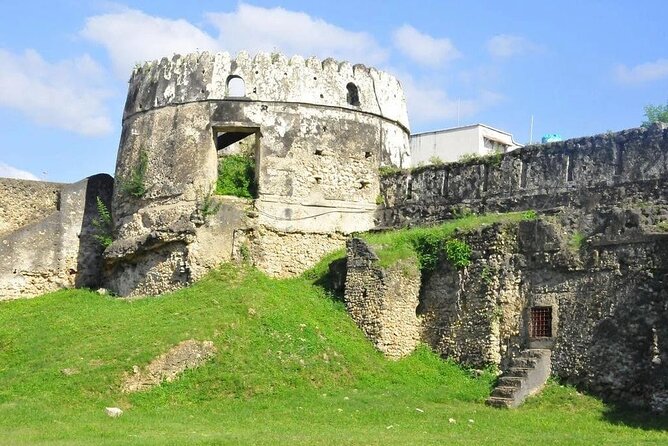
The tour starts at Old Fort on Mizingani Road, right by the seafront. This matters because Stone Town is easier to understand when you anchor yourself to water first, then move inward. From this starting angle, the nearby landmarks help you build a mental map immediately.
Old Fort is the oldest building in Stone Town, and it sits in a prime spot adjacent to the House of Wonders (the former Sultan’s palace). Even if you are not going inside for paid admission, simply standing in the right places lets you read the town like a diagram: fortification, palace influence, and the coastline all connected.
If you like clear orientation, this opening tends to set the tone. Guides such as Ahmad and Hassan are praised for communicating well, and that early clarity makes the rest of the walk feel organized rather than chaotic.
Forodhani Gardens: the walk’s best taste of Zanzibar after sunset
Forodhani Gardens is the next hit, and it is timed for atmosphere. You are on the main seafront promenade with Old Fort and the House of Wonders in front of you, which gives you a classic Stone Town postcard view while also bringing you into the local evening scene.
This is where you get the sensory part of Zanzibar. After sunset, the area draws tourists and locals to a popular food street market. Expect Swahili and Zanzibari favorites like grilled seafood, samosas, cassava sweet potatoes, Zanzibar mix (urojo), and Zanzibar-style pizza.
Practical tip: if you are booking for an evening slot, go hungry but stay picky. Food smells are great for motivation, yet you still want to choose what looks fresh and cooked to your comfort level. Bring a small wallet and keep things simple.
Old Customs House: carved doors and details you will actually notice
Next comes Old Customs House, built in the 18th century and tied to Zanzibar’s political story. It also has a visual payoff: a beautifully carved wooden door with fish, lotus, and anchor motifs. These symbols are the kind of work you can walk right past if nobody points them out, which is exactly why a guide helps here.
This stop is also a good reminder that Stone Town is not just a collection of monuments. It is an architecture culture where craftsmanship matters, and the town’s influences show up in how people decorated what they built.
If your guide is a strong communicator, you get more than a quick description. The best tours here slow down for 2 to 3 minutes, so you can look, then ask, then look again.



UNESCO Stone Town streets: narrow lanes, Zanzibar doors, and Jow’s Corner

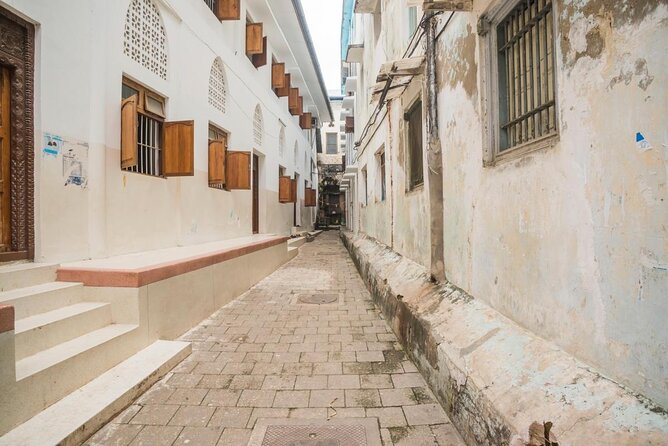
The core of Stone Town happens on foot between landmarks. You will move through narrow winding streets that reflect the town’s multicultural influences. This is the UNESCO part of the story, designated in 2000, with architecture largely dating back to the 19th century.
What I like most about covering this area with a guide is that you learn what to notice. You start seeing how the Arabic, Persian, Indian, and European elements show up in door styles, street layout, and building details. Then you are no longer just taking photos, you are understanding why the buildings look the way they do.
This part of the walk also includes local stops beyond the most famous listings, such as the Ismail Khoja Jamat Khana and Zanzibar carved doors, plus Jow’s Corner (a city center focal point). These are the places that help you connect the official “headline sites” to the living culture that still shapes the town.
Practical tip: plan for heat. Most of these streets offer limited shade, so do what locals do, drink water, take short pauses, and keep moving without rushing.
Darajani Bazaar: the Spice Market nickname makes sense fast
Darajani Bazaar is one of Stone Town’s main markets, and it is commonly called the spice market or Darajani market. As you walk through, you get a front-row look at everyday Zanzibar commerce.
The emphasis here is on freshness. You can see fruits, fish, and spices, which helps explain why the market is a key part of the region’s identity. It also gives you a chance to compare spice colors and textures, not just hear about them.
A simple way to make this stop more enjoyable: treat it like a guided browsing lesson. Ask your guide what is worth trying as a small sample and what is better for cooking at home. If you plan to buy, bring small cash, because you will likely be making multiple small purchases rather than one big one.
Old Slave Market area and the Anglican Cathedral: history with weight
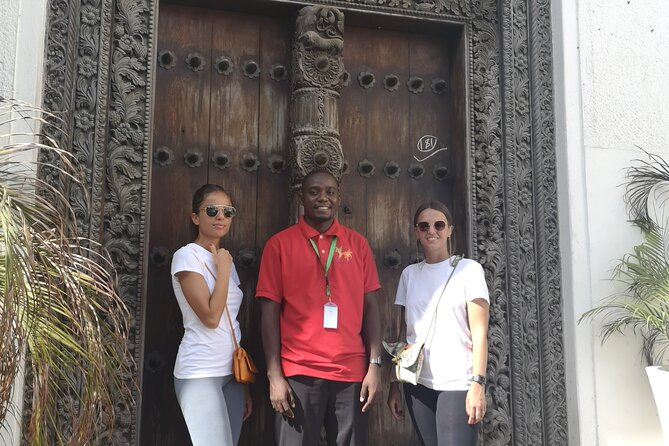
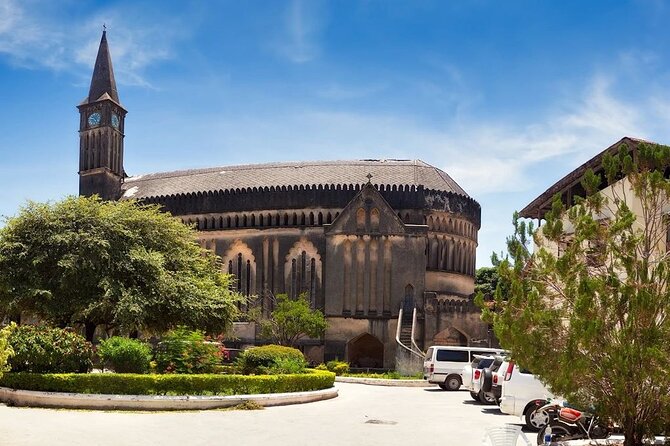
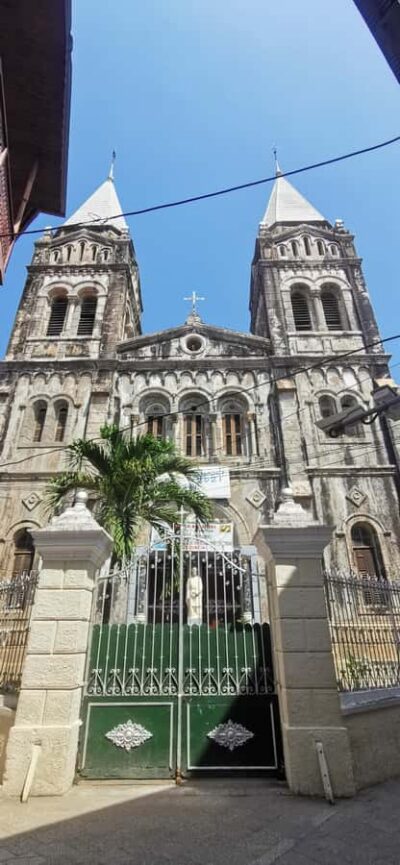
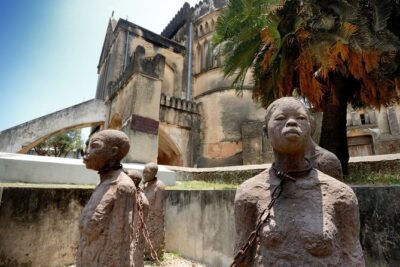
The tour then shifts to a heavier chapter: the Old Slave Market, connected to the area near the Anglican Cathedral. Zanzibar played a major political and economic role in East Africa, and it was also central to the slave trade, with people brought from the mainland in chains to be sold.
This market was closed on the orders of the Sultan in 1873, and visiting the area helps you understand that history is part of Stone Town’s public landscape, not hidden in museums only.
I recommend treating this stop with care. Do not turn it into a photo break. Let the guide explain the context, then take a quiet moment of your own. Even if you know the basics, the place itself gives the story weight.
Freddie Mercury Museum: Zanzibar roots in a tight, memorable stop
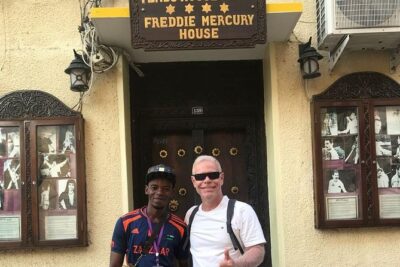
Next is the Freddie Mercury Museum, located in the heart of Stone Town. Freddie Mercury was born in Zanzibar, then moved to England around 1963. This stop works well in a walking tour because it resets the mood without ignoring meaning.
Inside, you see an outline of Zanzibar’s story starting from the late 1800s, along with details about Farroukh Bulsara’s roots. The museum also covers his early background in Zanzibar, schooling (including Panchangani in India), and the timeline leading to his rise as one of music’s biggest stars.
The key value here is perspective. You connect a global pop icon to a specific place, and you learn that Zanzibar is more than a beach-side stop. It is a place that shaped people who then influenced the world.
If your guide is Hassan, note one extra perk from the reviews: he is described as an artist too, so you might get a small creative extra touch during the day.
Price and value: what $35 buys in a 3-hour private format
At $35 per person, this tour is priced like a smart, focused “orientation plus highlights” experience. The biggest value is the private format, which means you get a responsive guide who can slow down when you want detail and move on when you do not.
Also, many of the stops are marked as free admission on the visit plan, so your tour cost is mostly paying for the guide time and route. That is a big deal in Stone Town, where seeing a lot independently can turn into wasted time and confusion.
Another reason it feels like value: reviews highlight that guides like Ahmad and Hassan tend to be friendly and professional, with clear English and strong organization. One of the best compliments is simple, the sequencing works, so you do not feel backtracked or shuffled.
Who should book this Stone Town walking tour?
This is a great match if you want:
- A structured Stone Town introduction in just a few hours
- Architecture and street-detail interpretation, not just landmark checklists
- Market culture plus major sites in one outing
- A private guide experience with room for questions
It may be less ideal if you want a long beach day, heavy museum time, or minimal walking. This is about streets, corners, and looking closely.
Should you book it, or go solo?
I would book it if your priority is understanding Stone Town fast and well, especially the architecture mix and the meaning behind the major sites. If you already love historical detail and you enjoy markets, you will get more from having someone connect the dots.
I would consider a solo plan only if you are confident navigating on foot, comfortable reading Stone Town details yourself, and mainly want freedom rather than guided context. For most people, a 3-hour private structure is the sweet spot.
FAQ
How long is the Stone Town private walking tour?
It is listed as about 3 hours.
Where does the tour start and end?
The tour starts at Old Fort, Mizingani Rd, Zanzibar, Tanzania, and it ends back at the meeting point.
How much does it cost?
The price is $35.00 per person.
Is this tour private?
Yes. It is a private tour/activity, and only your group participates.
What are the main stops on the route?
The tour includes Old Fort, Forodhani Gardens, Old Customs House, Stone Town, Darajani Bazaar, the Old Slave Market area/Anglican Cathedral, and the Freddie Mercury Museum.
Do I need to pay admission at the stops?
The visit details provided list free admission for each stop.
Will I receive a mobile ticket?
Yes. The tour includes a mobile ticket.
Is free cancellation available?
Yes, you can cancel for a full refund if you cancel up to 24 hours in advance. If you cancel less than 24 hours before the start time, the amount paid is not refunded.
Are service animals allowed and is it easy to reach by transit?
Service animals are allowed. The activity is also listed as near public transportation and suitable for most travelers.
Stone Town, Street by Street
- Zanzibar; Prison Island, Nakupenda, StoneTown Tour with BBQ
★ 4.3 · 457 reviews - Stonetown: Food Markets and Street Food Walking Tour
★ 4.7 · 151 reviews - Zanzibar Stone Town Walking Tour
★ 5.0 · 145 reviews - Stone Town Historical Walking Tour
★ 5.0 · 143 reviews - Spice Tour + Stone Town Tour + Prison Island
★ 4.5 · 130 reviews
Just added from around Zanzibar





Stone Town Heritage Walks, compared.
 ★ 4.4Zanzibar: Stone Town, Spice Tour, Prison Island with LunchFrom $681,219 reviews
 ★ 4.5Zanzibar: Prison Island, Stone Town, & Spice Farm TourFrom $70579 reviews
 ★ 4.3Zanzibar; Prison Island, Nakupenda, StoneTown Tour with BBQFrom $71457 reviews
★ 4.6Zanzibar: Stone Town, Spice tour & Prison Island with LunchFrom $55453 reviews
★ 4.3Zanzibar; Prison Island, Nakupenda, StoneTown Tour with BBQFrom $71457 reviews
★ 4.6Zanzibar: Stone Town, Spice tour & Prison Island with LunchFrom $55453 reviews
 ★ 5.0Stone Town Private Walking TourFrom $26371 reviews
 ★ 4.6Zanzibar: 3 Hours Private Stone Town walking Tour with GuideFrom $24301 reviews
 ★ 4.5Full-Day Private Stone Town +Spice Farm and Prison Island TourFrom $100216 reviews
 ★ 4.5Zanzibar: Stone Town Historical Cultural Walking Guided TourFrom $21179 reviews
Browse the lists this tour appears in